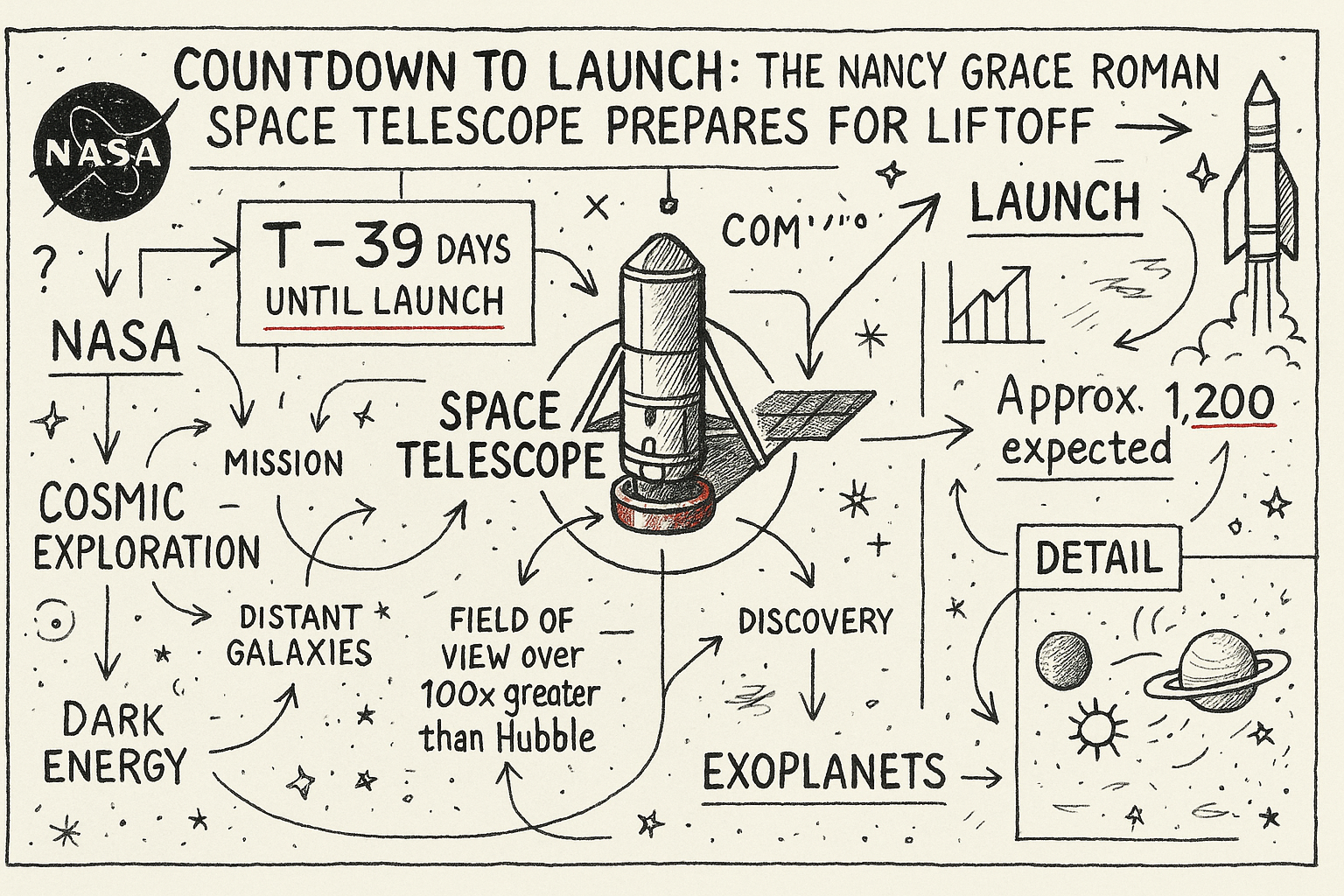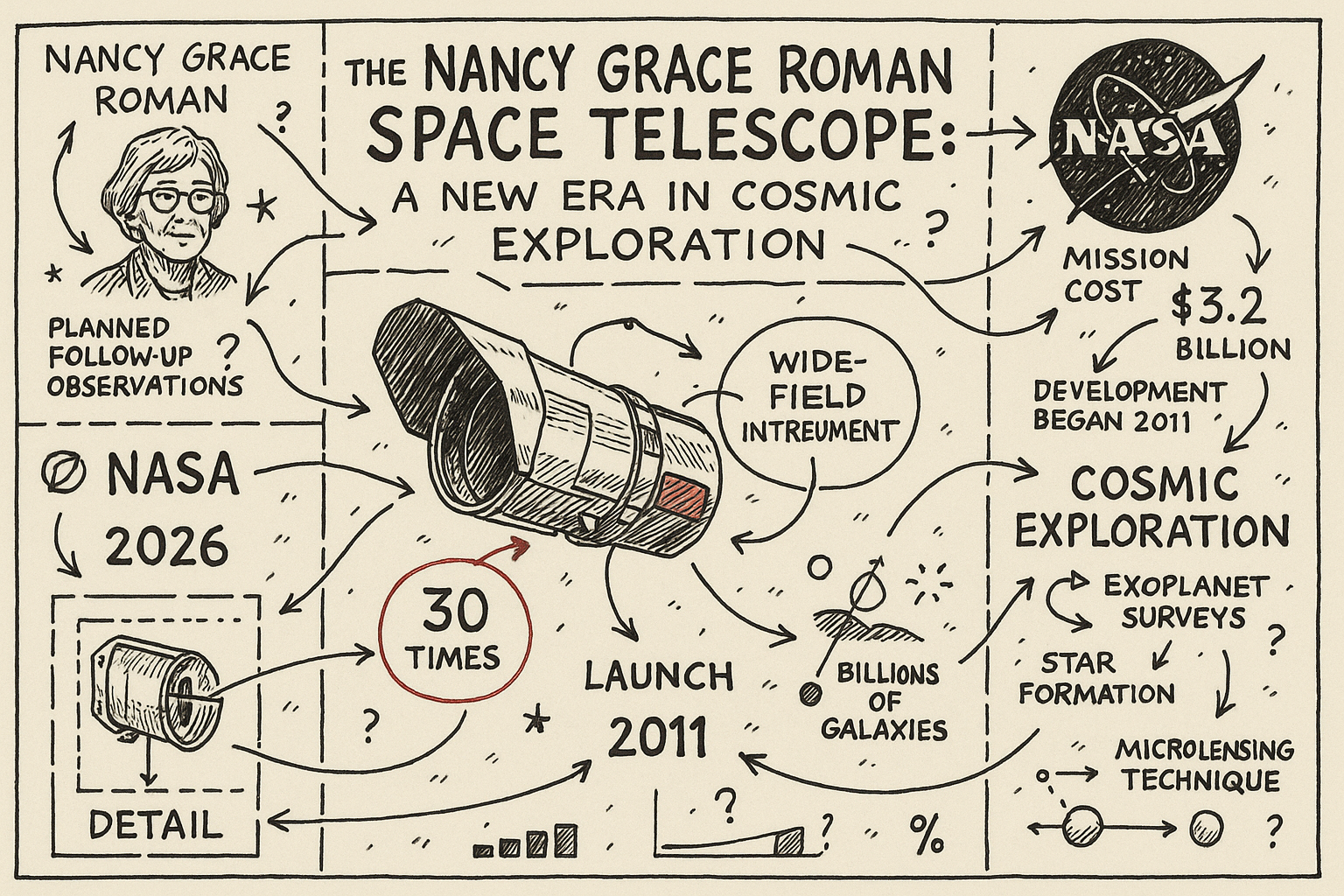
As the countdown to the launch of the Nancy Grace Roman Space Telescope begins, anticipation is building within the scientific community. Scheduled to lift off from NASA's Kennedy Space Center in Florida on August 30, 2026, at 7:26 a.m. EDT, this groundbreaking mission is poised to transform our understanding of the cosmos.
Named after NASA's first chief astronomer, the Nancy Grace Roman Space Telescope, often referred to simply as Roman, is designed to address some of the most profound mysteries of the universe. With its advanced optical design and a mirror the same size as that of the Hubble Space Telescope, Roman boasts a field of view more than 100 times larger, enabling it to survey vast regions of the sky with unprecedented speed and detail.
Revolutionary Capabilities
The Roman Space Telescope will operate in visible to near-infrared light, equipped to conduct detailed scans that will aid in the exploration of dark energy and dark matter. These enigmatic components of the universe are believed to play crucial roles in its expansion and evolution, yet remain poorly understood. Roman's mission includes a historical analysis of how these forces have influenced the formation and evolution of normal matter throughout cosmic history.
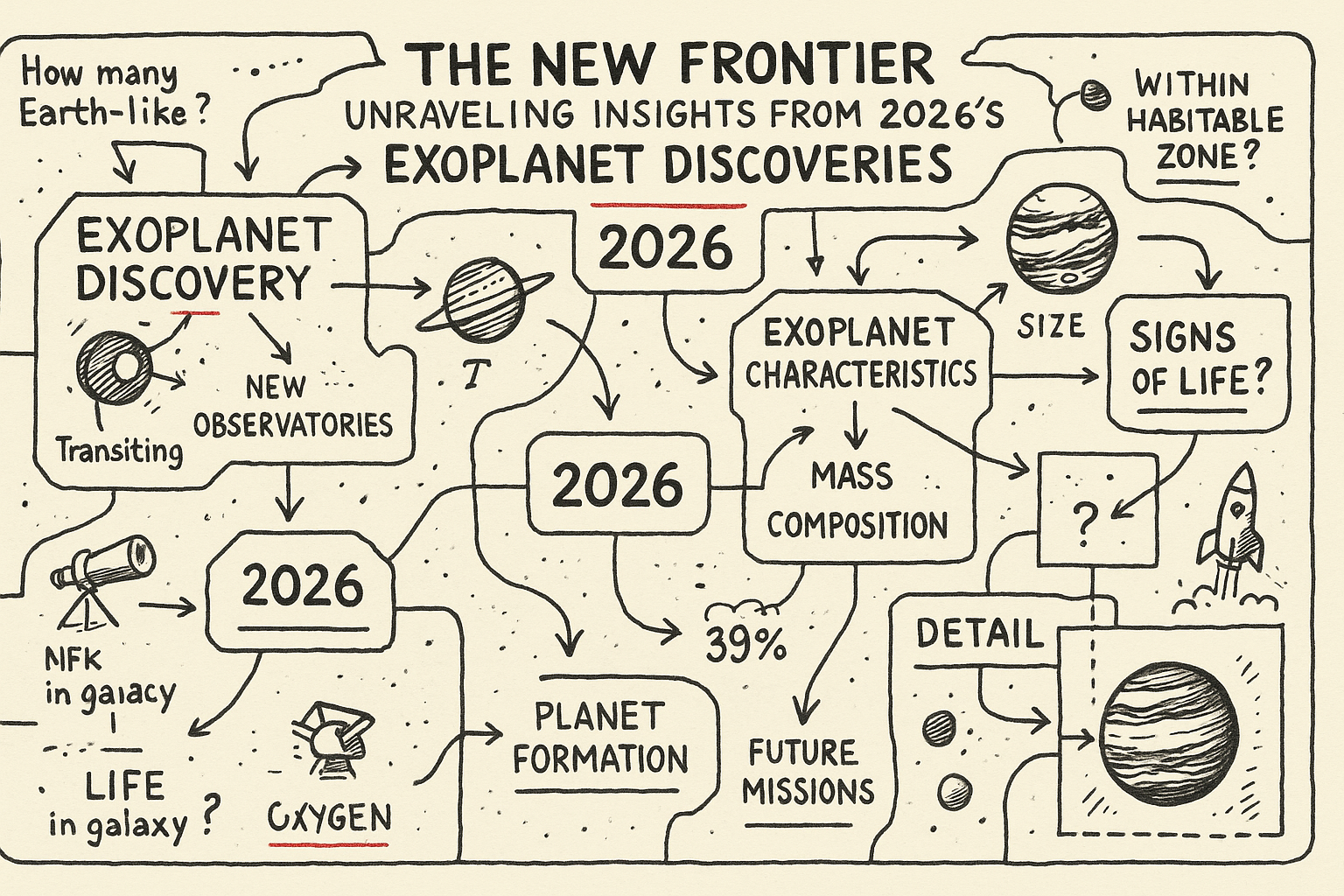
In addition to its dark energy and dark matter investigations, Roman is expected to significantly advance the search for exoplanets. The telescope's ability to block starlight will allow it to detect exoplanets that have previously been obscured, potentially identifying up to 100,000 new worlds. This capability will enable a comprehensive statistical census of planetary systems within the Milky Way, offering insights into the diversity and distribution of planets beyond our solar system.
International Collaboration
The Roman mission is a testament to international collaboration, with the European Space Agency (ESA) playing a vital role. ESA is providing essential hardware, including star trackers, batteries, and detectors for the telescope's coronagraph instrument. Moreover, ESA's deep-space ground station network will support communications, ensuring the mission's scientific return is maximized.
As Roman joins the ranks of the Hubble Space Telescope, launched in 1990, and the James Webb Space Telescope, launched in 2021, it represents a new chapter in space observation. Together, these observatories will offer complementary views of the universe, each contributing unique data that will help unravel the mysteries of space.
With its launch just days away, the Nancy Grace Roman Space Telescope stands as a beacon of human curiosity and ingenuity. Its mission promises not only to enhance our understanding of the universe but also to inspire future generations of astronomers and scientists. As we prepare to watch Roman embark on its journey, the possibilities for discovery seem as boundless as the cosmos itself.