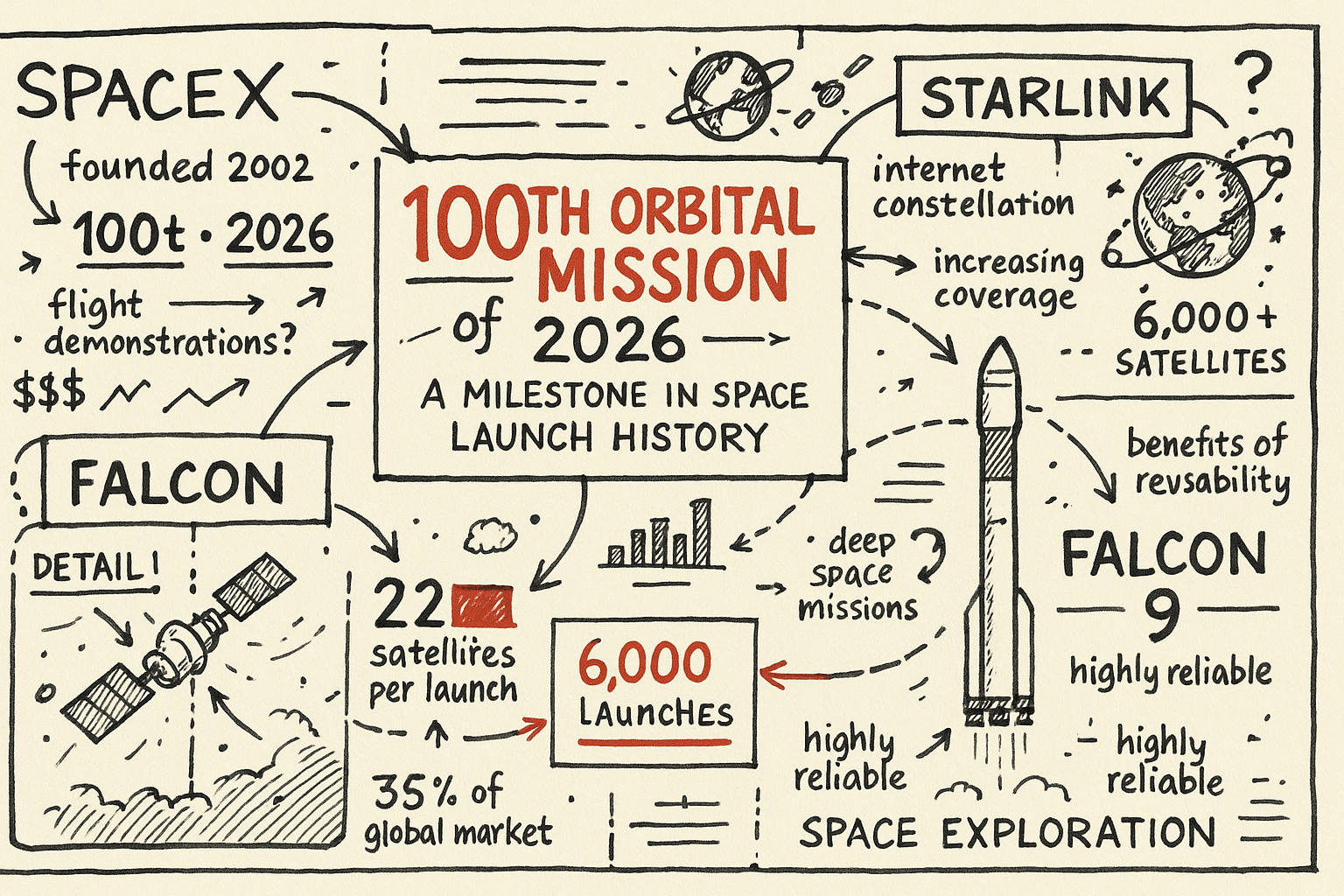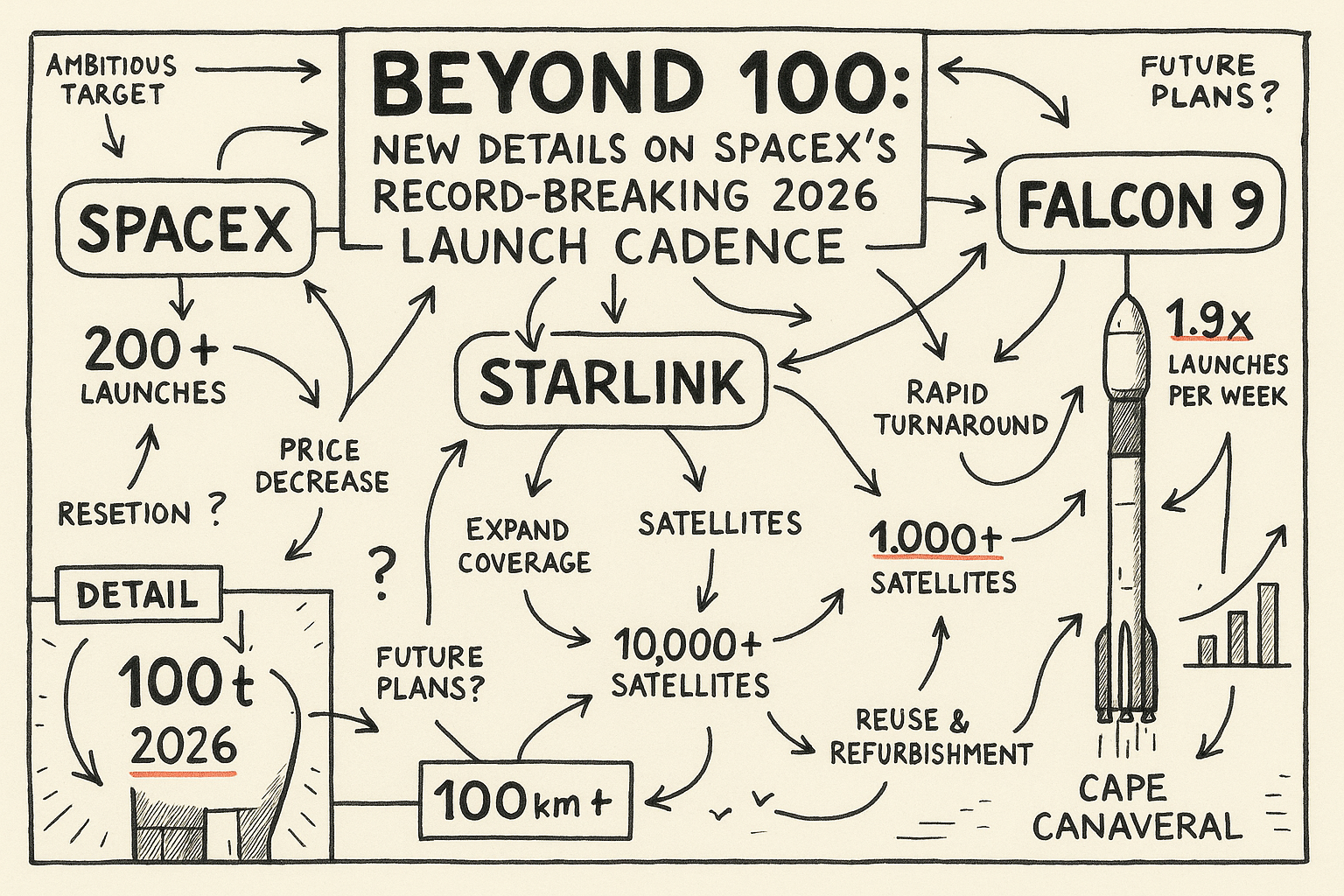
SpaceX’s announcement that it reached 100 orbital missions in 2026 drew attention for the headline number, but fresh reporting released since our earlier coverage offers clearer detail on how the company achieved that tempo and what operational markers accompanied the milestone.
Two coasts, steady Starlink replenishment
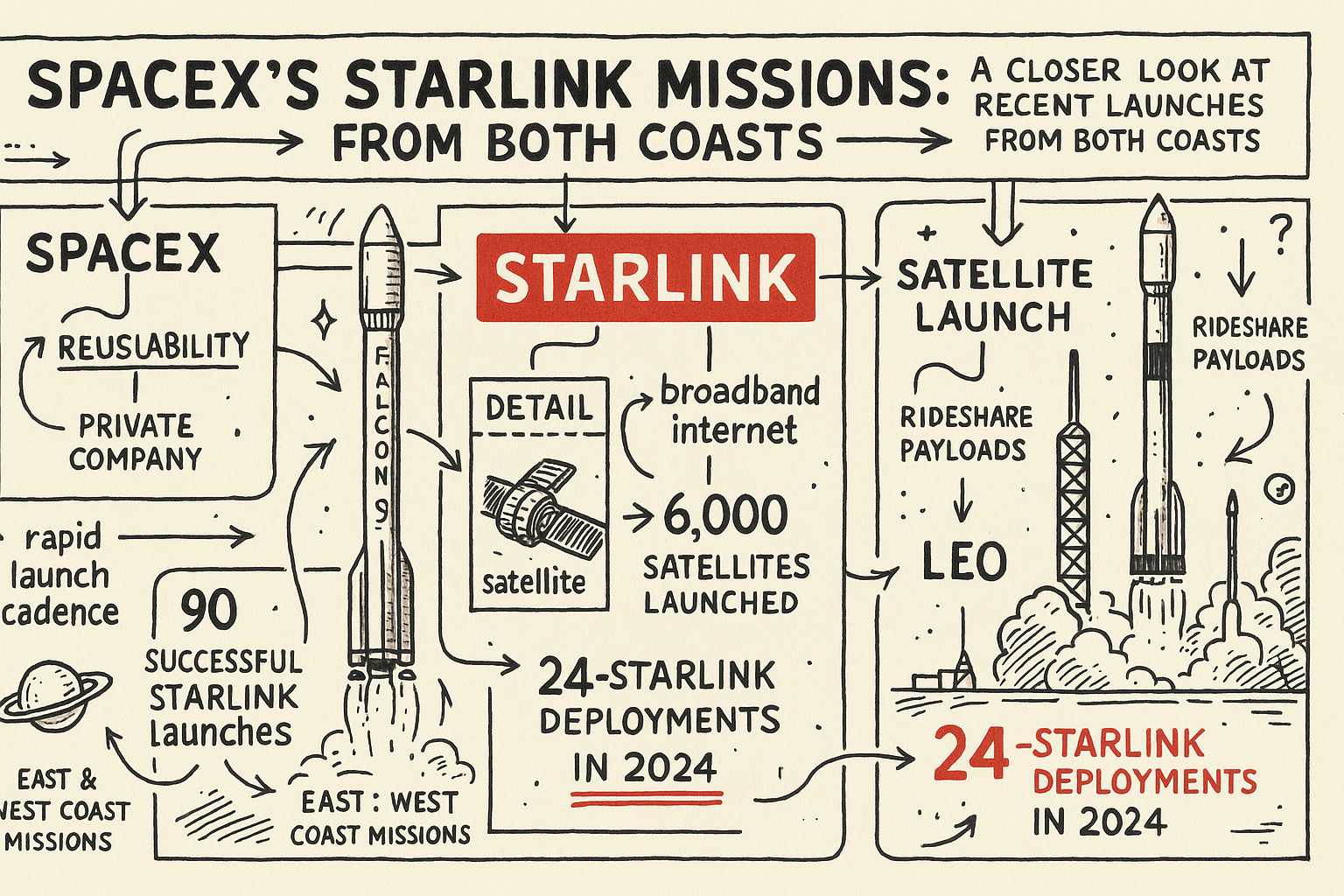
Coverage of launches across August 2026 shows that SpaceX sustained high cadence by operating Falcon 9 missions from both the East and West Coasts. From Cape Canaveral Space Force Station, Falcon 9 missions delivered Starlink satellites on multiple occasions in August, including the Starlink 10-39 mission that lifted off from Space Launch Complex 40 on Aug. 20 at 11:14 a.m. EDT (1514 UTC) and the Starlink 10-49 mission that launched from Cape Canaveral early on Aug. 25.
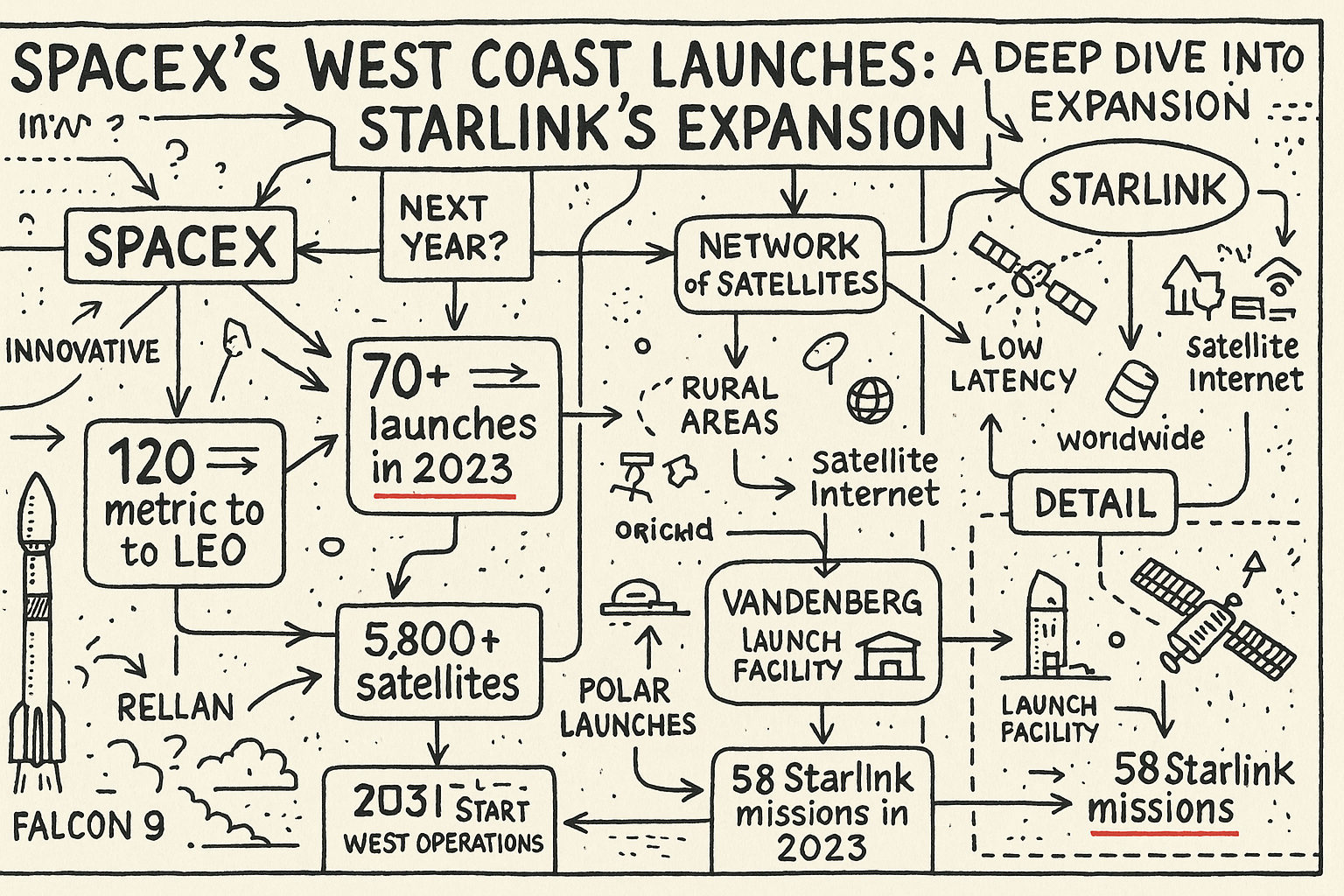
At Vandenberg Space Force Base, a Falcon 9 lifted off on Aug. 22 shortly after midnight delivering the Starlink 15-20 payload, a flight that editors and observers marked as SpaceX’s 100th orbital mission of the year. The mission used a launcher that successfully landed its first stage on the company’s droneship.
Booster reuse milestones and records
Reporting around the Cape Canaveral missions emphasizes how reusability underpins the launch tempo. One Falcon 9 booster completed a record-breaking 37th flight on the Starlink 10-49 mission, according to contemporaneous coverage. Another booster noted in coverage from Vandenberg — booster 1063 — was reported to be just two flights shy of a milestone at the time of that article.
Constellation scale and near-term scheduling
Across the missions described, each Starlink launch added 29 broadband internet satellites to the megaconstellation. Spaceflight Now and related reports cite company commentary that SpaceX now has more than 11,000 Starlink satellites in orbit. The high launch rate in August contributed directly to that count.
Coverage also suggested a potential near-term gap for Cape Canaveral Starlink flights: after the Aug. 25 mission, reporting noted that no further Starlink flights from Cape Canaveral appeared on the near-term public schedule, indicating that while overall annual cadence was high, the geographic distribution of launches can shift week-to-week.
Context within a busy global launch week
Independent launch previews placed the SpaceX activity in the context of a busy international schedule for the same week in late August 2026. Forecasts called for five orbital launches across China, the United States, and French Guiana, including missions by China’s Chang Zheng 6C and Europe’s Ariane 62. That broader launch tempo underscores how SpaceX’s 100th mission came amid an active period for other providers as well.
Taken together, the additional reporting fleshes out how SpaceX reached the 100-mission milestone: frequent Starlink flights from both coasts, repeated reuse of individual Falcon 9 boosters — including a 37th flight for one booster — and a steady net increase in the Starlink fleet, now exceeding 11,000 satellites. Those facts help explain how the company sustained such a high mission count through August 2026.