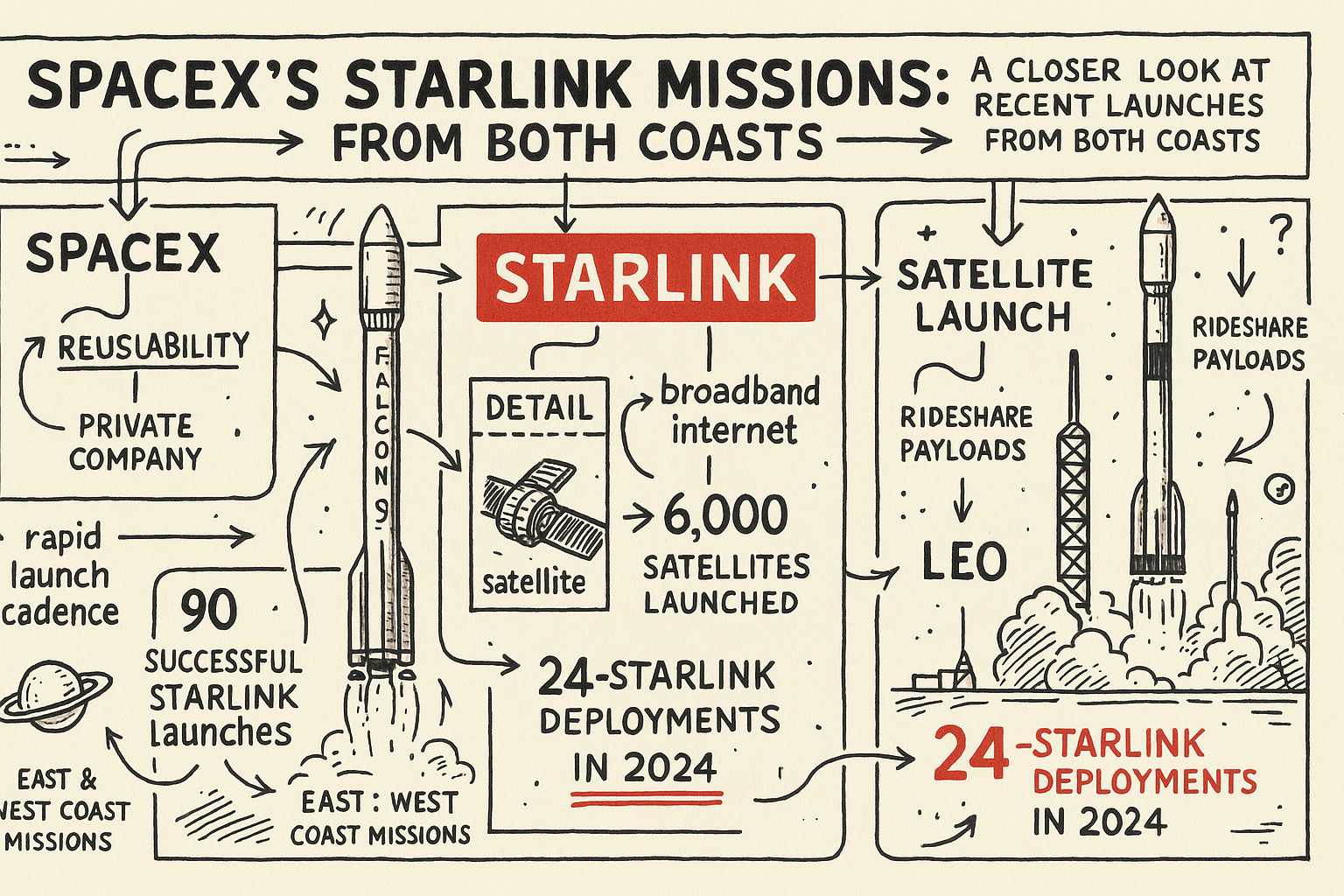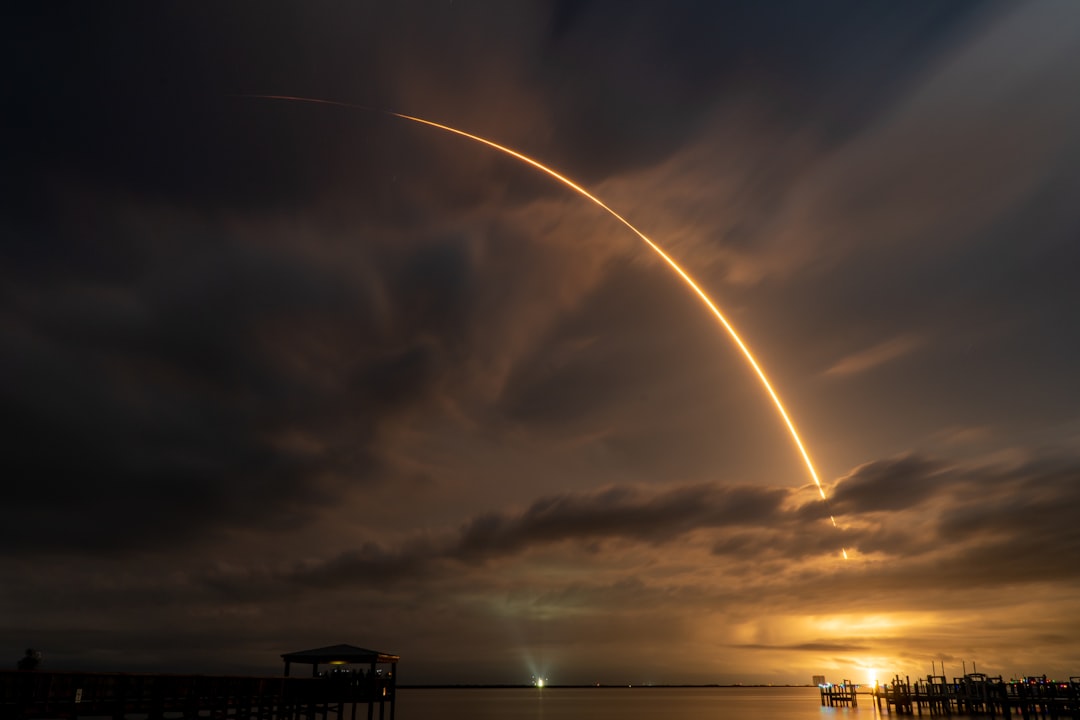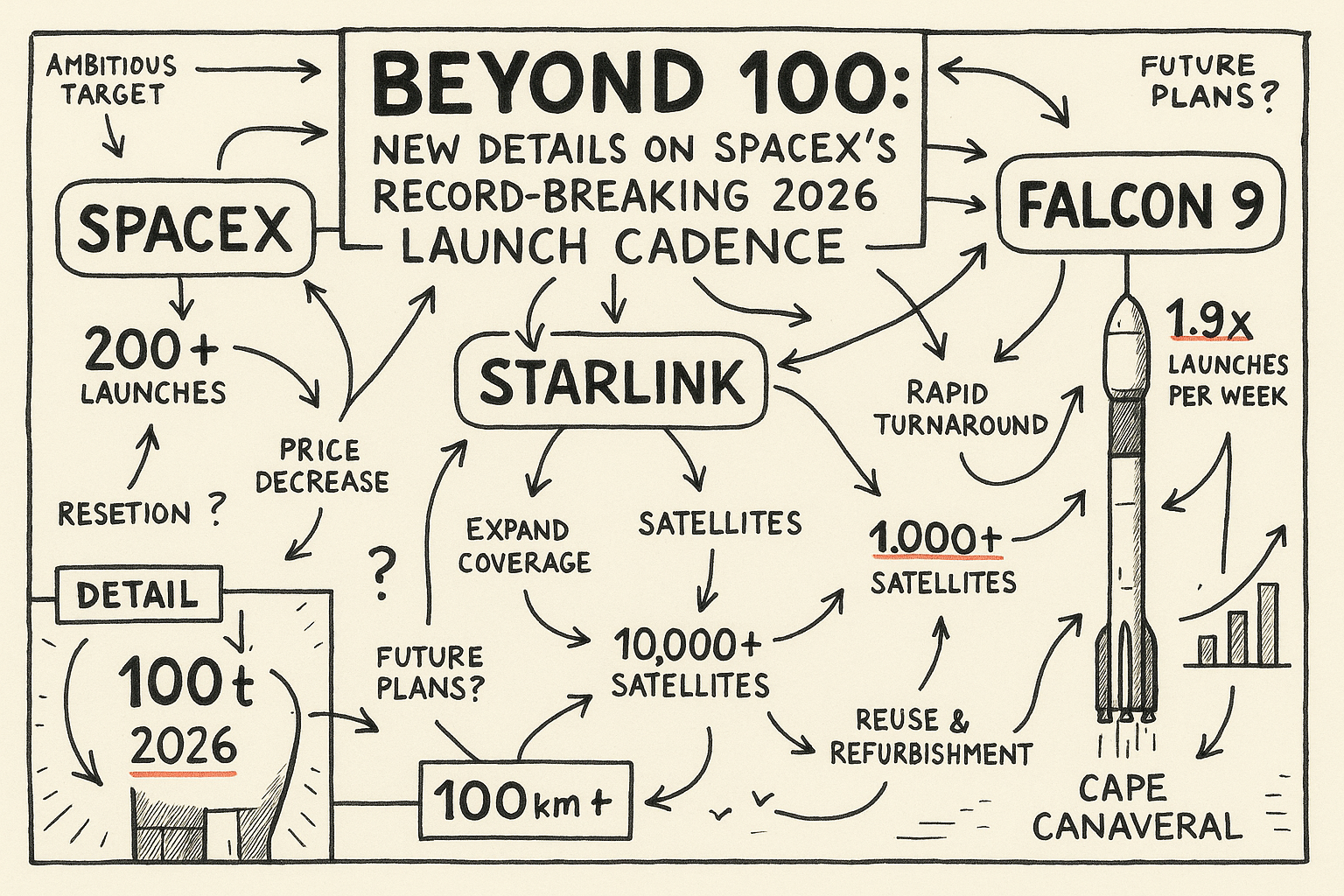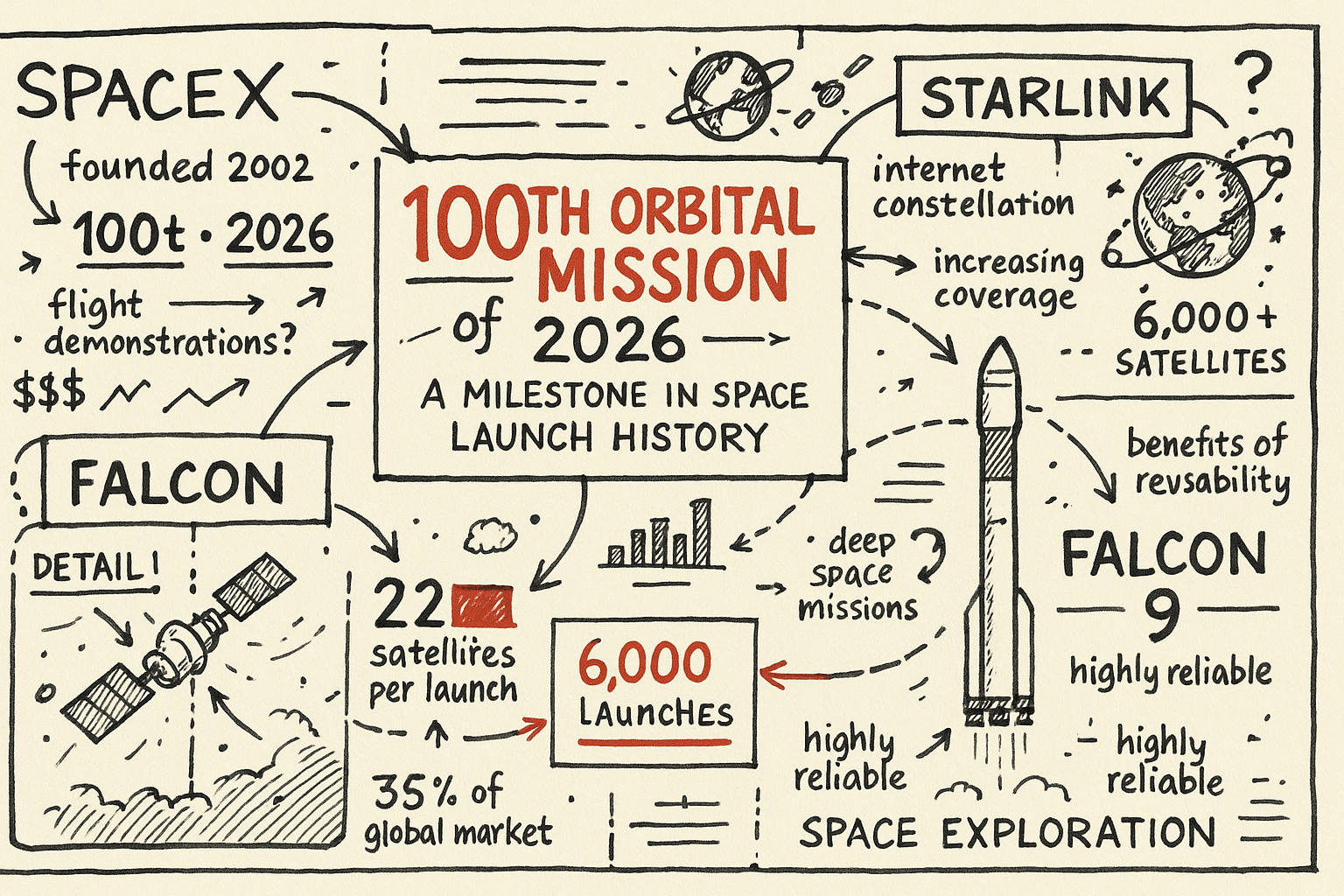
On August 22, 2026, SpaceX achieved a significant milestone by completing its 100th orbital mission of the year. This mission, which launched from California's Vandenberg Space Force Base, was part of SpaceX's ongoing efforts to expand its Starlink megaconstellation, adding 27 new satellites to the network.
The Falcon 9 rocket, a reliable workhorse of SpaceX's fleet, carried these satellites into low Earth orbit. This launch marks the 99th mission performed by SpaceX out of the 100 orbital missions conducted in 2026, showcasing the company's dominance in the commercial space launch sector.
Starlink's Growing Network
With the addition of these 27 satellites, SpaceX continues to expand its Starlink network, which aims to provide global broadband internet coverage. According to SpaceX founder Elon Musk, the company now has more than 11,000 Starlink satellites in orbit, a testament to the rapid growth of this ambitious project.
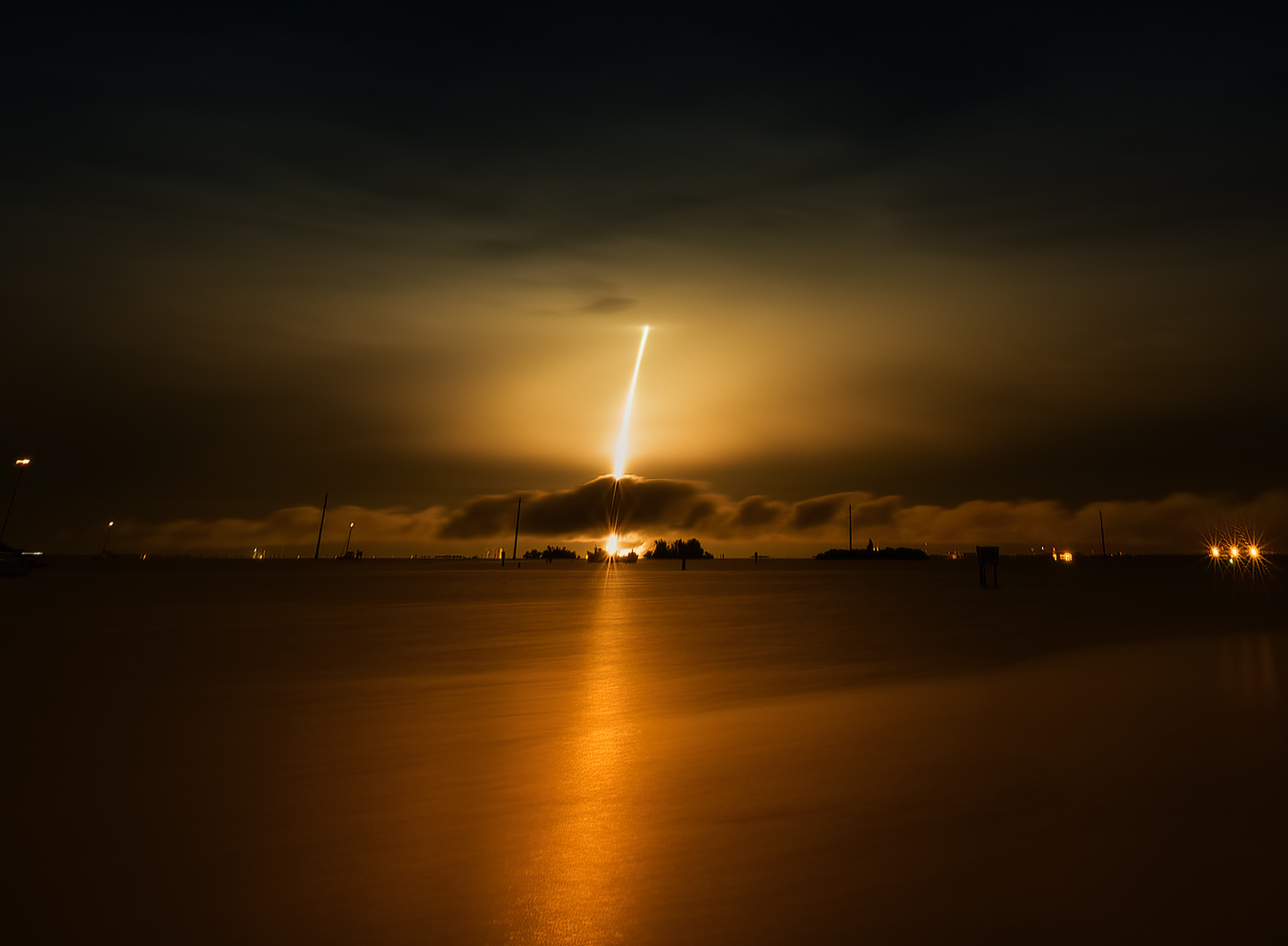
The Starlink 15-20 mission is just one of many that have taken place this year. Prior to this, the Starlink 10-39 mission launched from Cape Canaveral Space Force Station in Florida on August 21, 2026, deploying another 29 satellites into orbit. This relentless pace of launches underscores SpaceX's commitment to building a robust satellite network capable of delivering high-speed internet to underserved regions worldwide.
Technical Achievements and Future Prospects
The successful landing of the Falcon 9's first stage booster on a droneship further highlights SpaceX's advancements in reusable rocket technology. This capability not only reduces the cost of access to space but also enhances the sustainability of space operations.
As SpaceX continues to execute its ambitious launch schedule, the company is setting new standards for the space industry. The 100th mission milestone is not just a numerical achievement but a reflection of SpaceX's growing influence and capability in space exploration and satellite deployment.
Looking ahead, SpaceX's focus on increasing the number of Starlink satellites in orbit will likely continue. This expansion is crucial for achieving the company's goal of providing comprehensive global internet coverage, which could have transformative impacts on communication and connectivity worldwide.