NASA adjusts Axiom Space's lunar suit requirements to meet Artemis IV timeline
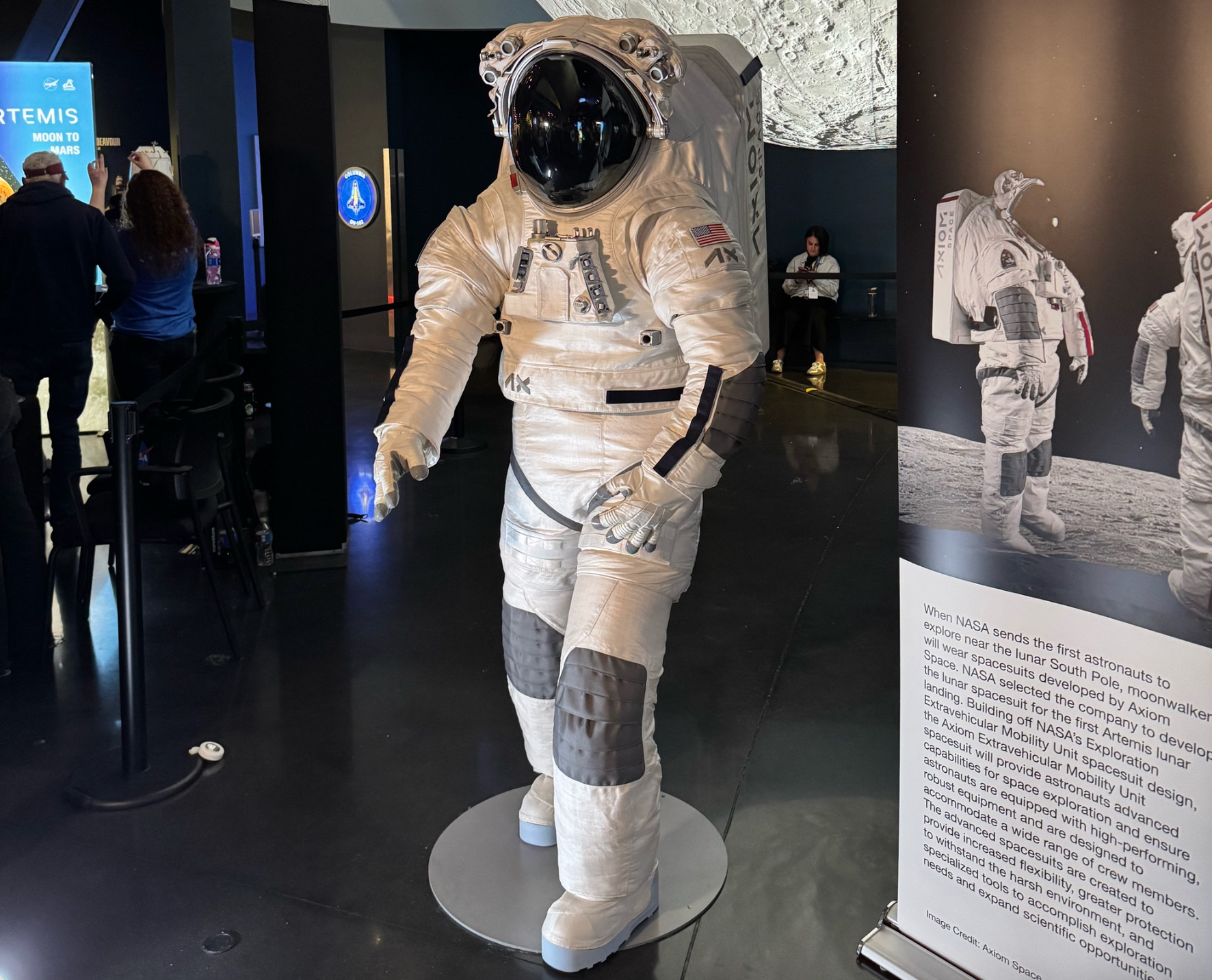
NASA is revising some requirements for Axiom Space's AxEMU lunar extravehicular mobility unit so that a first flight-ready version can be delivered in time for Artemis IV, currently scheduled no earlier than early 2028. The decision, discussed during a NASA Aerospace Safety Advisory Panel meeting on 31 August 2026, focuses development on the capabilities essential for the first lunar surface missions and defers additional features to later flights.
The AxEMU—Axiom Extravehicular Mobility Unit—is the private-sector suit Axiom Space is developing to support Artemis surface operations. According to reporting on 3 September 2026 by AstroSpace.it, NASA and Axiom agreed to reduce certain requirements tied to long-term qualification and durability for the initial suit version. In practical terms, the first AxEMU will not be required to meet the full-duration certification standards envisioned for extended or later-use scenarios; more robust duration qualifications will be pursued for subsequent suit versions.
This narrowing of scope reflects the program's role as a schedule risk driver for the Artemis lunar landing campaign. The development of lunar suits has long been identified as a critical path item along with the human landing systems being developed by SpaceX and Blue Origin. An April report from NASA's Office of Inspector General had already highlighted the risk of further schedule slips for the AxEMU, and Axiom maintained an objective to have a lunar-capable suit ready by 2028.
To accelerate progress, NASA has also increased its hands-on involvement in the suit program. AstroSpace.it reports that NASA personnel have been embedded within Axiom's development team, and that the agencies' leadership now meet six days per week to review development, performance and schedule. Those measures are intended to improve oversight and coordination so the suit reaches the minimum needed readiness for Artemis IV.
Testing plans retain an operational focus. The reporting notes that planned evaluations include assessments on the International Space Station as well as testing in simulated lunar gravity environments. The approach embodies a trade-off: achieve a baseline flight-capable suit for the near-term Artemis objective while postponing higher-end endurance and capability objectives to later missions where extended surface stays or more challenging tasks will demand them.
Marking these changes publicly underlines the programmatic pressure to keep Artemis IV on a not-earlier-than-2028 timeline. NASA's scheduling of its crewed lunar surface return depends on several contracting and technical threads converging: suit systems, the human landing systems, and mission integration. Reducing initial certification requirements for the AxEMU is a classic program-management technique to descope the first deliverable to essential functionality and buy schedule margin.
It is important to note the distinction between temporary descope and permanent downgrading: the adjustments described are intended to be a phased approach. Additional suit capabilities—such as higher-duration certification and features intended for later, more ambitious surface operations—remain planned, but their development will be sequenced after the first flight-ready suit is delivered.
This development also illustrates how commercial partnerships are evolving in Artemis. NASA's increased internal involvement in Axiom's suit team shows the agency balancing contractor autonomy with closer integration when schedule risk becomes acute. The suit program's outcome will influence how future commercial contributions to Artemis are managed, especially where crew safety, certification standards and mission timelines intersect.
Looking ahead, if the AxEMU meets the narrowed requirements and testing milestones, it could fly on Artemis IV as the first commercially developed lunar suit supporting NASA crew on the surface. If not, the schedule risk to Artemis IV would persist because suits are among the finite list of items that must be ready for a crewed landing campaign. The approach NASA and Axiom are taking—prioritizing essential capabilities and increasing agency oversight—reflects a pragmatic response to that reality.
Observers should watch forthcoming test results from the ISS and gravity-analog trials, and future updates from both NASA and Axiom about certification milestones and dates. Those data points will determine whether the program's phased approach successfully delivers a safe, mission-capable suit for Artemis IV or whether further schedule changes will be required.
Sources: AstroSpace.it, "La NASA modifica alcuni requisiti della tuta lunare di Axiom per rispettare i tempi di Artemis IV", 3 September 2026; discussion at the NASA Aerospace Safety Advisory Panel meeting, 31 August 2026; April 2026 Office of Inspector General report (as cited in AstroSpace.it).