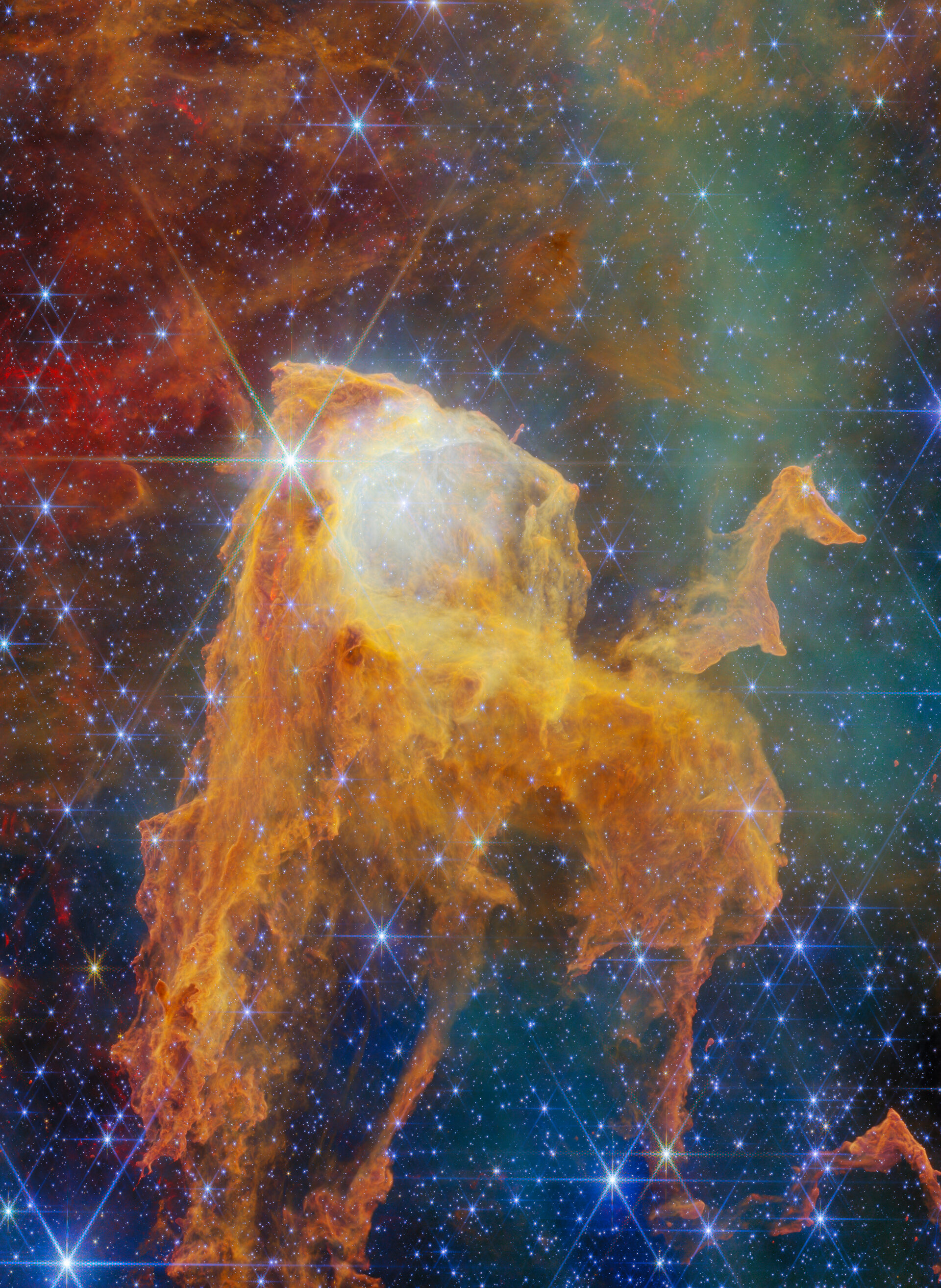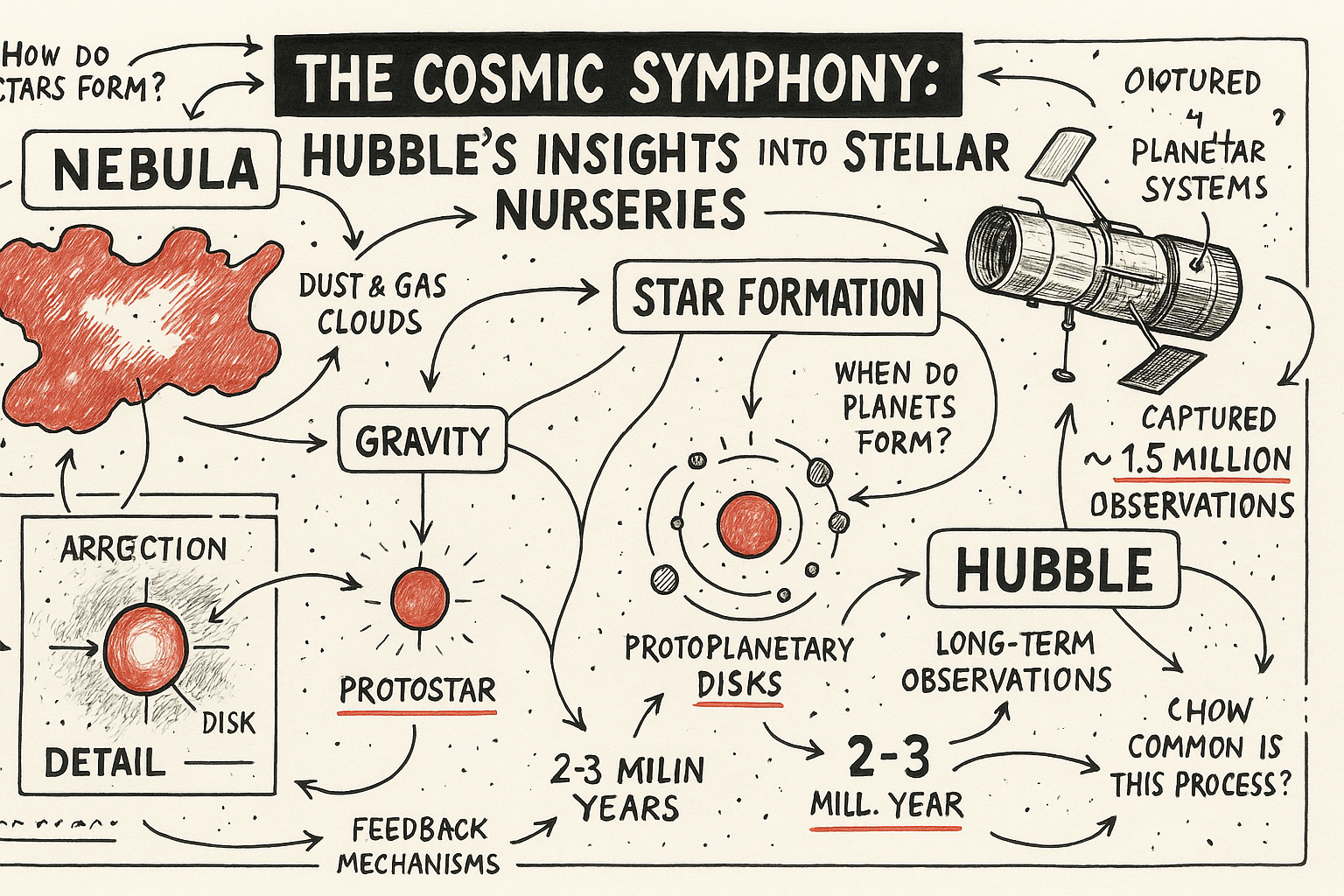
In the ever-expanding tapestry of the cosmos, the Hubble Space Telescope continues to unravel the mysteries of our universe, offering a window into the chaotic and wondrous realms beyond our earthly confines. Recent images from Hubble have captured the attention of astronomers and enthusiasts alike, showcasing a 'superbubble' within the Large Magellanic Cloud (LMC), a satellite galaxy of the Milky Way. The nebula, known as LHA 120-N44, or simply N44, serves as a testament to the dynamic processes of star formation and the intricate dance of cosmic forces.
The Significance of N44
N44 is more than just a photogenic nebula; it is a veritable nursery for stars, located a mere 160,000 light-years away. This proximity allows astronomers to study the mechanisms of star birth and the subsequent shaping of their environments. The superbubble itself is a cavity blown into the interstellar medium by the winds and radiation from massive stars. These stellar winds, along with the shockwaves from supernovae, sculpt the surrounding gas and dust into complex structures, providing fertile grounds for new stars to emerge.
Historically, the study of such regions has been pivotal in understanding the lifecycle of stars and the chemical enrichment of galaxies. N44 offers a glimpse into these processes, highlighting the interplay between young stars and their nascent surroundings. This nebula is a microcosm of the larger cosmic cycles that drive the evolution of galaxies, including our own.
Connecting the Dots: Broader Implications
While the stunning imagery of N44 captivates on a visual level, the scientific implications are profound. The study of superbubbles like N44 provides insights into the feedback mechanisms that regulate star formation rates. This is a crucial element in the quest to understand galactic evolution. The energy input from massive stars can either trigger the collapse of gas clouds, leading to new star formation, or disperse the clouds, halting the process. This delicate balance is a key factor in the sustainability of star-forming regions over astronomical timescales.
Moreover, these observations contribute to the broader understanding of the LMC itself. As the largest of the Milky Way's satellite galaxies, the LMC serves as a laboratory for studying galactic dynamics in a smaller, more manageable context. Insights gleaned from regions like N44 can be extrapolated to inform models of star formation and feedback in more distant and larger galaxies.
Surprising Insights and Future Directions
One particularly counterintuitive finding from the study of superbubbles is that the chaotic environments they create are not necessarily destructive. Instead, they can foster conditions conducive to the formation of new stars. This challenges the traditional view that stellar feedback is predominantly a disruptive force. Instead, it underscores the complexity of these interactions and the need for nuanced models to predict their outcomes.
Looking forward, the synergy between the Hubble Space Telescope and its successor, the James Webb Space Telescope, promises to deepen our understanding of such cosmic phenomena. Webb's enhanced infrared capabilities will allow for the penetration of dense dust clouds, revealing the hidden young stars within superbubbles like N44. This will provide a more complete picture of star formation processes and the lifecycle of stellar clusters.
In conclusion, the superbubble scene captured by Hubble in N44 is more than a visual marvel. It is a key to unlocking the secrets of star formation and galactic evolution. As we continue to explore these cosmic nurseries, we not only gain insights into the universe but also into the origins of the very elements that make up our world.