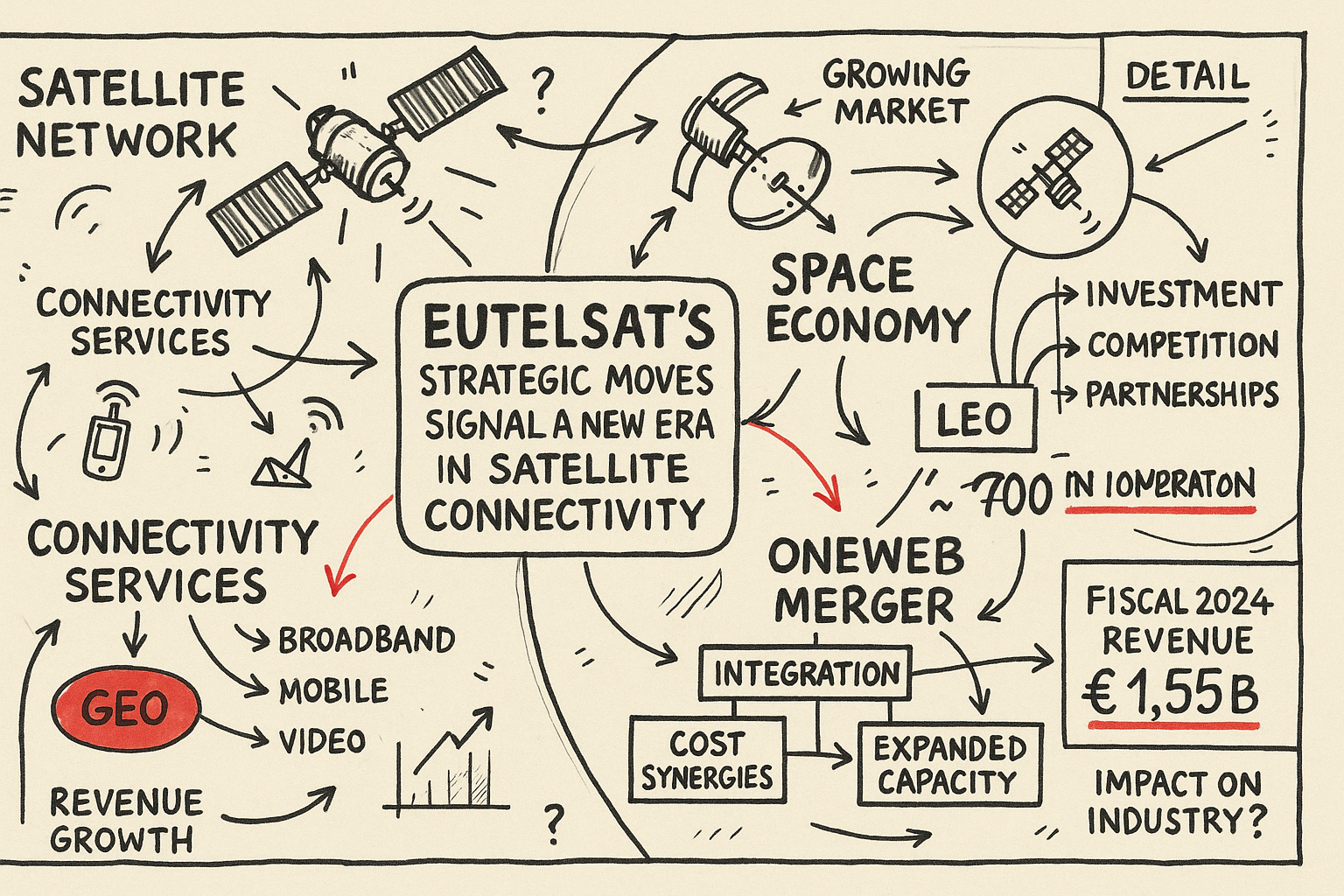
Introduction: The landscape of satellite communications is undergoing a significant transformation, marked by strategic partnerships and substantial investments. Leading this charge is Eutelsat, a key player in the global satellite industry, which is executing a series of initiatives aimed at redefining connectivity standards.
Expanding the LEO Constellation: On September 10, 2026, Eutelsat announced a €1 billion order to expand its OneWeb LEO constellation, marking a pivotal step in enhancing global internet coverage. This expansion aims to deploy second-generation satellites that promise improved performance and coverage, a move that underscores Eutelsat's commitment to the burgeoning demand for low-latency, high-speed internet.
Strategic Collaborations: In tandem with its LEO expansion, Eutelsat has formed a strategic partnership with Skynopy to launch the global AKAR software-defined ground network. This collaboration highlights a shift towards more flexible and adaptable satellite communications infrastructure, leveraging software-defined technologies to optimize network performance and efficiency.
Military and Government Applications: Eutelsat is also strengthening its foothold in the defense sector by appointing Eclipse as the first European OneWeb government aviation distribution partner for the French defense fleets. This partnership not only diversifies Eutelsat's service offerings but also emphasizes the increasing reliance on satellite communications for military operations.
Impacts on Media and Broadcasting: Beyond connectivity, Eutelsat is influencing the media landscape through its partnership with iKO Media Group. The multi-channel distribution deal with Atresmedia via Eutelsat 117 West A exemplifies how satellite technology is facilitating broader media reach across Latin America, illustrating the integral role of satellites in global content distribution.
Broader Industry Trends: The activities of Eutelsat are indicative of broader trends within the satellite industry. Companies like Kymeta and GomSpace are also engaging in strategic initiatives, such as Kymeta's $20 million Department of Defense order for SATCOM terminals and GomSpace's collaboration with KFUPM on small satellites. These efforts reflect a growing emphasis on resilience, adaptability, and international cooperation.
Counterintuitive Insights: Surprisingly, while the focus on LEO satellites suggests a shift towards global internet coverage, the continued investment in ground infrastructure and military applications indicates a balanced approach prioritizing both civilian and defense needs. This dual focus highlights an understanding that the future of connectivity lies in integration across diverse sectors.
Future Implications: The strategic moves by Eutelsat and its peers are likely to set new standards in satellite communications. As software-defined technologies and international collaborations become more prevalent, we can expect a more interconnected world, where satellite networks play a crucial role in bridging digital divides and supporting global security.