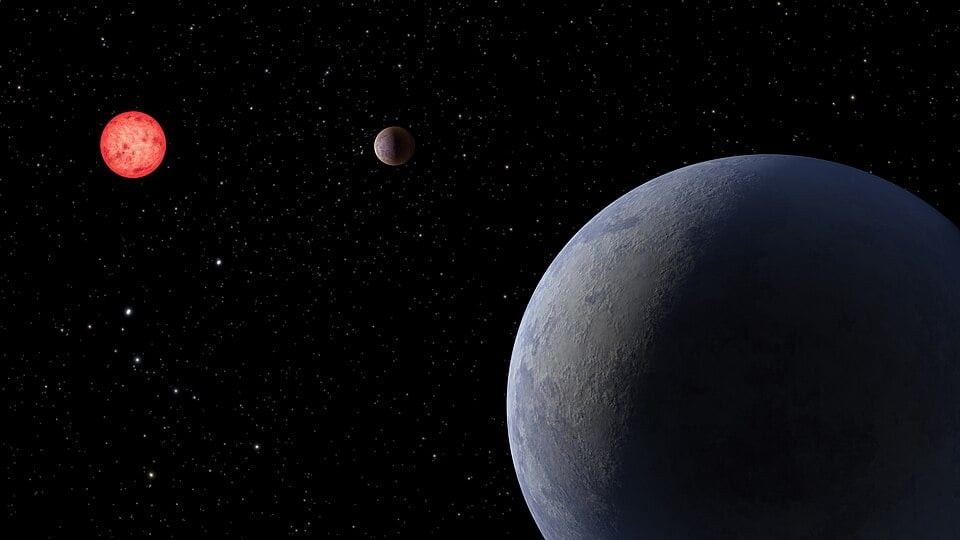
JWST analysis by David Kipping rules out moons larger than 0.1 Earth radii around LP 890-9 c
David Kipping of Columbia University analysed twelve transits of the exoplanet LP 890-9 c observed by the James Webb Space Telescope (JWST) and found no evidence for moons larger than 0.1 Earth radii, with that null result reported at 95% confidence in a paper available in pre-print on arXiv.
The study addresses a persistent puzzle since JWST began routine science operations: despite the telescope’s sensitivity and several targeted searches, no exomoon discovery has been confirmed. Previous efforts often examined single transits and ran into limits imposed by so-called "red noise" — slow, correlated variations arising in the instrument or from the host star — which can mimic or mask the subtle signals expected from small moons.
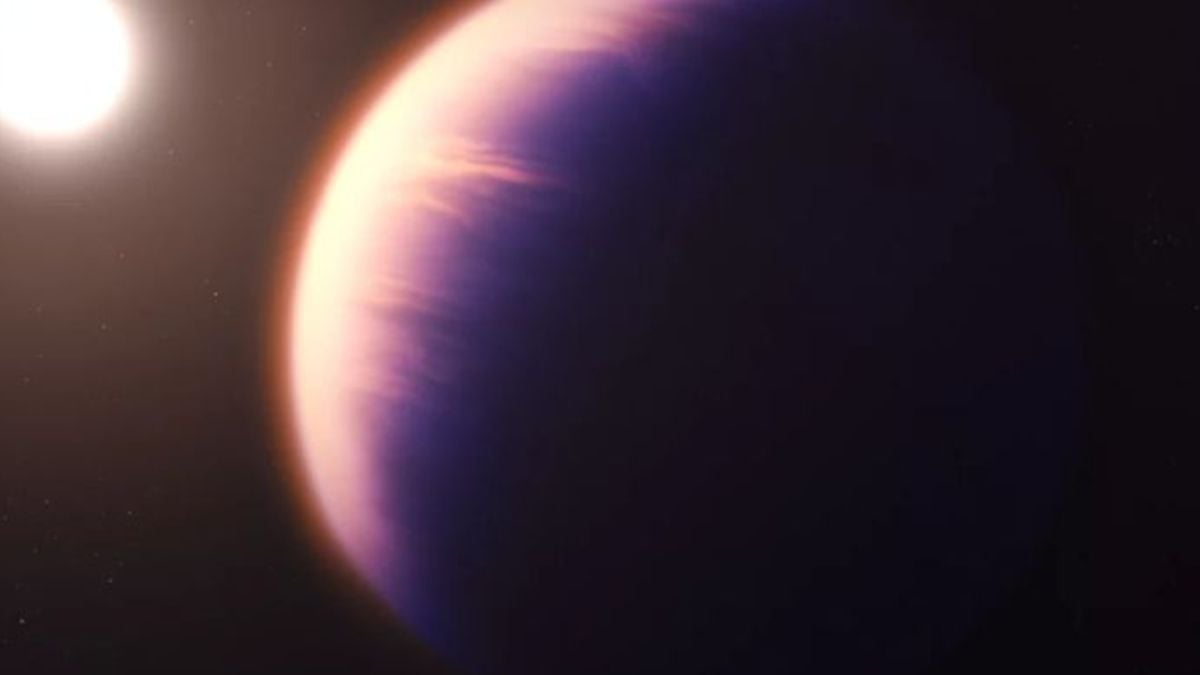
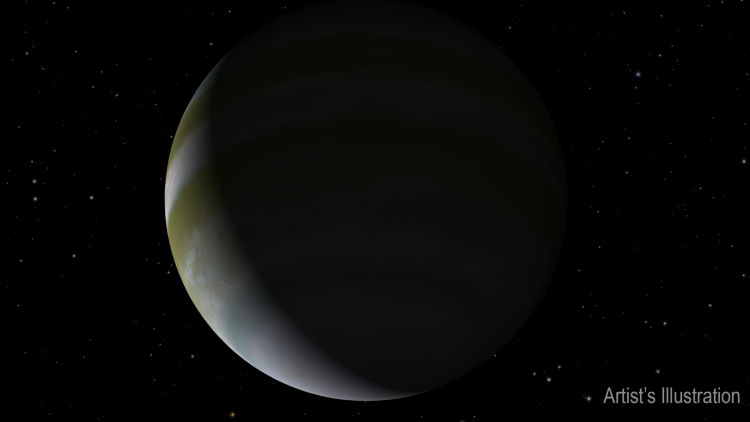
LP 890-9 c orbits an ultra-cool red dwarf approximately 105 light-years away and completes an orbit every 8.46 days. The planet’s short period and the frequency of JWST observations meant Kipping could combine data from twelve separate transits, a strategy he argues is crucial for separating persistent astronomical signals from transient noise.
Red noise can result from a number of effects: the detector warming up, slight pointing drifts in the telescope, or spots on the stellar surface that change apparent brightness. Kipping’s paper emphasises that these red-noise effects do not repeat in exactly the same way from one transit to the next, whereas a real moon must obey orbital mechanics and therefore appear in consistent, predictable positions relative to the planet across multiple transits. Averaging multiple clean transits therefore reduces the influence of non-repeatable noise and increases sensitivity to an exomoon.
Even so, the analysis produced a null detection for LP 890-9 c. The combined dataset allowed the team to place an upper limit: there are no moons with radii larger than 0.1 Earth radii orbiting this planet at the time of observation, with that limit stated at the 95% confidence level. Kipping notes that individual transits can be contaminated; one of the twelve transits in the dataset showed noticeable red noise, but combining that transit with even one other clean transit substantially improved sensitivity.
The paper therefore provides two key contributions. First, it demonstrates a practical path forward for exomoon searches using JWST by prioritising repeated observations of the same planet rather than relying on single-transit detections. Second, it uses a concrete dataset to show how stringent limits on moon sizes can be derived when multiple transits are available.
Historically, the search for exomoons has been challenging. Moons are smaller and produce much weaker signals than their host planets, and many early claims have been difficult to confirm. JWST was anticipated by some to transform the field because of its infrared sensitivity and stability, but the reality has so far been that instrumental and stellar noise have limited unambiguous detections. Kipping’s approach underlines that improved strategies, rather than a single breakthrough instrument capability, may be necessary to progress.
For LP 890-9 c specifically, ruling out moons larger than 0.1 Earth radii places meaningful constraints on the kinds of satellites that could exist around this warm, close-in world. A 0.1 Earth-radius moon would be roughly comparable in size to large Solar System bodies much smaller than Earth; excluding such moons reduces the parameter space for potential satellite systems around LP 890-9 c but does not preclude smaller moons or different orbital configurations that lie below the sensitivity threshold.
Looking ahead, Kipping’s result suggests observational programmes designed to repeatedly sample promising targets will be the most effective route to detecting exomoons with JWST. The method relies on the predictable geometry of moons and on the statistical power of averaging to suppress red noise. It also implies that targets with many scheduled transits and good prospects for clean observations — bright, quiet stars and well-behaved instrument performance — will be the natural priority.
Until such repeated, high-quality observations accumulate for a sample of planets, exomoons will remain elusive. Kipping’s paper does not claim a detection; instead, it offers a tested methodology and a concrete exclusion result for LP 890-9 c that other teams can emulate. The work therefore represents a stepwise advance: refining how JWST data are used to peel away instrumental and stellar noise so that the subtle signatures of moons, when present, can be revealed.
Source: Universe Today coverage of David Kipping’s arXiv preprint, "JWST Ruled Out Finding Tiny Moons Around An Exoplanet - That's Great News," published 10 September 2026.