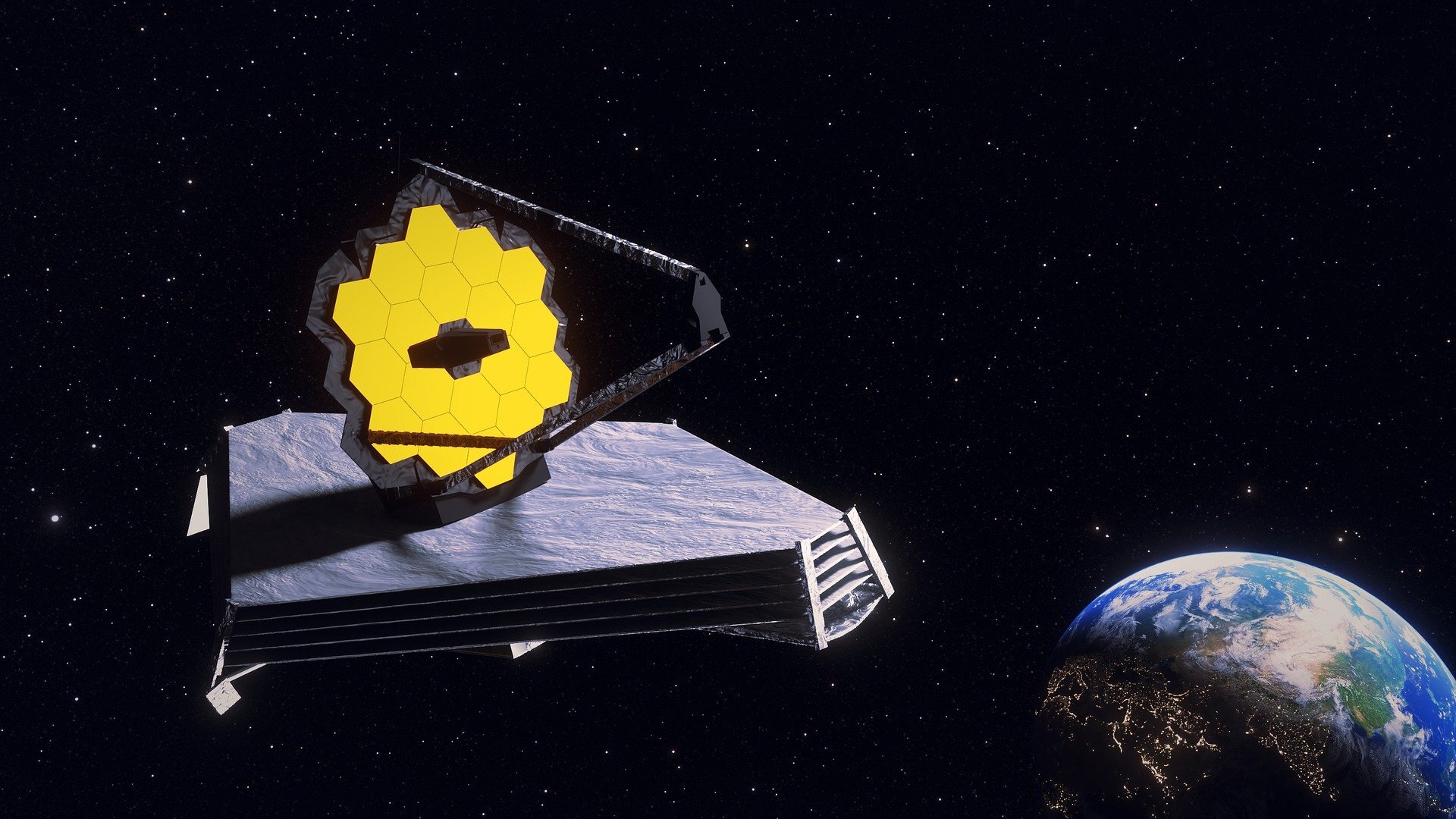
JWST/NIRSpec Detects Extreme Neutral Gas Outflows in 11–13 Billion-Year-Old Quiescent Galaxies
On Aug. 14, 2026 a paper led by Pengpei Zhu of the Cosmic Dawn Center (DAWN) in Copenhagen reported direct detections of extreme neutral-gas outflows from massive quiescent galaxies observed with the James Webb Space Telescope (JWST) NIRSpec instrument. The study, published in Astronomy & Astrophysics, analysed 23 massive galaxies that had largely stopped forming stars and lie at cosmic times corresponding to roughly 11–13 billion years ago.
The team traced cool neutral gas using the sodium Na I D absorption doublet, a diagnostic that often carries much more mass than the ionized outflow components typically measured in prior studies. According to the paper, "In galaxies with both neutral and ionized outflows, the neutral outflow rates are typically 10–100 times higher than the ionized outflow rates," and JWST/NIRSpec has enabled these Na I detections well beyond the local universe.
The sample of 23 quiescent galaxies spans high stellar masses; the authors note no detections of Na I D outflows below a stellar mass threshold of 10^10.5 M⊙ in their dataset. The study plotted the targets on the redshift–stellar mass plane and identified several objects with blueshifted Na I D absorption — a telltale signature of gas being driven outward from a galaxy. Some targets showed what the authors call a tentative Na I D blueshift, while others displayed systemic absorption or nondetections.
The broader scientific context for this work is the long-standing question of how massive galaxies "quench" — that is, stop forming stars and become quiescent. Energy released when matter accretes onto supermassive black holes can drive winds that heat, expel, or disturb the cold gas that fuels star formation. These feedback processes are central to models of galaxy evolution because they can both halt star formation and regulate black hole growth.
Most observational studies to date have focused on hot, ionized outflow components, which are often easier to detect at large distances. However, neutral components traced by Na I D can dominate the mass budget of outflows. By directly measuring Na I D absorption in galaxies at redshifts corresponding to 11–13 billion years in lookback time, Zhu and colleagues extended neutral-outflow studies into an epoch previously accessible mainly for ionized gas diagnostics.
Despite detecting some of the most powerful neutral-gas outflows recorded in quiescent galaxies beyond the local universe, the authors caution that even extreme outflows may not permanently prevent star formation. The paper highlights that outflows can heat and expel gas, stir up star-forming material, and potentially cut off fuel to the central black hole, but these processes do not necessarily represent an irreversible shutdown of star formation. The distinction between temporarily suppressed and permanently quenched star formation remains an area of active investigation.
The study demonstrates the capability of JWST/NIRSpec to probe cold gas physics at epochs when massive galaxies were transitioning to quiescence. Detecting Na I D at high redshift requires the combination of NIRSpec sensitivity and the redshifted location of the doublet into JWST’s near-infrared range for these ancient galaxies. The work therefore opens a new observational window for assessing the role of neutral gas in feedback and quenching across cosmic history.
Methodologically, the paper reports varying signal-to-noise across the sample and uses comparisons between blueshifted, systemic, and nondetection cases to characterise the incidence and strength of neutral outflows. The absence of Na I D detections below the stellar mass threshold of 10^10.5 M⊙ in this sample suggests a mass dependence in the observability or prevalence of neutral outflows at these epochs, though the authors do not claim a definitive causal link beyond the reported measurements.
Looking forward, these results imply that multi-phase studies of galactic winds — combining ionized, neutral, and molecular tracers — are essential to quantify the full mass, energy, and momentum carried by outflows. While JWST has delivered new direct detections of neutral outflows at high redshift, determining whether such winds are sufficient to cause permanent quenching will require larger samples, follow-up observations across wavelengths, and comparisons with theoretical models that include multi-phase feedback physics.
By enabling Na I D measurements at cosmological distances, JWST/NIRSpec provides observers with a tool to directly weigh the cool component of galactic winds in the epoch when many massive galaxies first turned off star formation. The findings reported by Pengpei Zhu and collaborators contribute a critical piece to the evolving picture of how feedback processes sculpt the population of massive galaxies we see today.