Arianespace revises 2026 Ariane 6 manifest after turbopump anomaly
On Sept. 18–20, 2026, industry reports confirmed that an engine turbopump anomaly detected during August ground evaluations has constrained the flight schedule for Europe’s Ariane 6 heavy‑lift launch vehicle. As a consequence of inspections and possible component remediation, launch operator Arianespace will miss its original baseline target of eight Ariane 6 flights in 2026, capping total missions for the year at five or six.
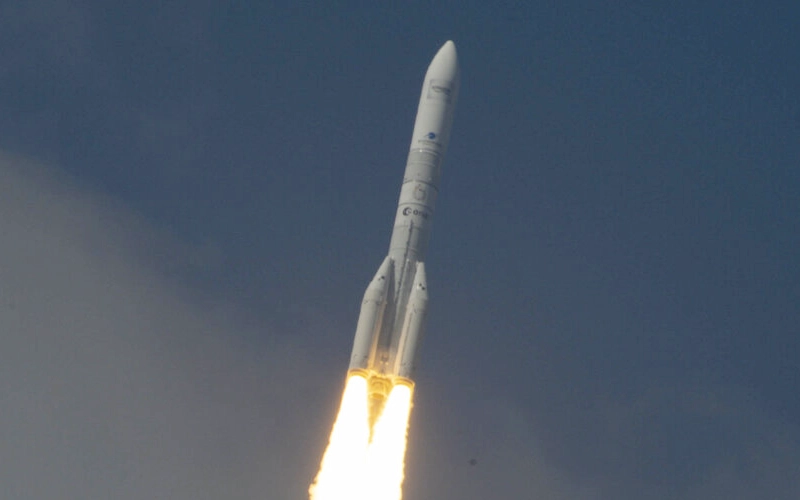
The problem was found during post‑flight inspections and ground testing following Ariane 6’s most recent mission on Aug. 27, 2026, when an Ariane 6 delivered the Eumetsat MTG‑I2 meteorological satellite into geostationary transfer orbit. Engineering teams from manufacturer ArianeGroup and engine supplier Safran are evaluating whether corrective maintenance can be performed on‑site at Europe’s primary launch facility, the Guiana Space Centre in Kourou, French Guiana, or whether the turbopump assembly must be uninstalled and returned to European manufacturing sites for requalification.
The affected component is a liquid rocket engine turbopump assembly. Detection occurred during the August 2026 ground inspection cycle. If a repair can be carried out at Kourou, Arianespace aims to preserve the late‑2026 launch schedule and complete one to two additional Ariane 6 flights this year, bringing the annual total to five or six. If the turbopump must be returned to Europe for replacement and requalification, the manifest would likely slip into early 2027.
The reduction from eight planned flights to five or six underscores ongoing operational hurdles as European manufacturing primes work to scale serialized rocket production across suppliers in France, Germany and other ESA member nations. The Ariane 6 program had been pursuing a steep industrial ramp‑up in 2026 to clear a commercial and institutional backlog accumulated during Europe’s transition from the retired Ariane 5.
This development arrives against a backdrop of tightening commercial launch capacity worldwide. The reports note that global heavy‑lift availability is constrained, and the Ariane 6 delay will have ripple effects for customers and schedules that were expecting an accelerated European cadence.
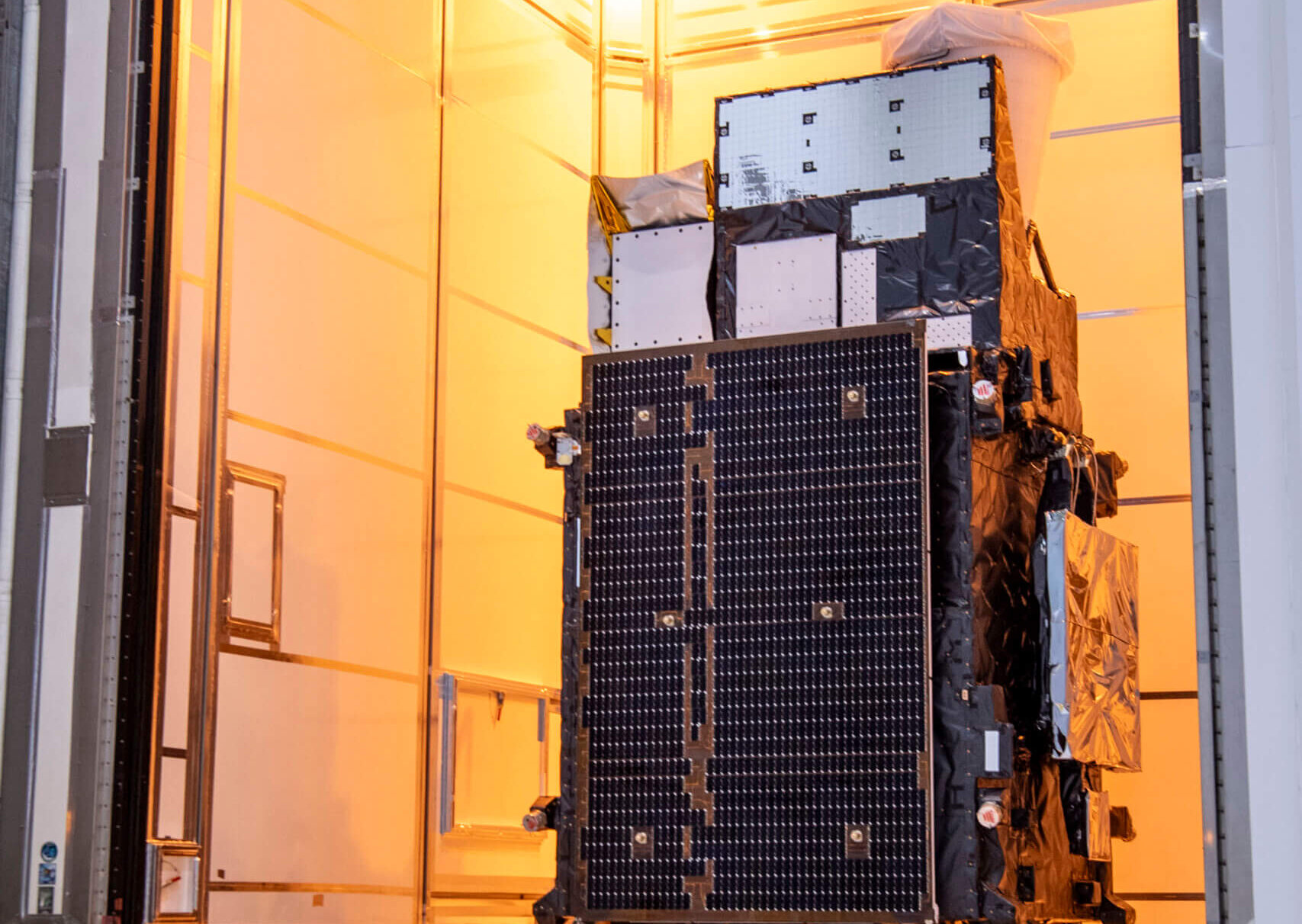
Context for the issue is provided by Ariane 6’s flight activity in 2026. The vehicle completed four operational missions to date in 2026, including the Aug. 27 launch that placed MTG‑I2 into GTO. The European Space Agency (ESA) produced public highlights of that launch, noting the MTG‑I2 Meteorological Satellite’s role in the Meteosat Third Generation constellation and its imaging cadence for weather forecasting.
Operationally, the choice facing Arianespace, ArianeGroup and Safran is pragmatic: an on‑site corrective maintenance path would be faster but depends on the anomaly’s root cause and whether the turbopump can be restored to qualification standards without full removal. A full replacement and return to European facilities would lengthen the recovery timeline because the turbopump is a high‑precision rotating machinery component that requires extensive testing after any significant intervention.
For customers and programme planners, the immediate effect is schedule uncertainty. Suppliers and the launch operator must balance the pressure to meet manifest commitments with the imperative of ensuring flight safety and engine reliability. The decision path chosen in the coming weeks will determine whether Ariane 6 can meet even the reduced five‑to‑six flight target in 2026 or whether the program will move more of its workload to 2027.
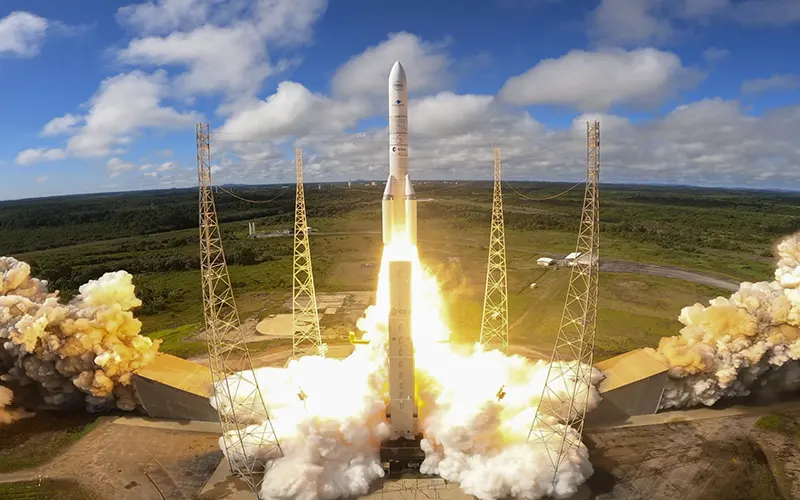
NovΔ mAInd's launch database records a prior Ariane 6 mission in 2026: Ariane 64 | Kuiper × 32 was scheduled for 2026-02-12 and it flew successfully as part of a broadband constellation deployment. Placing the turbopump issue alongside that record highlights that Ariane 6 has been active this year but is now facing a mechanical inspection that limits the planned industrial ramp.
Historically, turbomachinery in liquid rocket engines has been a critical focus for reliability because turbopumps operate at high speed and temperature and are subject to complex fluid‑structure interactions. European industry and ESA designed Ariane 6 to replace Ariane 5 with a higher production cadence, but moving from a development pace to serial manufacturing often reveals new supply‑chain and assembly stresses; the current anomaly illustrates that transition challenge.
Looking ahead, the timeline for return to full cadence will depend on the root‑cause analysis and whether corrective actions can be validated at Kourou. If the hardware must be returned to Europe, operators should expect additional slips into early 2027. Until a definitive repair path is announced by Arianespace, ArianeGroup or Safran, customers and planners must account for constrained Ariane 6 availability in the remainder of 2026 and the start of 2027.
Sources reporting on the issue emphasize that engineering due diligence, not schedule pressure, drives the remediation approach and that safety and requalification remain the priority.