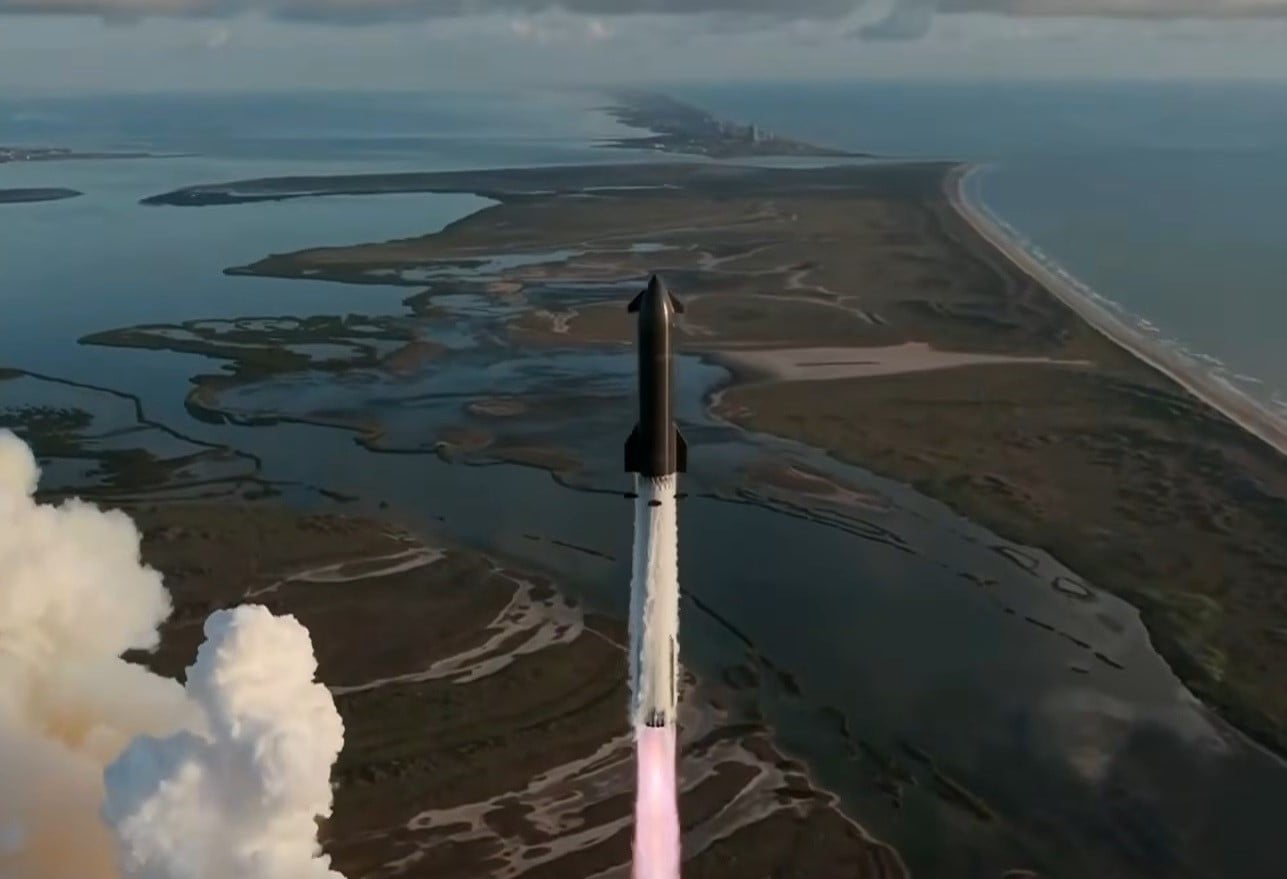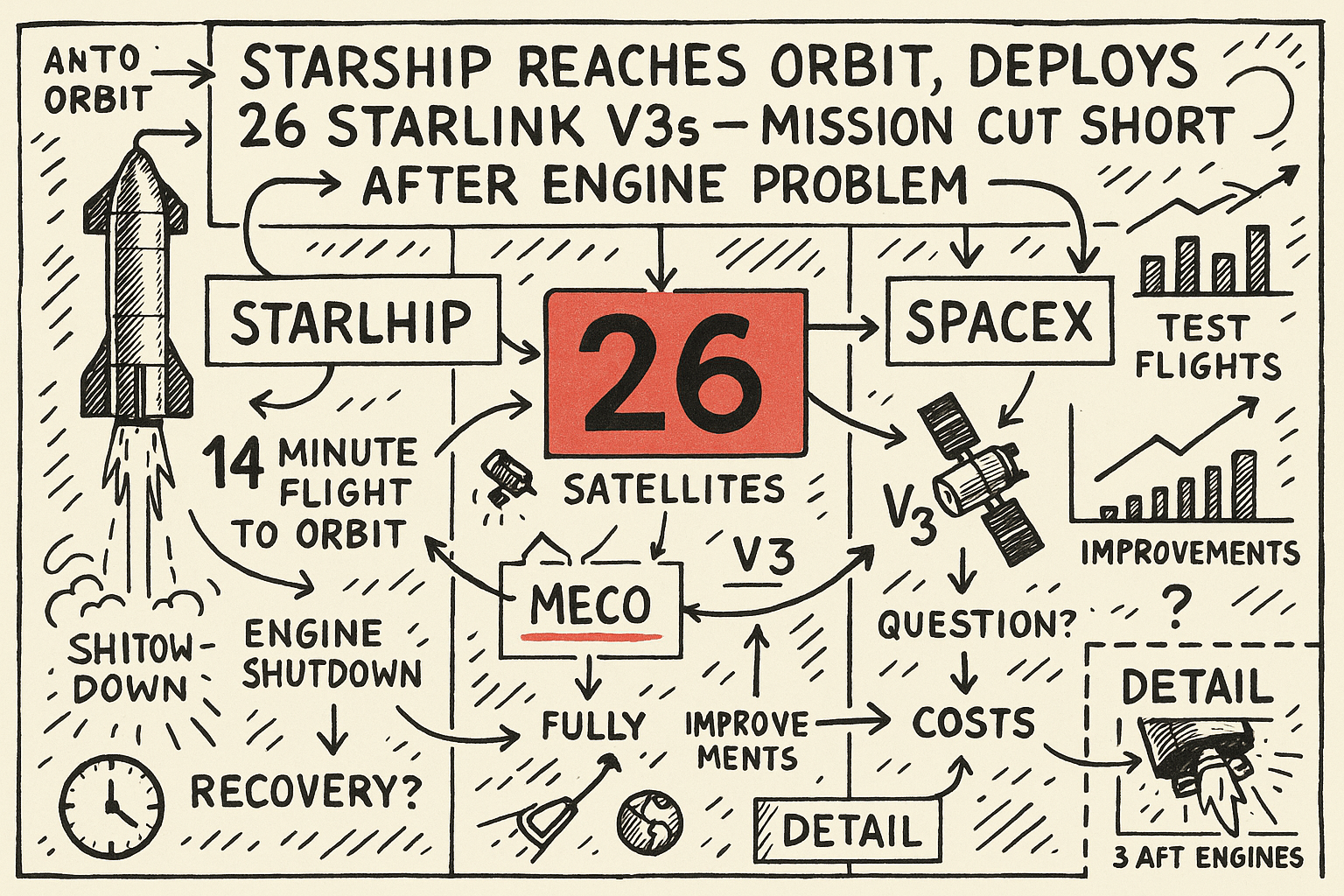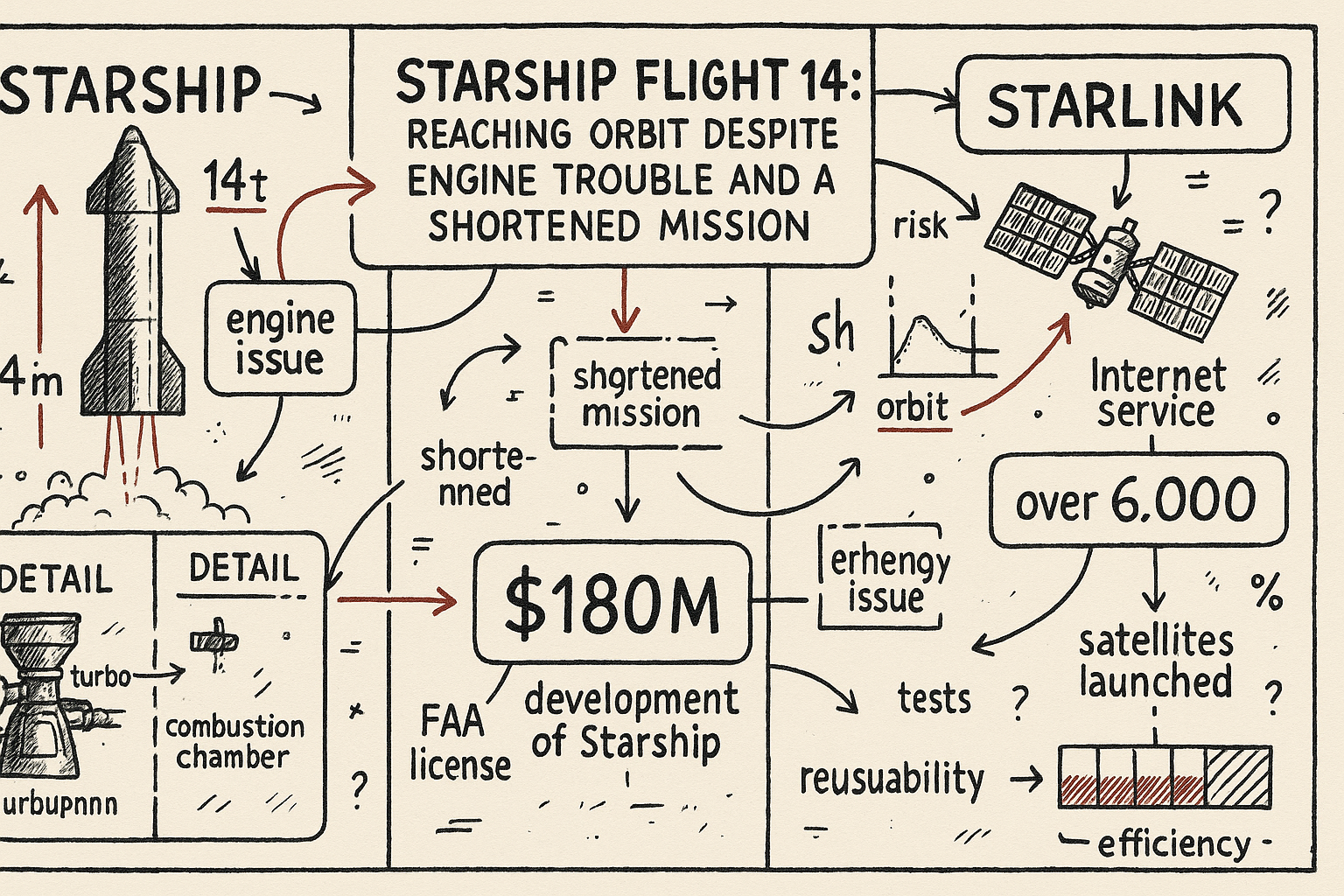
On Sept. 28, 2026, SpaceX’s Starship made history by reaching orbit on its 14th test flight, marking the first time the massive vehicle attained Earth orbit after three years of development and suborbital tests. The 407-foot-tall rocket lifted off from SpaceX’s Starbase complex in Texas and completed nearly two orbits before the mission was cut short.
Engine anomaly and mission shortening
During the climb to space, one of the 33 methane-fueled Raptor engines on the Super Heavy booster shut down prematurely. Despite that failure, the booster continued its ascent and later executed a splashdown in the Gulf of Mexico. The flight was shorter than planned — the test ended about 10 hours earlier than originally scheduled — after an engine issue affected later phases of the mission.
Operational milestone: Starlink payloads
Though shortened, the mission put operational Starlink satellites into orbit for the first time on a Starship flight. The mission therefore combined a test-flight objective with a commercial payload deployment, demonstrating the vehicle’s potential role in placing operational satellites into space.
Program context and next steps
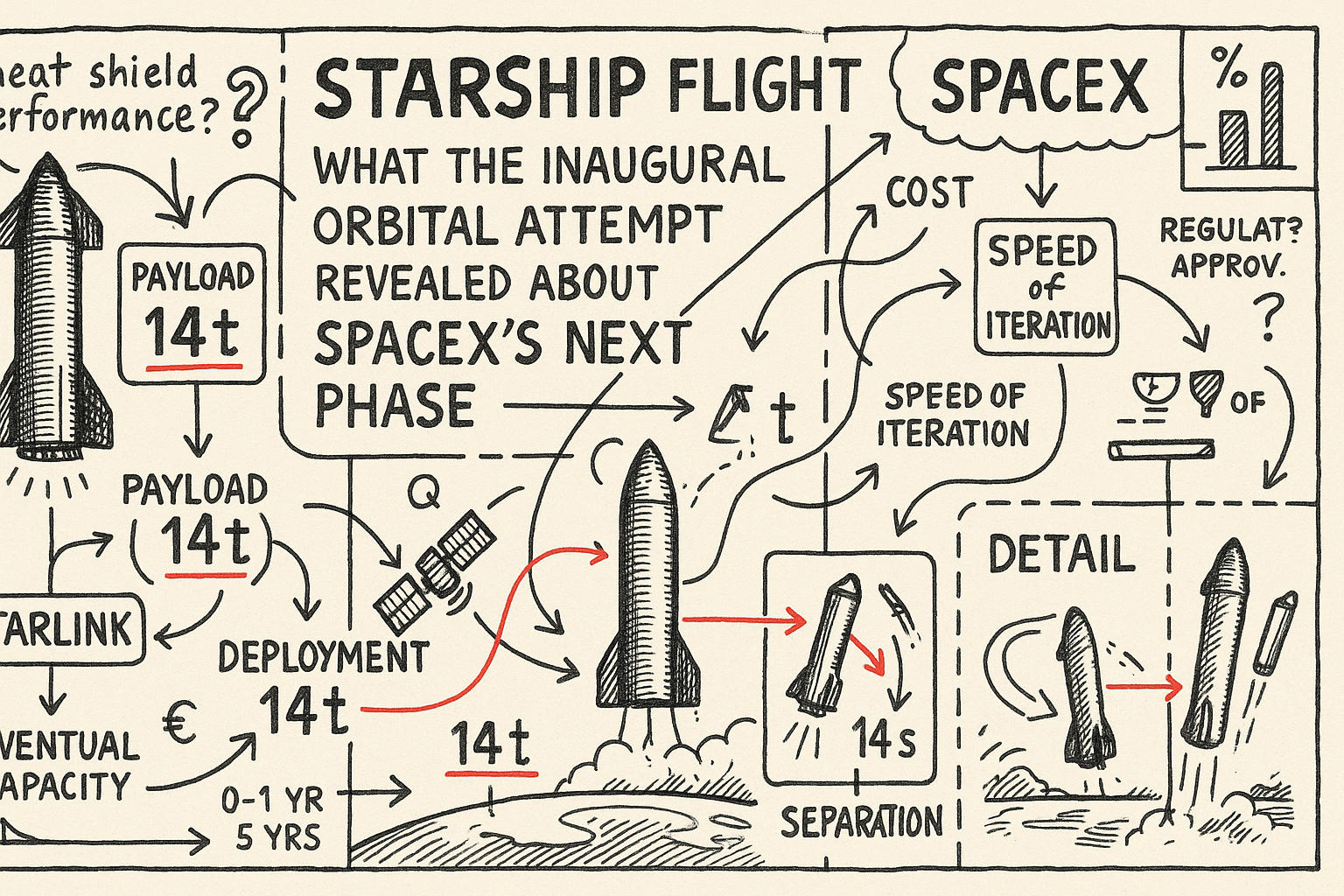
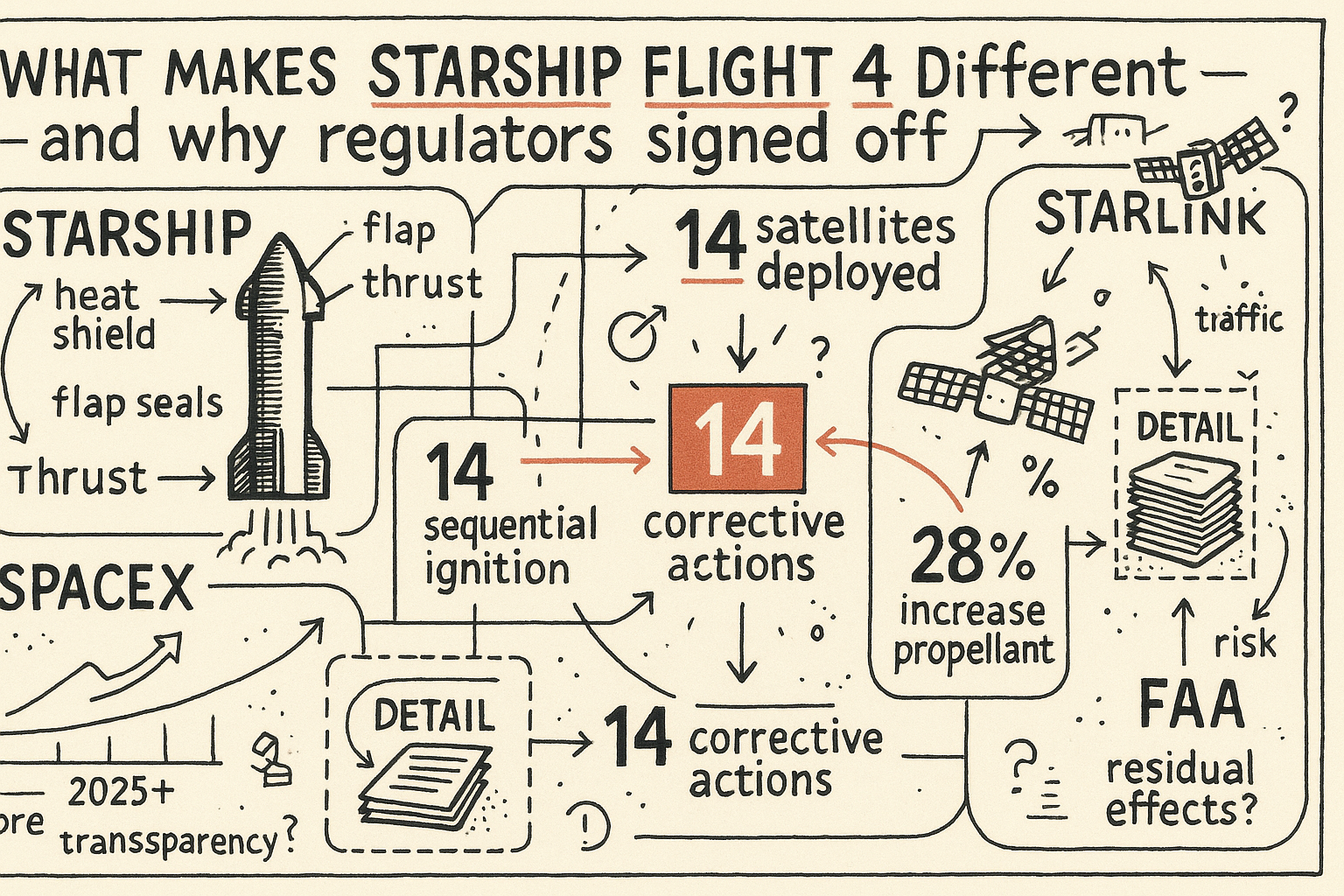
This was the 14th flight in the Starship test program and the first to reach orbit; all previous flights had been suborbital. The orbital attempt represents a key step in developing the vehicle for future missions, including ambitions tied to lunar and Mars missions. The flight came three years after Starship’s first test flight and follows recent corporate milestones for SpaceX, including a high-profile initial public offering earlier in the year.
What the flight proved
Flight 14 showed that Starship can reach orbit even when confronted with propulsion anomalies and that it can deliver operational payloads. The booster’s successful splashdown in the Gulf of Mexico and the payload deployment underline progress in both booster recovery and mission utility, even as engineers evaluate the causes and impacts of the engine shutdown and the reasons the mission was curtailed.
SpaceX’s progress on Starship continues to be closely watched as the company ramps up development of the world’s most powerful rocket and pursues broader plans for crewed and cargo missions beyond low Earth orbit.