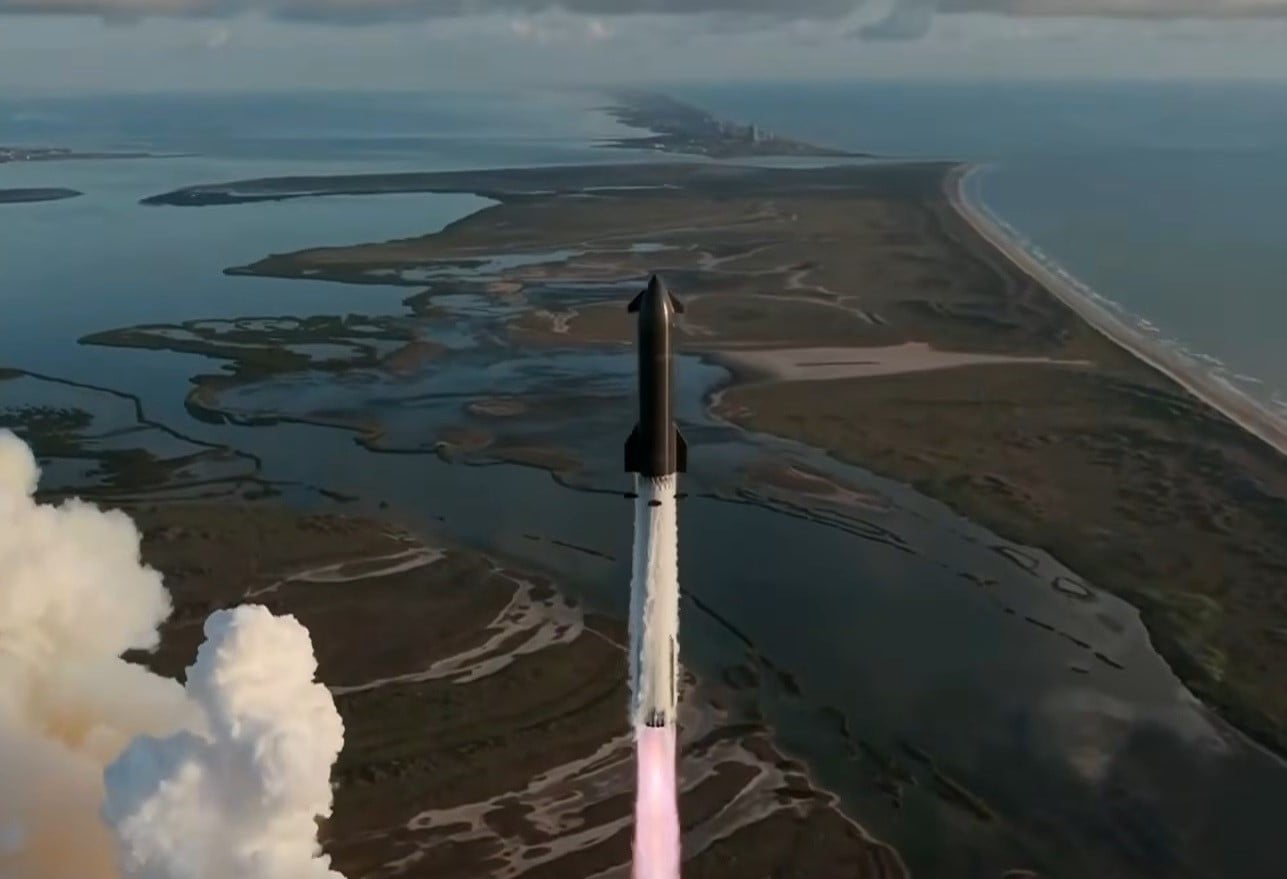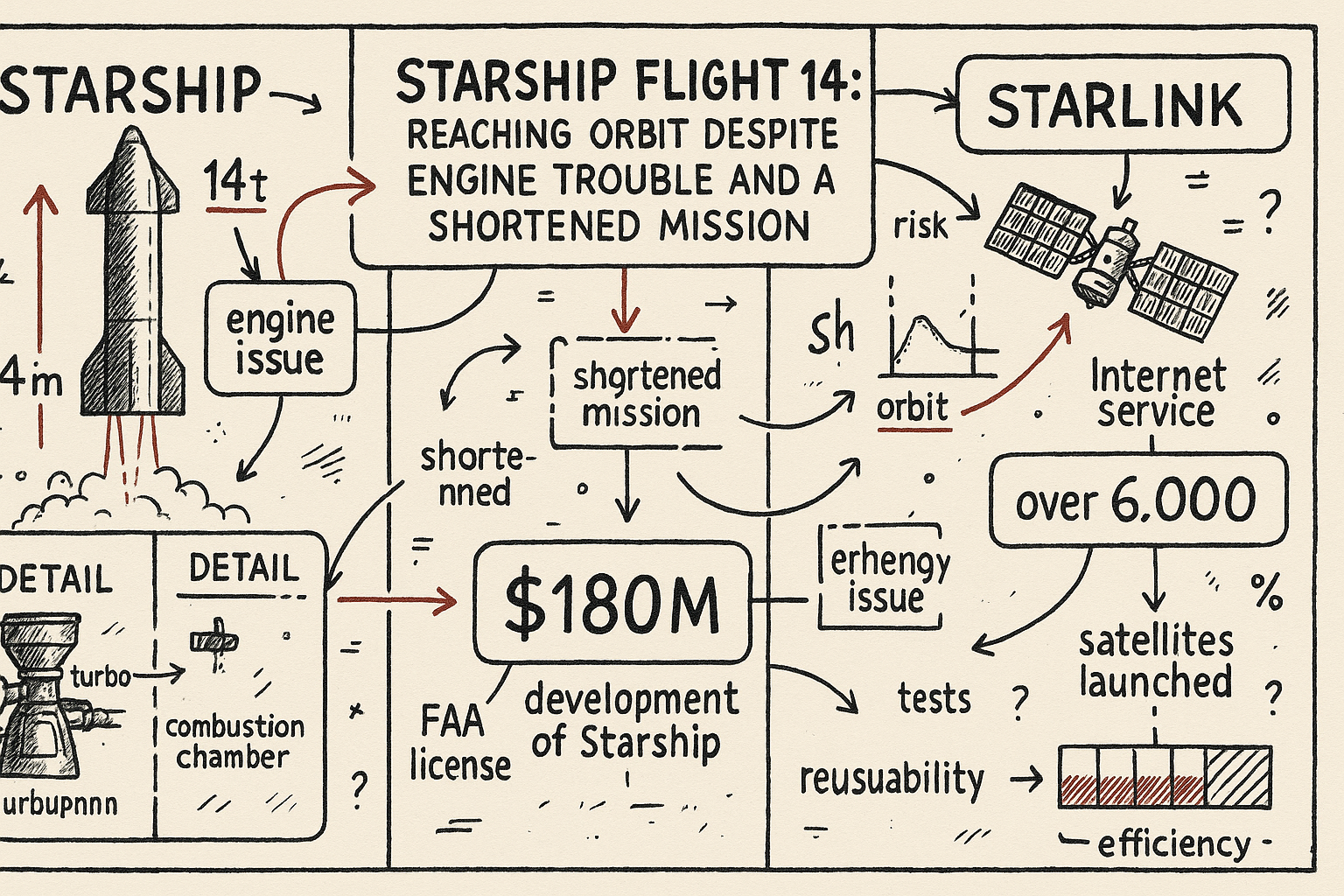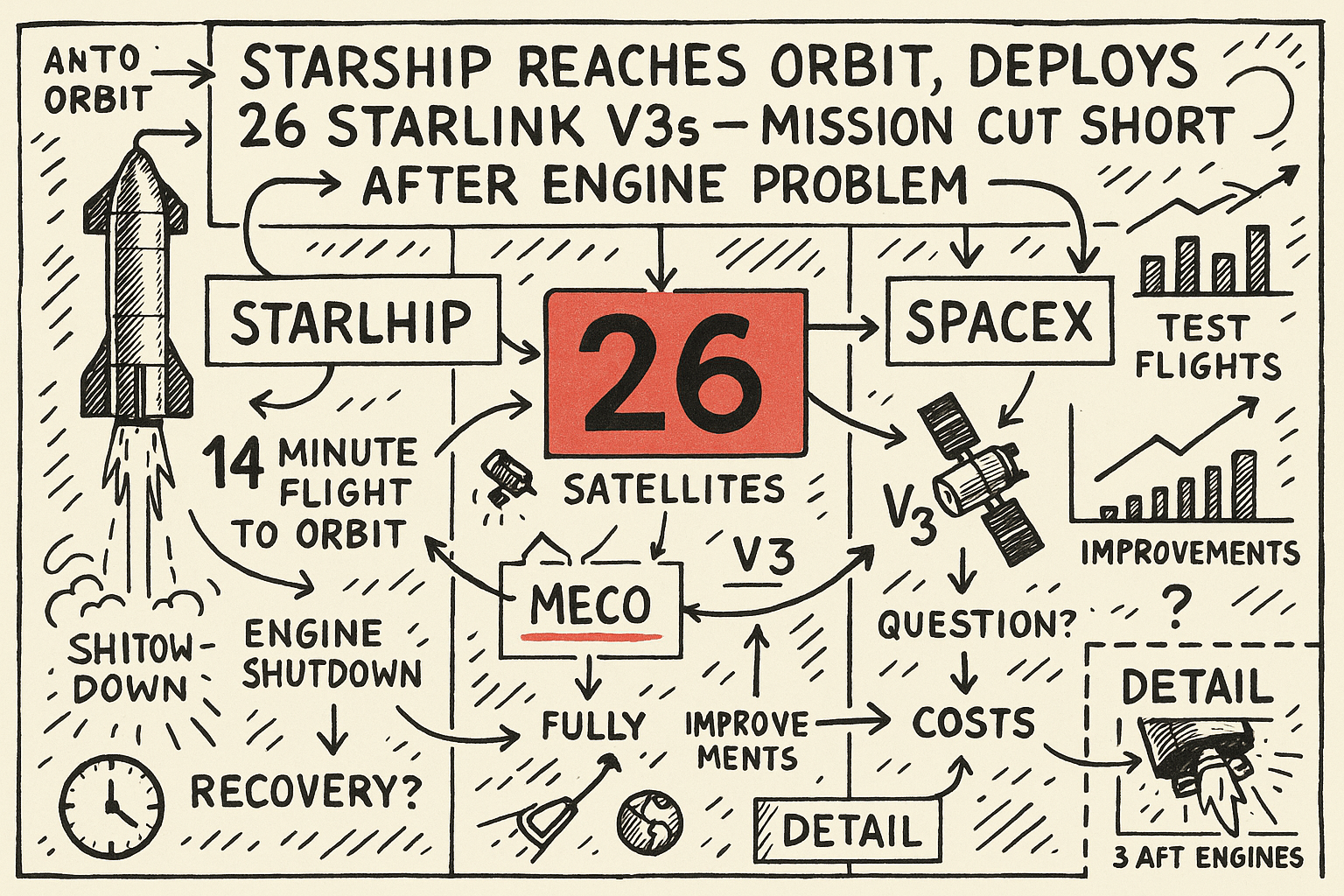
SpaceX’s Starship achieved orbit for the first time on Flight 14, successfully deploying 26 next‑generation Starlink V3 satellites before the mission ended earlier than planned after an engine issue.
The rocket lifted off from SpaceX’s Starbase in Texas on 28 September 2026. The flight had been billed as a roughly 10‑hour test that would see Starship complete about six orbits of the Earth. Instead, the vehicle completed roughly two orbits and remained in space for about three hours before the mission was terminated and the ship splashed down in the Pacific Ocean.
What happened in flight
Reports from multiple outlets say one of the Super Heavy booster’s Raptor engines shut down shortly after liftoff. Universe Today specified that one of the 33 methane‑fueled Raptor engines on the Super Heavy booster shut down prematurely during ascent. Satellite Today and other coverage noted that SpaceX mission control continued the flight after the shutdown but ultimately decided to cut the mission short following the anomaly.
Despite the early engine shutdown and the shortened timeline, mission managers were able to complete a primary objective: the deployment of 26 Starlink V3 satellites into orbit. Those satellites join SpaceX’s existing operational Starlink constellation, which provides broadband internet service to users on Earth.
Duration and trajectory
The mission was planned as a long-duration orbital test, with the vehicle expected to orbit six times over a roughly 10‑hour period. Instead, the flight lasted about three hours and completed nearly two orbits before reentry and splashdown. BBC News described the vehicle’s return as an earlier‑than‑planned splashdown in the Pacific Ocean, while Universe Today reported the launch occurred at 7:50 a.m. CT (12:50 p.m. UTC) and that the flight completed nearly two orbits.
Operational significance
Flight 14 marks the first time Starship both reached orbit and placed operational Starlink satellites into service. Coverage emphasized that previous flights in the Starship test program had been suborbital; this was the first orbital mission in the program’s test series to achieve orbital insertion and deploy operational payloads.
Satellite Today and SpaceWatch.Global underscored that the mission validated elements of Starship’s orbital operations even as it highlighted risks still present in early orbital test flights: an engine loss on ascent did not prevent orbital insertion and payload deployment, but it did contribute to the decision to curtail the planned long‑duration sequence of orbits and tests.
Recovery and next steps
Following mission control’s decision to end the test early, Starship reentered and splashed down in the Pacific Ocean. Universe Today also reported that the Super Heavy booster executed a splashdown in the Gulf of Mexico after the ascent engine shutdown. Observers and analysts will be watching subsequent SpaceX statements and telemetry releases for more details about the engine failure, the sequence of decisions that led to the shortened mission, and how lessons from Flight 14 will inform future orbital test flights.
While the flight did not complete the full suite of planned tests for a 10‑hour, six‑orbit mission, it nevertheless achieved a key milestone by placing operational Starlink V3 satellites into orbit and demonstrating that Starship can reach orbit and perform on‑orbit deployments even after experiencing an ascent engine issue.