SpaceX’s Starship Reaches Orbit Despite Engine Issues
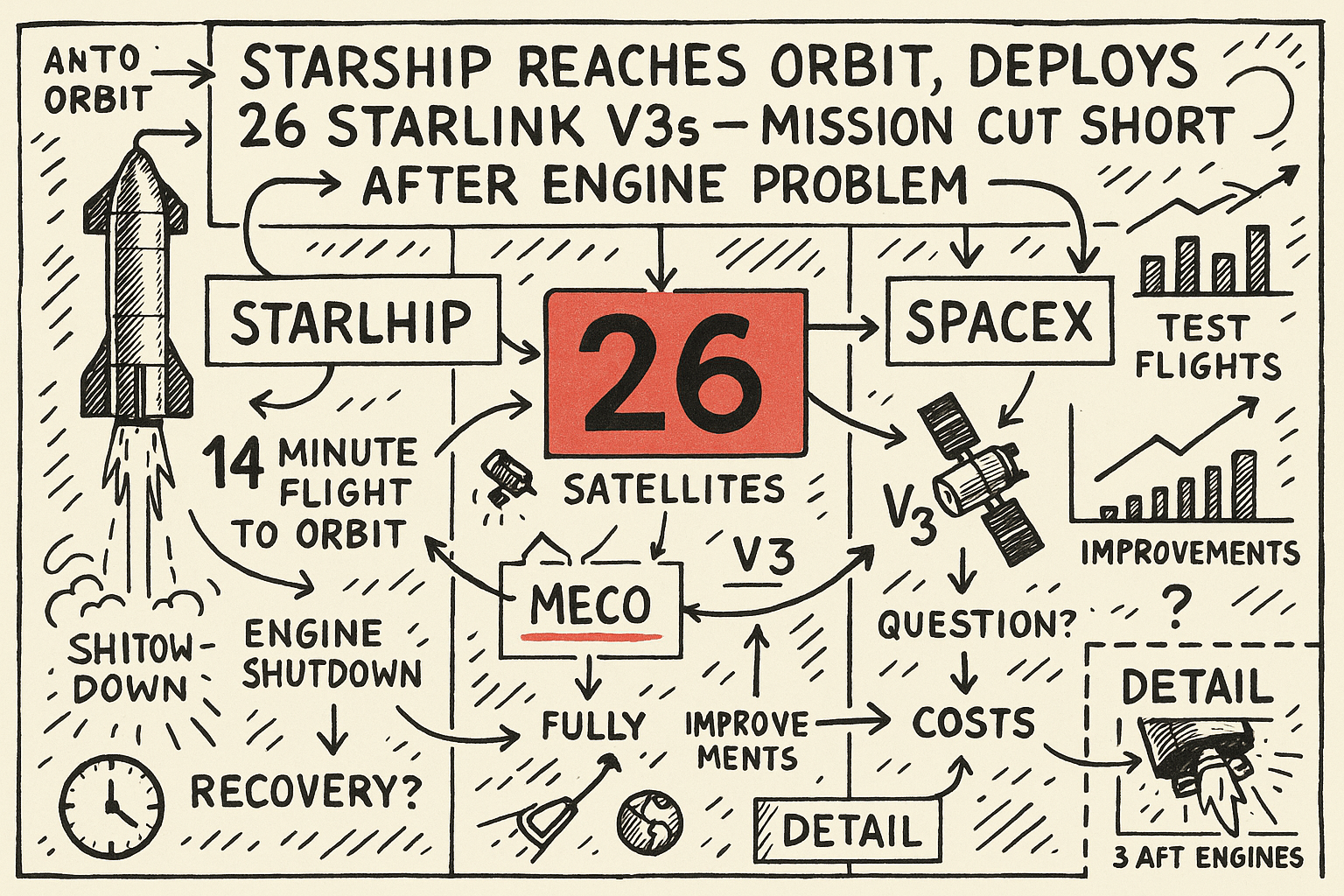
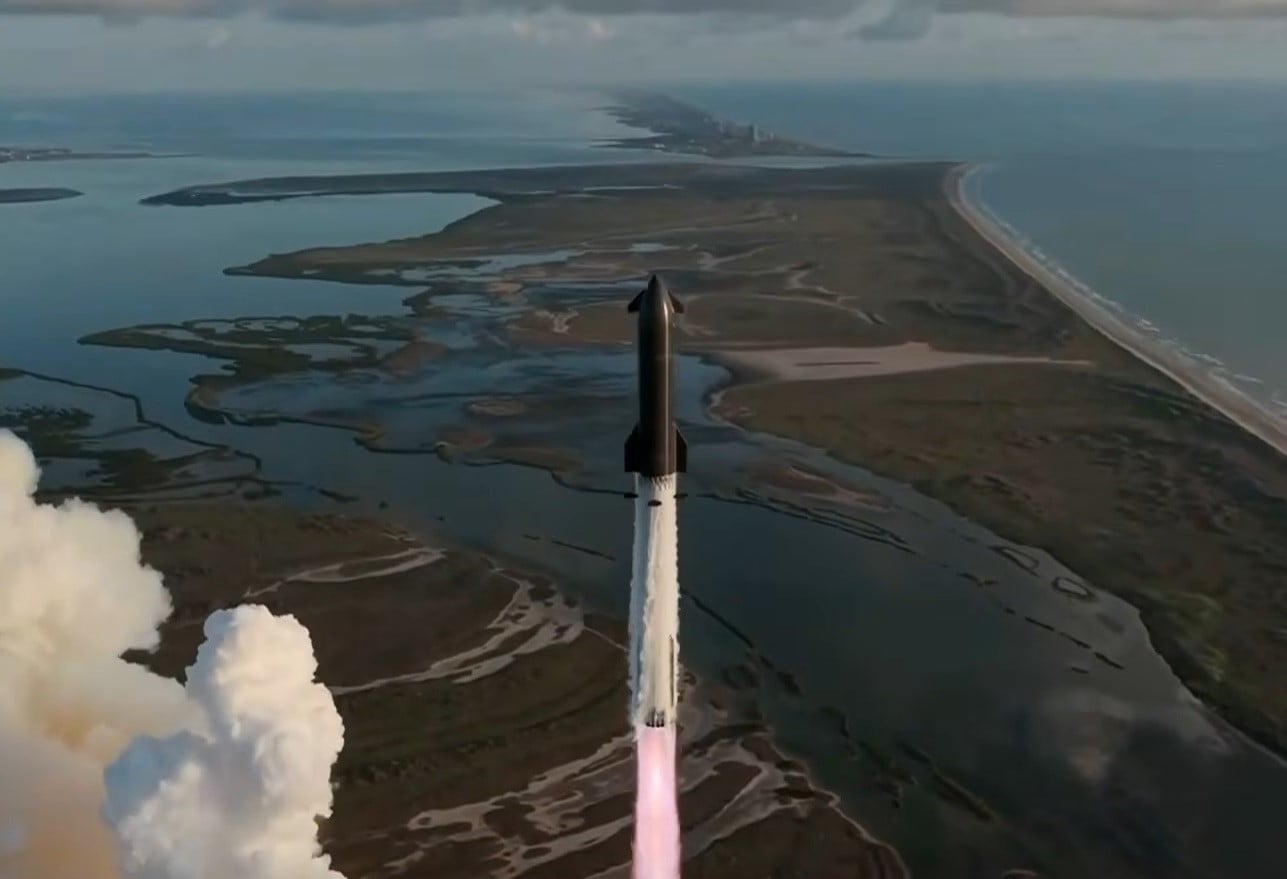
SpaceX launched its 407-foot Starship super-heavy launch system from the Starbase complex in Texas on 28 September 2026, achieving orbit for the first time and successfully deploying 26 operational Starlink V3 satellites, despite engine failures on both the booster and the upper stage.
The flight, designated Flight 14 in SpaceX’s test programme, lifted off at 7:50 a.m. CT (12:50 p.m. UTC). During ascent one of the 33 methane-fueled Raptor engines on the Super Heavy booster shut down prematurely. An additional early shutdown occurred on one of the six Raptor engines fitted to the upper stage, referred to in SpaceX materials as Ship 41. The two engine anomalies prompted a hold of roughly 20 minutes while the mission team deliberated whether to continue with the primary mission profile or move to a contingency plan.
After review, controllers elected to proceed with an orbital insertion burn. A 19-second burn successfully placed Starship into orbit, and Mission Control announced "Starship is orbital," drawing cheers from employees watching the live feed. During the orbital phase the vehicle’s dispenser deployed 26 Starlink V3 satellites in succession at an altitude of approximately 160 miles (270 kilometres), marking the first time operational V3 satellites were placed into orbit by Starship.
Universe Today reported that the V3 satellites are heavier than the existing V2 Mini models and are designed to enable data download speeds of roughly 1 terabit per second — about 10 times the capacity of SpaceX’s older satellites. The outlet quoted SpaceX commentator Dan Huot saying, "This one flight was like 20 Falcon 9 flights in terms of bandwidth," a remark intended to convey the increased payload capability Starship brings when used to expand the Starlink constellation.
SpaceX had planned a roughly 10-hour test flight, but the company shortened the mission "out of an abundance of caution, given the engine issue experienced during ascent," shifting to a backup profile that ended with the upper stage splashing down in the Pacific north of Hawaii a little more than three hours after launch. The Super Heavy booster executed a planned splashdown in the Gulf of Mexico. SatelliteToday and SpaceQ corroborated that the mission deviated from the primary long-duration plan because of the engine shutdowns but still met major test objectives: reaching orbit and deploying operational satellites.
Technical and programmatic context
The flight represents the 14th test in Starship’s sequence; previous flights had been suborbital. SpacePolicyOnline and other outlets noted this flight as the long-sought first orbital achievement for the integrated Starship system. According to contemporaneous coverage, SpaceX previously attempted to carry V3 satellites on a July test flight but failed to reach orbit on that occasion; the satellites deployed during that earlier attempt re-entered and burned up after testing.
The mission highlights both the scale of Starship and the challenges that remain for a vehicle of this size. With 33 Raptor engines on the booster and six on the upper stage, the architecture accepts some engine-out margin, and this flight demonstrated that redundancy can allow a mission to continue when individual engines fail. Nonetheless, mission planners shortened the profile and terminated in the ocean earlier than originally planned, indicating a conservative approach to risk while still validating key capabilities: ascent to orbit, phased engine restarts and a multi-satellite dispense sequence.
Implications for Starlink and Starship operations
The deployment of 26 V3 satellites from Starship is the first time operational Starlink hardware has been added to the constellation by this vehicle. Universe Today emphasised the potential bandwidth benefit of V3 satellites, which are intended to support higher throughputs and future direct-to-device services. SpaceX has publicly discussed transitioning a portion of Starlink launches to Starship to take advantage of its larger payload capacity.
SpaceX’s decision to curtail the mission despite successful orbital insertion highlights how the company balances test objectives with caution after on‑orbit anomalies. Observers quoted by the outlets noted that Starship’s ability to reach orbit even with engine shutdowns is an important validation; however, routine, fully operational flights with recovery of stages and longer mission durations remain future goals for the programme.
Where this sits in NovΔ mAInd’s records
According to NovΔ mAInd's launch database, SpaceX has 146 launches tracked with a 99.3% success rate; the database records the company’s first flight as 2025-01-04 and lists the most recent prior launch date as 2026-09-28, and shows a capacity figure of 22800 kg to LEO.
What comes next
SpaceQ and SatelliteToday reported that SpaceX is considering changes to future test profiles, including options for the upper stage to attempt a return to the launch site on a subsequent flight, rather than a planned ocean disposal. Future flights will continue to test stage recovery, extended mission durations and Starship’s role in large constellation deployment. The success of this orbital insertion and the V3 deployment will factor into those plans, but the conservative early termination of the mission underlines that engineers will continue to work on engine reliability and operational procedures before Starship routinely replaces Falcon 9 for certain payload classes.
For now, Flight 14 stands as Starship’s first orbital milestone and a partial operational success: it validated key systems and delivered working payloads into orbit while exposing failure modes and prompting mission adjustments that will inform the next tests.