SpaceX’s Falcon 9 successfully launched 21 data-transport satellites into low Earth orbit for the U.S. Space Development Agency (SDA) from Vandenberg Space Force Base, departing Space Launch Complex 4E on a southerly trajectory. The liftoff occurred at 12:39 a.m. PDT (0739 UTC) after an earlier attempt was halted by an automatic abort with 58 seconds remaining in the countdown on Oct. 5.
What the new material adds
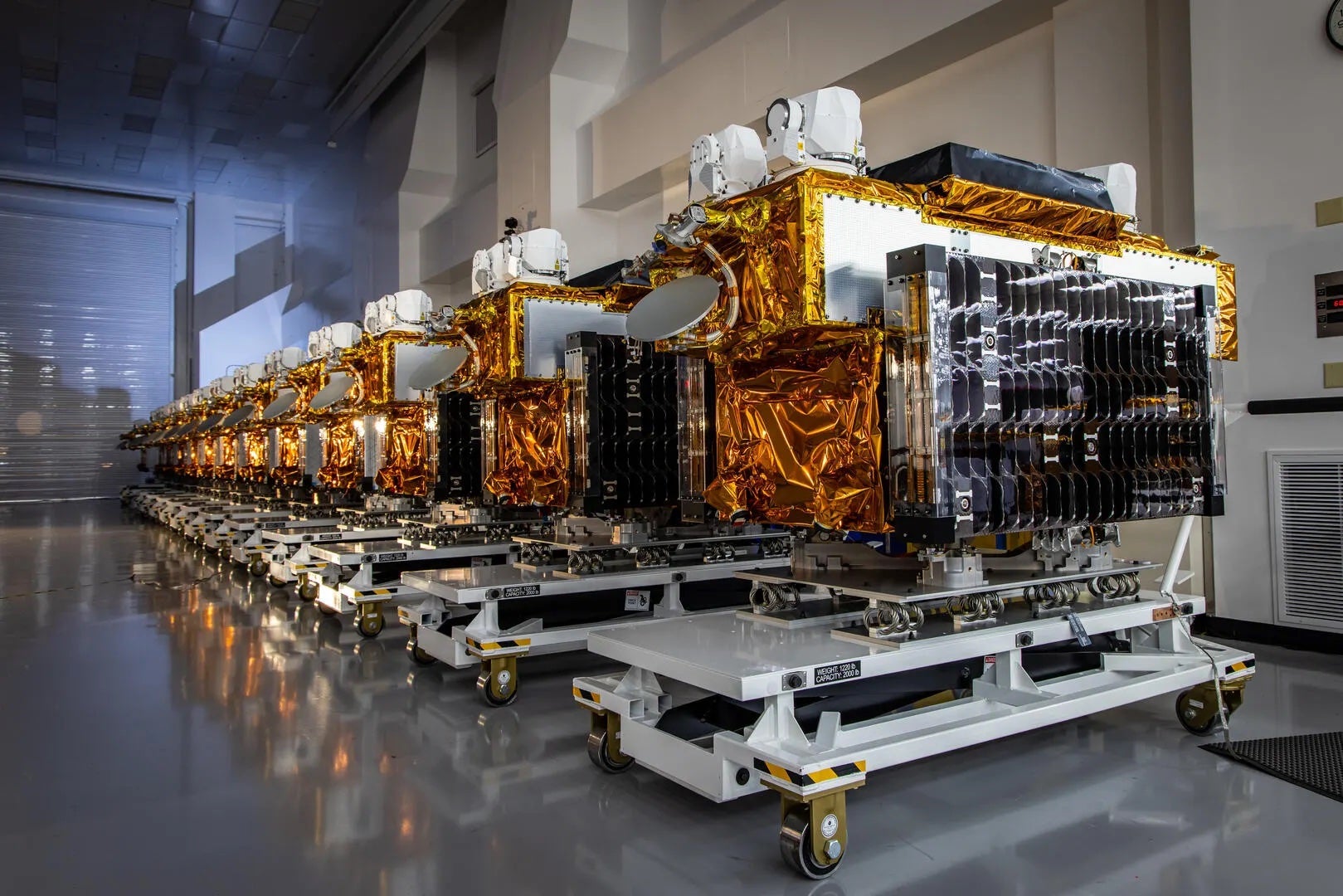
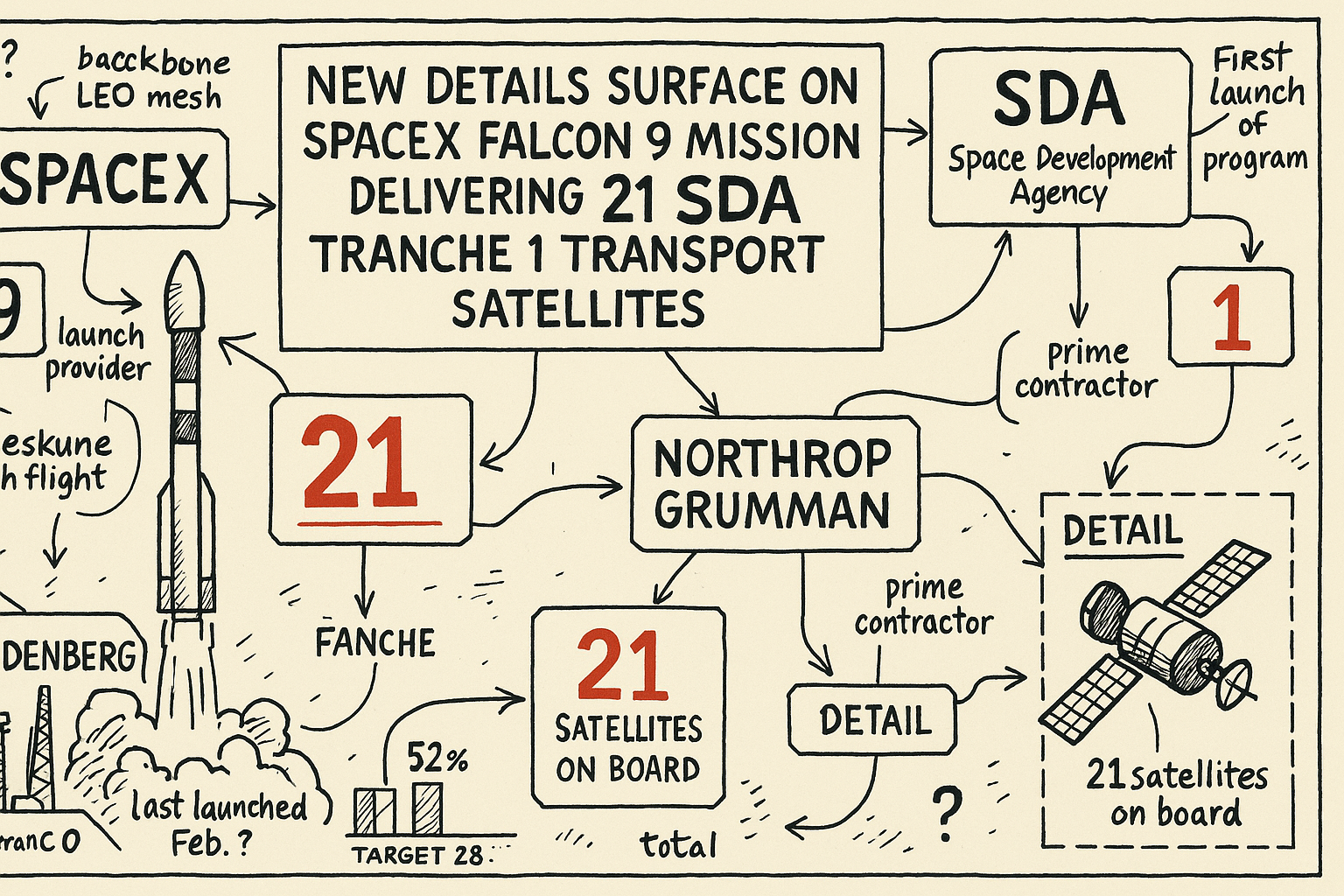
New reporting confirms that the spacecraft delivered on this flight were manufactured by Northrop Grumman and were delivered to the California base on Sept. 28. Air & Space Forces Magazine characterization of the flight places it as Northrop Grumman’s inaugural Tranche 1 mission; the company is slated to provide a total of 21 transport satellites and 14 missile-tracking spacecraft for SDA.
Reporting also situates this launch within the broader SDA Tranche 1 plan. Tranche 1 is intended to eventually consist of 154 operational satellites: 126 data-transport spacecraft, 28 missile-tracking vehicles, and four missile-defense test satellites equipped with high-fidelity infrared sensors. The payloads are part of SDA’s Proliferated Warfighter Space Architecture, described by SpaceX reporting as a mesh network of optically connected low Earth orbit satellites designed to provide global military tactical communications, missile warning, indication, and tracking.
Launch timeline and abort context
The mission lifted off five days after the October 5 launch attempt was halted. SpaceX said the abort was called because of "some off-nominal data on Stage Two," and the abort occurred moments after the rocket’s onboard computers took control of the countdown. The successful launch on the subsequent attempt sent the Falcon 9 on a southerly departure path from SLC-4E.
Programmatic significance
This mission represents the fourth of nine contracted Tranche 1 missions that SpaceX will fly for the Space Development Agency. The vehicles launched on this flight contribute to the data transport layer that SDA and its contractors are assembling to form the mesh networking capability described in program reporting.
Northrop Grumman’s role, underscored by this inaugural Tranche 1 flight for the company, ties into SDA’s procurement plan where multiple providers supply batches of transport and missile-tracking satellites to populate Tranche 1’s planned constellation.
Operational miscellany
The flight used SpaceX’s West Coast facility at Vandenberg, currently its only launch site on the West Coast. The same complex has supported other Falcon 9 missions in 2026, and the West Coast launches have typically used southerly trajectories appropriate for sun-synchronous or similar low Earth orbits.
Reporting notes the spacecraft were on site at Vandenberg as of Sept. 28, providing a narrow window between delivery and launch that reflects the cadence and logistical tempo of Tranche 1 operations.
Taken together, the new details deepen public understanding of contractors’ roles and the stepwise buildup of SDA’s Tranche 1 transport layer—an architecture SDA and its partners are assembling to provide integrated tactical communications and missile-tracking capabilities from low Earth orbit.