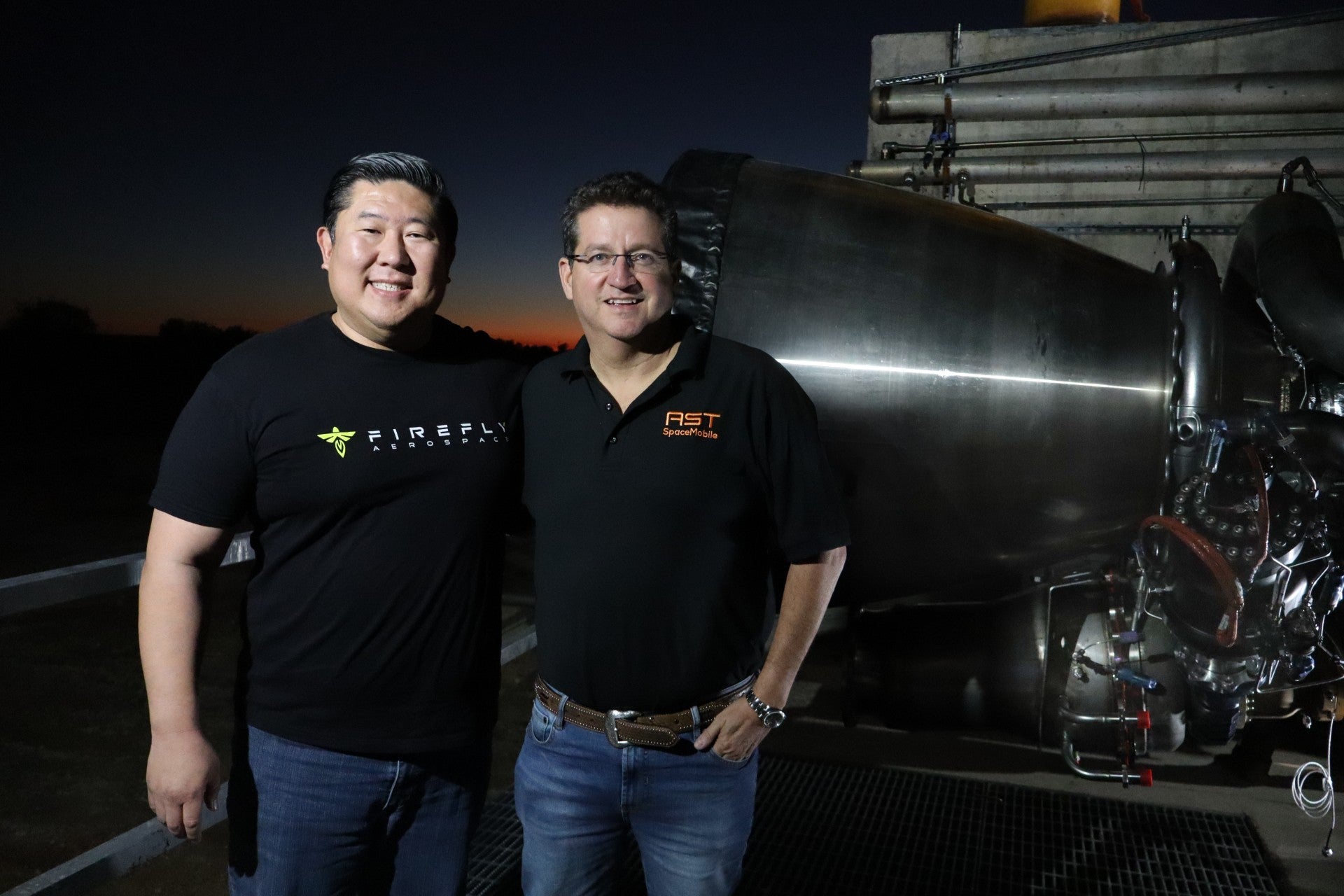
AST SpaceMobile and Firefly Aerospace, both based in Texas, announced on Friday a $1.3 billion agreement under which Firefly will supply and license rocket engines for AST's proposed heavy-lift launcher, Blacklift. AST classifies Blacklift as a 20-ton rocket, which would put it in the same category as SpaceX's Falcon 9 and United Launch Alliance's Vulcan. Flights are planned to start in 2028, if all goes to plan, with five BlueBird direct-to-device satellites per launch.
What the $1.3 billion buys
Firefly said it will deliver 27 Miranda engines and nine vacuum-variant Vira engines "for AST SpaceMobile's first three rockets." It will also license AST to manufacture the engines in the future. The $1.3 billion breaks down as follows:
$800 million upfront from AST, half in cash and half in AST Class A common stock; $250 million for the 36 engines; and another $250 million over three years for engineering services.
AST says it will follow SpaceX's pattern of using Falcon 9 mainly for Starlink, and will devote Blacklift's capacity to its own BlueBird satellites. AST founder, chairman and CEO Abel Avellan called Blacklift "the springboard to significantly expand our total addressable market, providing AST SpaceMobile with regular unconstrained access to orbit and providing for most favorable owners' economics in the industry."
Firefly CEO Jason Kim called it "a bold transformational deal for Firefly, for AST SpaceMobile, and for the space industry." He said that when a company builds its own rocket, "the engine is the hardest, highest-stakes decision they make." In his words, "AST SpaceMobile gets control of its own launch schedule, and Firefly gets added funds to rapidly expand our rocket production and reinforce the supply of launch vehicles to address record demand from the industry."
Engine layout is an inference, and the engines have not yet flown
Firefly did not state how the engines would be arranged. Spaceflight Now inferred from the 27-and-nine split that each Blacklift first-stage booster would carry nine Miranda engines and each upper stage three Vira engines. For comparison, Firefly's medium-lift Eclipse rocket, which it is developing with Northrop Grumman, uses seven Miranda engines and one Vira.
Firefly says Miranda has completed more than 175 hot-fire tests lasting more than 4,200 seconds. Vira is still in development, but it takes heritage from the Lightning engine that powers the upper stages of Firefly's Alpha rockets. Neither engine has flown on an orbital mission. Firefly's current public estimate for Eclipse's inaugural launch is 2027.
Few details of the rocket itself came with the announcement. AST has not released Blacklift's height, propellant tank sizes or proposed launch site. It has also not described how it will go from an artist's rendering to a launch in about two years. An analysis from Payload Space found that going from the start of development to a successful first launch has historically taken about six years. The prices, engine counts, test figures and 2028 target all come from the companies' own statements. No independent verification of Blacklift's design or schedule has been published.
NovΔ mAInd's launch database lists Firefly Aerospace with 2 launches tracked, a 50% success rate, a most recent flight on 2026-03-11, and 1030 kg to LEO.
Three events where more detail may emerge
AST reports third-quarter earnings on Monday, 9 November, at 5 p.m. EST (2200 UTC), and may offer details then. It will hold an "unveiling event" in New York City on Thursday, 12 November, which may fill in more of the blanks. Firefly will discuss the deal on its own third-quarter call on Tuesday, 10 November, also at 5 p.m. EST (2200 UTC).