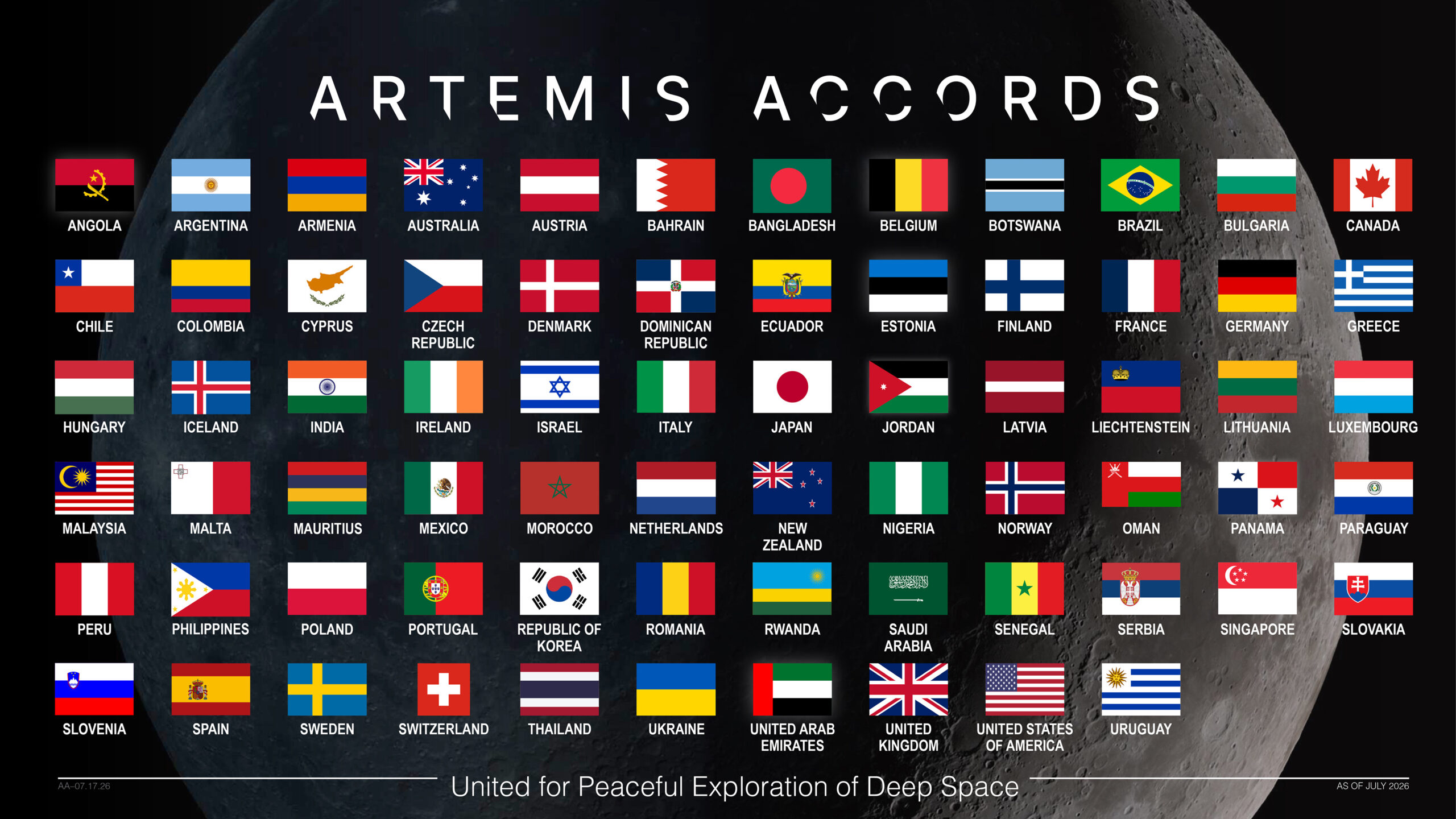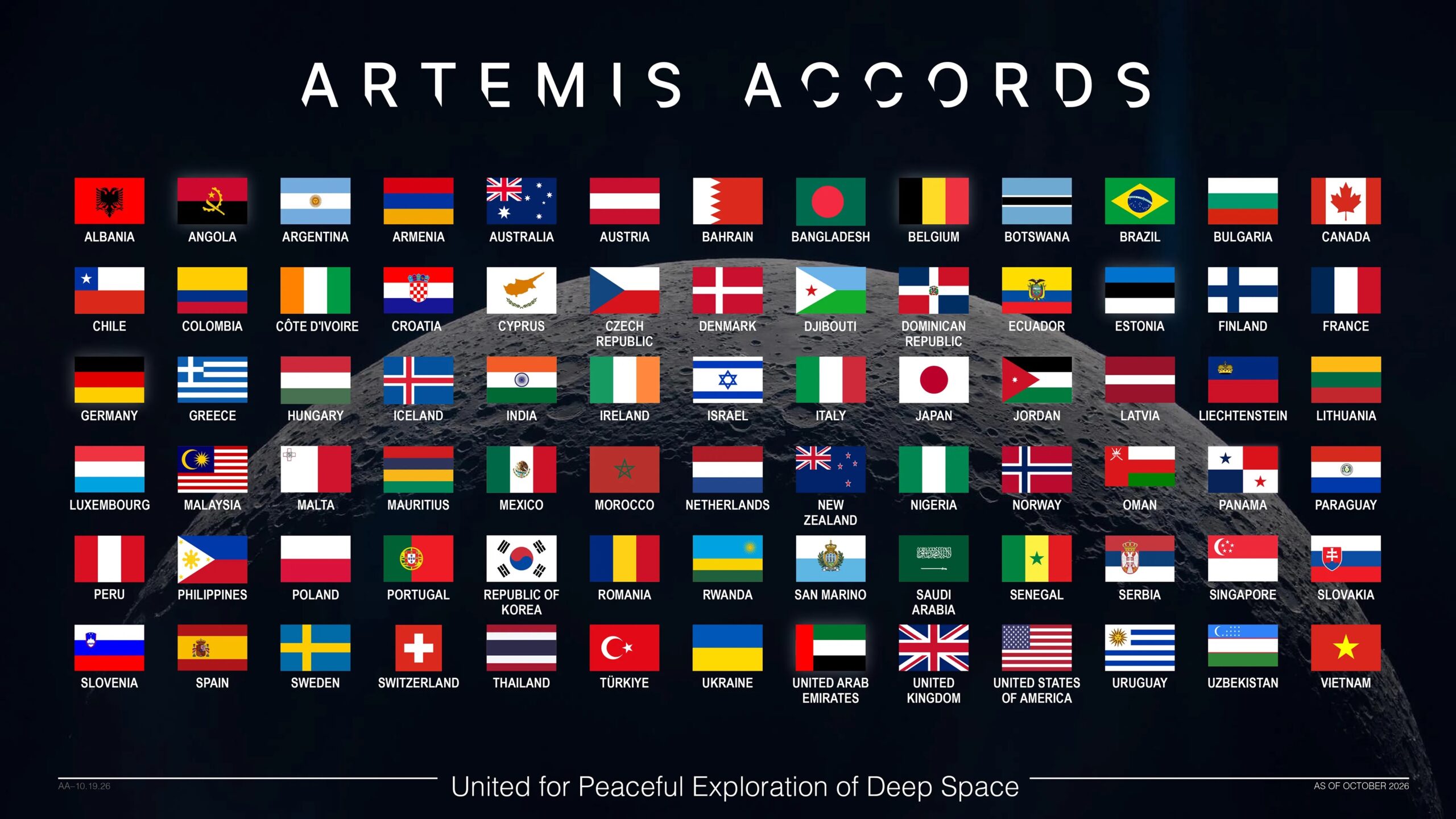
The Socialist Republic of Vietnam signed the Artemis Accords on October 28, 2026, becoming the 78th country to join the U.S.-led framework for peaceful and transparent space activities. Vietnam’s Minister of Science and Technology Vũ Hải Quân signed the Accords during Vietnam International Digital Week in Ha Long; U.S. Ambassador to Vietnam Jennifer Wicks attended the ceremony. NASA Deputy Administrator Matt Anderson contributed recorded remarks for the event.
In his remarks, Matt Anderson said Vietnam is "joining at an important point in the development of its own space program," noting ongoing collaboration between NASA and the Vietnam National Space Center in satellite innovation, land-use research, and radar-based Earth observation. The Accords commit signatories to principles including peaceful exploration, transparent operations, rendering assistance to those in need, sharing scientific data, avoiding harmful interference with other activities, and preserving historically significant sites and artifacts.
The signing extends the U.S.–Vietnam Comprehensive Strategic Partnership into civil space. According to NASA, the partnership builds on more than 30 years of cooperation across defense, economic, law enforcement, war legacy remediation, and technology, and it now includes collaboration in space activity.
Vietnam has recently expanded its domestic space capabilities. The country inaugurated the Vietnam National Space Center in Hanoi on March 13, 2026; Astrospace reports the center was built with Japanese cooperation at an investment exceeding $260 million and includes satellite control, data reception and processing, research labs, and training facilities. Vietnam is developing the LOTUSat program, led by LOTUSat-1, described as the country's first SAR (synthetic aperture radar) Earth observation satellite. Astrospace states LOTUSat-1 is complete and awaiting launch, with a current target date by the end of 2027. The SAR capability is intended to support weather, disaster response and land monitoring—areas of particular importance for a country frequently affected by typhoons and floods.
NASA has also worked directly with Vietnamese institutions: earlier in 2026 the agency partnered with the Vietnamese-German University to support the Soil Moisture Active Passive (SMAP) mission, which measures surface soil moisture globally. NASA’s statement highlights that these scientific and technical ties helped pave the way for Vietnam’s accession to the Accords.
SpaceWatch.global corroborated the signing date and venue, and framed the accession as part of Vietnam’s effort to strengthen domestic space technology capabilities and civil space cooperation with the United States. Astrospace noted Vietnam is the first nation to sign after Uzbekistan, which signed on October 19 in Samarkand, and that the Accords’ membership rose to 78—an increase of 19 signatories compared with the end of 2025.
The Artemis Accords were introduced in 2020 by NASA and the U.S. Department of State together with seven founding nations. NASA’s release emphasizes that more countries are expected to sign in the months and years ahead as the agency seeks to establish coordination and safety frameworks for activities on the Moon, Mars and beyond.