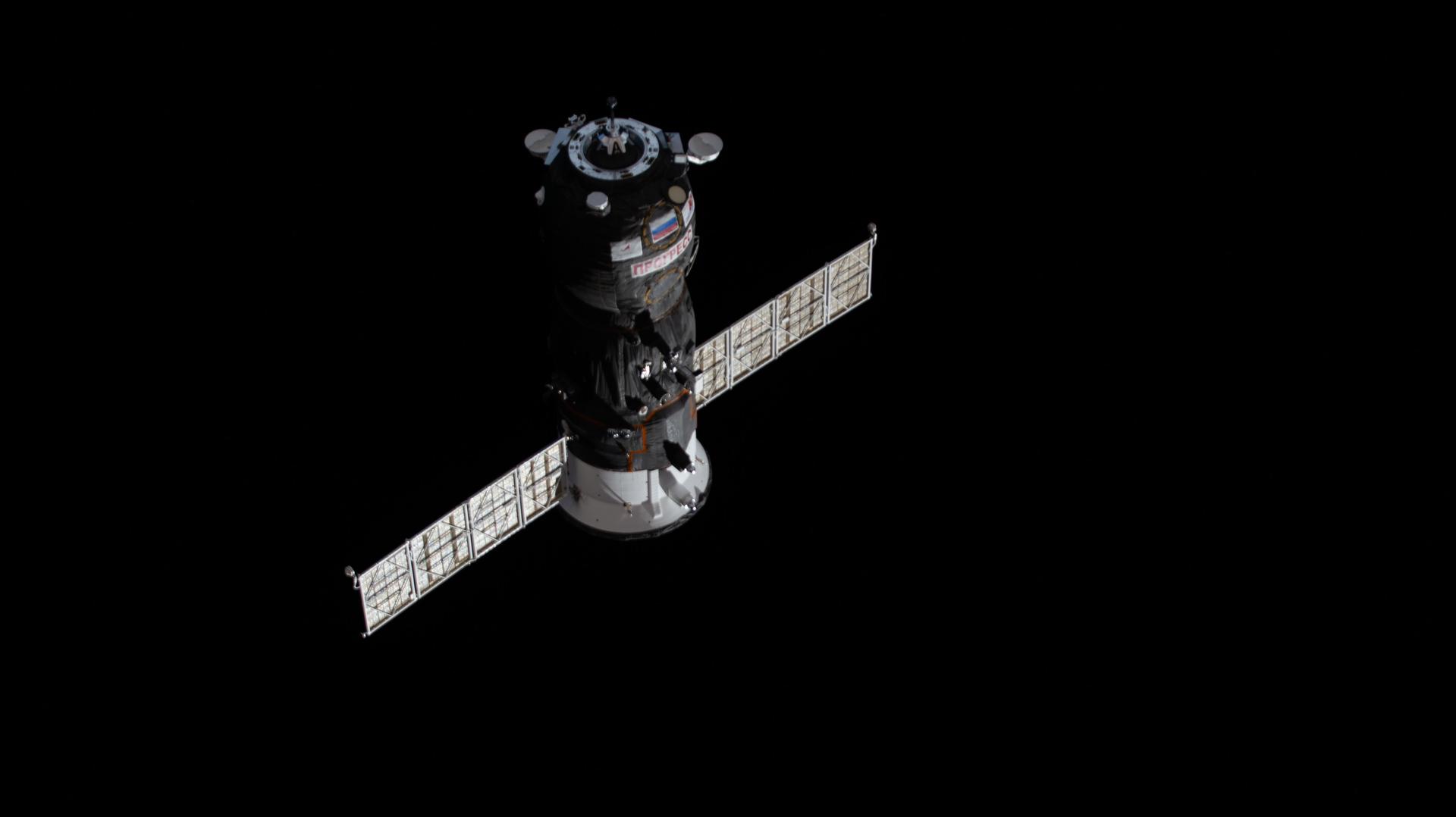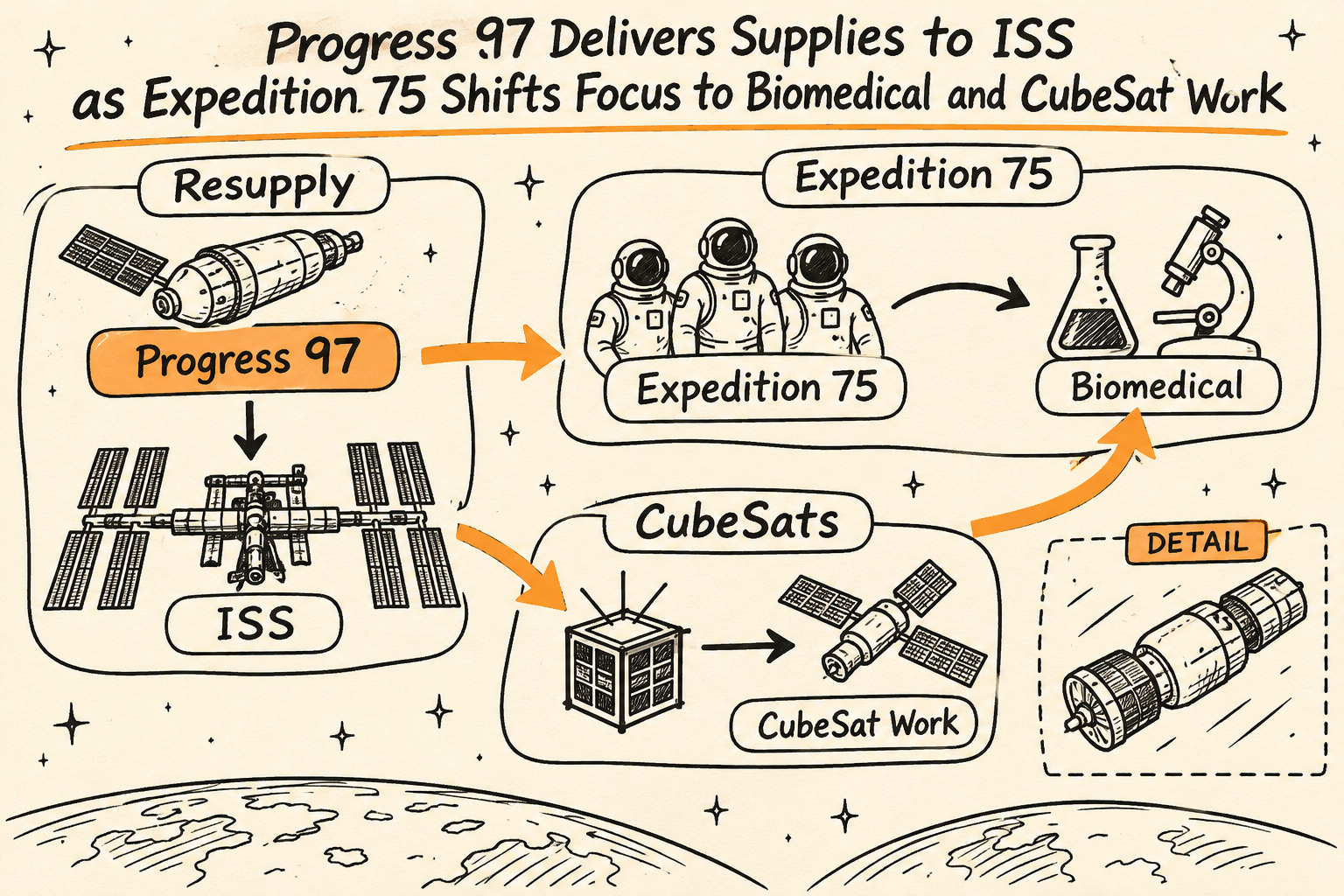
On Thanksgiving Day, Roscosmos’ Progress 97 cargo craft autonomously docked to the Earth-facing port of the International Space Station’s Rassvet module at 7:08 a.m. EST. The spacecraft launched from Baikonur Cosmodrome on Nov. 24 at 5:17 a.m. EST (3:17 p.m. Baikonur time) atop a Soyuz rocket and delivered about three tons of food, fuel, and supplies for the Expedition 75 crew.
Mission timeline and planned disposition
Progress 97 arrived after a live-streamed rendezvous and docking sequence that NASA covered in real time. The vehicle is scheduled to remain attached to Rassvet for roughly eight months before departing for a planned destructive re-entry that will dispose of trash.
Where Progress fits into the station’s short-term cadence
The Progress docking came as Expedition 75 conductors were mid-week focused on a range of human research and maintenance tasks. NASA flight engineers Jessica Watkins and Luke Delaney were working with the EchoFinder-2 ultrasound investigation, using augmented reality and advanced algorithms to assist organ detection and potentially reduce reliance on medical teams on the ground for crew health monitoring. Commander Pyotr Dubrov and flight engineer Anna Kikina reviewed procedures for the Progress 97 docking as part of that same schedule.
Other station activities documented in the days around Progress’ arrival included replacement of life support hardware in the Tranquility module by flight engineers Anil Menon and Joshua Kutryk. The hardware removes moisture from the air, condenses it into water, and processes it for recycling—tasks critical to long-duration operations aboard the orbital complex. Kutryk also prepared a pair of college student-designed CubeSats inside the Kibo laboratory module for deployment to photograph Earth and monitor space weather. Flight engineer Sergey Teteryatnikov focused on cleaning ventilation systems in the Nauka science module and transferring and cleaning water tanks in the Russian segment.
Supply chain and upcoming resupply
Progress 97’s roughly three tons of cargo reinforced the station’s logistics ahead of another resupply mission targeted for the week after Progress’ arrival. Northrop Grumman’s Cygnus XL was scheduled to launch from Cape Canaveral Space Force Station no earlier than 10:47 a.m. on Sunday, Nov. 29, atop a SpaceX Falcon 9. That Cygnus mission was slated to deliver research hardware including experiments to study cancer cell movement, engineered muscle tissues, DNA-inspired particles, and other investigations aimed at promoting human health.
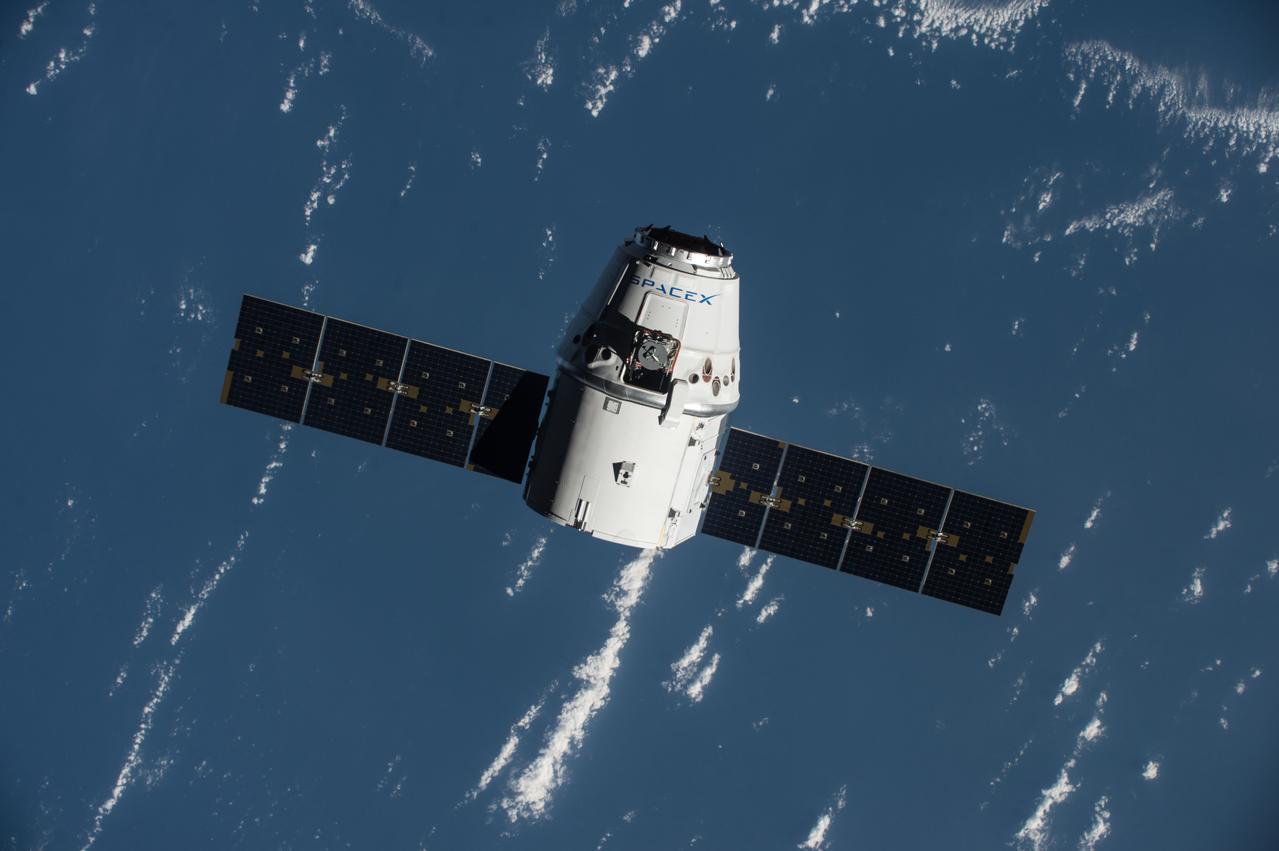
The Progress arrival followed recent departure of an unpiloted SpaceX Dragon vehicle, which undocked from the Harmony module’s space-facing port on Nov. 21 and was due to splash down off the California coast later that day.
Operational context
With Progress 97 berthed and additional commercial cargo en route, Expedition 75 maintained a busy tempo of science and maintenance: advanced biomedical studies, life support servicing, CubeSat deployments, and routine housekeeping across station modules. The mix of international vehicles and commercial resupply missions highlights the ongoing partnership model that sustains the ISS and supports the crew’s research and habitation needs.