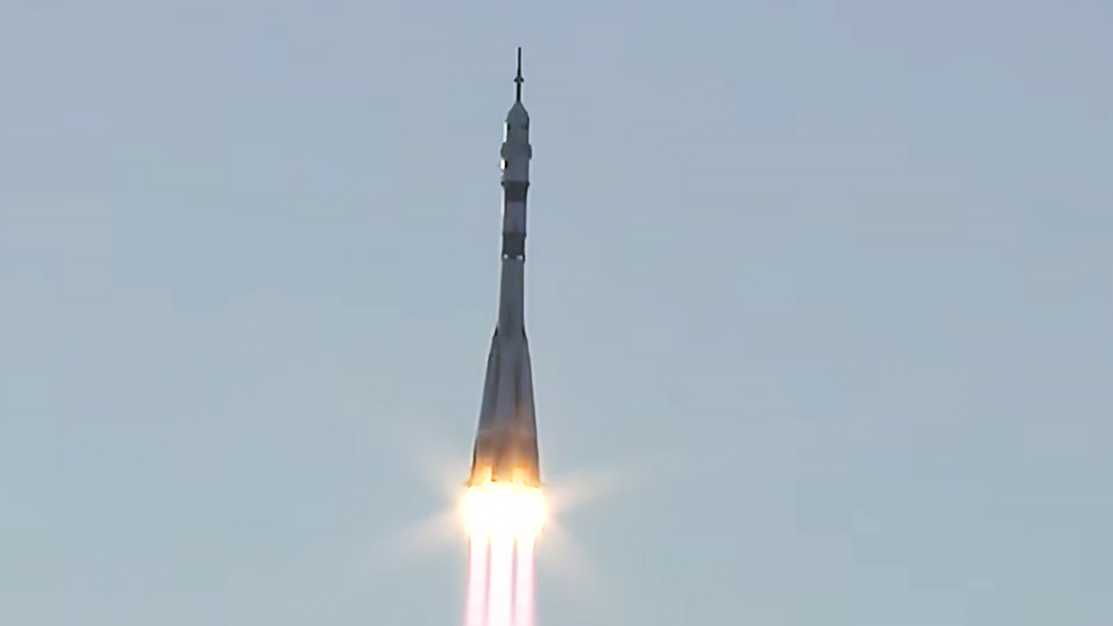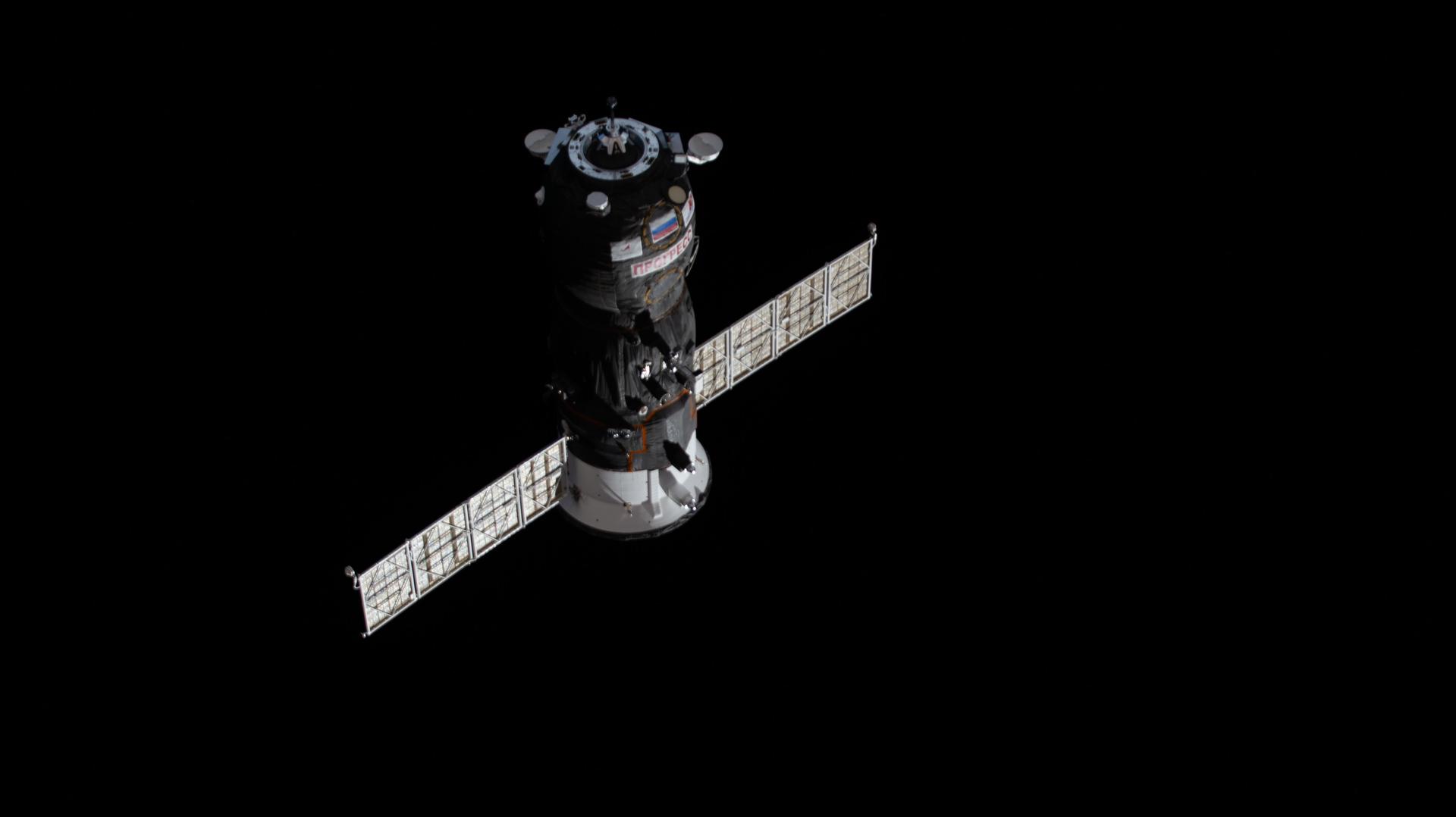
Roscosmos' unpiloted Progress 97 cargo spacecraft launched on a Soyuz rocket from the Baikonur Cosmodrome in Kazakhstan at 5:17 a.m. EST (3:17 p.m. Baikonur time) on Nov. 24. It is carrying about three tons of food, fuel and supplies to the seven-member Expedition 75 crew aboard the International Space Station, according to NASA.
Docking set for Thanksgiving morning after a two-day trip
After a two-day flight, Progress 97 is scheduled to dock autonomously at approximately 7:11 a.m. EST on Thursday, Nov. 26, which is Thanksgiving Day in the U.S. NASA's schedule names the Earth-facing port of the Russian Rassvet module as the target. The Space.com coverage the article draws on, like some other reporting, calls the module Poisk instead. NASA will stream the arrival live beginning at 6:30 a.m., and its launch coverage began at 5 a.m.
Once docked, the freighter will be loaded with trash and will leave to re-enter the atmosphere, burning up harmlessly over the Pacific Ocean. NASA says the stay will last about eight months. Space.com's reporting differs on the duration.
The Russian cargo cadence is steady. As NovΔ mAInd reported, Progress 94 undocked on Sept. 7 at 11:18 a.m. EDT and was scheduled for destructive re-entry the same day. Progress 96 was scheduled to launch from Baikonur on Sept. 9.
A first: unloading at one port, reboosting from another
Space.com notes a sequence unique to this mission. The freighter will be unloaded through one Russian module and then relocate to a different docking port so Progress can later perform orbital reboosts for the station. Space.com reports that port as the aft port of the PrK transfer tunnel leading to the Zvezda service module. It attributes the port-management detail to Anatoly Zak of RussianSpaceWeb.com and describes this as the first mission scheduled to unload cargo and perform orbit corrections from different docking ports.
Space.com also reports that Progress 97, which Russia calls Progress MS-36, slipped in schedule after a service platform at Baikonur's Site 31 collapsed and was then repaired in November 2025.
Cygnus XL: the final cargo mission of the year
NASA calls Northrop Grumman's Cygnus XL the final cargo delivery of the year. It is targeted to launch no earlier than 10:47 a.m. EST on Sunday, Nov. 29, atop a SpaceX Falcon 9 from Cape Canaveral Space Force Station in Florida. NovΔ mAInd has covered NASA's decision to fly a Cygnus XL on a Falcon 9 for CRS-25.
Inside is approximately 11,000 pounds of science experiments and lab hardware. NASA highlighted investigations into cancer cell movement, engineered muscle tissues and DNA-inspired particles, aimed at promoting human health on Earth and in space.
NASA flight engineers Jessica Watkins and Luke Delaney will command the Canadarm2 robotic arm to capture Cygnus XL on Tuesday, Dec. 1. Ground controllers will then take over Canadarm2 remotely and maneuver the vehicle to the Unity module's Earth-facing port for installation.
Aboard the station: capture practice, ultrasound scans and air sampling
On Tuesday, Watkins and Delaney took turns scanning each other's internal organs with the EchoFinder-2 ultrasound device for a space health monitoring study. Doctors on the ground monitored in real time as augmented-reality tools and AI algorithms assisted with organ detection. The two later familiarized themselves with the Cygnus XL mission, practiced robotic capture techniques and held a pre-mission conference with flight controllers.
In the Tranquility module, Anil Menon of NASA inspected, cleaned and lubricated the advanced resistive exercise device, which mimics free weights on Earth. Joshua Kutryk of the Canadian Space Agency then inspected the COLBERT treadmill, photographing its components and testing its operability.
In the Russian segment, cosmonauts Pyotr Dubrov and Sergey Teteryatnikov collected air samples to analyze for airborne bacteria and mold, then stowed them in an incubator to watch for microbial growth. Anna Kikina split her day between biomedical research and life support upkeep. For a long-running Roscosmos investigation of how spaceflight affects the immune and nervous systems, she stowed hair and saliva samples, took a timed memory test and wore a heart activity monitor.