Overview
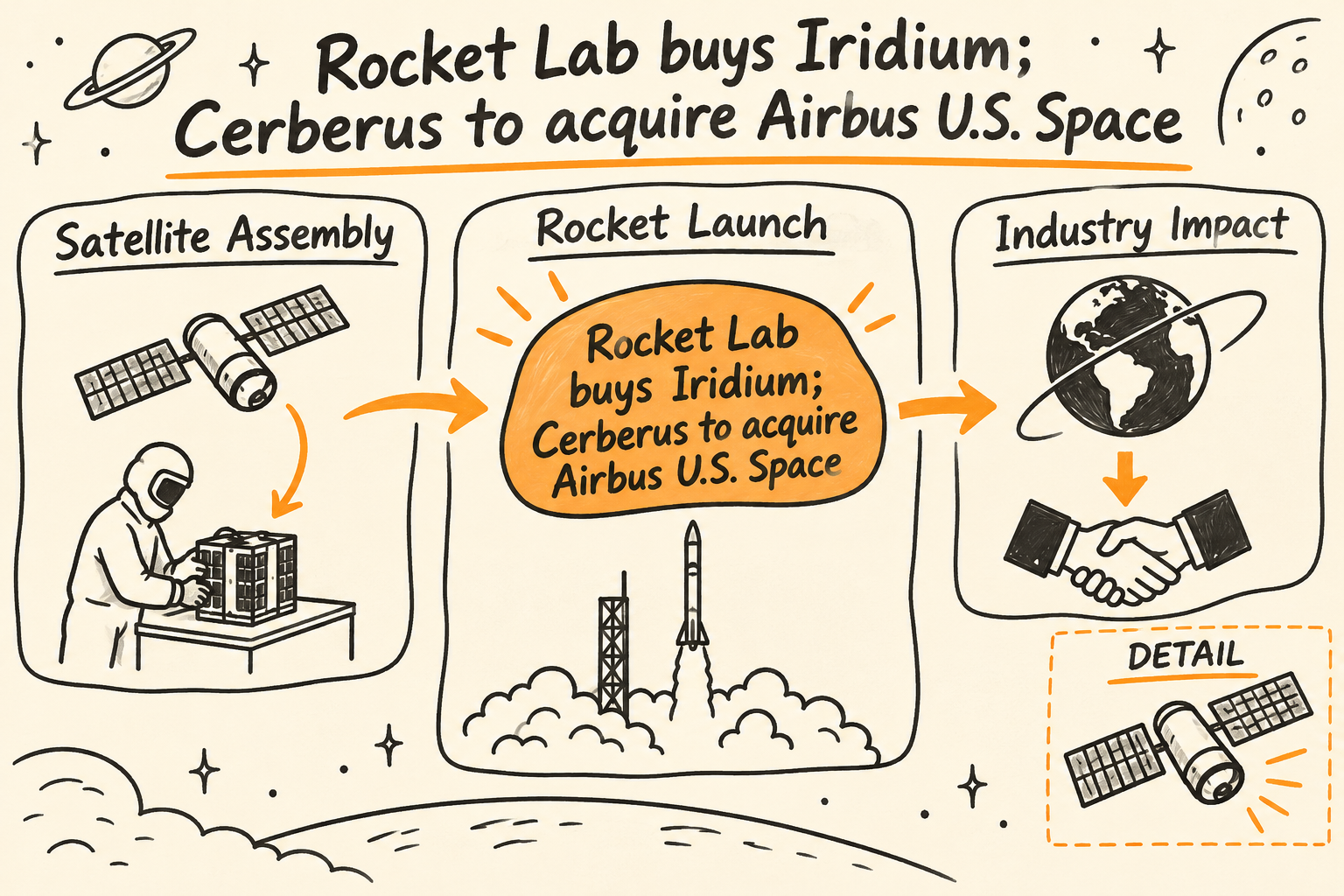
Over the past month a series of transactions, investments and regulatory moves have illuminated a single, accelerating trend: the commercial space sector is shifting from a loose ecosystem of specialised suppliers toward vertically integrated industrial groups that control design, manufacture, launch and, increasingly, spectrum access. From Rocket Lab's purchase of Iridium's stakeholder interests through to Cerberus Capital Management's agreed acquisition of Airbus U.S. Space & Defense's satellite manufacturing unit, the market is responding to capacity limits, mid-band policy changes, and the maturation of smallsat technologies.
How we got here: a decade of smallsat disruption
The smallsat revolution that took off in the 2010s—recall the sold-out SmallSat Symposium in 2016 where early SpaceX backers and Rocket Lab's founder convened—created a new class of operators and suppliers. Startups iterated rapidly on bus architectures, propulsion modules, and payload miniaturisation. That experimentation drove down unit costs, enabling ambitious constellation plans. But it also revealed a fragility: the now-proven demand for launches and the limited cadence of reliable rides meant satellites frequently waited months for deployment windows, disrupting revenue timelines for operators and customers.
Vertical integration as a capacity hedge
Recent deals point to a pragmatic answer: build, buy or merge. Well-funded operators are buying launch or manufacturing to guarantee access and control over risk. Rocket Lab's move to buy Iridium (reported in industry coverage) is emblematic: an enterprise that historically specialised in launch and smallsat manufacturing is now tying itself directly to a global service operator, aligning incentives across the supply chain. Similarly, Cerberus' purchase of Airbus U.S. Space & Defense's satellite manufacturing unit transfers a mature prime contractor capacity into private equity ownership—a sign that traditional aerospace suppliers are becoming acquisition targets as capital seeks stable cashflows in space infrastructure.
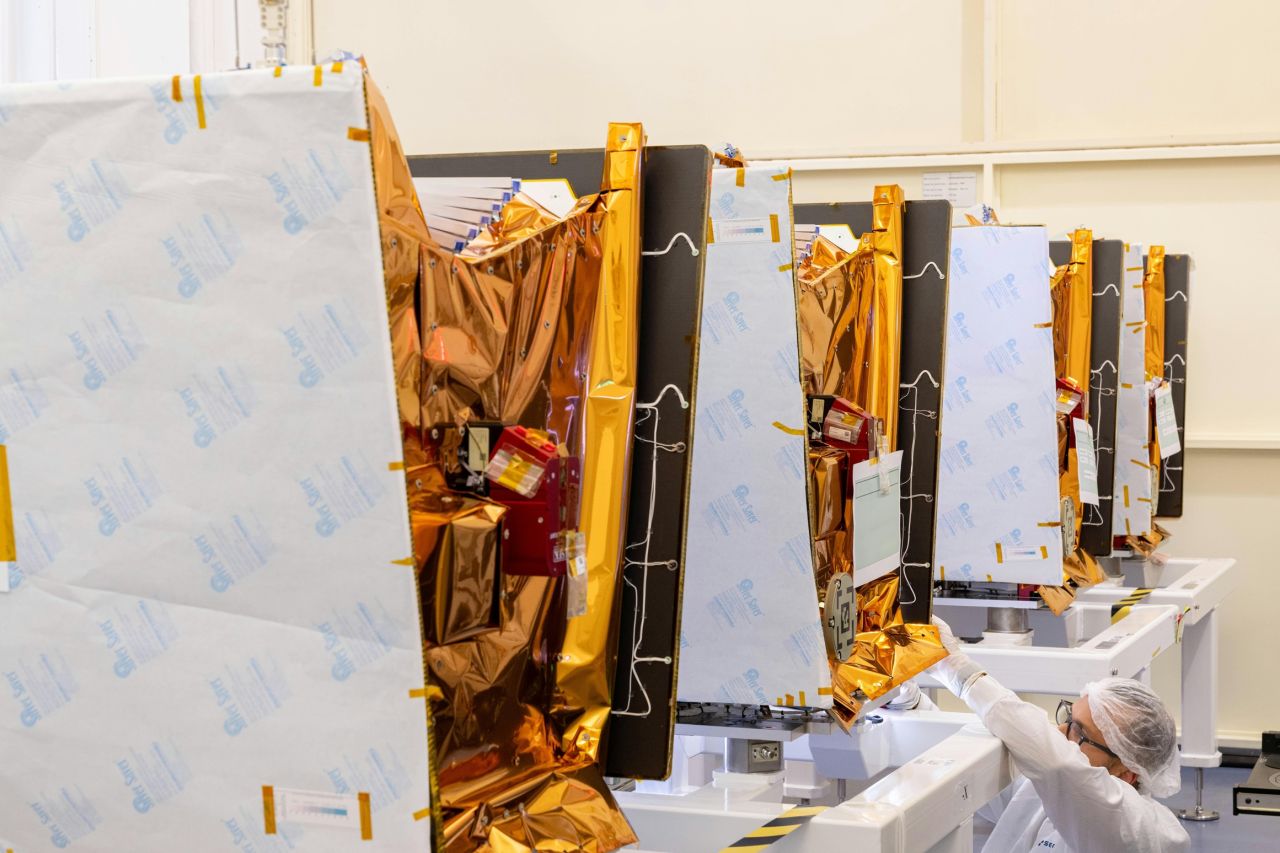
These combinations are not merely financial but operational. When an operator owns launch capability, it can better match manifest cadence to service rollouts; when a manufacturer is aggregated under an investor willing to back serial production hubs—such as Space Industries' €20M Stellar Hub in Italy—scale economics improve and qualification cycles compress. The net effect is a more predictable path to revenue for constellation owners and more disciplined capital deployment for manufacturers.
Policy and spectrum pressure
Consolidation is also a response to external constraints. The FCC's Upper C-Band Auction 115 and related mid-band reallocations have altered the calculus for LEO and smallsat operators. Terrestrial broadband incumbents and regulators are reshaping available spectrum, and satellite companies now face indirect market shifts: the need to secure alternate bands, ensure interoperability with terrestrial services, and guarantee service quality under new coordination regimes. For startups without deep pockets, losing spectrum access or being forced into secondary bands could be existential; for larger entities, spectrum reallocation is another reason to aggregate capabilities so that negotiation power and cross-subsidies can absorb transitional costs.
Technology inflection: greener, electric propulsion
On the technology side, the propulsion market's pivot to electric and green systems is reshaping lifetime economics for satellites. Analysts project the satellite propulsion market to grow substantially by 2031, driven by high-efficiency electric propulsion that reduces propellant mass and enables longer missions and more aggressive orbital adjustments. That means constellation operators can launch smaller, lighter payloads or stack more payload per launch—slightly easing launch demand but raising the premium on reliable, frequent launches for timely replenishment and constellation densification.
LEO networks, paying customers, and the launch bottleneck
Even as second-generation LEO networks secure government customers (the Pentagon and European partners have contracted services), they confront a paradox: commercial validation increases the urgency to expand on-orbit capacity just as launch manifests tighten. Reports that a second LEO operator has paying customers but faces launch shortfalls underline a counterintuitive reality—market demand exists, revenue is attainable, yet inability to get hardware into orbit on schedule can stall business models. Owning launch mitigates that risk, but acquiring launch capability is capital intensive and operationally challenging.
Implications and scenarios
In the near term expect three outcomes. First, more M&A among satellite manufacturers, operators and launch providers as firms seek integrated value chains. Second, a bifurcation of the market: deep-pocketed conglomerates and private-equity-backed manufacturers will serve large national and commercial constellations, while nimble specialists focus on niche services or launch-agnostic payloads. Third, policy will become a battleground—spectrum, export controls and launch range access will determine winners more than just superior hardware.
Longer term, if vertical integration succeeds operationally, customers should see faster deployment, lower per-satellite lifecycle costs, and new service guarantees. However, consolidation risks reducing competition, increasing single-point-of-failure exposure, and concentrating geopolitical leverage in fewer hands—raising questions for regulators and international partners.
NovΔ mAInd analysis: The market is constructing larger industrial stacks to solve timing, regulatory and technological frictions. The next several years will tell whether integrated groups can deliver not only scale but resilience—and whether policy keeps pace with an industry that is quickly becoming fewer, bigger and global.