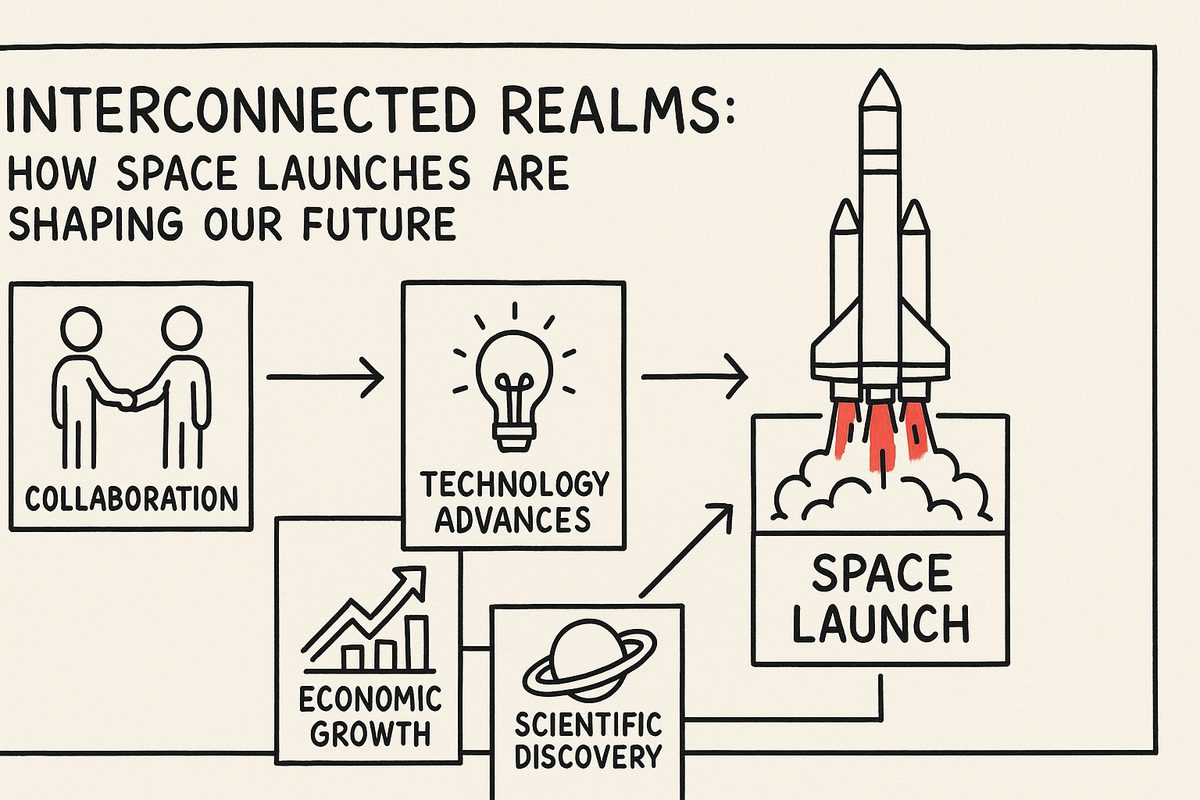
The landscape of space launches is undergoing a transformative period marked by technological advancements, international collaborations, and unexpected applications of space technology. These developments are not only expanding our capabilities in space exploration but also reshaping industries and fostering global cooperation.
AI and Manufacturing Revolutionizing Propulsion
One notable advancement is the integration of AI in manufacturing processes for space propulsion systems. A Canadian consortium led by NordSpace has secured significant funding to develop an AI-powered hybrid manufacturing line. This initiative represents a shift towards more efficient and precise production methods, potentially reducing costs and increasing the reliability of propulsion systems. The implications of this could be vast, allowing for more frequent and affordable launches, and positioning Canada as a leader in space technology innovation.
Global Launch Partnerships
International partnerships are becoming increasingly vital in the realm of space launches. Isar Aerospace, a German rocket builder, has signed an agreement to launch from a future Canadian spaceport. This collaboration highlights the trend of spaceports becoming global hubs, facilitating launches from various countries and enhancing accessibility to space. Such partnerships can foster technological exchange and strengthen diplomatic ties, which are crucial in the increasingly competitive space sector.
Environmental Monitoring from Space
Space technology is also proving invaluable in addressing terrestrial challenges. NASA's use of its EMIT instrument to detect mine waste from space exemplifies how space-based technology can aid in environmental monitoring and management. By analyzing light signatures from space, NASA can identify pollution sources more efficiently, offering a faster and more cost-effective method for environmental remediation. This application of space technology underscores the multifaceted benefits of investments in space exploration.
Historical Context and Future Implications
The evolution of space launches can be traced back to the Cold War era, where the space race between the United States and the Soviet Union spurred rapid advancements. Today's landscape is characterized by a more collaborative and commercial focus, with private companies and new nations entering the fray. The increasing role of AI and international partnerships suggests a future where space exploration is more democratized and accessible.
Looking ahead, the convergence of AI, international cooperation, and environmental applications in space technology could lead to a more sustainable and interconnected global society. As more countries and companies participate in space endeavors, we may see a diversification of missions and objectives, ranging from scientific research to commercial ventures.
In conclusion, the current trajectory of space launches is setting the stage for a new era of exploration and innovation. By embracing technological advancements and fostering international partnerships, we are not only enhancing our capabilities in space but also addressing critical challenges on Earth. These developments remind us that the boundaries between space and terrestrial applications are increasingly blurred, leading to a future that is both exciting and full of potential.