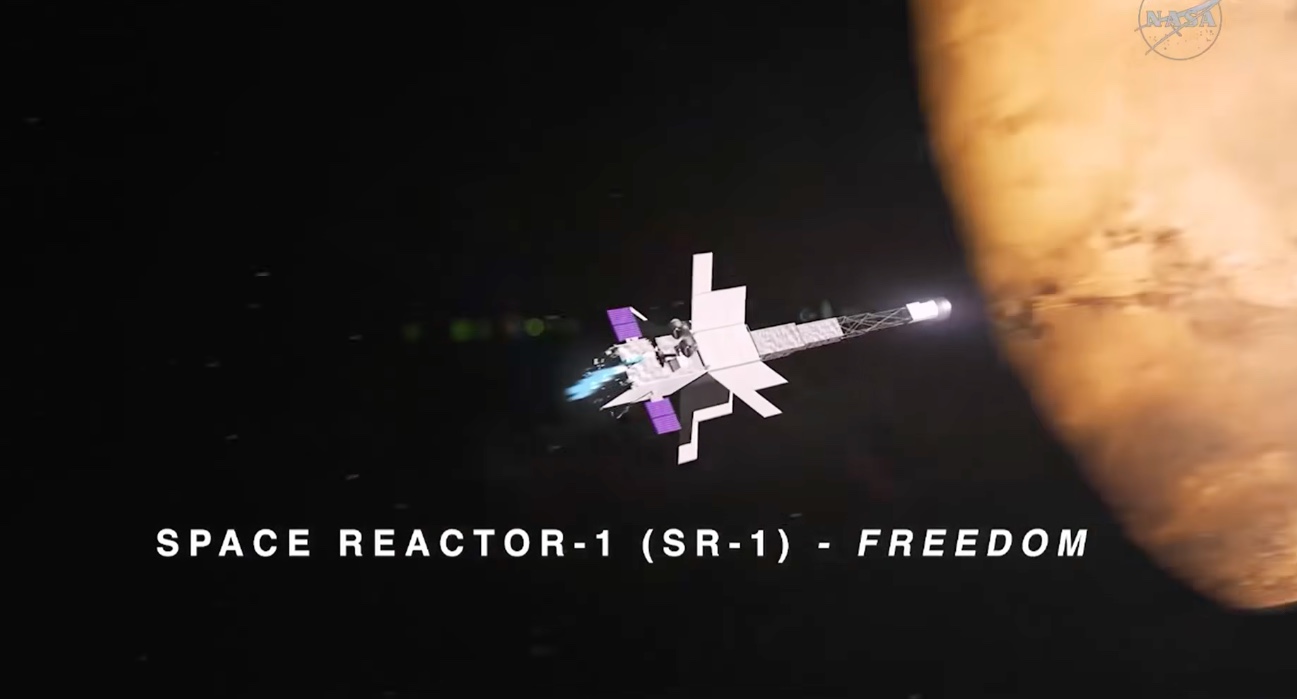
NASA is advancing its nuclear electric propulsion (NEP) initiatives by implementing a more efficient management strategy for an upcoming demonstration mission. Aiming to launch by the end of 2028 — roughly two and a half years away — the Space Reactor 1 (SR-1) Freedom mission represents a significant and historic step in space propulsion technology, marking what would be the first-ever flight demonstration of nuclear electric propulsion.
What Is SR-1 Freedom?
NASA officially announced the SR-1 Freedom mission at its Ignition event in March 2026. The mission's core concept involves a nuclear reactor providing power to electric thrusters, propelling the spacecraft on a journey to Mars. Unlike conventional chemical propulsion systems, nuclear electric propulsion offers far greater fuel efficiency over long distances, making it particularly well-suited for deep space exploration where travel times and energy demands are extreme.
Despite the ambitious announcement, NASA has provided relatively few public updates on SR-1 Freedom since the Ignition event, even as other initiatives unveiled at the same time — such as a proposed lunar base and changes to support commercial space stations — have received more attention. That changed slightly on June 2, 2026, when NASA officials addressed the mission's status at a meeting of the National Academies' Aeronautics and Space Engineering Board and Space Studies Board.
Streamlining Development for Speed
At the June 2 meeting, NASA officials revealed that the agency had discussed planning for SR-1 Freedom at a management council meeting the previous day. Lori Glaze, NASA's acting associate administrator for exploration systems development, explained the agency's intent to accelerate the mission's development without abandoning its established standards.
"We talked through the intent to streamline the processes that we're going through for the development" of the mission, Glaze said. The goal is to remain compliant with existing NASA project management requirements "and yet make sure we're tailoring that to the needs to allow us to go faster." She added: "We are, as an agency, very focused on trying to identify the barriers to going quickly and identify how we can try to speed up decision-making."
This streamlined management approach aims to reduce bureaucratic hurdles and enhance coordination across teams, enabling faster development and deployment of the propulsion system — a critical factor given the tight timeline to a late-2028 launch.
Leveraging Existing Hardware
A key reason the aggressive schedule is considered achievable is NASA's strategy of repurposing existing hardware wherever possible. The spacecraft's electric propulsion system will be drawn from the Power and Propulsion Element (PPE), originally built for the lunar Gateway program. According to Glaze, the PPE is "very far along in its development," and while modifications will be required, NASA is not starting from scratch. "We have a spacecraft," she noted.
The nuclear reactor component will similarly leverage existing designs developed by the Department of Energy for research reactors, though NASA has released few specifics about it. Glaze confirmed that NASA and the DOE are working in close collaboration, including updating a memorandum of understanding between the two agencies to reflect the mission's needs.
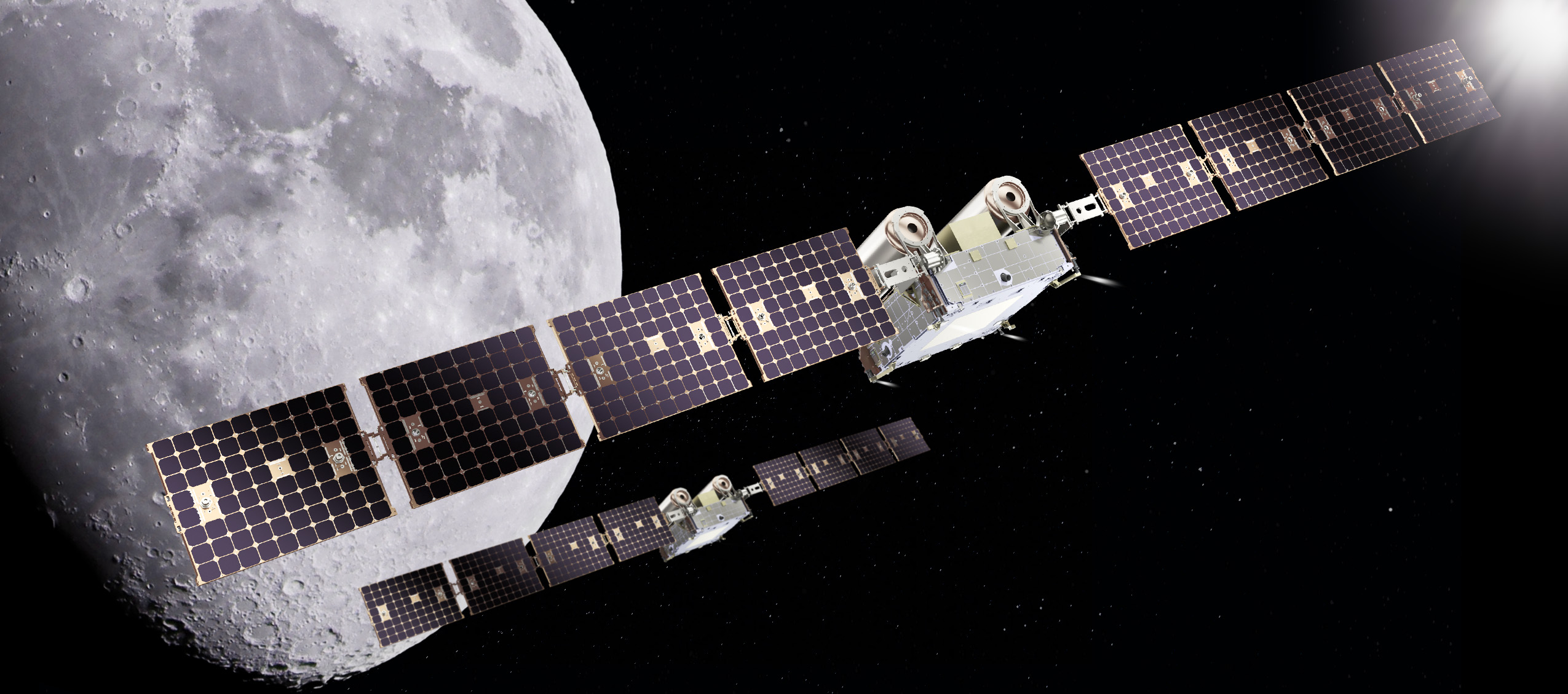
Concept designs of SR-1 Freedom released at the Ignition event show the spacecraft featuring a long truss structure separating the nuclear reactor from the rest of the vehicle, along with radiator panels designed for heat rejection — a necessary engineering consideration when operating a nuclear power source in space. "We're trying to leverage as much as we can with as little new development as possible," Glaze said, acknowledging that the approach, while sensible, presents real engineering challenges.
The SkyFall Payload: Helicopters on Mars
SR-1 Freedom will not travel to Mars empty. The spacecraft will carry SkyFall, a secondary spacecraft designed to deploy three helicopters into the Martian atmosphere. These rotorcraft are based on the Ingenuity helicopter, which famously demonstrated powered flight on Mars during NASA's Perseverance rover mission. The inclusion of SkyFall underscores NASA's broader ambition to expand aerial exploration capabilities on Mars, building on the proven success of Ingenuity's design.
Why This Mission Matters
The development of nuclear electric propulsion technology aligns directly with NASA's long-term objectives for Mars exploration and beyond. NEP systems could dramatically reduce travel times to distant planets and enable spacecraft to carry heavier payloads more efficiently than traditional chemical rockets. If SR-1 Freedom succeeds, it could open the door to a new generation of deep space missions, fundamentally changing how humanity explores the solar system.
As the launch window approaches, the space community will be watching closely to see whether NASA's streamlined development strategy can deliver on its promise — and whether SR-1 Freedom becomes the milestone in propulsion history it is designed to be.
Stay up to date with the latest space news at NovA mAInd.