The landscape of space exploration and satellite deployment is rapidly evolving, offering new pathways for organizations to realize their ambitions in orbit. At the forefront of this evolution is the concept of hosted payloads, which is fundamentally altering how companies and governments approach space missions. Traditionally, deploying a new capability in space was a monumental task, requiring significant investment and technical expertise. Organizations were compelled to construct nearly every aspect of their mission from scratch, including spacecraft, payload integration, ground infrastructure, and mission operations. However, hosted payloads are streamlining this process, reducing barriers to entry, and accelerating the timelines for getting capabilities into space.
Beau Jarvis, Chief Revenue Officer at Kepler Communications, highlights the transformative impact of hosted payloads: "We’re seeing companies looking for the fastest, most economical way to get their capabilities into space, and their data back down to Earth." Hosted payloads allow organizations to place their sensors and mission hardware aboard existing platforms, relying on host providers for essential services such as power, communications, and operations. This shift not only reduces complexity but also enables organizations to focus on perfecting the technologies and services that set them apart.
For emerging companies, the speed offered by hosted payloads is crucial. Every day a company is not operationally active, it incurs costs without revenue generation. Hosted payloads drastically shorten the path from concept to orbit, thus supporting faster revenue realization. They also present a strategic advantage for governments aiming to enhance sovereign space capabilities without the necessity of developing every component independently.
The advantages of hosted payloads extend beyond merely securing a ride to orbit. As reliance on space-based data increases, the ability to access this information swiftly becomes as critical as its collection. Traditional satellite systems often depend on scheduled ground station contacts, which can limit the frequency of data retrieval and communication with the spacecraft. In scenarios where timely information is vital—such as monitoring wildfires, maritime tracking, weather forecasting, or national security missions—delays can significantly diminish data utility.
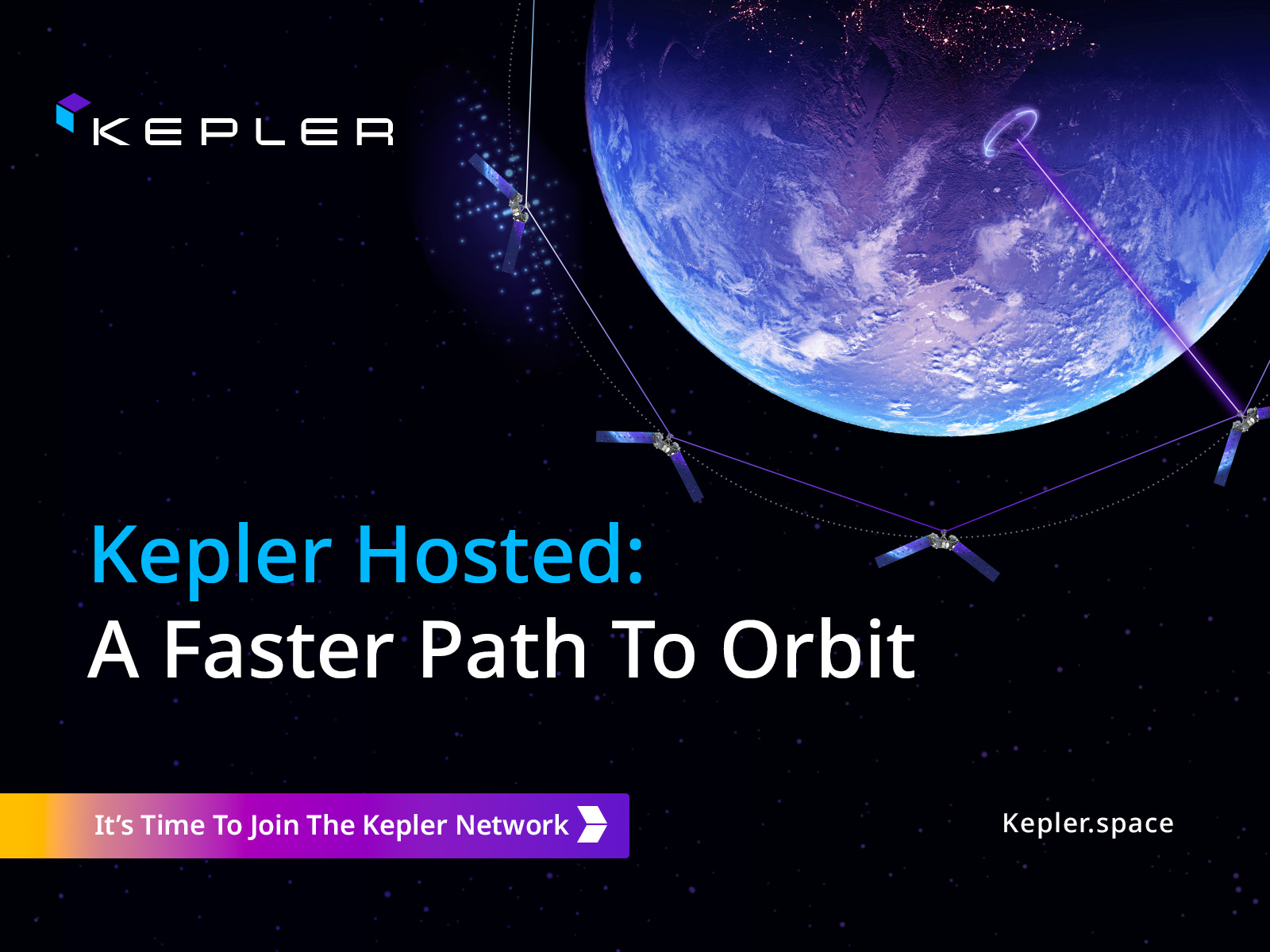
Kepler Communications addresses these challenges by combining hosted payload services with their optical data relay network, enhancing the volume and frequency of data transfer while reducing latency. According to Jarvis, "It’s not just the fact that you can get data more often; you can get much more of it." This capability becomes increasingly valuable as organizations seek to derive deeper insights from their data, supporting advanced analytics, machine learning models, and faster operational decision-making.
Moreover, Kepler’s satellites are equipped with on-orbit compute resources, which enable customers to process information closer to the source. This reduces the need to transmit raw data to the ground for processing, thus enhancing efficiency and responsiveness.
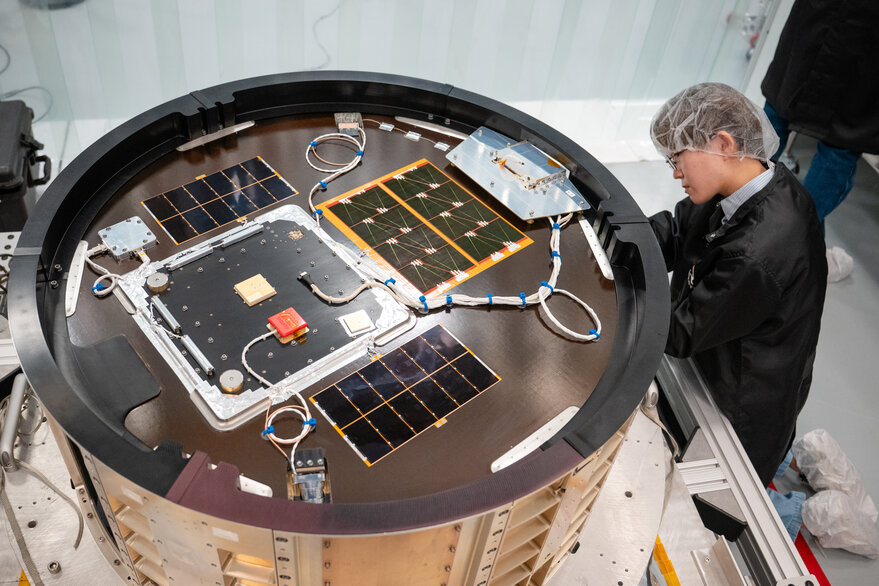
A recent success story highlighting the efficacy of hosted payloads is OroraTech's deployment of four SAFIRE Gen4 thermal sensors, which successfully achieved their first operational light aboard a Kepler satellite. This demonstrates the potential for hosted payloads to facilitate innovative technological deployments in space.
As the space industry continues to evolve, the implications of hosted payloads are profound. They democratize access to space, enabling a broader range of participants to contribute to and benefit from space exploration. As more organizations leverage these opportunities, we can anticipate a surge in innovation and the development of new applications that will further enhance our understanding and utilization of space.