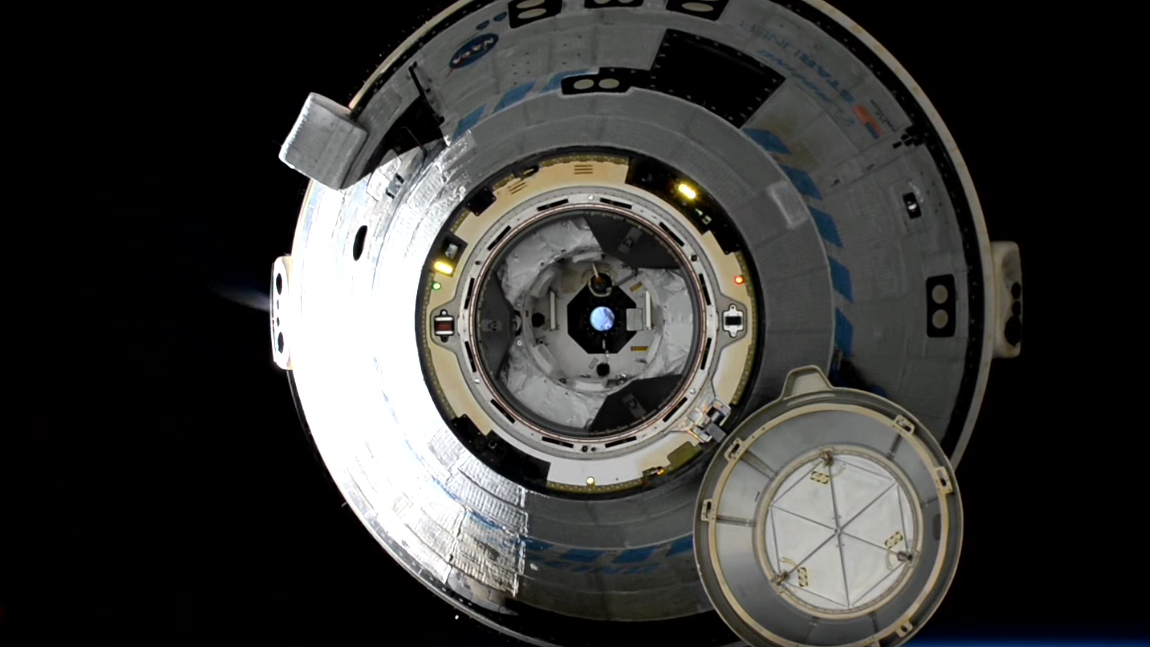
The CST-100 Starliner, a collaborative spacecraft project between NASA and Boeing, is facing an uncertain launch timeline for its upcoming Starliner-1 mission. Despite this, both organizations remain committed to advancing the mission, underscoring their dedication to resolving outstanding issues from earlier tests and continuing the development of reliable crew transport systems for space exploration.
The Starliner project has encountered significant challenges along its journey to certification. The Crew Flight Test (CFT) conducted in 2024 revealed several critical anomalies, which led NASA to classify the mission as a Type A mishap. Among the issues encountered during the CFT were failures in five of the spacecraft's thrusters during rendezvous operations, necessitating manual intervention by former NASA astronaut Butch Wilmore. Additionally, the spacecraft experienced leaks in seven of its eight helium manifolds and a failure in its reaction control system jet. These problems led to NASA's decision to remove Wilmore and his fellow astronaut Suni Williams from the Starliner, subsequently assigning them to the SpaceX Crew-9 mission.
These technical difficulties have prompted a thorough review by NASA and Boeing, who are diligently working through post-flight analysis to address the identified issues. The Program Investigation Team (PIT) report has been pivotal in guiding these efforts, and progress is actively being made to ensure the Starliner’s propulsion systems are up to par for future missions. The Starliner-1 mission, which will be uncrewed, is a crucial step towards achieving full crewed certification for the spacecraft.
Kent Rominger, a member of NASA's Aerospace Safety Advisory Panel (ASAP), highlighted during a recent meeting that while the timeline for the Starliner-1 mission remains under review, efforts are underway to define the necessary criteria to reduce risks and confirm readiness for future crewed missions. This includes resolving propulsion system issues that were noted during the CFT.
The commitment to launching Starliner-1, despite the lack of a clear timeline, reflects NASA and Boeing’s ongoing dedication to developing a robust commercial crew program. This program is designed to enhance the United States' capability to transport astronauts to low Earth orbit and support the International Space Station. Achieving crewed certification for the Starliner is a critical milestone in diversifying this capability and ensuring a dependable alternative to the SpaceX Dragon spacecraft, which has been a primary vehicle for such missions in recent years.
As NASA and Boeing continue to work on addressing the technical challenges, the broader context of the Starliner project underscores the intricacies and demands of developing new space technologies. Each challenge encountered and resolved adds to the collective knowledge and experience of the aerospace community, setting the stage for safer and more reliable space travel.
Looking forward, the successful resolution of these issues and the subsequent launch of Starliner-1 could pave the way for a more competitive and resilient commercial crew transportation market. It holds the potential to provide NASA with greater flexibility and redundancy in its human spaceflight program, ultimately contributing to the agency's long-term exploration goals.