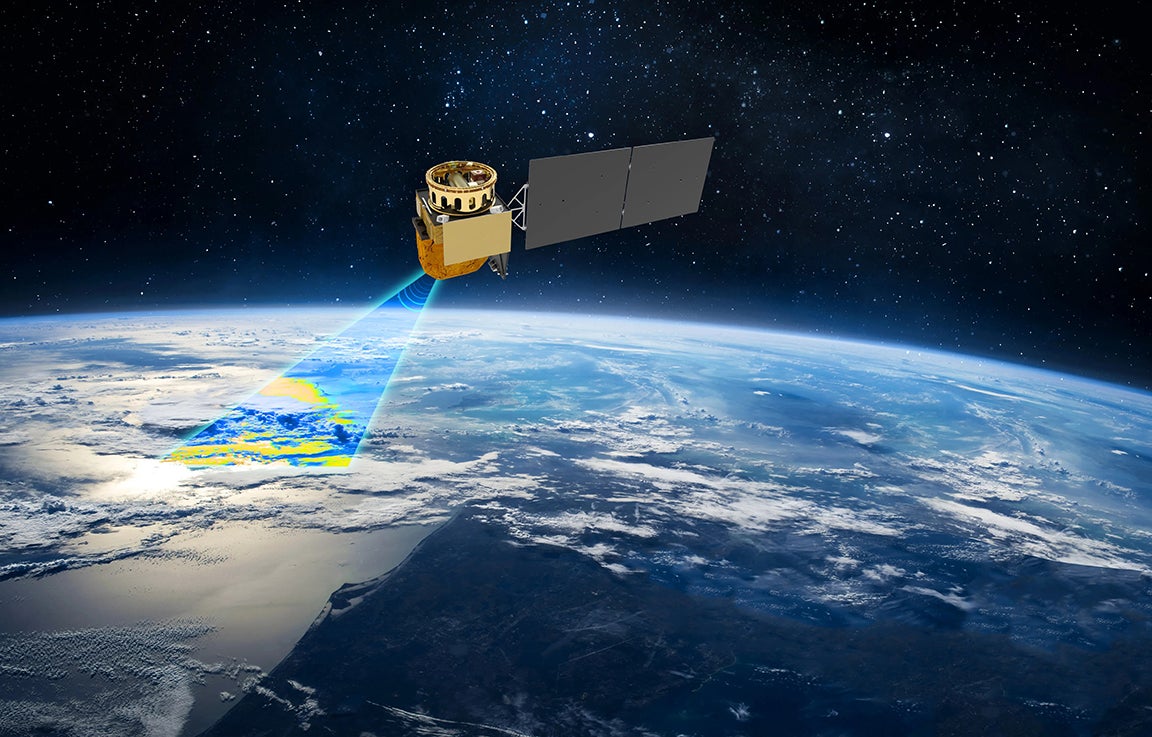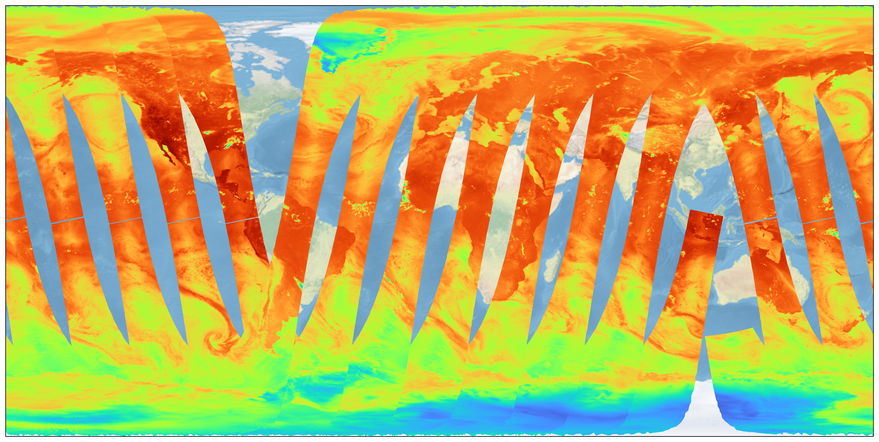
The recent release of first light imagery from Weather Stream's GEMS2-Amethyst satellite marks a significant advancement in atmospheric monitoring technology. This satellite, launched on March 30, 2026, aboard the SpaceX Transporter 16 rideshare mission from Vandenberg Space Force Base, is equipped with a commercial microwave radiometer that offers detailed three-dimensional atmospheric temperature and moisture profiles. These profiles are instrumental in improving weather forecasting models and enhancing decision-making processes across various sectors.
The GEMS2-Amethyst satellite operates in a 600-kilometer sun-synchronous orbit, enabling it to provide comprehensive global coverage approximately every 12 hours. This capability is crucial for filling observation gaps that have long challenged meteorologists and other stakeholders. "Weather affects everything. From forecasting severe storms to supporting military operations to helping the insurance industry assess risk, the observation gaps we are filling with GEMS2-Amethyst touch decisions that billions of people depend on every day," Weather Stream founder and CEO Michael Hurowitz stated.
Weather Stream's initiative aligns with a broader trend in the commercialization of weather data collection, as evidenced by recent contracts awarded by government agencies such as the National Oceanic and Atmospheric Administration (NOAA). NOAA recently awarded a $2.7 million contract to Orbital Micro Systems, a subsidiary of Weather Stream, and a $7.3 million contract to Boston-based Tomorrow.io. These contracts are designed to assess the quality and impact of commercial microwave sounder data on NOAA's forecast models, particularly for tropical cyclone forecasting.
The significance of microwave radiometry in weather prediction cannot be overstated. A 2021 NOAA report highlighted that microwave sounders on polar-orbiting weather satellites have been among the most impactful remote sensing observations in numerical weather prediction models for the past two decades. Weather Stream's GEMS2-Amethyst, with its dual-band passive microwave radiometer integrated in a GomSpace bus, measures atmospheric temperature and humidity profiles across a nearly 2,000-kilometer swath, providing critical data that supports these models.
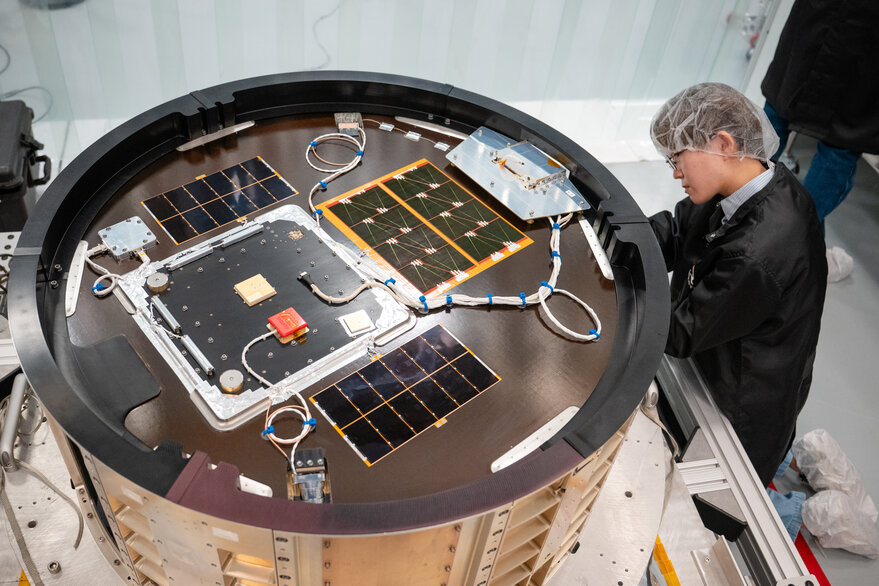
This mission is not Weather Stream's first foray into spaceborne microwave radiometry. In 2019, the company launched its first commercial microwave radiometer on a cubesat, marking a milestone in the miniaturization and commercialization of satellite-based atmospheric sensors. The first GEMS satellite, a three-unit cubesat, successfully gathered temperature data until it reentered Earth's atmosphere in 2021. The GEMS2-Amethyst, a more advanced six-unit cubesat, expands on this capability by observing atmospheric humidity and precipitation in addition to temperature.
Looking ahead, Weather Stream has ambitious plans to establish a GEMS commercial weather data constellation. This constellation aims to gather data as frequently as every 15 minutes, potentially revolutionizing how meteorological data is collected and used. The implications of such a network are vast, promising enhanced accuracy in weather predictions, improved risk assessments for industries such as insurance and agriculture, and better-informed responses to severe weather events.
The deployment of the GEMS2-Amethyst satellite and the first light imagery it has produced underscore the critical role of commercial enterprises in advancing satellite technology and atmospheric science. As the satellite continues its mission over the next five years, it will undoubtedly contribute valuable insights that support both scientific research and practical applications.