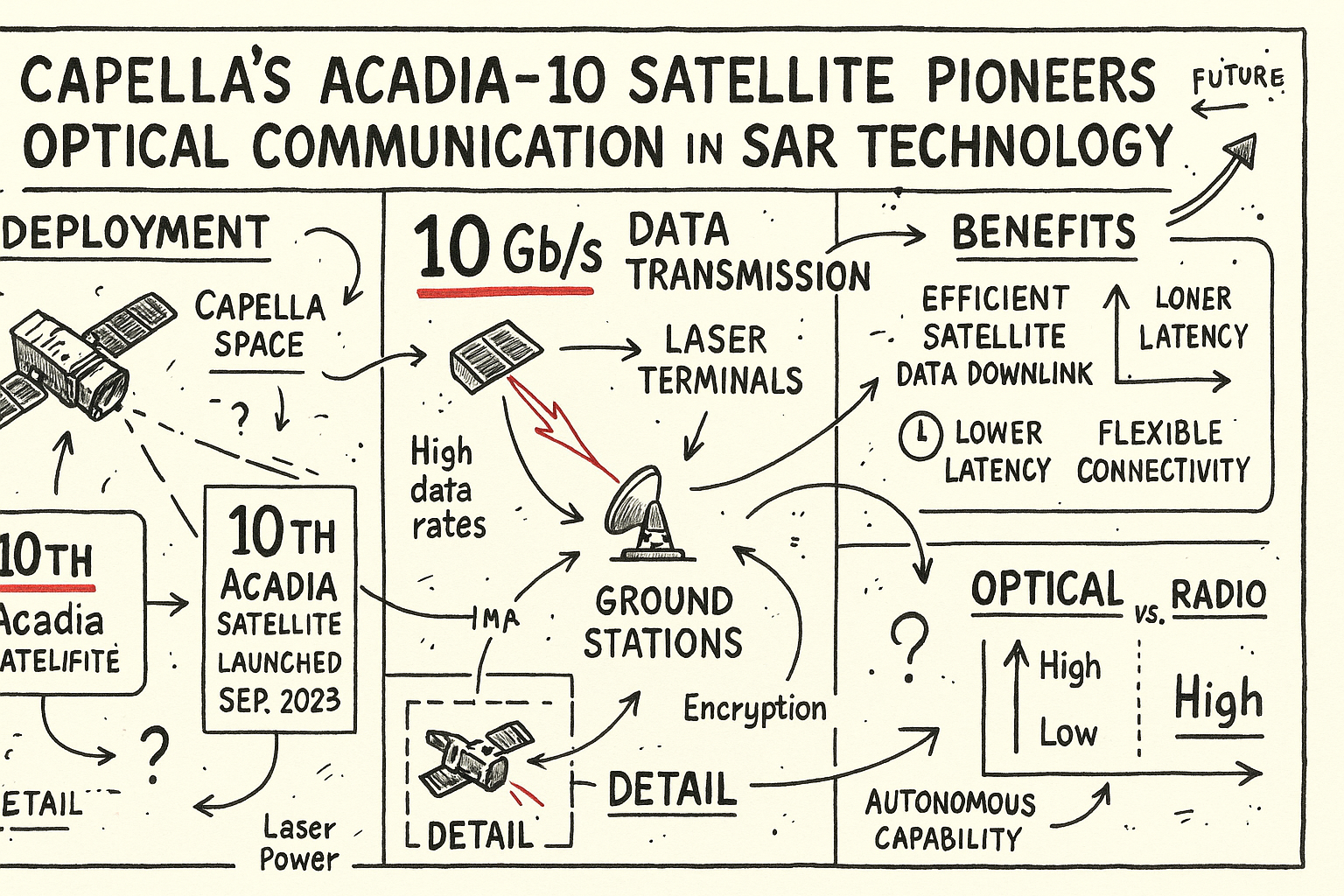
Capella Space, a leading player in the field of synthetic aperture radar (SAR) technology, has achieved a significant milestone by validating an optical communication terminal (OCT) on its newest satellite, Acadia-10. This marks the first instance of Capella deploying an OCT, which was supplied by Mynaric, a company recognized for its expertise in optical communication technology. The successful validation of this terminal is poised to revolutionize the way SAR data is managed and utilized.
The Acadia-10 satellite, which was launched in March 2026, has already begun to demonstrate its advanced capabilities. Capella Space recently released the first SAR images captured by Acadia-10, showcasing the potential of this technology. One of the most groundbreaking features of the Acadia-10 is its ability to transfer data at a rate of 2.5 gigabits per second during onboard tests. This capability allows for near-real-time data transmission, effectively eliminating the wait times associated with traditional ground station communications.
Capella Space emphasized the transformative impact of this technology, stating that the new system compresses the task-to-delivery timelines from several hours to mere minutes. This acceleration in data transfer is expected to fundamentally alter how organizations operationalize SAR data, offering more timely and actionable insights for a wide range of applications.
While the Acadia-10 currently employs a Mynaric OCT, Capella has announced plans to equip future Acadia satellites with optical terminals from Skyloom. This transition is set to begin in 2027. The shift aligns with the strategic acquisitions of both Capella and Skyloom by IonQ, a company with a vision to integrate quantum networking into space operations. IonQ's involvement highlights the growing intersection between quantum technology and space communication, suggesting a future where quantum networking could be a staple in satellite operations.
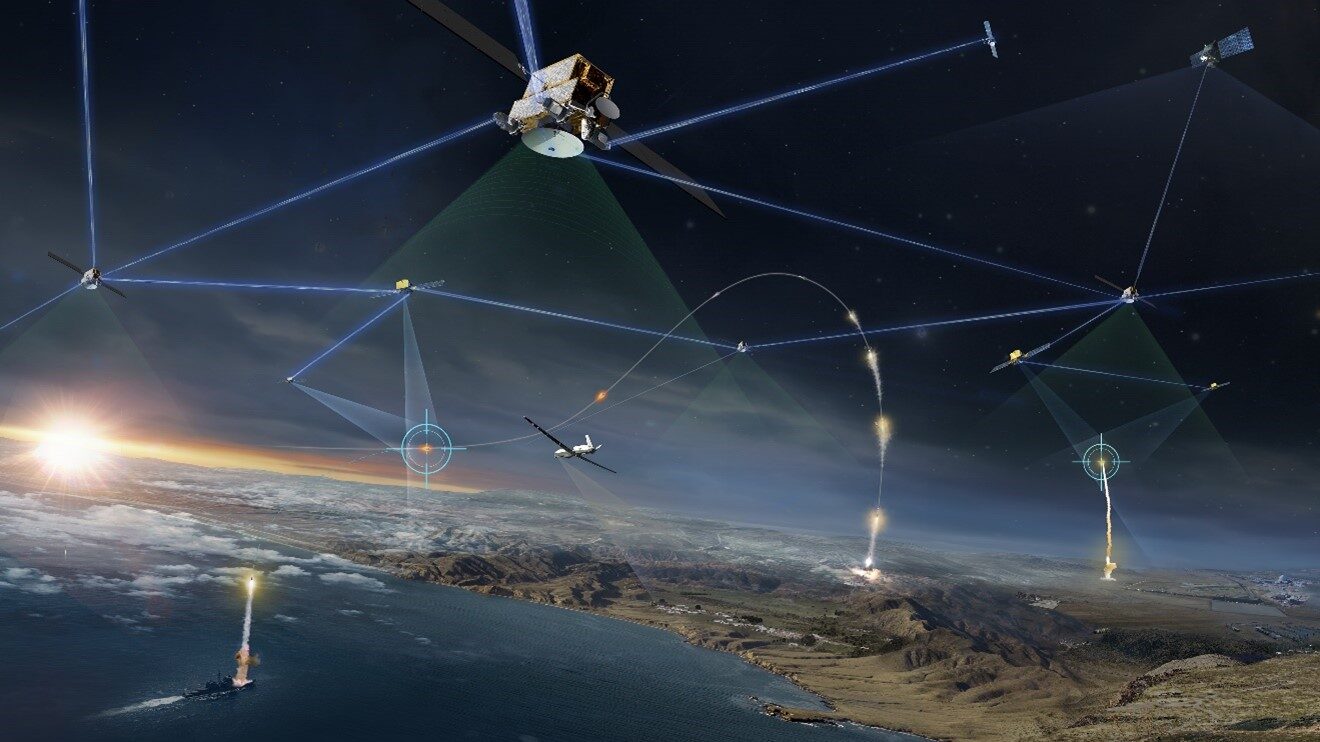
Capella's collaboration with the Space Development Agency (SDA) is another crucial aspect of this development. The Acadia-10's optical terminal is compatible with the SDA's OCT standard, facilitating communication with the SDA's proliferated Low-Earth Orbit (LEO) network. This compatibility underscores Capella's ongoing partnership with the SDA, which began in 2021. Earlier this year, the SDA awarded Capella a contract under the HALO Europa Track 1, aimed at designing satellites capable of demonstrating advanced tactical waveform performance and secure communications in LEO. Further details about the tests under this agreement are expected to be disclosed in the future.
The integration of an OCT into the SAR satellite posed significant engineering challenges. With the Acadia-10 weighing between 175 to 195 kilograms and equipped with 700 watts of solar array power, accommodating the optical terminal required substantial modifications. Capella had to navigate complex thermal, mechanical, and power constraints, and adapt the pointing and scheduling logic to align with the OCT, which operates on different principles compared to traditional X-band downlinks.
As Capella continues to push the boundaries of SAR technology and optical communications, the implications for the future are profound. The ability to rapidly transmit vast amounts of data from space to Earth opens new possibilities for real-time monitoring and analysis in areas such as environmental observation, disaster response, and national security. Furthermore, the integration of quantum networking in future satellites could pave the way for more secure and efficient communication systems, potentially transforming the landscape of space-based data transmission.
In summary, Capella Space's deployment of an optical communication terminal on the Acadia-10 satellite represents a leap forward in satellite technology. By enhancing data transfer speeds and reducing latency, Capella is setting a new standard for the operationalization of SAR data, with promising advancements on the horizon as quantum networking becomes more integrated into space operations.