The landscape of space exploration is experiencing a dynamic evolution, marked by significant launch initiatives from both governmental and private sectors. Recent developments underscore a strategic shift towards enhanced international collaboration and technological advancement.
Global Launch Initiatives: A Collaborative Future
One of the most notable developments is Isar Aerospace's ambitious plan to establish a dedicated launch complex at Spaceport Nova Scotia. This $112.5 million USD agreement not only signifies Canada's growing prominence in the space sector but also highlights a burgeoning partnership with Germany, following their substantial submarine project collaboration. This move is emblematic of a trend where nations leverage bilateral relationships to bolster their space capabilities.
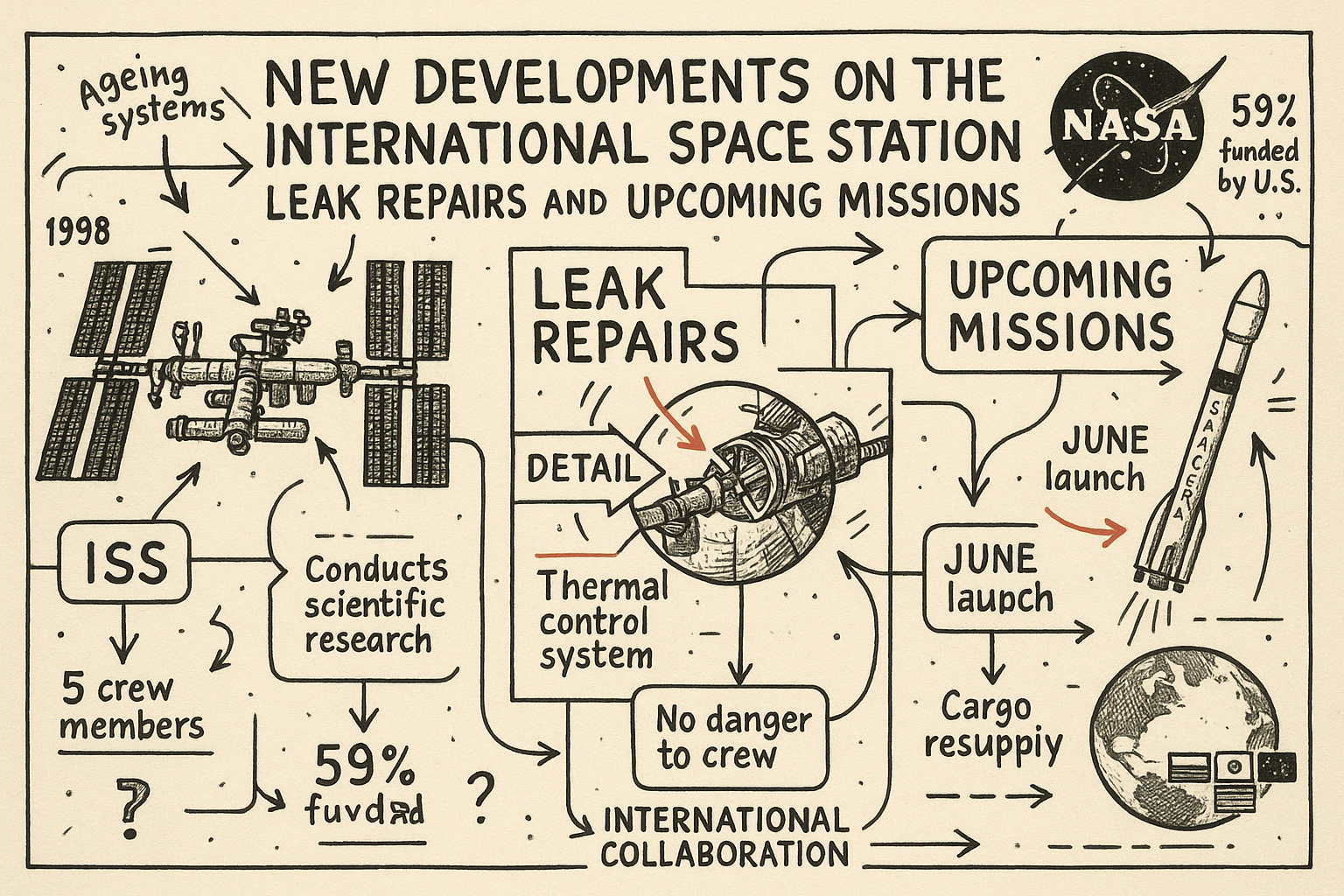
Simultaneously, NASA's continued focus on international cooperation is evident through its joint efforts with the Canadian Space Agency (CSA) in maintaining the International Space Station's operational integrity. The upcoming US spacewalk to replace components of the Canadarm2 exemplifies the intricate interdependence between countries in maintaining pivotal space infrastructure.
Technological Advancements and Strategic Deployments
The Canadian Space Agency's $688 million contract with MDA Space for the RADARSAT replenishment satellite further underscores Canada's strategic commitment to maintaining and enhancing its Earth observation capabilities. This initiative is critical for continuous low-earth orbit surveillance, providing invaluable data for environmental monitoring and security purposes.
In parallel, NASA's CAPSTONE mission has successfully completed its extended testing phase, showcasing advanced technologies for autonomous lunar navigation and communication. This development is a cornerstone for future missions aimed at establishing a sustained human presence on the Moon, as it reduces reliance on constant Earth-based communication.
Future Prospects: A New Era of Space Habitats and Exploration
Looking ahead, Vast Space's Haven-1 station is a testament to the growing ambition of private enterprises in space habitation. With its planned 2027 launch, Haven-1 is poised to provide a versatile platform for research and human habitation, reflecting the increasing feasibility of private space stations as extensions of governmental projects.
However, as these ambitions grow, so do the challenges. Former NASA chief's skepticism about the Artemis moon lander plans underscores the complexity and potential pitfalls of these large-scale endeavors. The Artemis program's success will hinge on its ability to integrate advanced technologies with practical mission design, a balance that will require continuous innovation and adaptive management.
Concluding Thoughts: Strategic Implications and Insights
These diverse initiatives collectively paint a picture of a rapidly evolving space sector where strategic partnerships and technological advancements are key enablers. The integration of international expertise and private innovation is reshaping the contours of space exploration, offering new opportunities for scientific discovery and economic growth.
As we navigate this new era, one surprising insight emerges: the increasing reliance on international and cross-sector collaborations could redefine national space programs. Rather than operating in silos, space agencies and companies are forming a network of shared resources and expertise, potentially accelerating the pace of exploration and discovery.