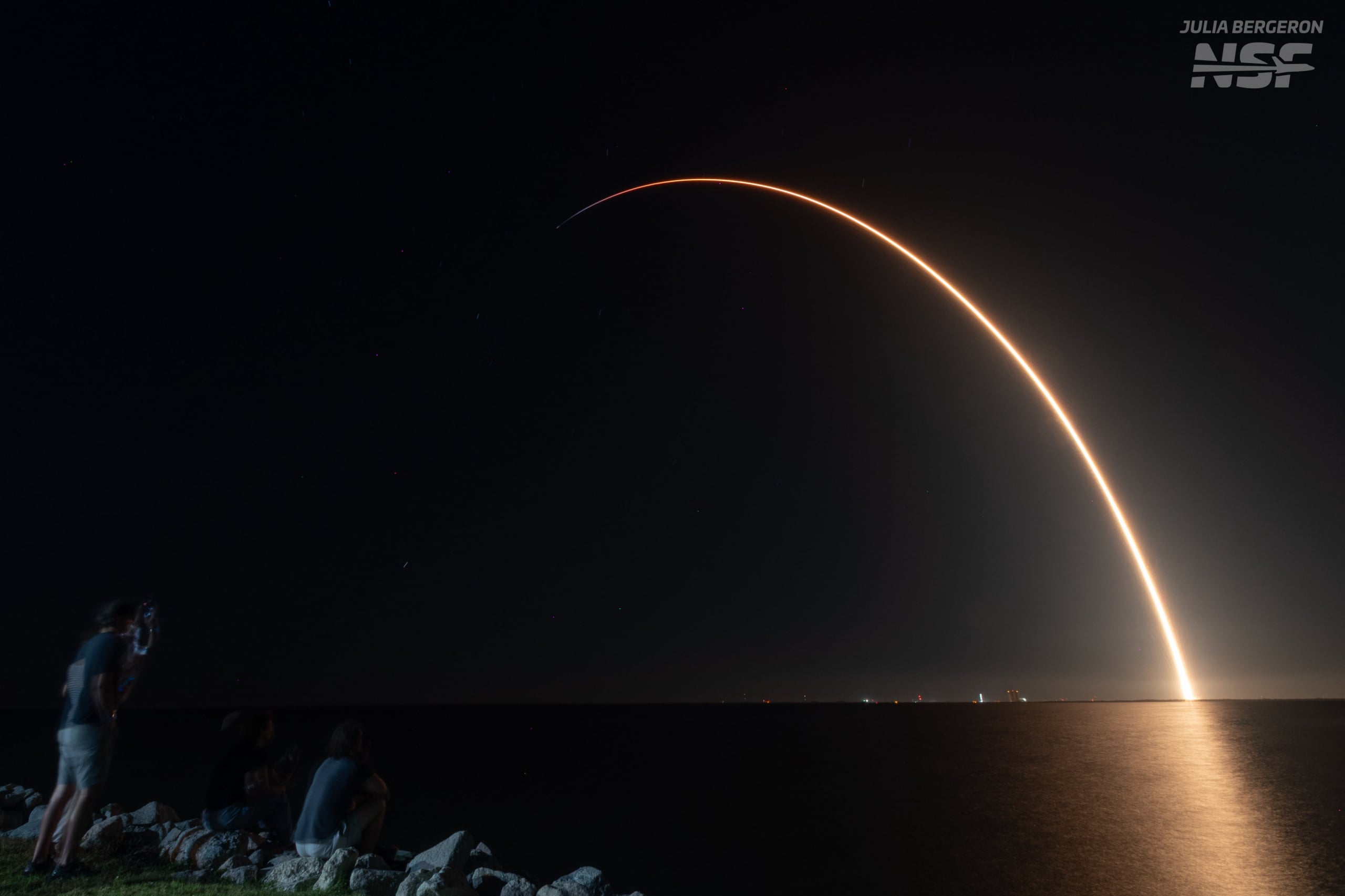
On July 21, a SpaceX Falcon 9 lifted off from Cape Canaveral carrying Northrop Grumman's Mission Robotic Vehicle (MRV) and three Mission Extension Pods (MEPs) toward geosynchronous transfer orbit. The launch drew attention less for the rocket than for its cargo: a spacecraft designed to repeatedly service other satellites in orbit, rather than dock with just one and stay there.
Two Arms, a Reusable Toolkit
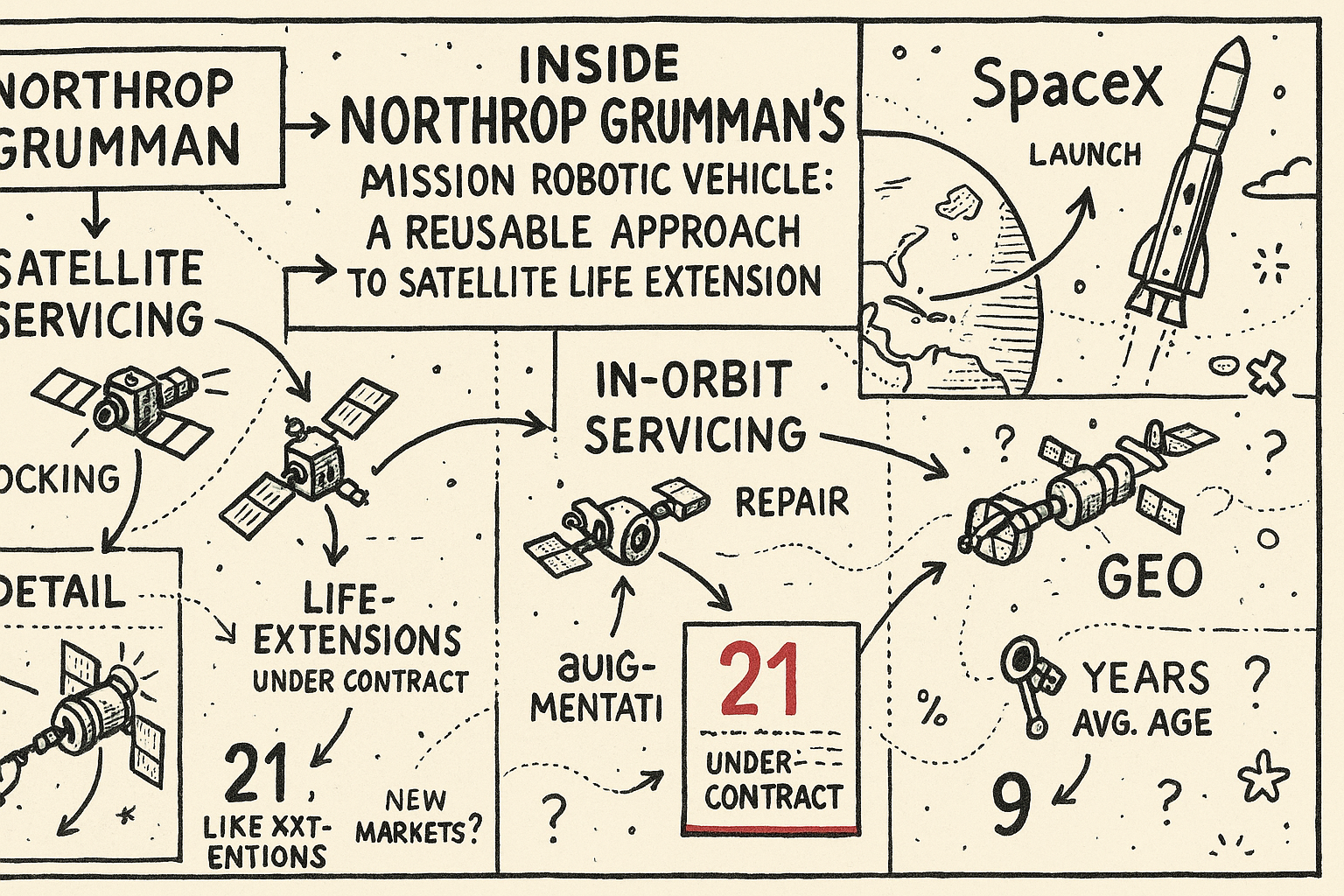
The MRV carries two robotic arms, each roughly 10 feet (3 meters) long, built by the U.S. Naval Research Laboratory under DARPA's Robotic Servicing of Geosynchronous Satellites (RSGS) program; NASA's Goddard Space Flight Center joined as a supporting partner on the mission in 2024. Those arms let the MRV grapple client satellites and install hardware directly, rather than merging permanently with them. That distinction matters: Northrop's earlier servicers, MEV-1 (which docked with Intelsat 901 in 2020) and MEV-2 (which docked with Intelsat 10-02 in 2021), each attached to a single satellite for the rest of that satellite's operational life. The MRV instead retrieves each Mission Extension Pod in turn, flies it to the target spacecraft, and installs it with its robotic arms before moving on to the next customer — turning a one-shot docking mission into a repeatable service run.
What a Pod Actually Does
Each MEP is a small propulsion module that attaches to a satellite's structural ring and takes over station-keeping using its own electric thrusters, rather than transferring fuel into the host spacecraft. Northrop projects that a single pod can extend a typical geostationary communications satellite's useful life by roughly six years — a meaningful window for an operator facing the choice between a multi-year, nine-figure replacement program and a cheaper life-extension contract. The three pods launched with the MRV are already spoken for: two are bound for Intelsat satellites, and one for Australia's Optus.
A Market Still Taking Shape
'The toolkit that we have right now when there are problems in space is very, very limited. It's about to be widely expanded,' SpaceLogistics vice president Ryan Tintner said of the mission. The U.S. Space Force has signaled it intends to draw on MRV as a commercial resource once it is fully operational, and Northrop has framed the vehicle as a baseline for capabilities well beyond life extension — in-orbit inspection, repair, and eventually assembly. The MRV itself is expected to remain in service for around 15 years, with additional pods planned for future customers as the servicing backlog grows.
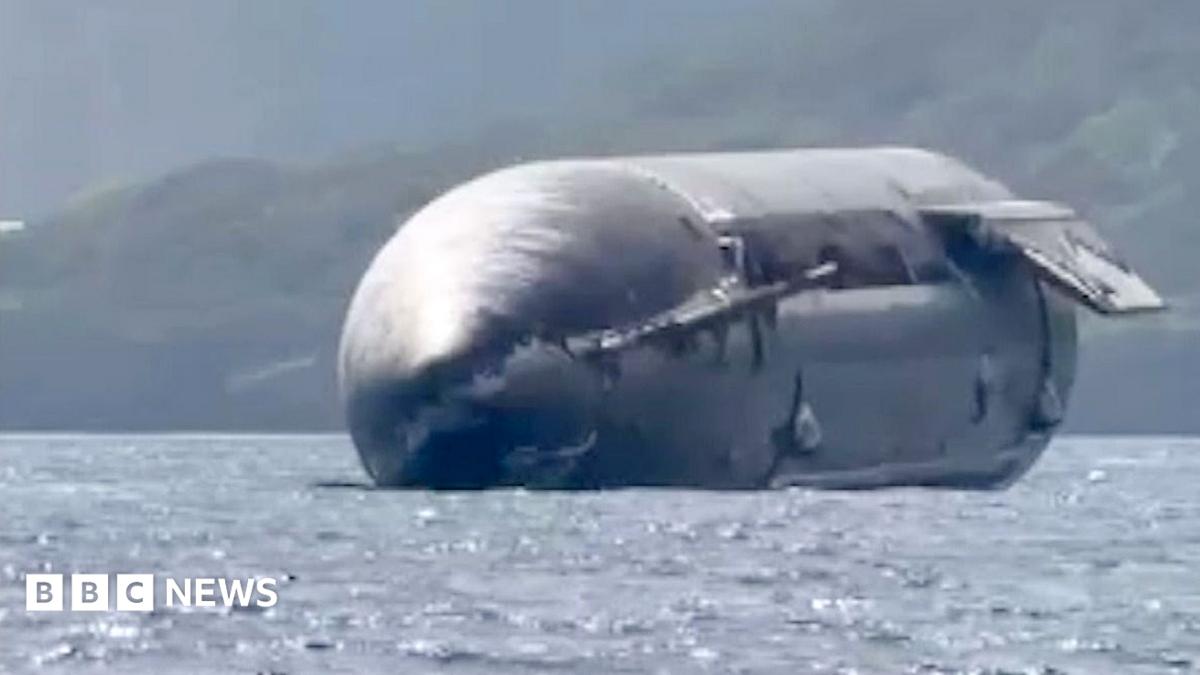
The launch came at a cost to the booster: because of the mission's fuel demands, SpaceX did not attempt to recover the Falcon 9 first stage, retiring it after a record 32 flights. For a company that has made reuse its signature, expending its most-flown booster on this mission is its own small signal of how much performance geostationary servicing work actually demands.