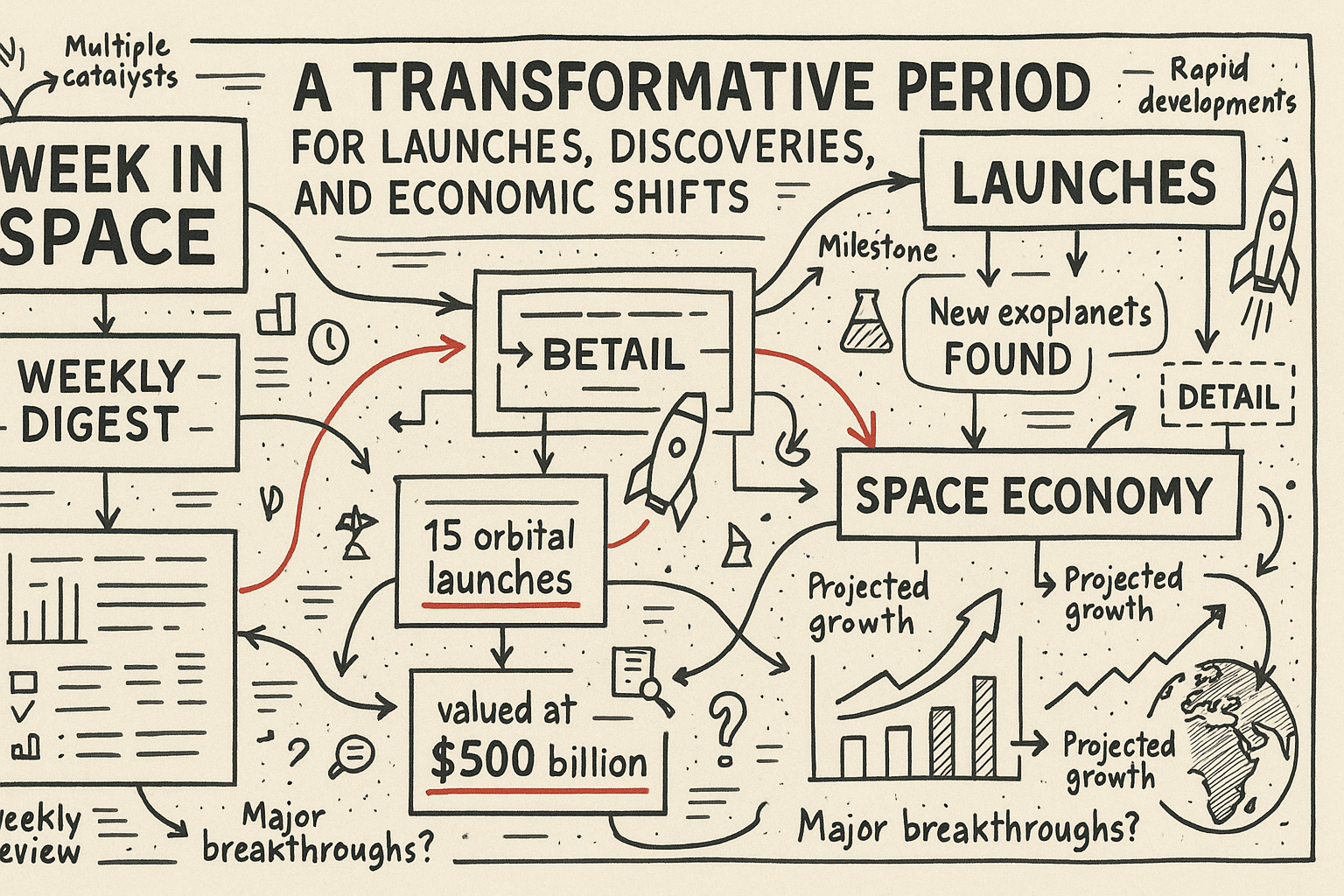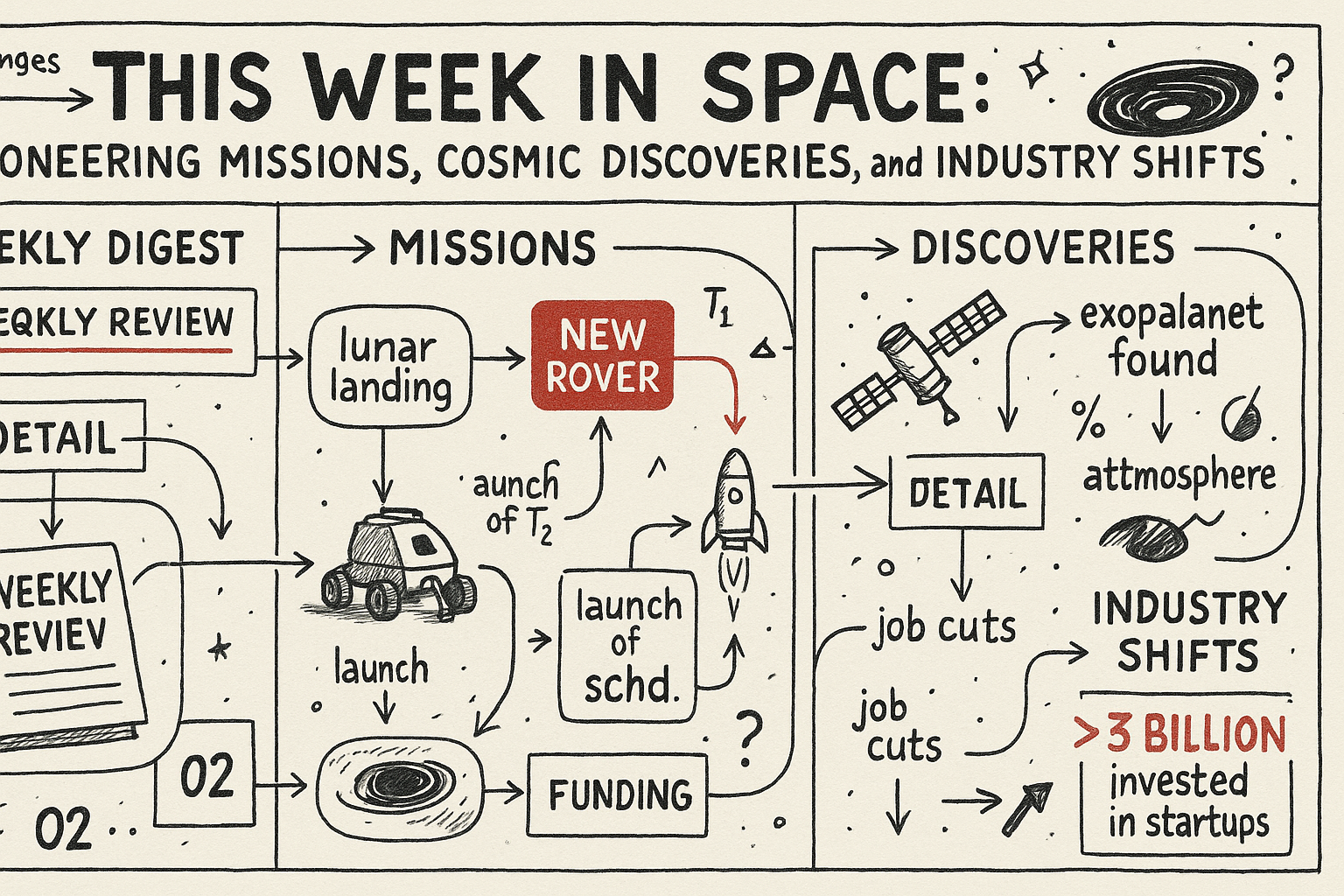
This week in the vast realm of space exploration and industry was marked by pioneering missions, groundbreaking discoveries, and significant industry shifts, capturing the imagination of scientists and entrepreneurs alike. From NASA's daring CAPSTONE 02 mission, designed to revolutionize lunar navigation, to the cosmic ballet of black holes, the past week has been nothing short of transformative. Meanwhile, private companies like Rocket Lab and SpaceX continue to redefine the commercial space sector, setting new standards in innovation and strategy.
Launch Activity: Pioneering Steps in Lunar and Beyond
At the forefront of this week's achievements is NASA's CAPSTONE 02 mission. This mission represents a critical leap forward in autonomous lunar operations. By testing advanced space navigation and rendezvous technologies in lunar orbit, CAPSTONE 02 is laying the groundwork for future Artemis missions and the long-term vision of establishing sustainable human presence on the Moon. This mission is not just a stepping stone; it is a monumental stride in ensuring that future lunar expeditions can be conducted with greater safety and efficiency.
Adding to the week's launch highlights, Rocket Lab announced a substantial expansion of its launch capabilities, securing a $266 million contract with the U.S. Space Force. This deal not only underscores Rocket Lab's growing influence in the suborbital launch market but also marks a strategic move to enhance its operational footprint with a new site in Alaska. This expansion is pivotal for supporting national defense initiatives and showcases Rocket Lab's adaptability and forward-thinking approach in the competitive aerospace landscape.
Exploration & Science: Unraveling Cosmic Mysteries
This week, the cosmos offered a plethora of discoveries that challenge our understanding of the universe. Notably, recent studies on black holes have provided new insights into their enigmatic nature. The revelation that black hole collisions may follow thermodynamic laws suggests a recurring, almost predictable pattern in their behavior. This insight not only deepens our understanding of these dark entities but also strengthens the bridge between classical physics and the strange world of quantum phenomena.
In another corner of the universe, the James Webb Space Telescope has once again demonstrated its prowess by detecting semi-heavy water on the distant exoplanet WASP-39b. This discovery is crucial, as it offers a glimpse into the planet's atmospheric composition and potential for habitability. The presence of such water molecules could provide clues about the planet's formation and its ability to support life, a topic of perennial intrigue for astronomers and astrobiologists.
Industry & Policy: Strategic Moves and Funding Milestones
The commercial space industry is in a state of dynamic evolution. This week, Rocket Lab further solidified its position with a new multi-launch contract with Japan’s iQPS, expanding its global launch portfolio. The agreement reflects Rocket Lab’s strategic commitment to building robust international partnerships and fulfilling the growing demand for reliable satellite launches.
Meanwhile, the financial landscape of space enterprises saw a significant boost with K2 Space's successful $500 million Series D funding round. This influx of capital is set to propel K2 Space’s ambitions for large satellite production, positioning the company to meet the burgeoning demands of both commercial and defense sectors. The increased valuation to $6.8 billion underscores the confidence investors place in the future of satellite technology as a cornerstone of global connectivity and security.
On the policy front, the UK faces a delicate balancing act as it navigates the challenges and opportunities within its national space strategy. With significant investments aimed at maintaining competitiveness on the global stage, the UK’s approach promises innovation, yet must contend with hurdles such as funding allocations and international collaboration.
Celestial Events and Future Prospects
August 2026 promises a series of celestial spectacles and scientific endeavors that continue to captivate both the scientific community and the public. This month ushers in unique astronomical events that not only offer breathtaking views but also provide valuable opportunities for research and discovery. The anticipated impact of a SpaceX Falcon 9 rocket stage on the Moon, for instance, presents a rare opportunity for scientists to study lunar impacts in real-time, offering insights into both lunar geology and the effects of such collisions.
Looking forward, the space sector is poised for further excitement as missions such as NASA’s PROMISE and the Nancy Grace Roman Space Telescope prepare to redefine our understanding of the cosmos. PROMISE, which involves the transformation of the Perseverance Mars rover model for lunar exploration, stands as a testament to NASA’s innovative spirit. Meanwhile, the Roman Space Telescope is expected to unlock secrets of supermassive black holes, offering a deeper look into the very foundations of our universe.
In conclusion, this past week has been marked by remarkable progress across various fronts in the space sector, from technological advancements and scientific discoveries to strategic industry moves. As we move into the coming weeks, the anticipation builds for further groundbreaking developments that promise to expand our horizons and deepen our understanding of the universe we inhabit.