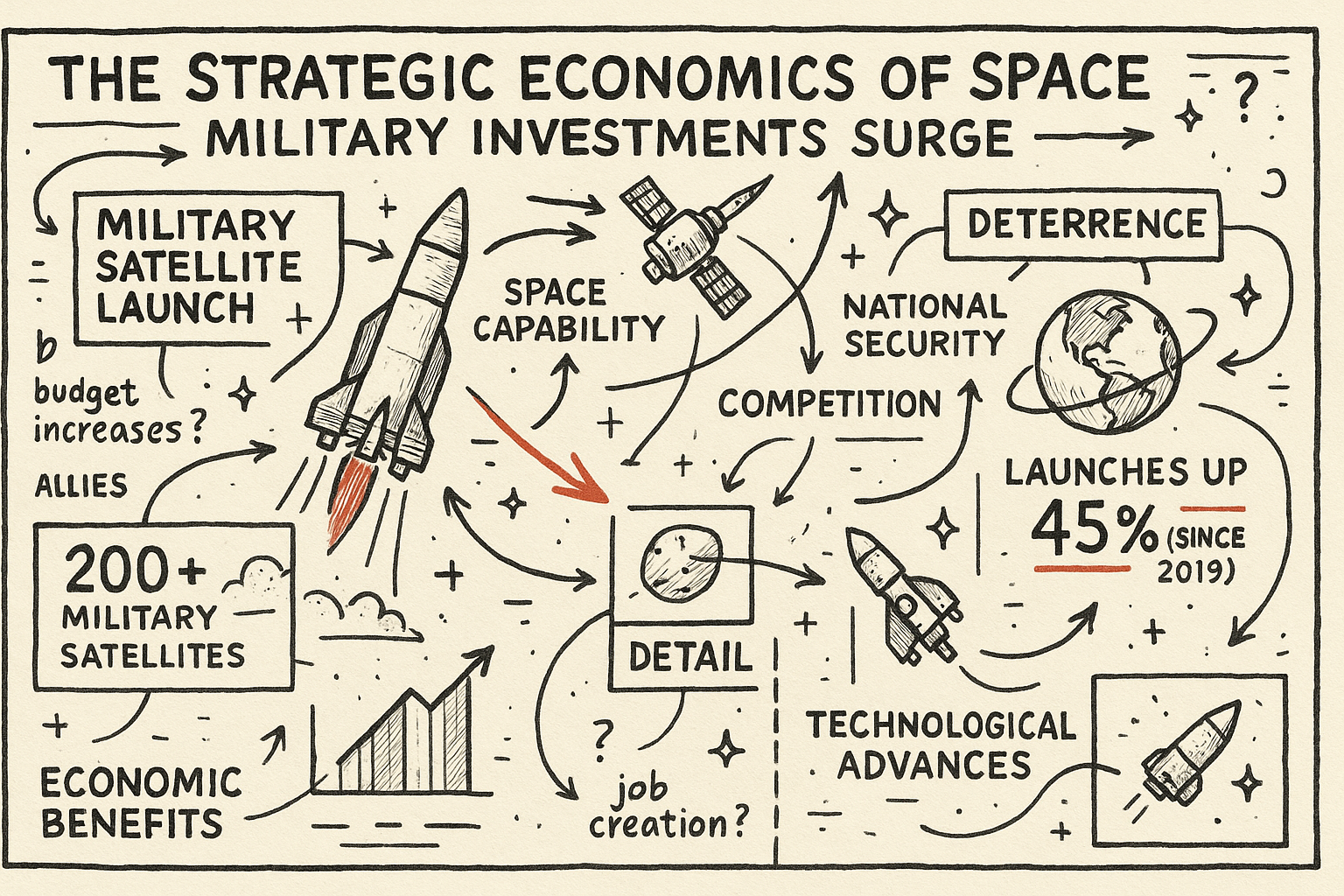
The U.S. Space Force's recent flurry of contracts underscores a pivotal shift in the global space economy, as military investments become a major driver of technological innovation and geopolitical strategy. As the Space Force allocates nearly $3 billion across various projects, including a $981 million training range contract with 15 companies, the economic impact is profound and multifaceted.
Historical Context: Military as a Catalyst
Historically, military needs have often catalyzed technological advancement. The space sector is no exception. The Cold War-era Space Race, driven by U.S. and Soviet military ambitions, laid the groundwork for today's commercial space endeavors. Now, with the Space Force's strategic focus on enhancing training capabilities and communication infrastructures, a new wave of innovation is being unleashed.
The $22.9 million contract for K2 Space's orbital laser communications demonstration exemplifies this trend. By hosting optical terminals on two satellites, K2 Space aims to enhance military communications, a critical component in maintaining operational superiority. This investment not only addresses current military needs but also paves the way for commercial applications of such technologies.
Economic Implications: A New Space Race
The resurgence of a competitive space environment is further evidenced by the investment in space situational awareness (SSA) technologies. A Beijing-based startup's $14 million funding to develop an SSA constellation adds to China's growing capabilities in tracking orbital objects. This development highlights a broader trend: the global rush to secure space assets has economic, strategic, and security dimensions.
China's focus on SSA reflects a strategic effort to monitor and possibly counteract foreign satellites, a capability the Space Force is also keenly developing. This dual investment from major space powers suggests a new, economically driven space race, with both nations seeking to dominate the high ground of space.
Strategic and Economic Synergies
The Space Force's $287 million software contract to Sphinx Defense for a strategic SATCOM ground segment further illustrates the synergy between military strategy and economic growth. By investing in software that enhances mission planning and satellite communication resilience, the Space Force is not only securing its strategic interests but also fostering a robust market for advanced software solutions.
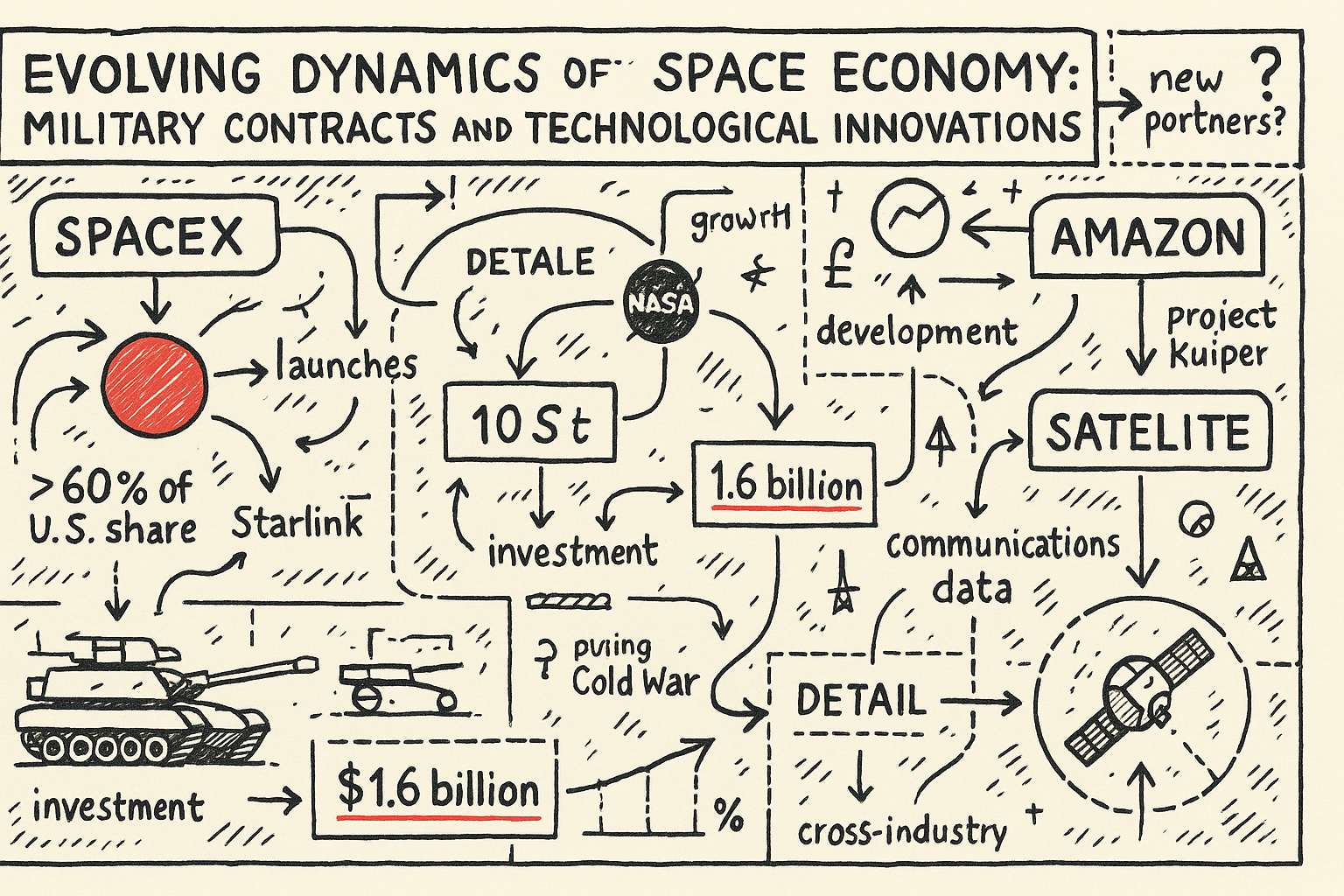
Similarly, SpaceX's $1.6 billion contract to launch sensing and targeting satellites emphasizes the increasing reliance on private companies to fulfill public sector objectives. The economic benefits are significant, propelling SpaceX into a central role within the U.S. military's space operations, while ensuring the rapid deployment of critical technologies.
Counterintuitive Insights
One surprising aspect of this strategic economic shift is the realization that military investments, often perceived as isolated from civilian markets, are in fact creating substantial commercial opportunities. The Space Force's contracts are not just about defense; they are stimulants for the broader economy, driving innovation in sectors like telecommunications, software, and aerospace manufacturing.
Moreover, the involvement of private sector companies in military contracts enhances competition and efficiency, potentially reducing costs and accelerating technological advancements. This integration of public and private initiatives is reshaping the economic landscape of the space industry, leading to unexpected collaborations and advancements.
Future Implications
As global powers continue to invest heavily in space capabilities, the economic and strategic landscapes are poised for dramatic shifts. The intertwining of military objectives with economic growth strategies will likely spur a new era of innovation and competition, with implications reaching far beyond national borders.
Ultimately, the strategic investments by the Space Force and similar initiatives by other nations signal a new chapter in the space economy, where military imperatives drive technological progress and economic growth, reshaping our understanding of space as a domain of both conflict and commerce.