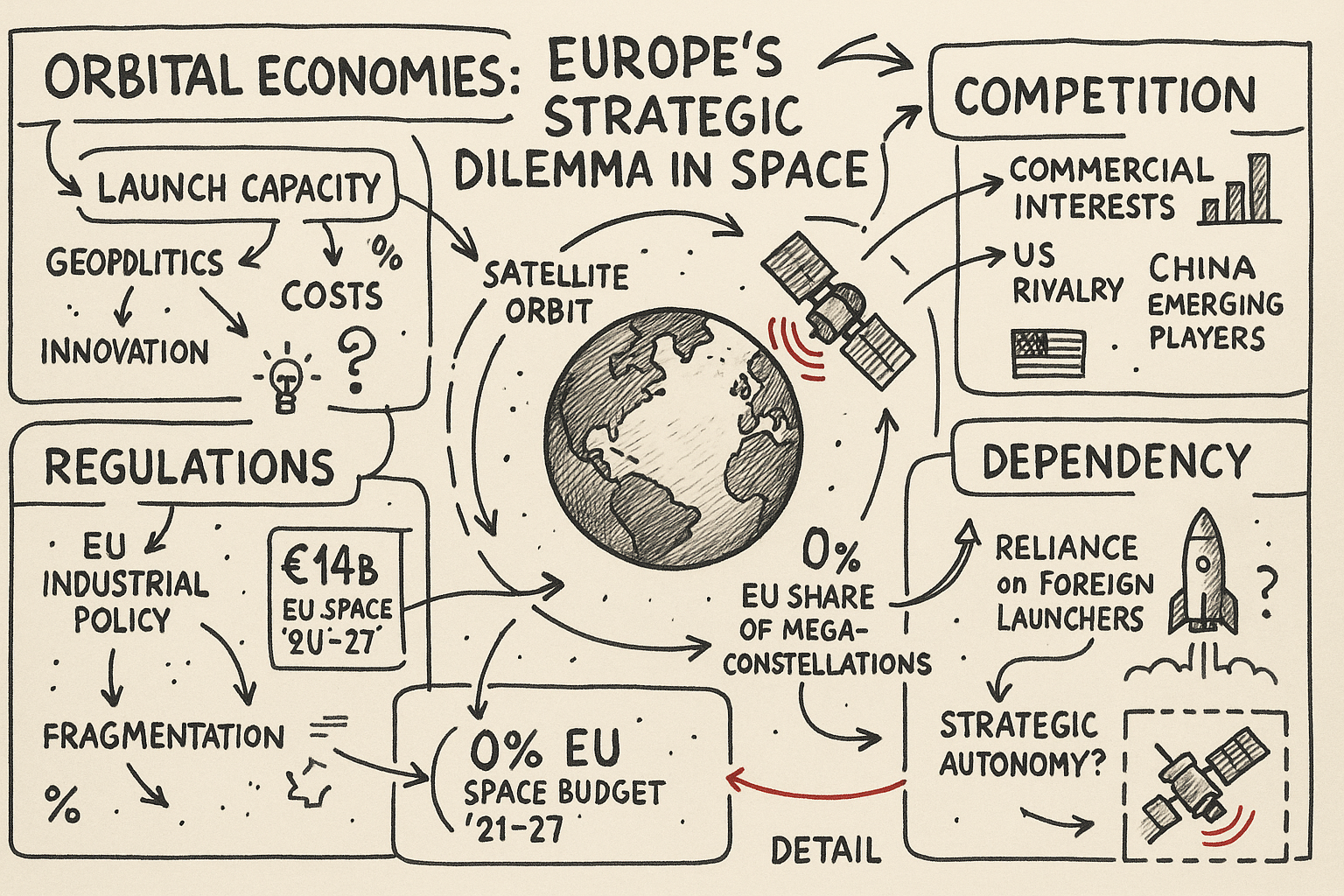
The landscape of the global satellite economy is undergoing a seismic shift, with European players facing a crossroads in their strategic development. A series of recent developments have highlighted both the promise and the peril confronting Europe's space sector, as it grapples with competitive pressures from American giants and rapid advancements in orbital technologies.
One of the most significant signals of change comes from Eutelsat, a major European satellite operator, which reported robust growth in its Low Earth Orbit (LEO) business segment. CEO Rodolphe Belmer has suggested that Eutelsat is 'undervalued' compared to SpaceX, pointing to the company's potential in leveraging LEO technologies to bridge the competitive gap with American and Asian counterparts. This optimism is echoed by SES, another key player, which anticipates a rebound after a subdued second quarter, aiming to surpass the €1 billion revenue mark through its networks business.
However, the broader picture reveals a more challenging scenario. The European Space Policy Institute has issued a stark warning about Europe's increasing dependency on foreign orbital computing infrastructures. As U.S. firms and China's government-led initiatives accelerate the deployment of space-based data centers, Europe's own advancements appear sluggish. This 'orbital compute gap' could potentially undermine Europe's strategic autonomy in space, raising concerns about future technological sovereignty.
Adding to the complexity is the competitive threat posed by SpaceX, which is not only dominating the satellite broadband market with Starlink but is also eyeing terrestrial mobile networks, directly challenging telecom heavyweights like T-Mobile, AT&T, and Verizon. Such moves underscore SpaceX's ambitious strategy to expand its footprint beyond space, leveraging its satellite constellations to offer comprehensive communication solutions.
Meanwhile, the traditional geostationary satellite (GEO) industry is witnessing a tumultuous phase. Hughes, a prominent player in the GEO broadband market, has filed for bankruptcy, unable to withstand the competitive pressures from SpaceX's Starlink. Yet, there is a silver lining for the GEO sector. The upcoming FCC auction of the upper C-band spectrum presents an opportunity for satellite operators to secure substantial funding for new geostationary spacecraft and transition costs, potentially infusing the sector with a much-needed financial boost.
In the midst of these developments, new entrants like Endeavor Optical Networks are emerging to carve out niches in specialized segments. With plans to establish an optical satellite network in Medium-Earth Orbit (MEO) for space-based data transfer, Endeavor is positioning itself to capitalize on the burgeoning demand for high-speed, low-latency data communications.
Historically, Europe has been a formidable force in the space industry, known for its collaborative projects and cutting-edge technologies. However, the current scenario requires a strategic pivot. European countries must accelerate their efforts in developing indigenous orbital technologies and infrastructure to maintain competitiveness. The European Union's investment in its launcher capabilities, though progressing, is not advancing as swiftly as required. This calls for a concerted effort to enhance collaboration, streamline regulatory processes, and attract private investments to support innovation and growth.
In conclusion, while European satellite operators like Eutelsat and SES are demonstrating resilience and potential, the region faces critical challenges that could determine its future standing in the global space economy. Addressing the orbital compute gap and countering competitive threats from American and Asian companies will require strategic foresight and decisive action. The stakes are high, and the decisions made today will shape Europe's technological and economic landscape in the decades to come.