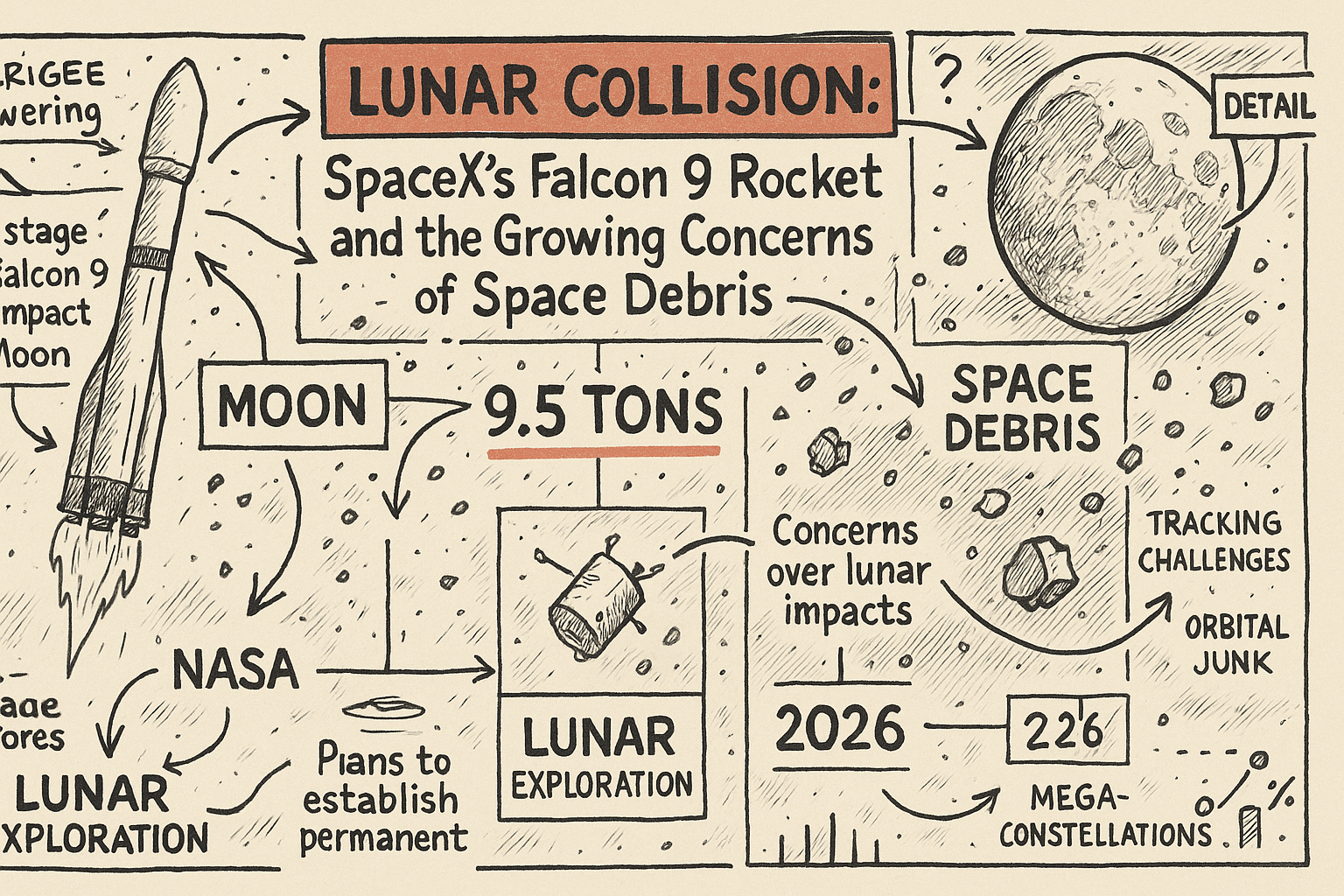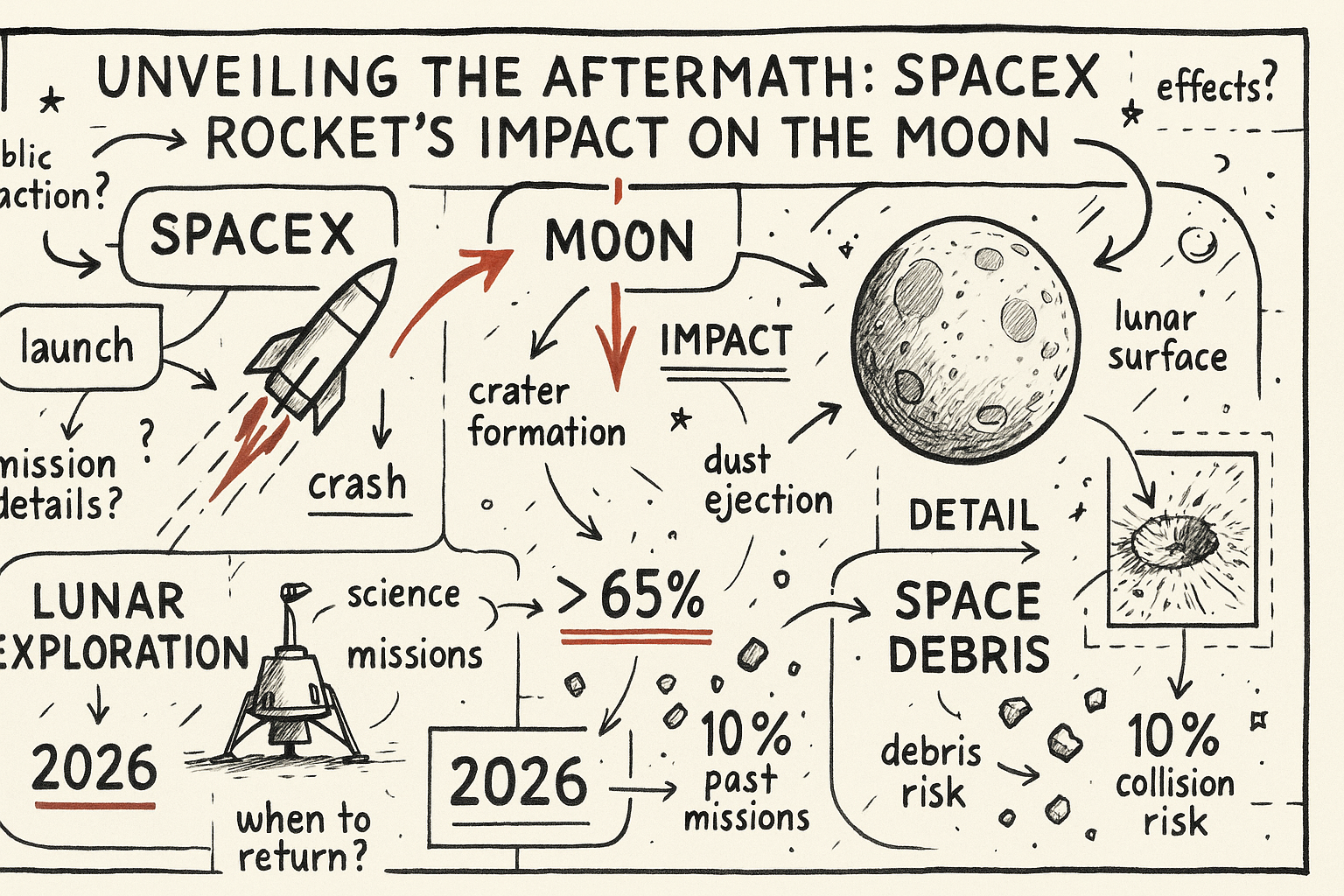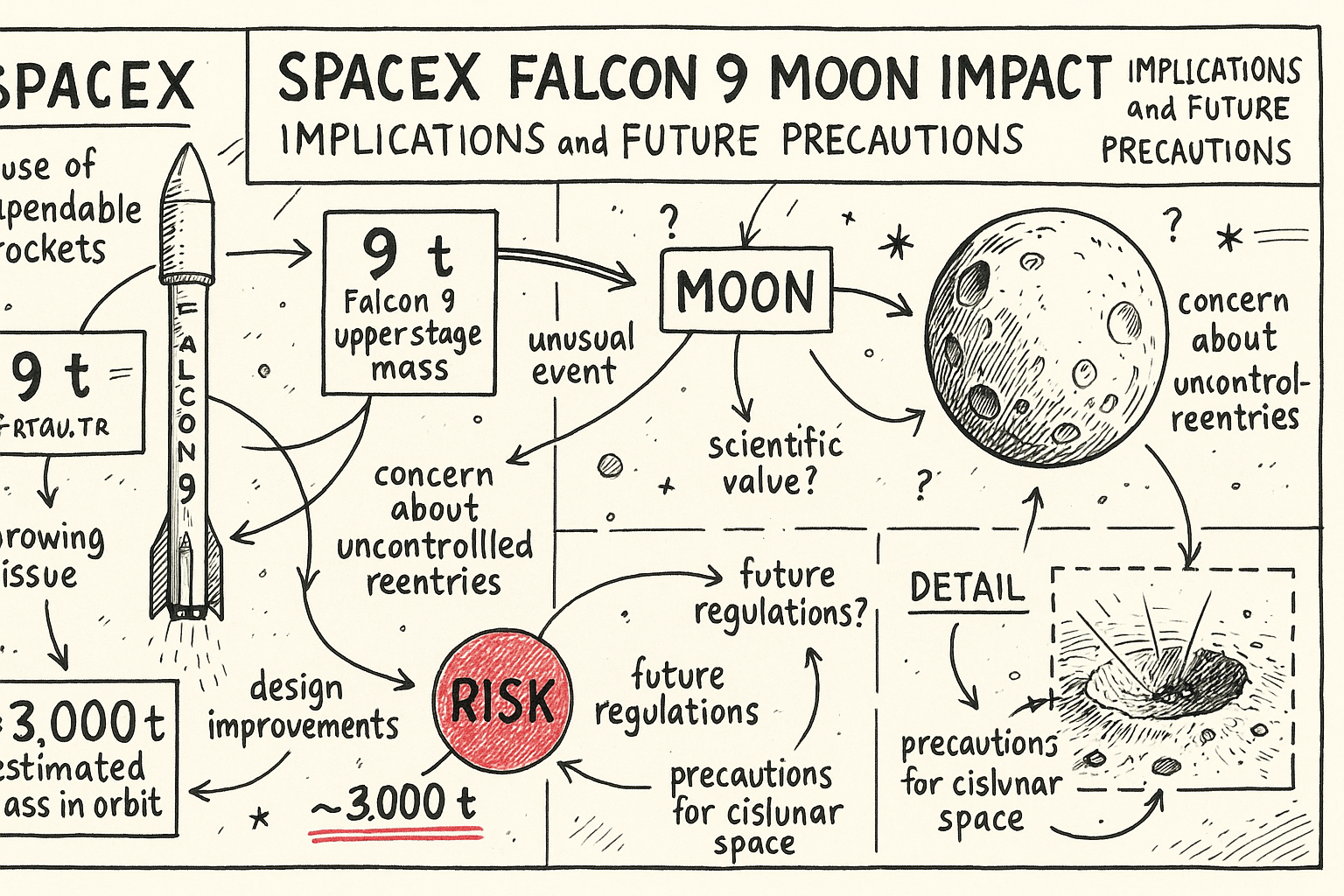
The Moon, Earth's constant celestial companion, is no stranger to impacts. Over billions of years, it has been bombarded by asteroids and meteors, creating its distinctive cratered surface. In recent times, human activity has also contributed to these impacts, with probes and landers occasionally crashing onto the lunar surface. This week, the Moon is set to experience another such event, as a SpaceX Falcon 9 rocket stage is on a collision course with it.
The Falcon 9 upper stage, which has been drifting through space for about a year and a half, is expected to crash into the Moon at a speed of approximately 5,400 mph (2.43 kilometers per second). This high-speed impact will occur on August 5, 2026, at 2:35 a.m. Eastern Time. Without an atmosphere to slow it down, the collision is anticipated to generate an explosion equivalent to 3 metric tons of TNT, resulting in a crater up to 27 meters in diameter and 5 meters deep.
Scientific Opportunities and Concerns
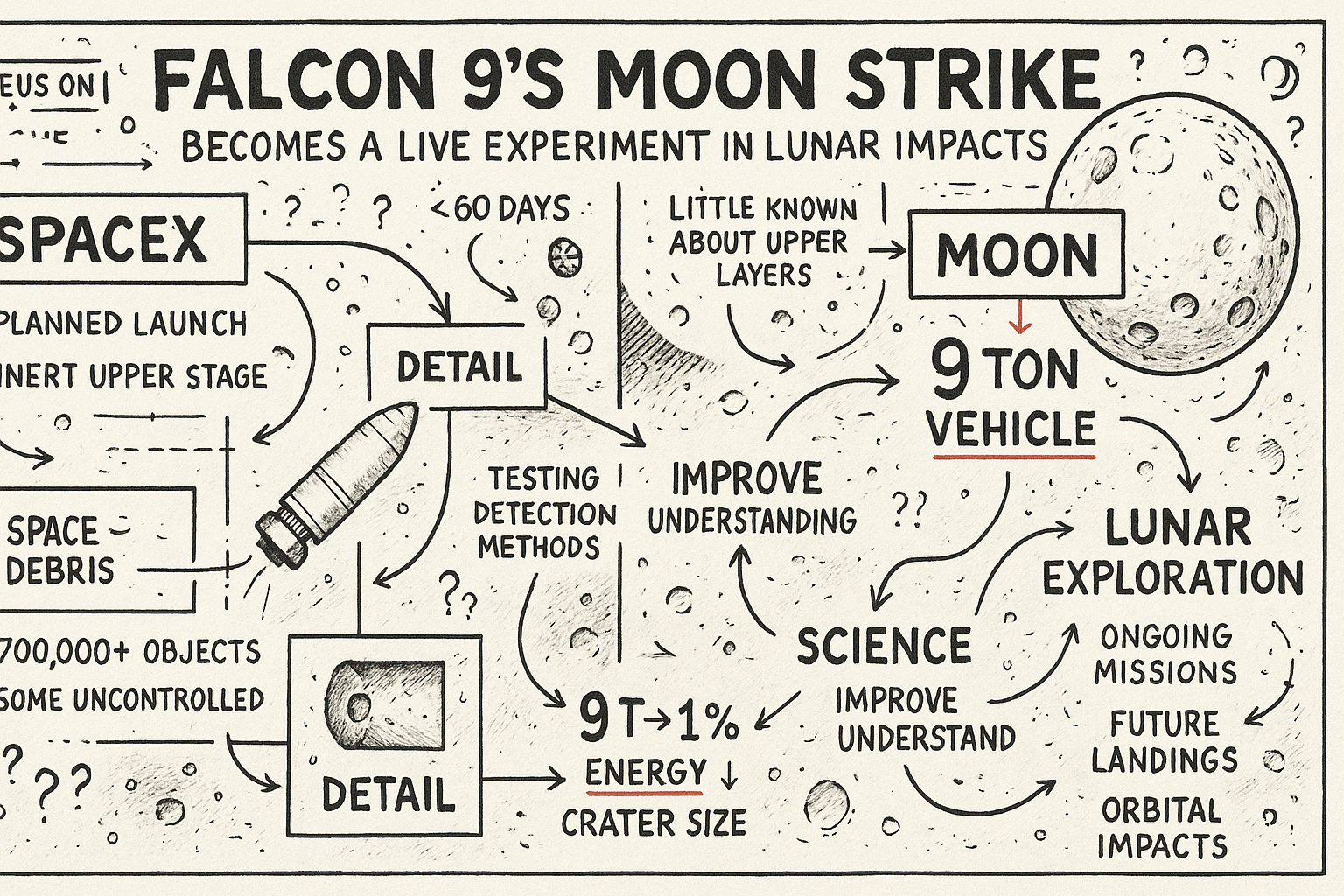
While the impact is unintentional, it presents a unique opportunity for scientific observation. The debris cloud generated by the collision could be visible from Earth, providing astronomers with valuable data about the Moon's surface composition and the dynamics of such impacts. This event also serves as a reminder of the increasing risk of space debris as more missions target the Moon, especially with the renewed interest in lunar exploration.
As the space race intensifies, the likelihood of debris hitting the Moon is expected to rise. This raises important questions about the future of lunar exploration, particularly concerning the safety of potential lunar bases. The Moon's lack of atmosphere means that any incoming objects, regardless of size, will impact its surface at full speed, posing a significant threat to any infrastructure established there.
Preventing Future Collisions
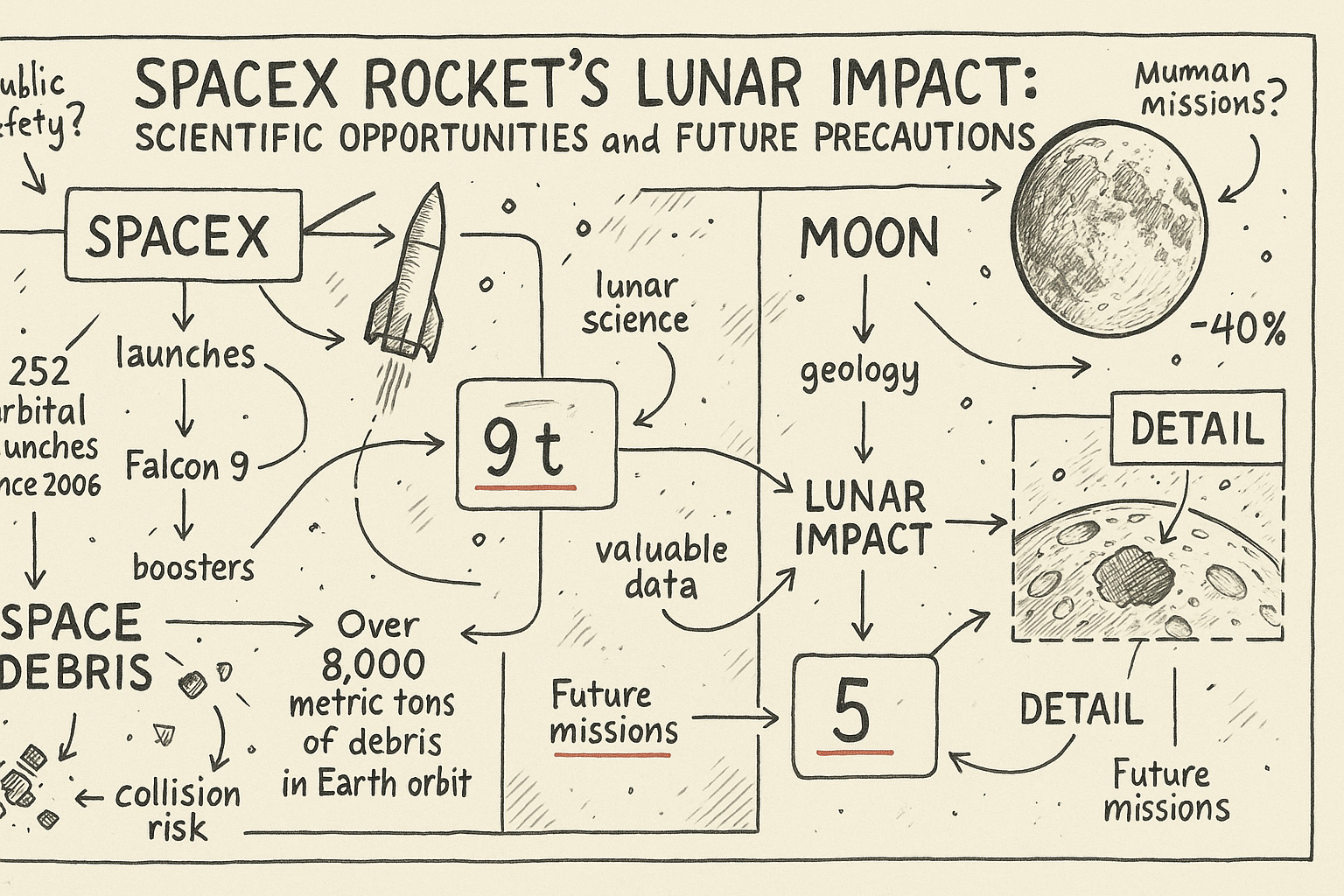
In response to this impending impact, SpaceX is collaborating with NASA to develop strategies to prevent similar incidents in the future. The Falcon 9 upper stage involved in this collision was part of a mission launched in January 2025, which successfully delivered lunar landers for Firefly Aerospace and ispace. However, the upper stage was left adrift due to insufficient fuel to return to Earth or maintain a stable orbit.
Efforts to mitigate such risks in future missions may include designing rocket stages with the capability to deorbit themselves or enter a stable orbit after completing their primary mission objectives. This collaboration between SpaceX and NASA highlights the importance of addressing space debris as humanity continues to explore beyond Earth.
As we look forward to further lunar exploration, the lessons learned from this event will be crucial in ensuring the safety and sustainability of future missions. The Moon remains a key destination for scientific discovery and potential human settlement, and safeguarding it from the hazards of space debris is a priority for the international space community.