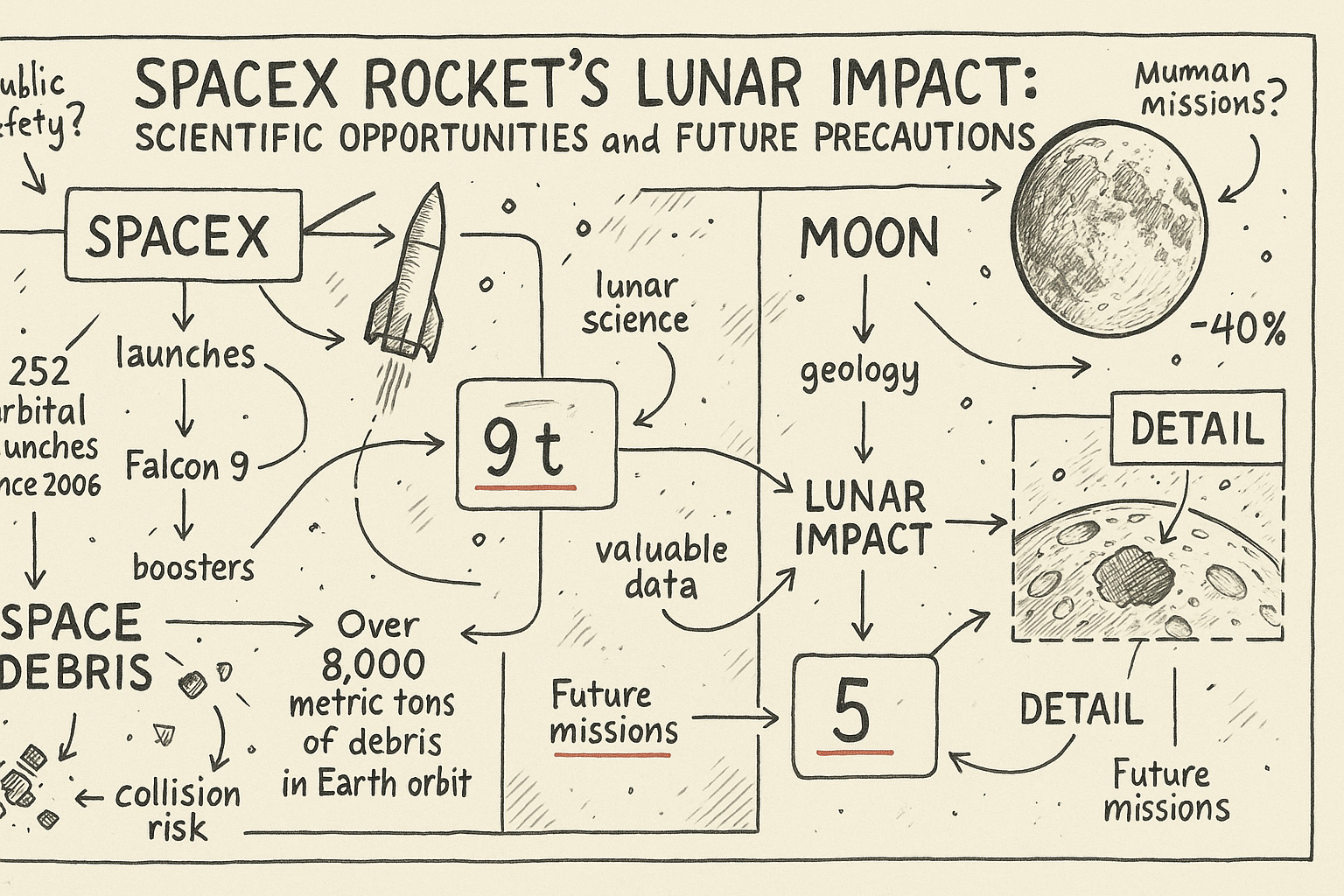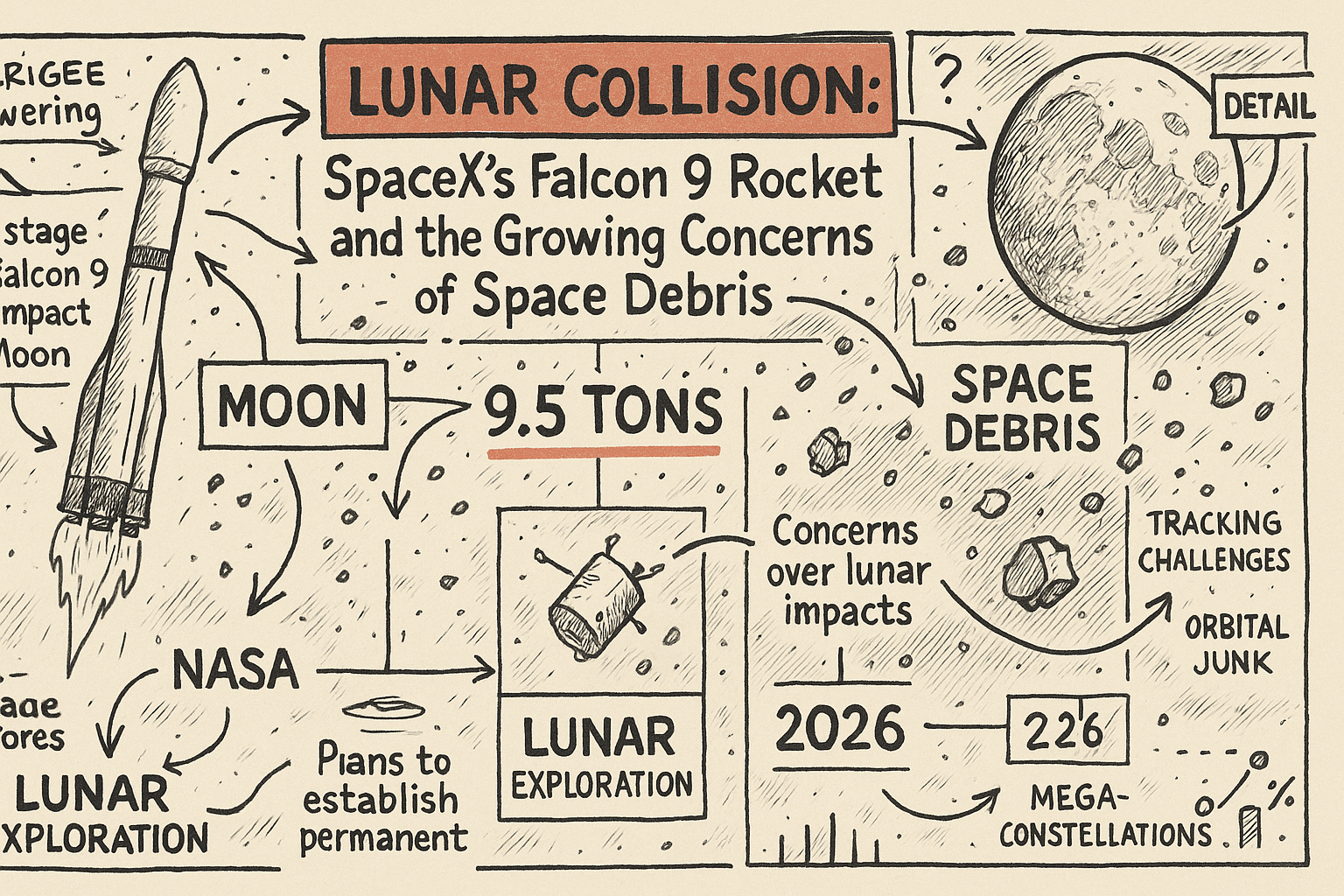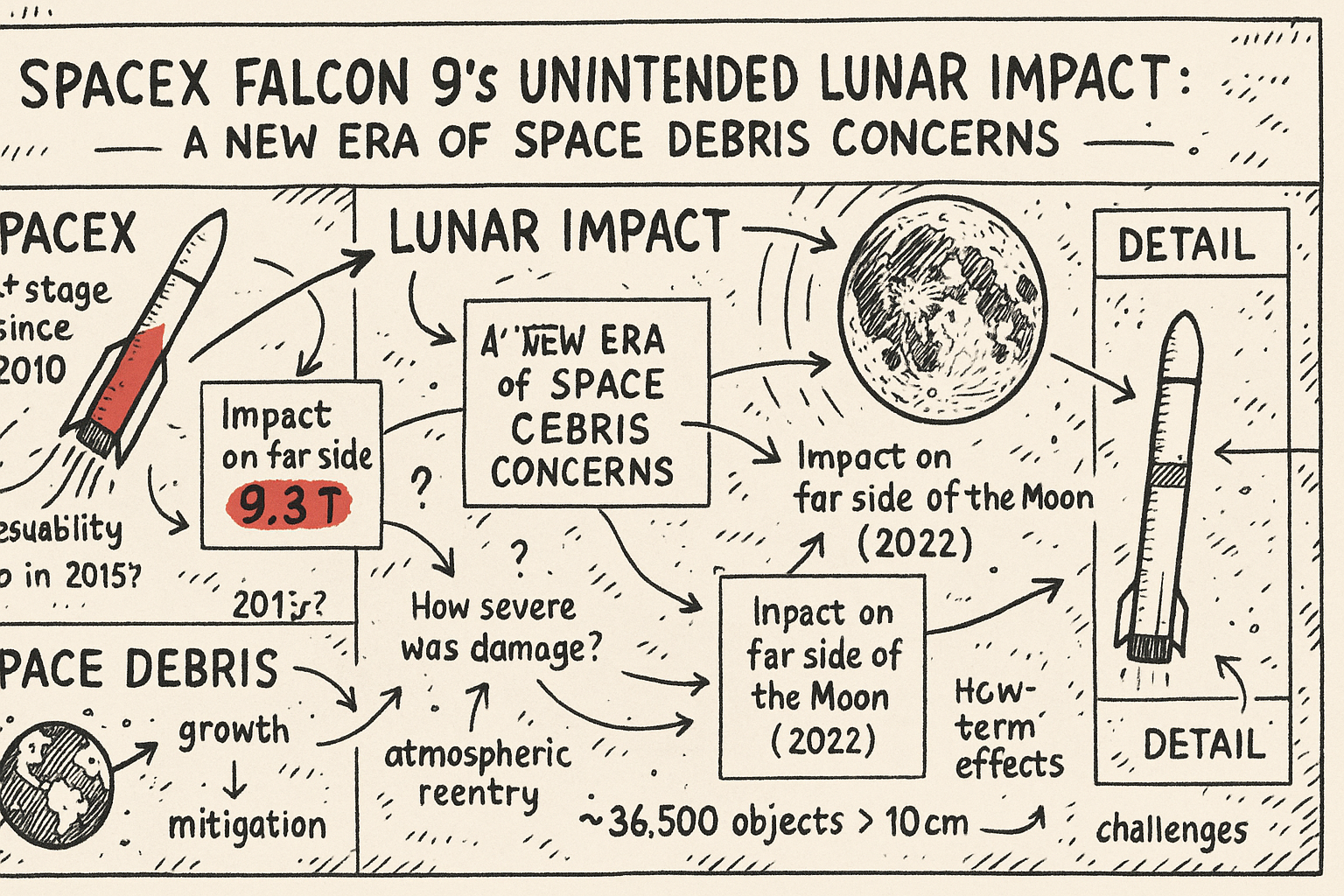
The recent collision of a SpaceX Falcon 9 rocket stage with the Moon has brought the issue of space debris into sharp focus. The upper stage, weighing approximately 4,000 kg, was part of a mission launched last year to transport a pair of lunar landers. While the landers successfully reached their destinations, the rocket stage was left adrift in space, ultimately leading to its unintended lunar impact.
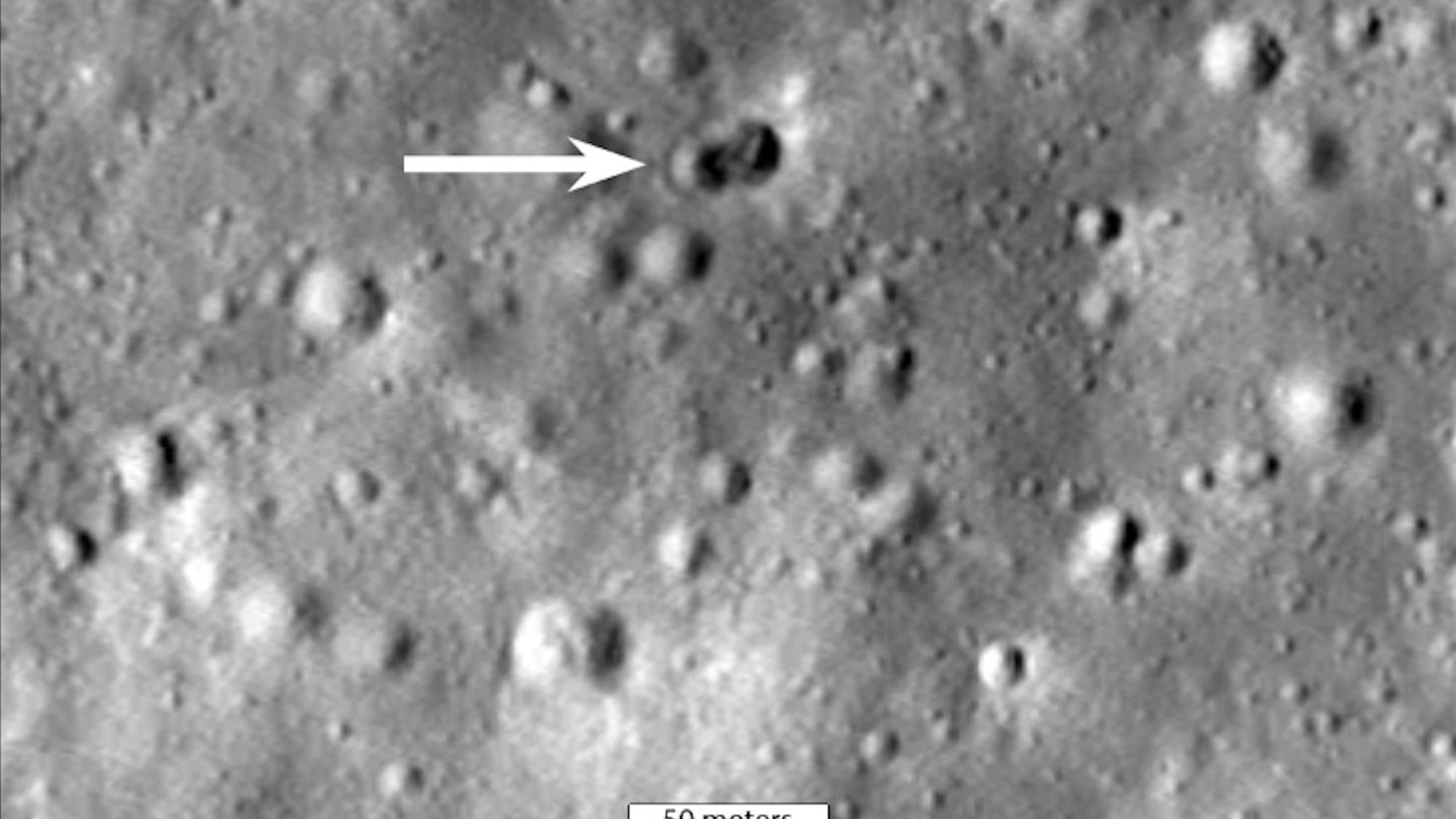
On August 5, 2026, at around 6:35 a.m. GMT, the rocket stage is believed to have struck the Moon's surface, creating a crater potentially up to 27 meters in diameter and 5 meters deep. This impact, equivalent to an explosion of 3 metric tons of TNT, is a stark reminder of the challenges posed by space debris, especially as the space race intensifies.
Rising Concerns Over Space Debris
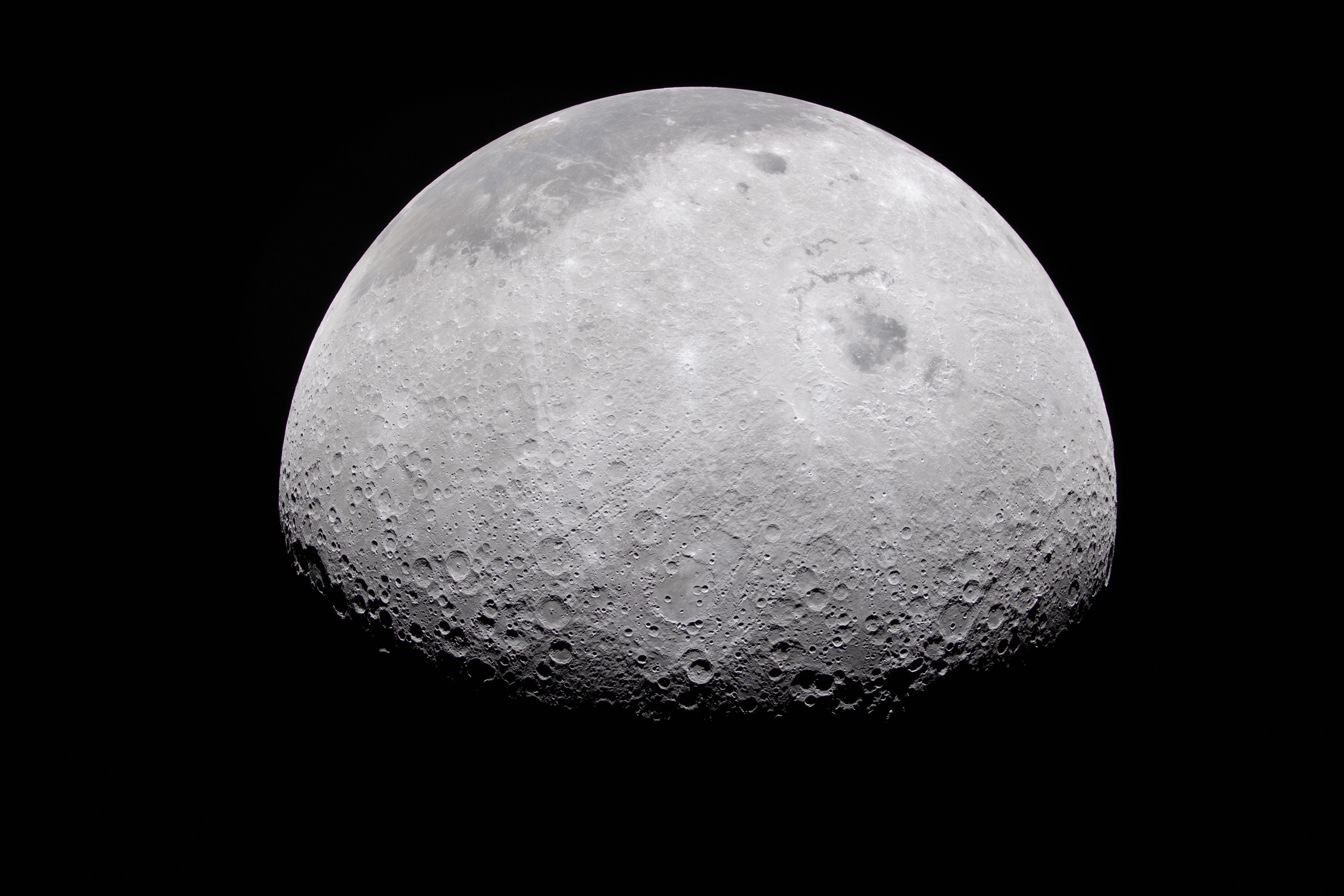
The collision has raised alarms about the increasing risk of space debris impacting celestial bodies. As more countries and private companies participate in space exploration, the likelihood of such incidents is expected to grow. The Moon, currently littered with approximately 3,000 human-made objects, faces an uncertain future as a site for exploration and potential bases.
Experts warn that the accumulation of debris could pose significant threats to future lunar missions, including the establishment of lunar bases. The lack of an atmosphere on the Moon means that debris travels at high speeds, increasing the potential for damage upon impact.
Implications for Future Lunar Exploration
The SpaceX Falcon 9 incident serves as a cautionary tale for the future of lunar exploration. As nations and private entities plan to establish bases on the Moon, safeguarding these installations from space debris becomes paramount. The incident underscores the need for international cooperation and regulation to address the growing problem of space debris.
NASA and other space agencies are actively tracking space debris and exploring solutions to mitigate its impact. Ground-based telescopes and space-based assets are being utilized to monitor objects like the Falcon 9 upper stage, highlighting the importance of tracking and managing space debris in real-time.
As the space industry continues to evolve, addressing the challenges of space debris will be crucial to ensuring the safety and sustainability of future missions. The recent lunar collision is a reminder of the delicate balance required to explore the cosmos responsibly.