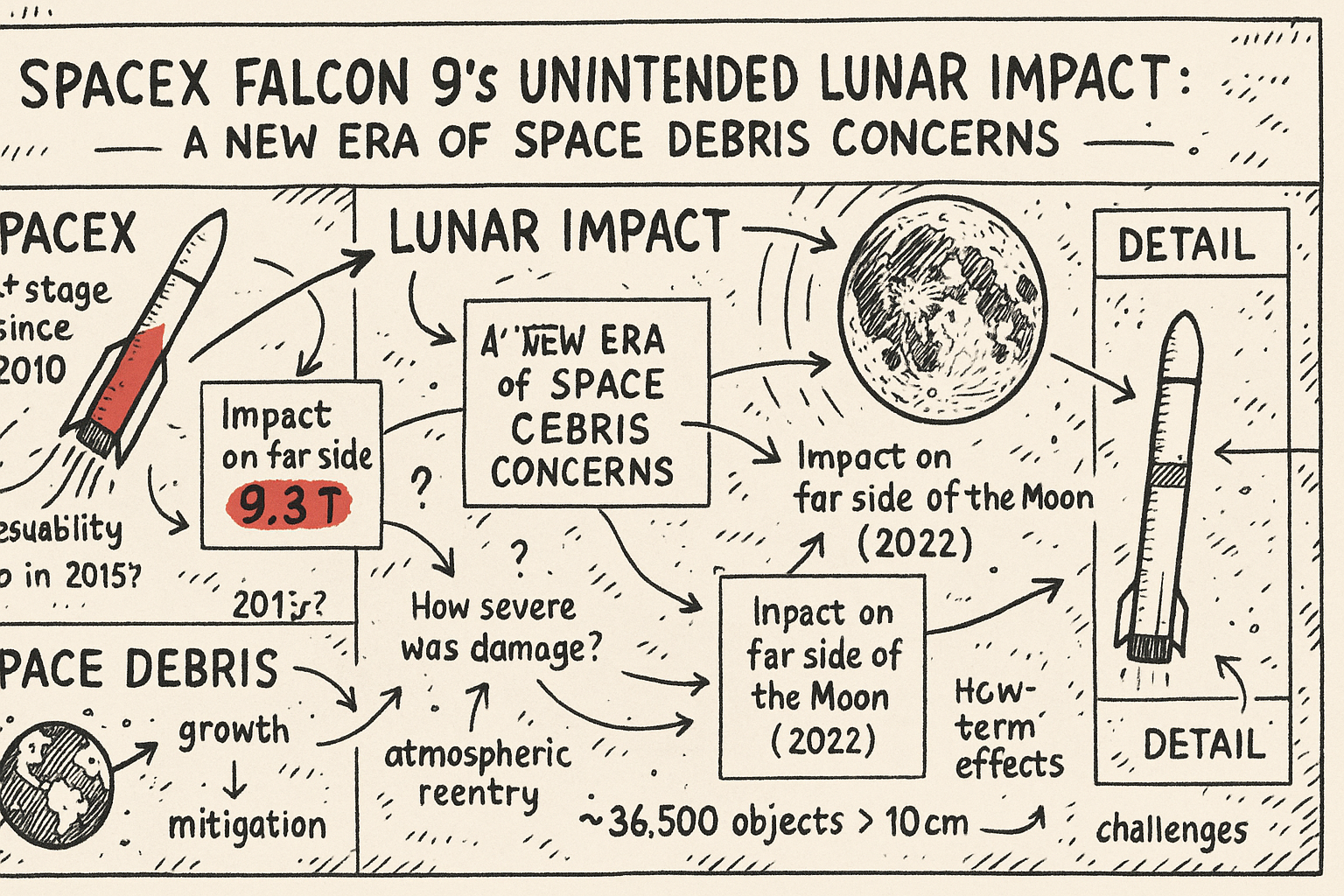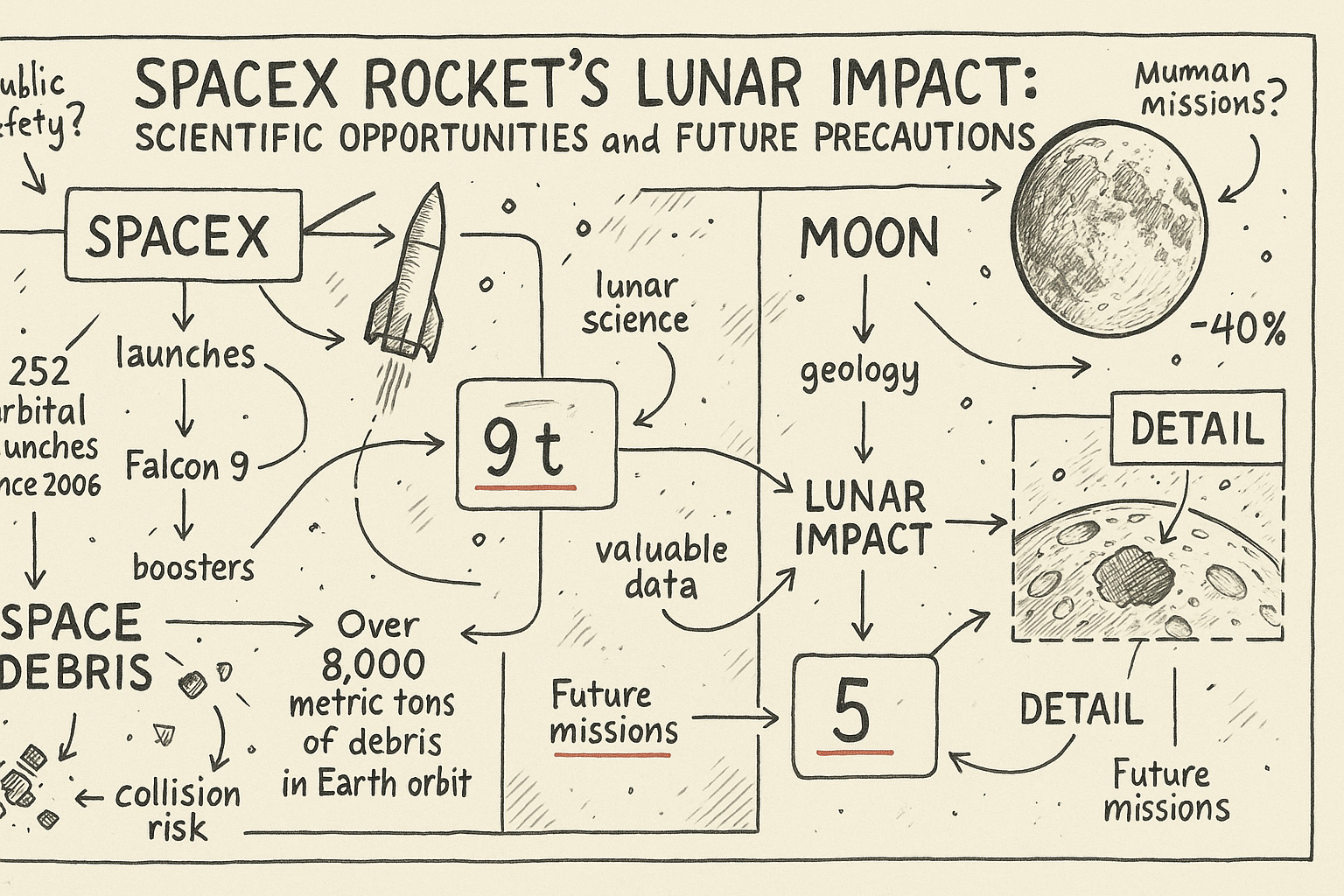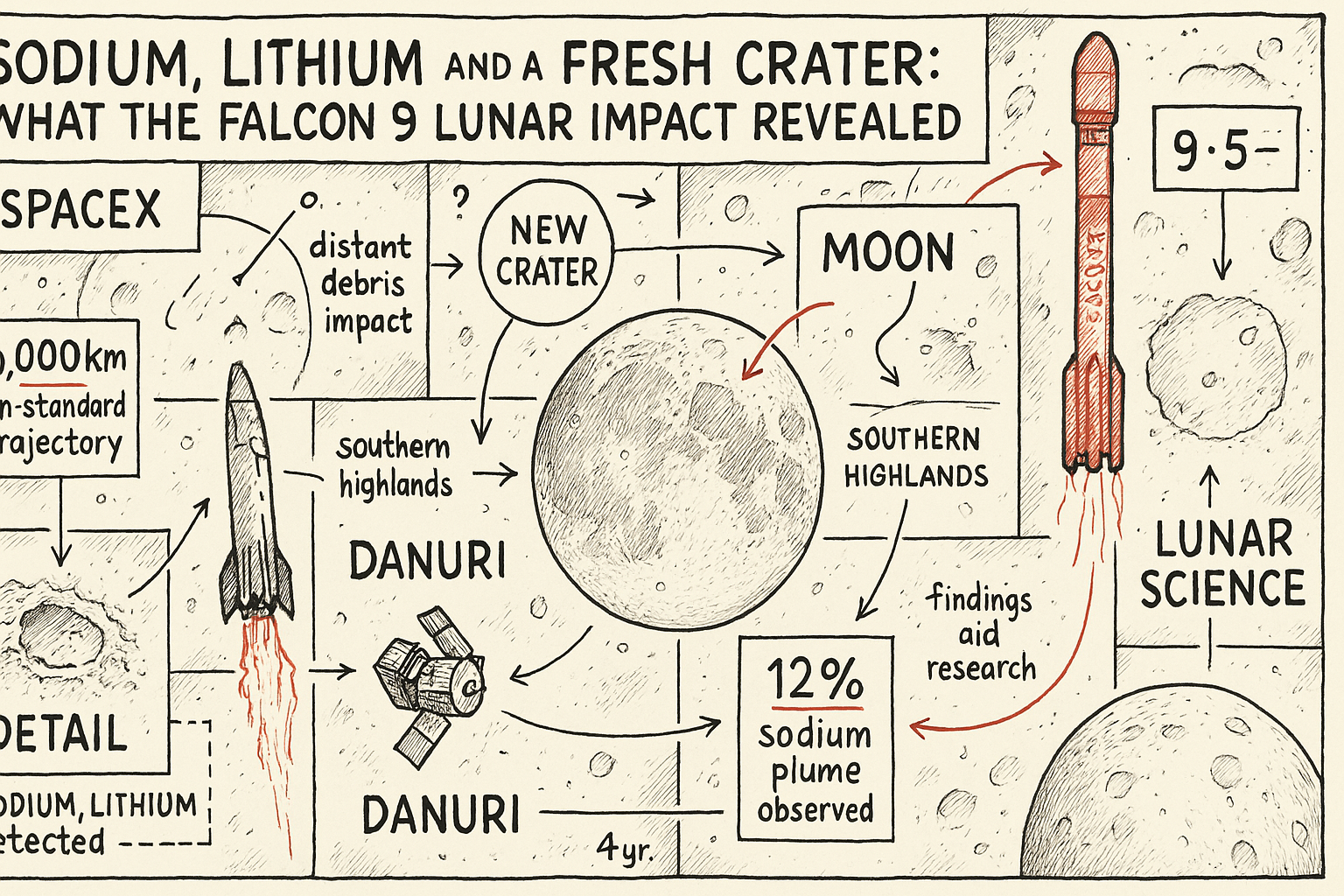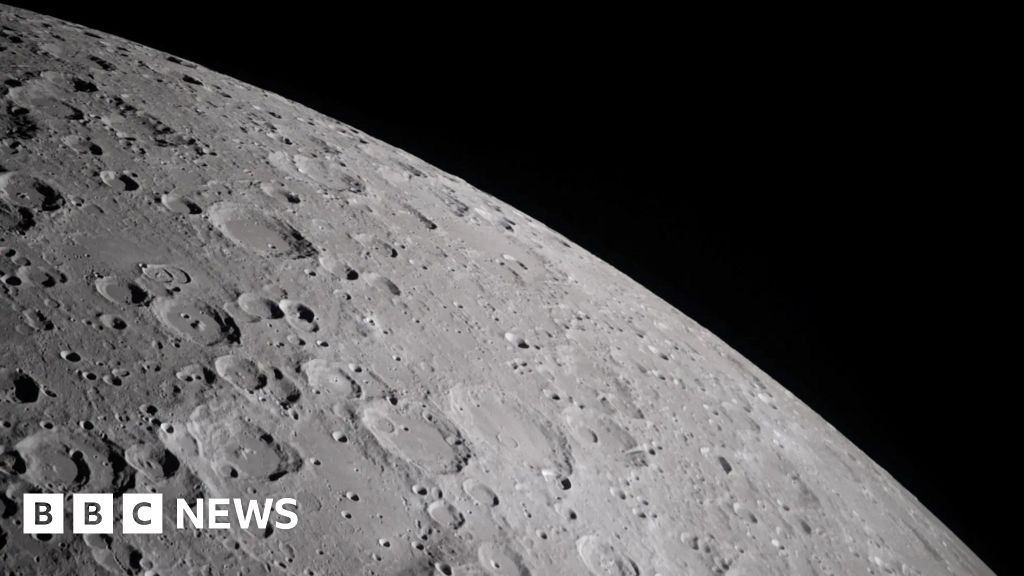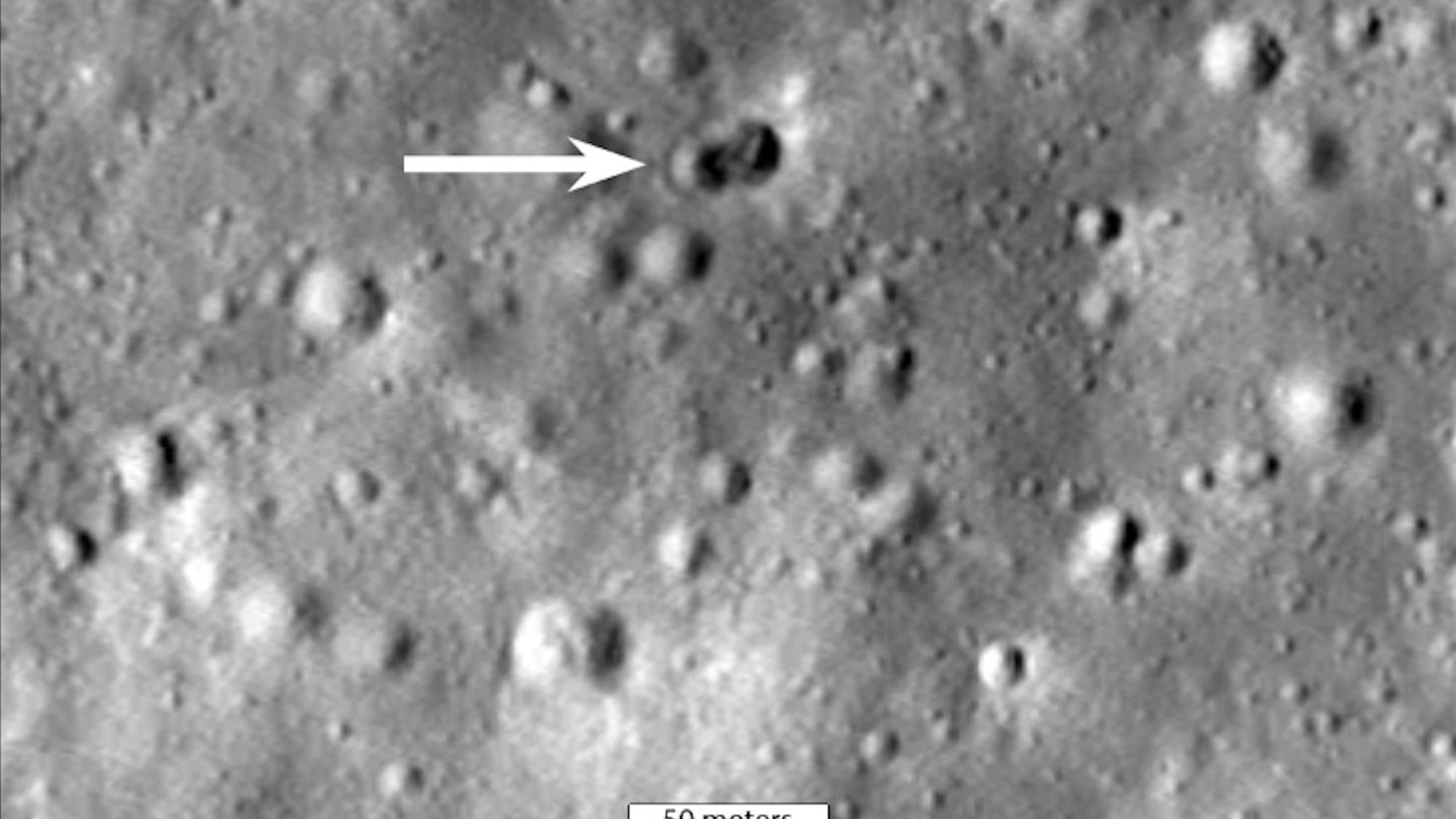
The recent impact of SpaceX's Falcon 9 rocket debris on the Moon has sparked a broader discussion about the implications for future lunar exploration. While the creation of a new lunar crater offers unique scientific opportunities, the event also serves as a reminder of the potential hazards posed by space debris.
In an uncontrolled collision on August 5, the upper stage of a Falcon 9 rocket struck the Moon, raising alarms about the risks such debris could pose to future lunar bases. As humanity prepares for a more permanent presence on the Moon, the integrity and safety of these installations could be threatened by similar impacts.
This incident is not isolated; it joins a history of human-made objects colliding with the lunar surface. As launches to orbit and the Moon become more frequent, the likelihood of such events increases, highlighting the need for better debris management in cislunar space.
Experts warn that the growing problem of space debris could complicate efforts to establish sustainable lunar bases, necessitating international cooperation and improved tracking systems. The Falcon 9 incident underscores the urgency of addressing these challenges as space exploration enters a new era.
Vedi anche: New Insights from SpaceX Falcon 9's Lunar Collision: Implications for Future Missions