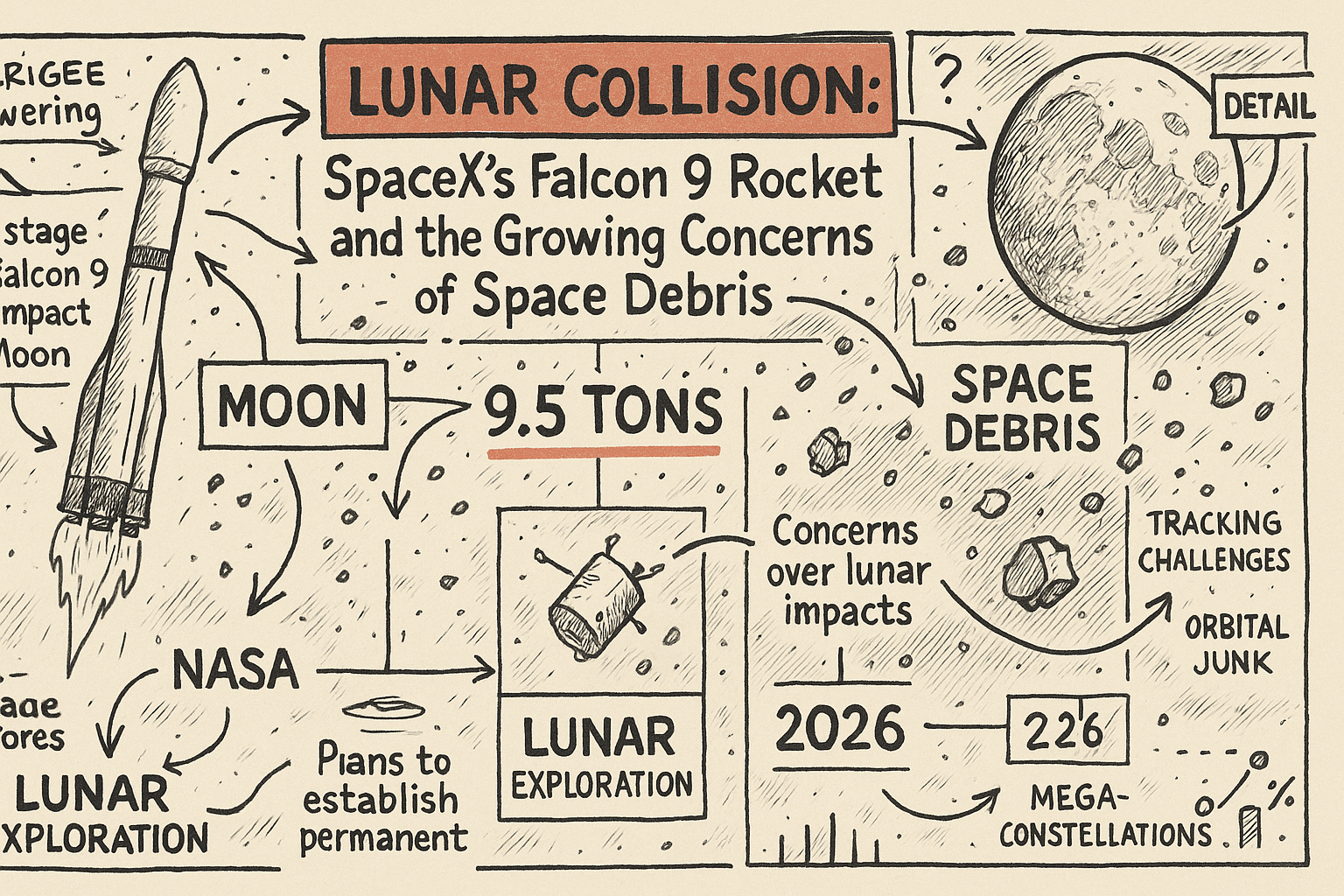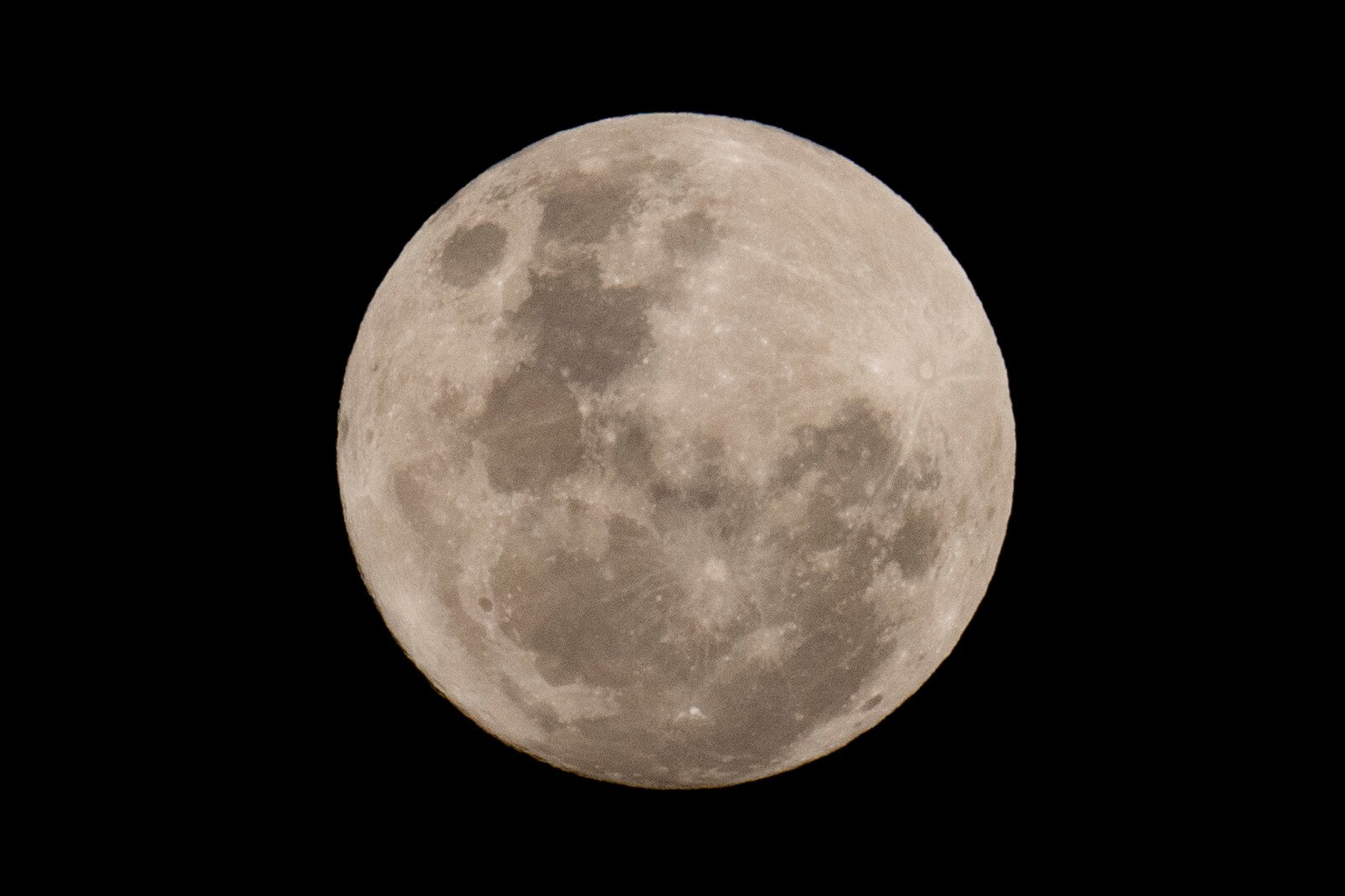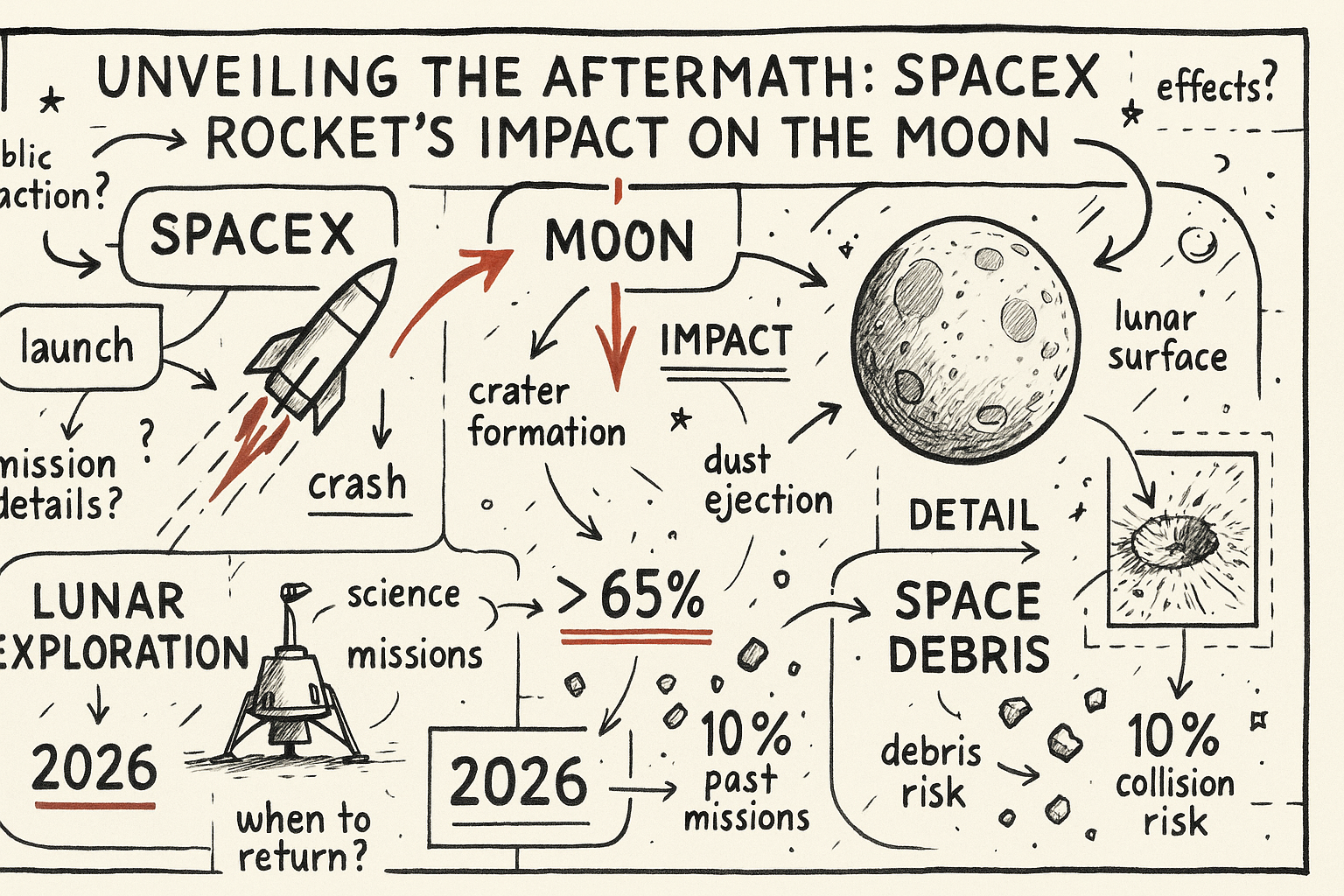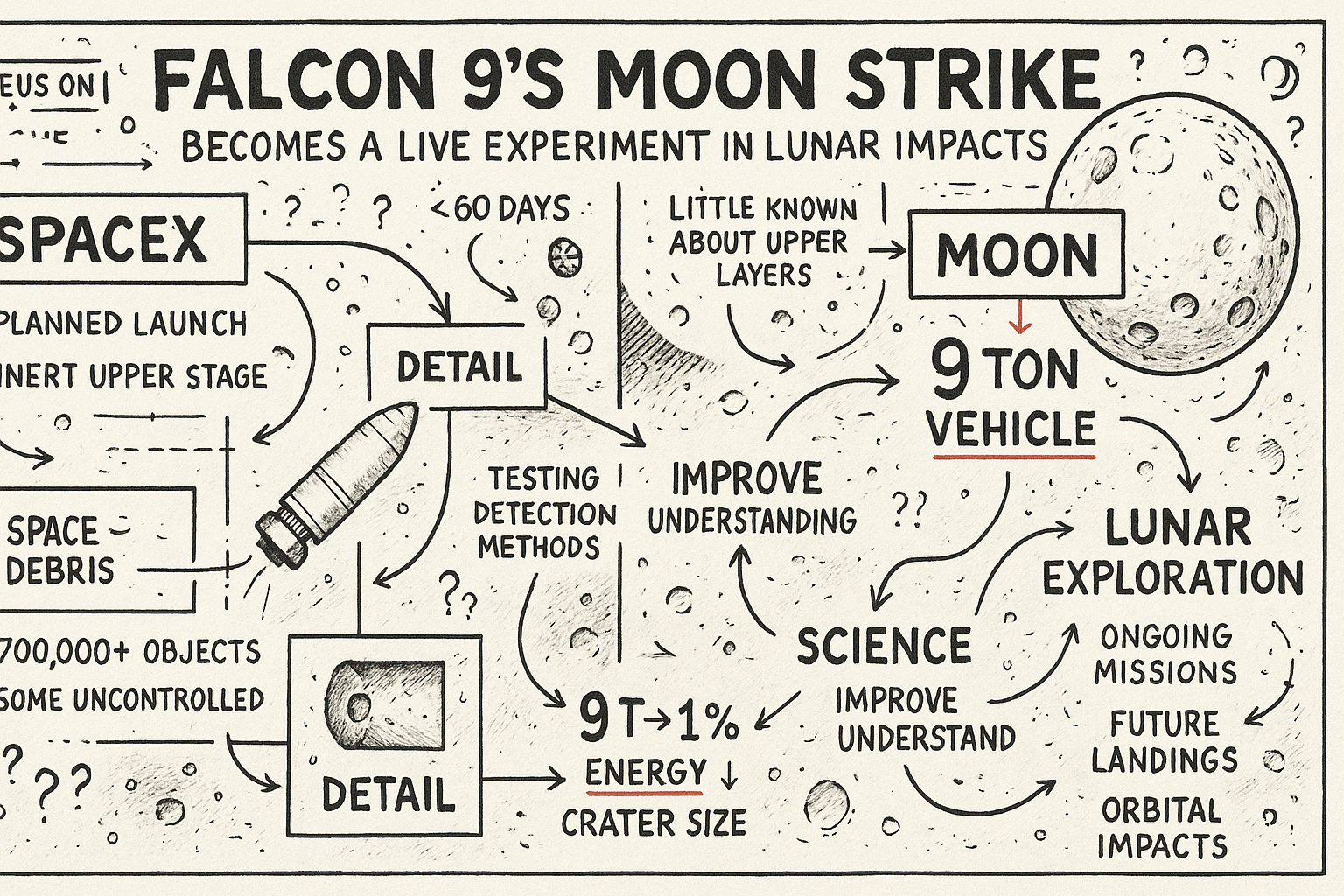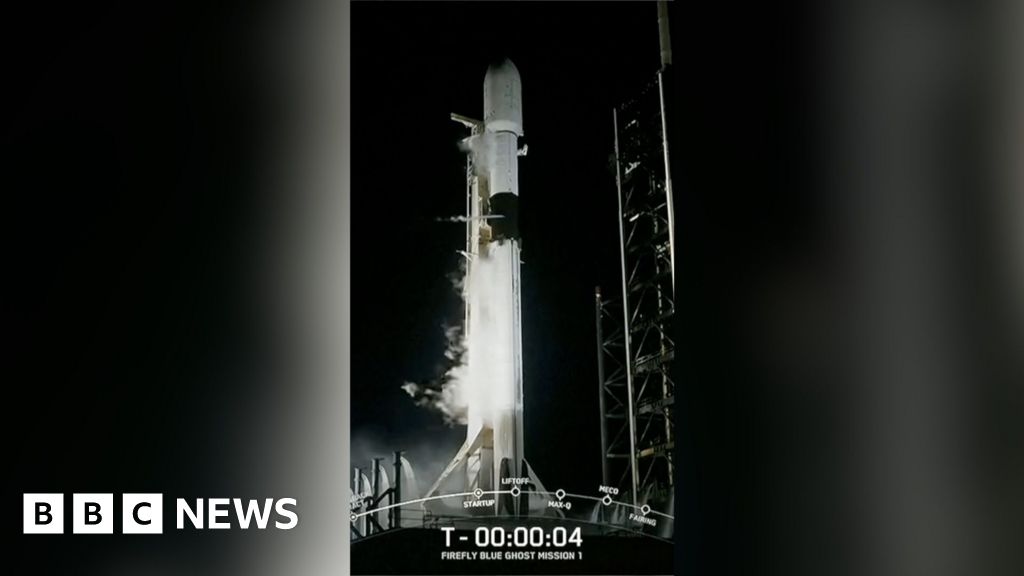
A recent event in the field of space exploration has sparked widespread curiosity and speculation as a SpaceX Falcon 9 rocket stage reportedly crashed into the Moon on August 5, 2026. The impact occurred at a staggering speed of approximately 5,400 mph (8,700 km/h), and experts believe it may have formed a new crater on the lunar surface. However, despite the magnitude of this event, no images of the impact have been captured yet, leaving the scientific community and the public eagerly waiting for visual confirmation.
The empty upper stage of the Falcon 9 rocket was on a collision course with the Moon, but the absence of direct imagery from the impact has prompted questions. According to Pallab Ghosh, a science correspondent for the BBC, it could take days or even weeks before images of the crash site become available. This delay is primarily due to the time it takes for lunar orbiters to be positioned correctly to capture images of the newly formed crater.
The process of observing such impacts involves a complex coordination of resources and technology. While the impact was detected through signals by scientists, capturing direct images is dependent on orbiters like NASA’s Lunar Reconnaissance Orbiter (LRO) and other lunar missions that might be capable of photographing the site. These orbiters must be in the right place at the right time, a task that involves precise calculations and planning.
The implications of this crash extend beyond just a new crater on the Moon. The event provides a unique opportunity for scientists to study the effects of high-velocity impacts on lunar geology. Understanding such impacts can offer insights into the Moon's surface composition and its history. Moreover, this knowledge can be significant for future lunar missions, including those aimed at establishing a more permanent human presence on the Moon.
Historically, intentional impacts on celestial bodies have been used to gather scientific data. For example, the LCROSS mission in 2009 intentionally crashed a part of its spacecraft into the Moon to study the resulting plume and confirm the presence of water ice. While the Falcon 9 impact was not planned as part of a scientific mission, it nonetheless presents a similar opportunity for study.
The lack of immediate imagery also highlights the challenges of space observation and the limitations of our current technology. As space missions increase, both governmental and private entities like SpaceX are likely to encounter similar situations. The need for rapid and reliable observation tools is becoming more apparent as space exploration enters a new era of increased activity.
In the coming weeks, as orbiters adjust their trajectories, the scientific community will be keen to capture and analyze any images of the impact site. These images will not only confirm the presence of a new crater but also provide valuable data for ongoing lunar research. The anticipation surrounding these images is a testament to the enduring human curiosity about our nearest celestial neighbor and the ever-evolving capabilities of space technology.