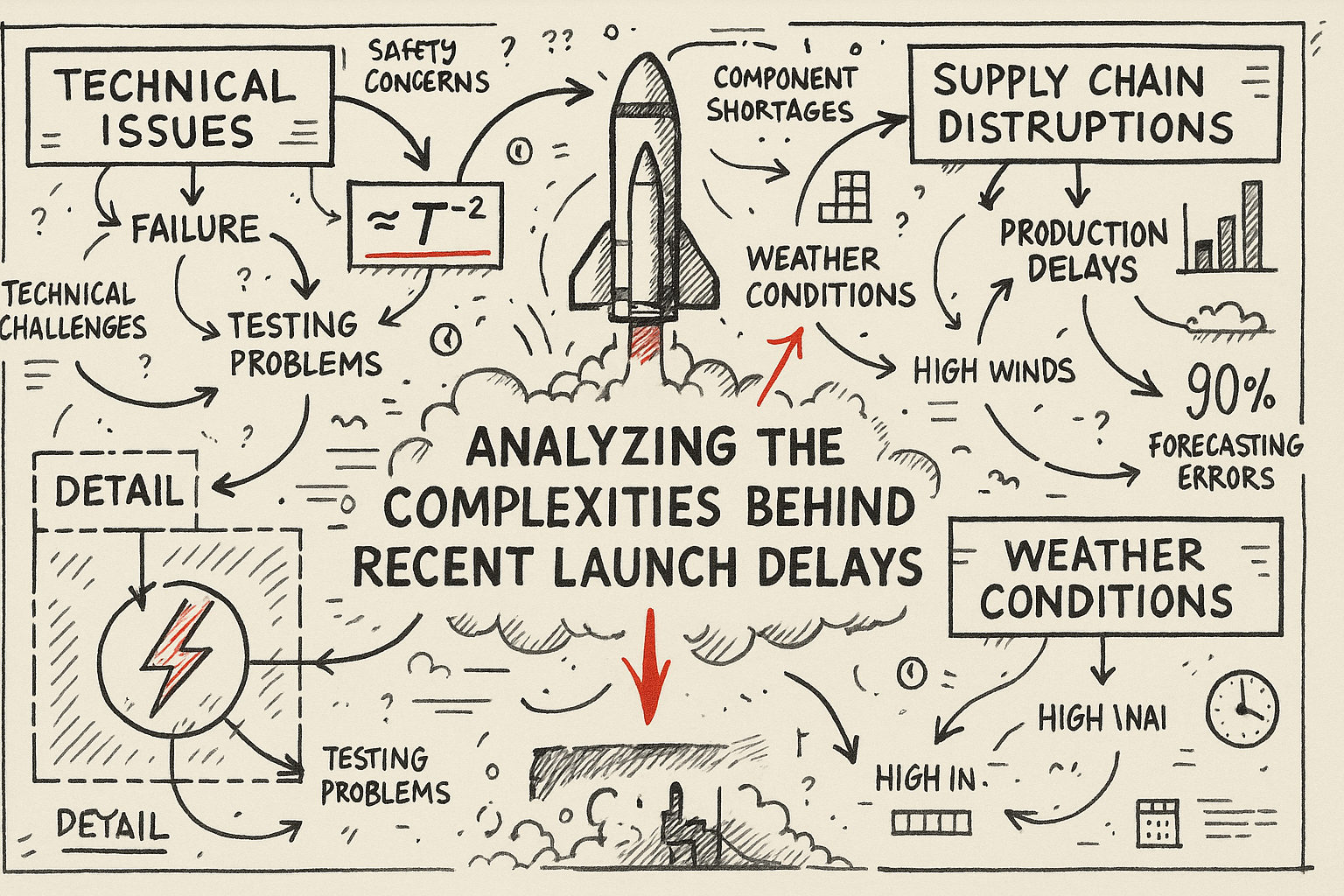
The history of space exploration is replete with launch delays, a phenomenon that seems to have become increasingly common in recent years. The recent launch postponements of Japan's MICHIBIKI No. 7 satellite and Rocket Lab's delayed Earth-observing satellite provide a lens through which we can examine the complexities of modern-day launches.
JAXA's MICHIBIKI No. 7: A Series of Reschedules
The Japan Aerospace Exploration Agency (JAXA) has faced multiple delays in launching the MICHIBIKI No. 7, part of the Quasi-Zenith Satellite System (QZS-7), aboard the H3 Launch Vehicle. Originally scheduled for earlier in the year, the mission has been rescheduled several times, with recent updates confirming a new launch window (Sources 1, 2, 5, 6, 7).
The reasons for these delays are multifaceted, involving technical, logistical, and perhaps atmospheric conditions. JAXA’s repeated rescheduling underscores a broader challenge in the aerospace industry: the unpredictability of space missions. However, it's crucial to note that such delays are not necessarily a sign of failure but rather an indication of the rigorous safety and precision standards that space agencies uphold.
Rocket Lab's 5-Week Delay
Rocket Lab's experience further illuminates the issue. The company successfully launched a Japanese Earth-observing satellite, albeit after a five-week delay (Source 3). This delay was attributed to both technical checks and a crowded launch schedule, highlighting the competitive and congested nature of current space endeavors.
Such delays, while frustrating, ensure that all systems function optimally before a launch. It's a reminder that the space industry operates under a zero-error tolerance policy, where the stakes are incredibly high.
Historical Context and Industry Implications
Historically, launch delays have been part and parcel of space exploration. During the Apollo era, for instance, NASA experienced numerous postponements due to technological challenges and the need for precise alignment with lunar windows. What is new, however, is the frequency and public scrutiny of these delays in today’s digital age.
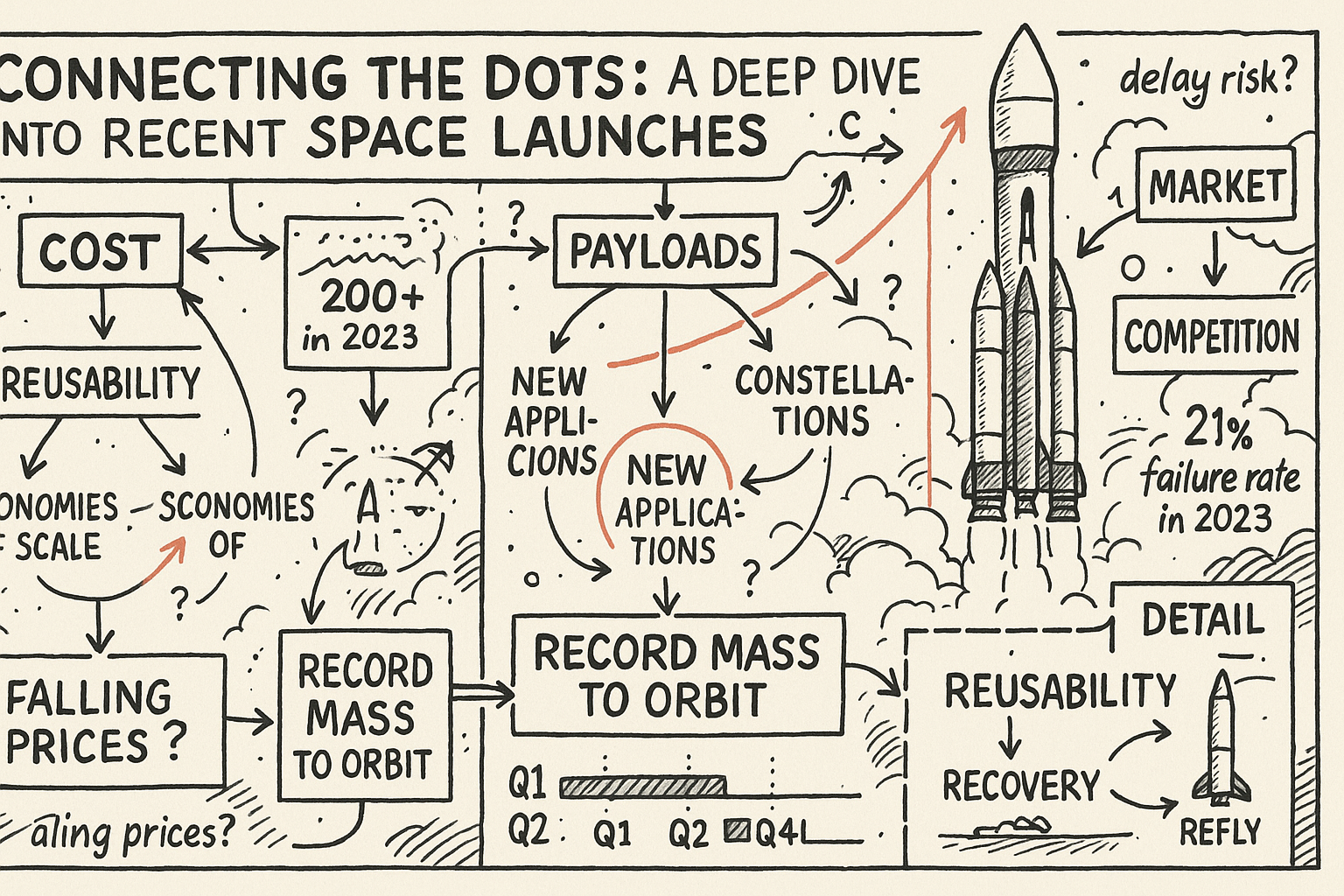
The increasing complexity of payloads, the rise of commercial players, and climate considerations have added layers of complexity to launch schedules. The aerospace sector is evolving, with more stakeholders and nations entering the fray. This democratization of space has led to packed launch schedules, creating a bottleneck effect.
Future Implications
Looking ahead, the industry must innovate to manage these challenges. Possible solutions include better predictive modeling for weather conditions, enhanced coordination among international space agencies, and investment in more versatile launch technologies that can adapt to unexpected changes.
Moreover, the push towards reusable rockets, as exemplified by companies like SpaceX, could mitigate some scheduling pressures by reducing turnaround times. As technology advances, the hope is that delays will become less frequent, though they may never be entirely eliminated.
Conclusion
In examining the recent launch delays of JAXA and Rocket Lab, it becomes clear that these are not mere technical glitches but symptomatic of broader industry trends. As space becomes more accessible, the challenges of coordination, safety, and timing grow exponentially. Understanding these dynamics offers valuable insights into the future of space exploration.