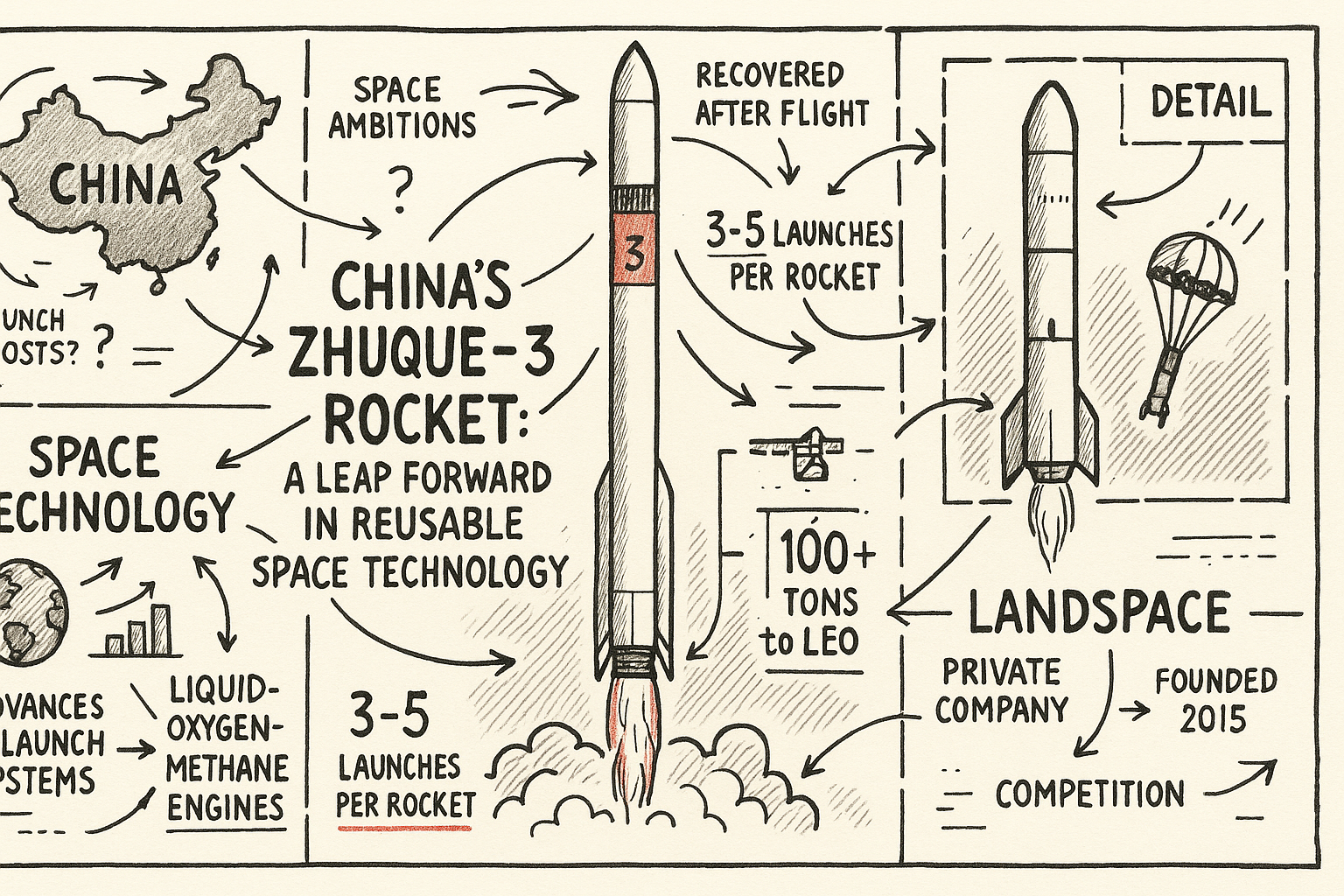
The Zhuque-3 rocket, developed by the private Chinese company LandSpace, has accomplished a significant milestone in space exploration technology with its successful second flight and the first soft landing of its first stage. The launch, which took place from the Jiuquan Satellite Launch Center on August 18, 2026, represents a pivotal achievement in the field of reusable rocketry.
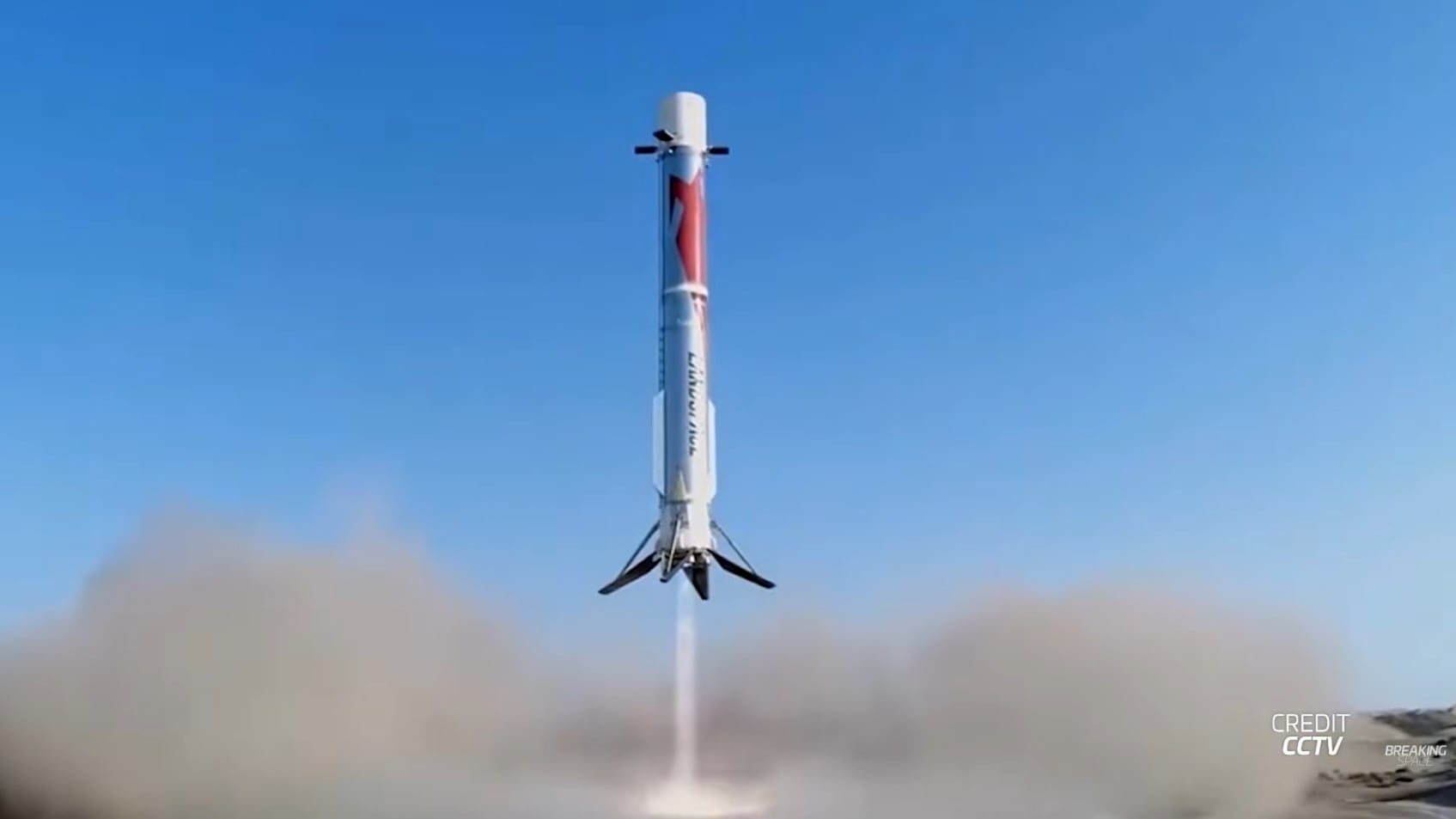
Powered by nine Tianque-12A engines, the Zhuque-3 lifted off at 23:35 UTC, about a third into its 37-minute launch window. The rocket smoothly ascended, demonstrating a clean stage separation and accurate payload delivery into orbit. The first stage then executed a precise landing on its designated pad, approximately 390 kilometers downrange from the launch site. This successful landing places the Zhuque-3 in the company of other notable reusable rockets such as SpaceX's Falcon 9, Blue Origin's New Glenn, and China's own Chang Zheng 10B.
The Zhuque-3's development has been closely watched since its inception, given its potential to enhance China's competitive stance in the global space industry. Its maiden flight in December 2025 was a near success; while the vehicle managed to place a dummy payload into low Earth orbit, the first stage failed to land due to an abnormal landing burn. This near-miss underscored the challenges of developing a reusable rocket, a feat that requires precision engineering and extensive testing.
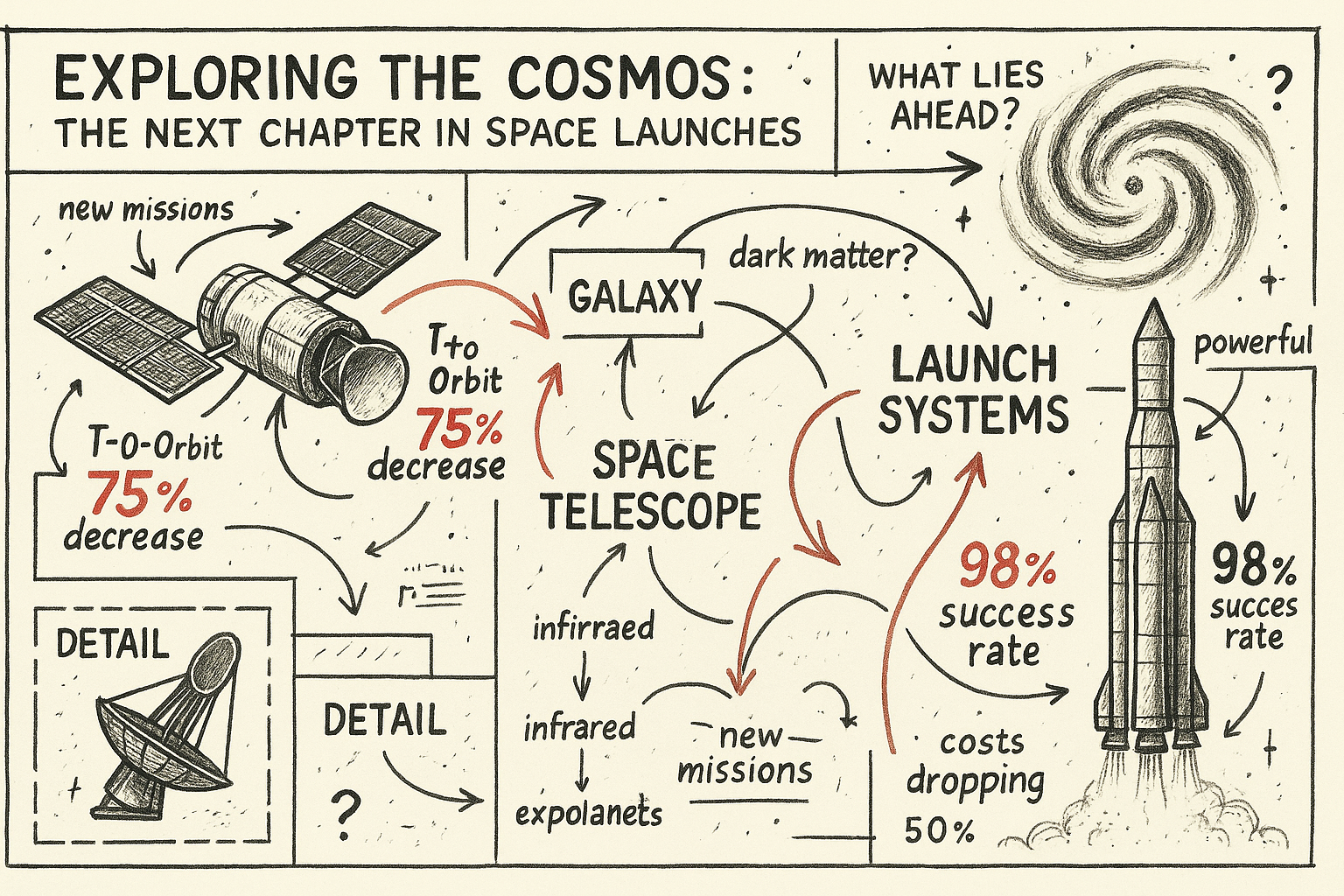
In achieving this milestone, LandSpace has demonstrated a rapid progression in rocket technology. The Zhuque-3's capability to land its first stage makes it only the fourth partially-reusable orbital-class rocket globally. This technological achievement not only enhances the efficiency of space launches by reducing costs associated with building new rockets for each mission but also advances the sustainability of space exploration endeavors.
The successful landing of the Zhuque-3 marks a step forward in China's ambitions to be a leader in space technology. LandSpace's achievement is part of a broader trend of private aerospace companies contributing to space exploration, a domain once dominated by state-owned entities. The private sector's involvement has fostered innovation and competition, accelerating advancements in technology and exploration capabilities.
This successful mission also highlights the evolving landscape of international space exploration, where private companies play an increasingly prominent role. The Zhuque-3's success could inspire further developments in reusable rocketry, potentially leading to more frequent and economical access to space.
The implications of such advancements extend beyond cost savings. Reusability in rocketry may enable more ambitious projects, such as sustained lunar exploration and even manned missions to Mars. As the technology matures, it could support a more robust infrastructure for space tourism and commercial endeavors in orbit.
Looking ahead, the continued success of Zhuque-3 and similar rockets will likely influence future space policy and exploration strategies. It demonstrates the viability of private companies in contributing to national and international space goals, potentially reshaping the space exploration landscape in the coming decades.
As LandSpace and others continue to innovate in this field, the possibilities for space exploration and its associated benefits for humanity seem boundless. The successful landing of the Zhuque-3 is not just a technical achievement but a beacon of what might be possible as technology and ambition continue to align in the pursuit of the final frontier.