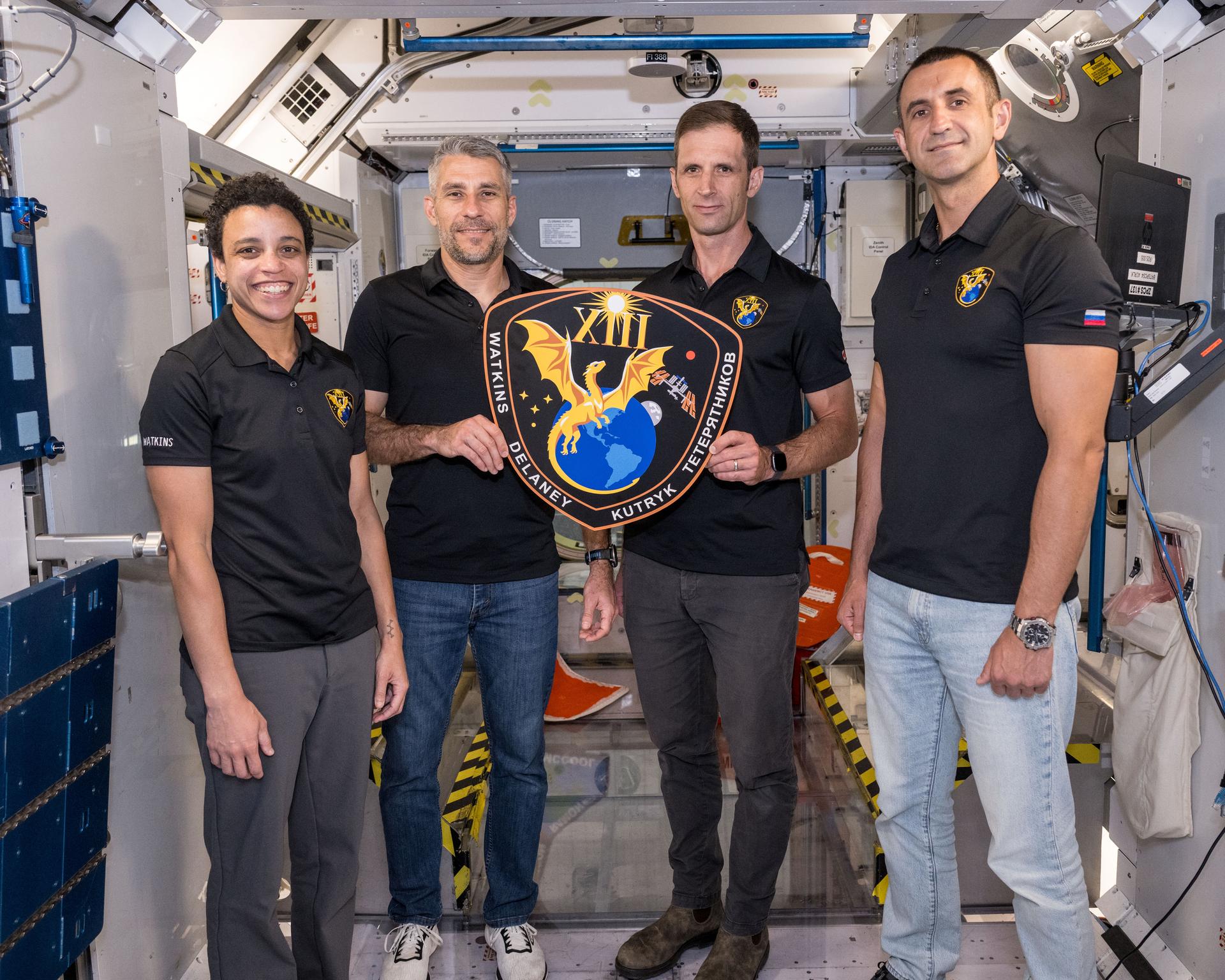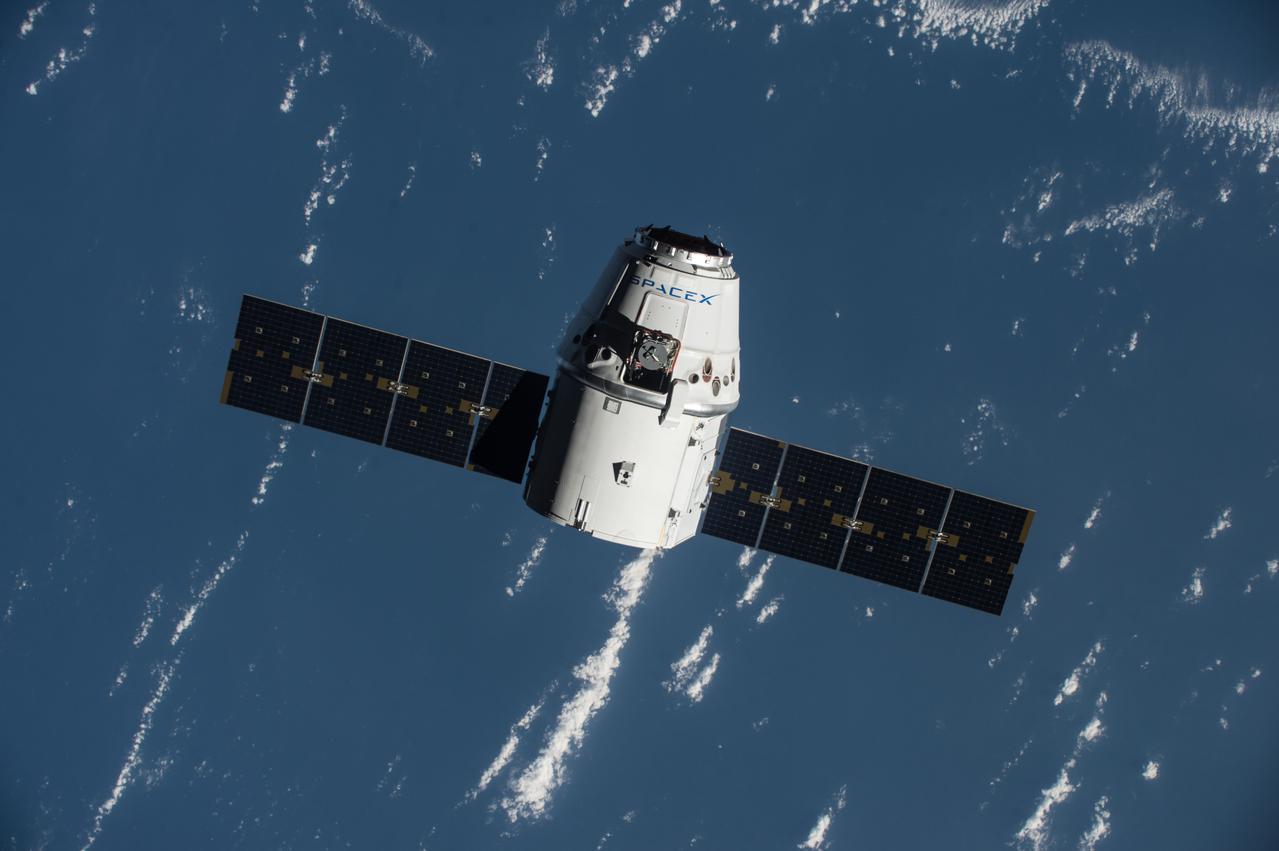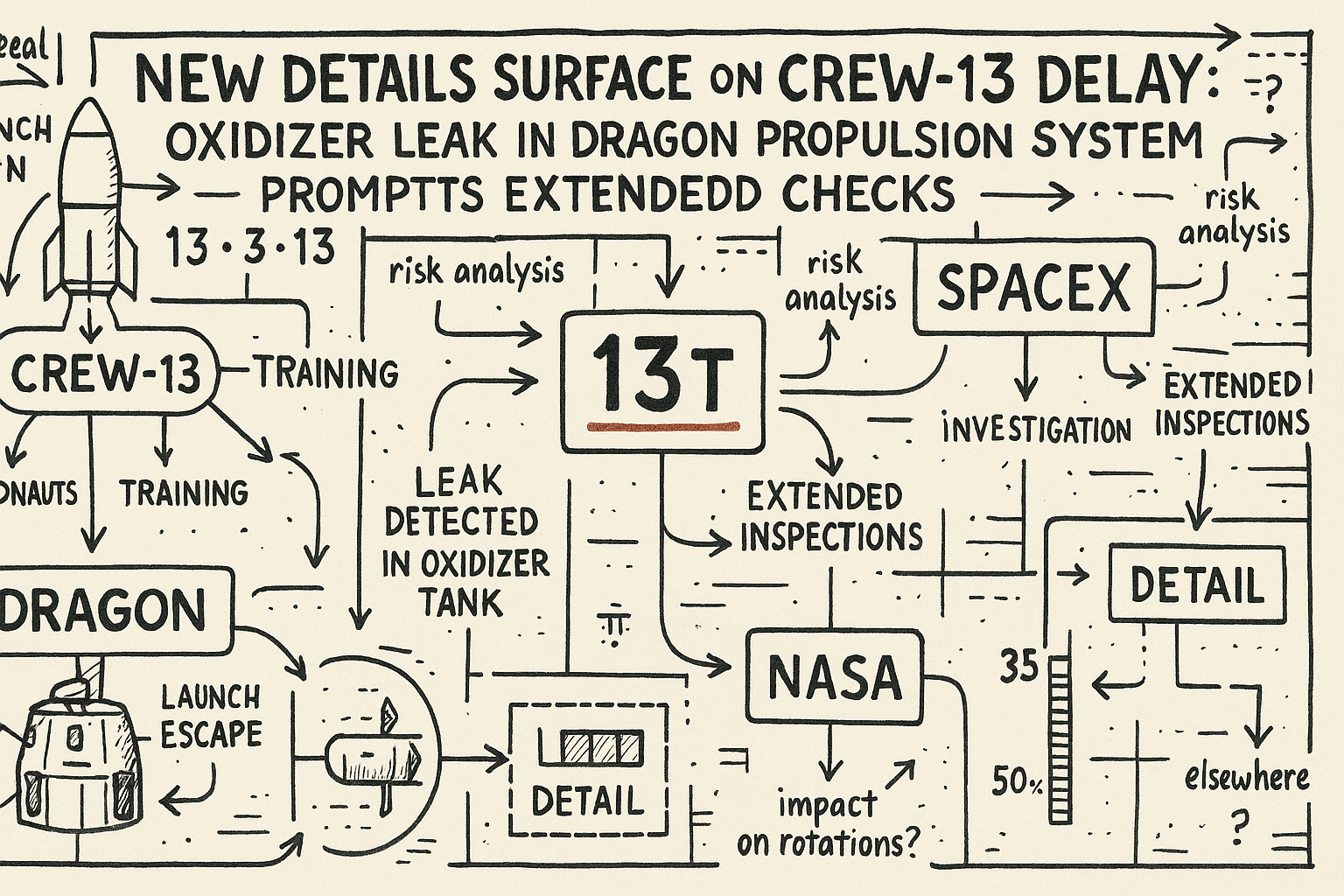
NASA and SpaceX have delayed the Crew-13 mission to the International Space Station after identifying a leak of oxidizer in the Dragon spacecraft’s propulsion system during routine prelaunch work. The launch had been scheduled no earlier than Sept. 12; a new target date has not been announced.
The issue was discovered during normal vehicle processing ahead of liftoff. NASA and SpaceX said technicians are conducting additional testing and analyzing the data collected to determine the origin of the leak and whether any repairs or other interventions will be required on the capsule. NASA has indicated that a revised launch date will be announced only after those checks are complete.
Oxidizer leak: what the agencies disclosed
Both NASA and SpaceX publicly attributed the decision to delay Crew-13 to a leak of oxidizer in Dragon’s propulsion system. The oxidizer is used together with fuel in the spacecraft’s thrusters for on-orbit maneuvers. Officials characterized the response as a measured precaution: teams paused launch processing to investigate the anomaly rather than proceed toward the scheduled launch.
News reports noted that propulsion-related issues have been encountered previously during ground operations with Dragon-class spacecraft. One cited precedent was a 2022 cargo mission, CRS-25, which was postponed after a hydrazine leak was detected; that instance was described as part of routine caution given the way propellant tanks and thrusters are integrated on the Dragon capsule.
Operational context and next steps
NASA’s public messaging makes clear that technicians are carrying out further tests and data analysis to trace the source of the oxidizer leak and to define any corrective actions. No timeline for completion of these activities has been provided. The agencies have not announced a replacement launch date for Crew-13.
The delay affects a crew rotation mission to the International Space Station. While separate NASA operations—such as planned spacewalks to complete installation of a space-to-ground antenna that were scheduled in late August—are proceeding under their own timelines, the Crew-13 slip will shift the arrival of the assigned crew until the propulsion-system issue is resolved and a new launch window is set.
The decision to halt launch processing and pursue thorough verification follows standard safety-first practices for crewed missions. NASA and SpaceX will release updates after testing and analysis conclude and a determination about remediation and a new launch date has been made.