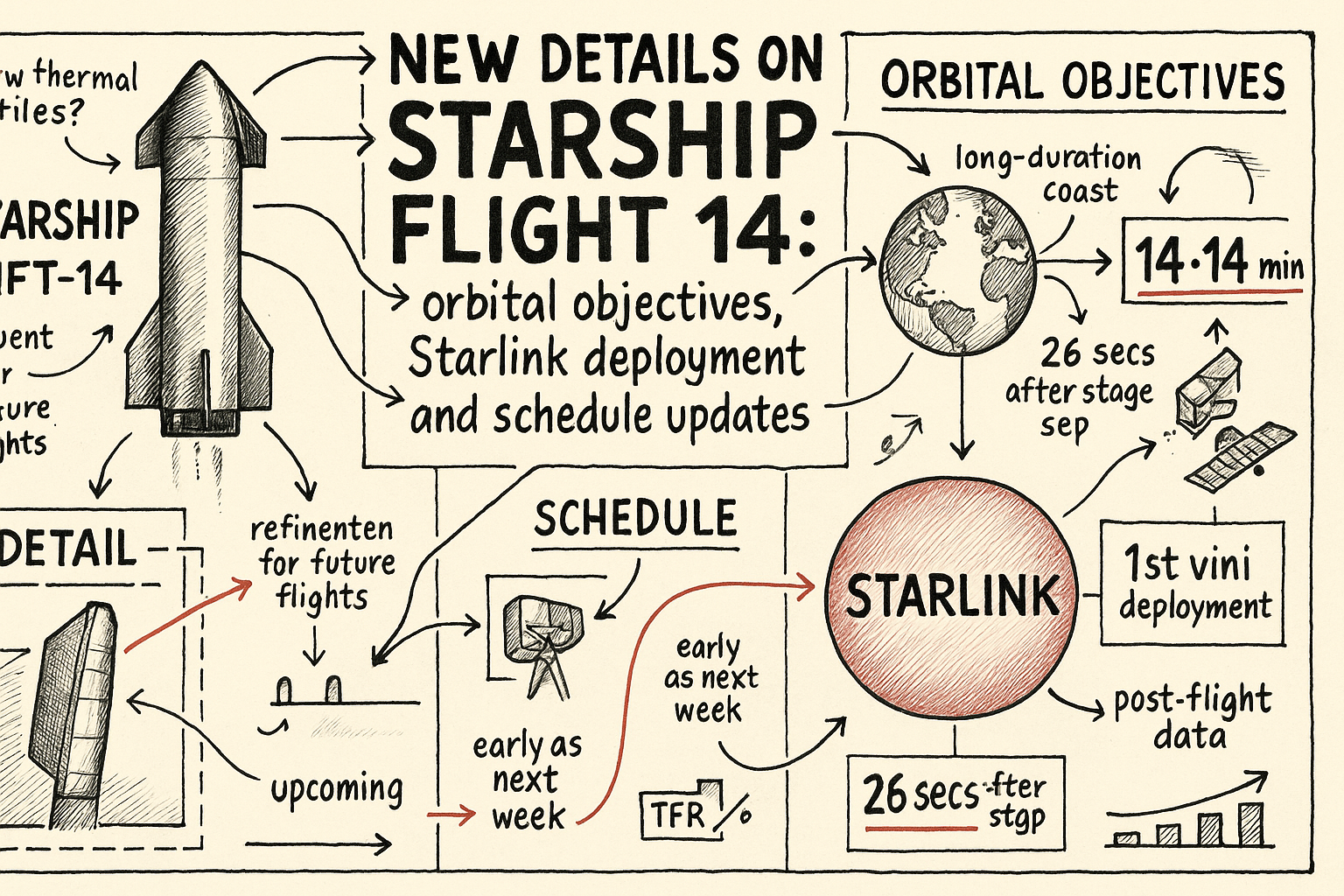
SpaceX has set its sights on Integrated Flight Test‑14 (IFT‑14) as the program's planned first orbital attempt for the Starship system. New reporting consolidates the company’s public schedule, mission objectives and some internal expectations at Kennedy Space Center, while clarifying items that earlier coverage did not fully address.
Orbital attempt and timeline
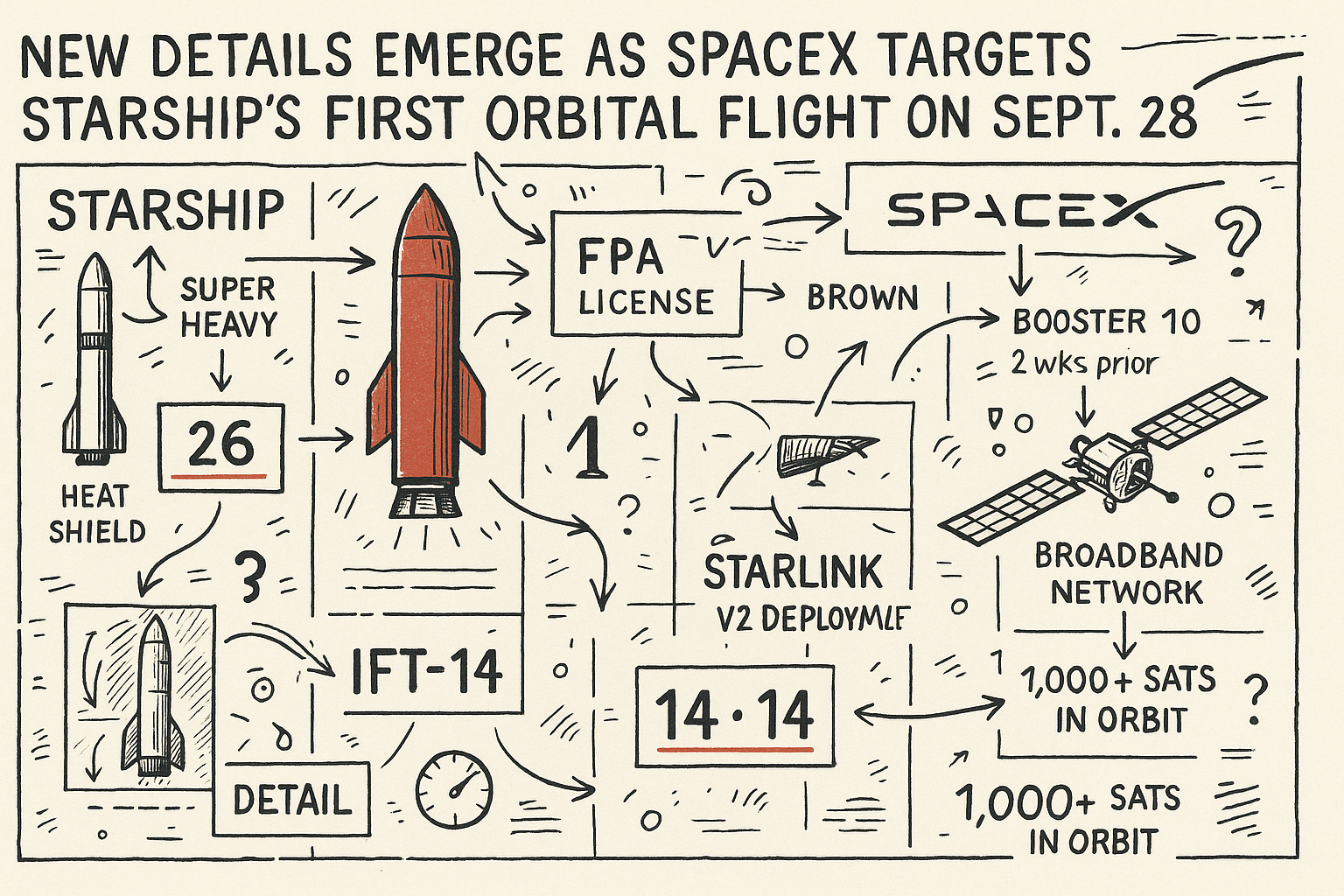
According to multiple outlets, SpaceX announced plans to attempt Starship's first orbital flight in late September. The company initially aimed for a liftoff the week of September 15–21, with one public schedule citing a target of 7:15 a.m. local time (1215 GMT) on a Tuesday. Subsequent reporting updated the target to no earlier than Monday, September 28, pending regulatory approval.
Mission profile and payloads
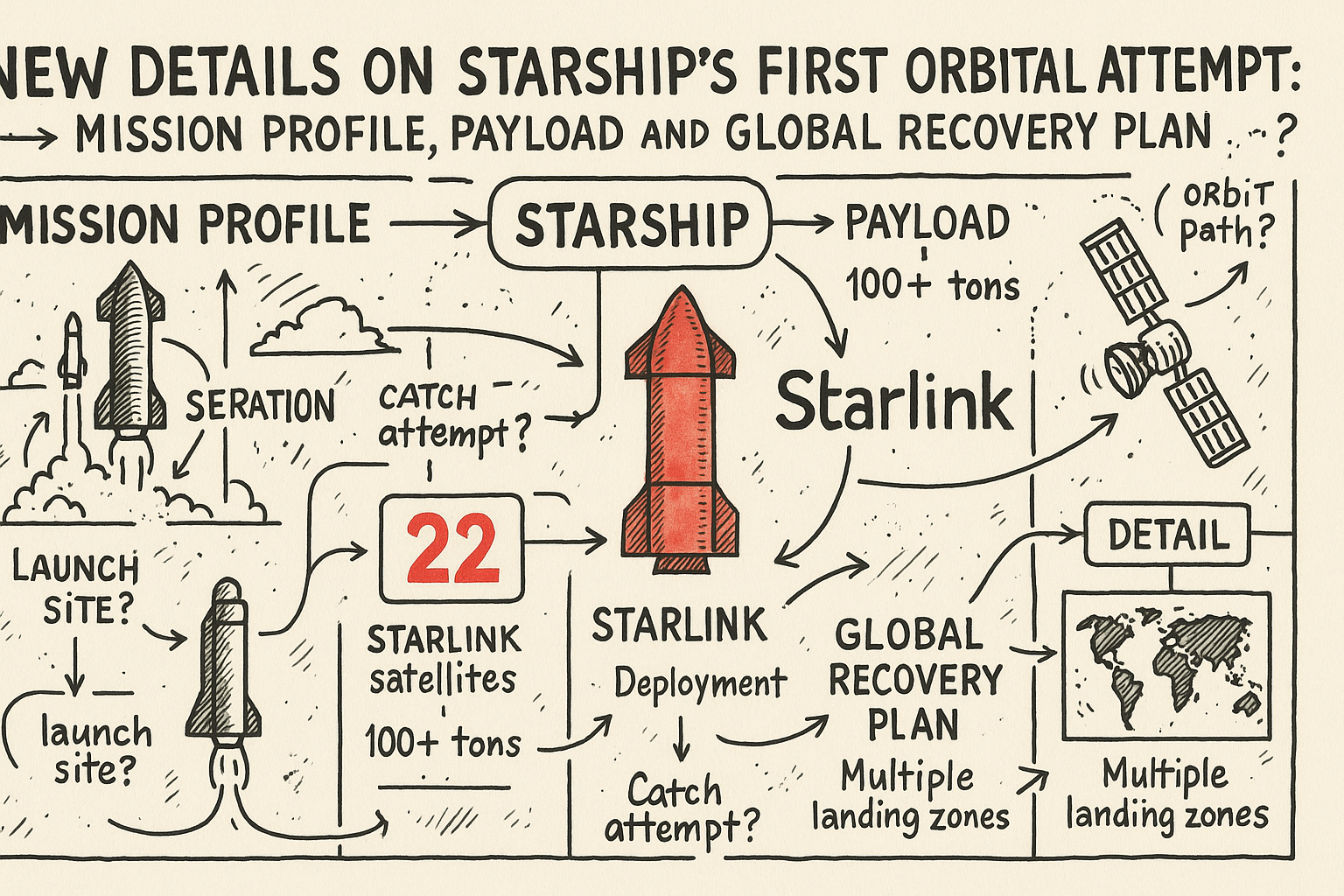
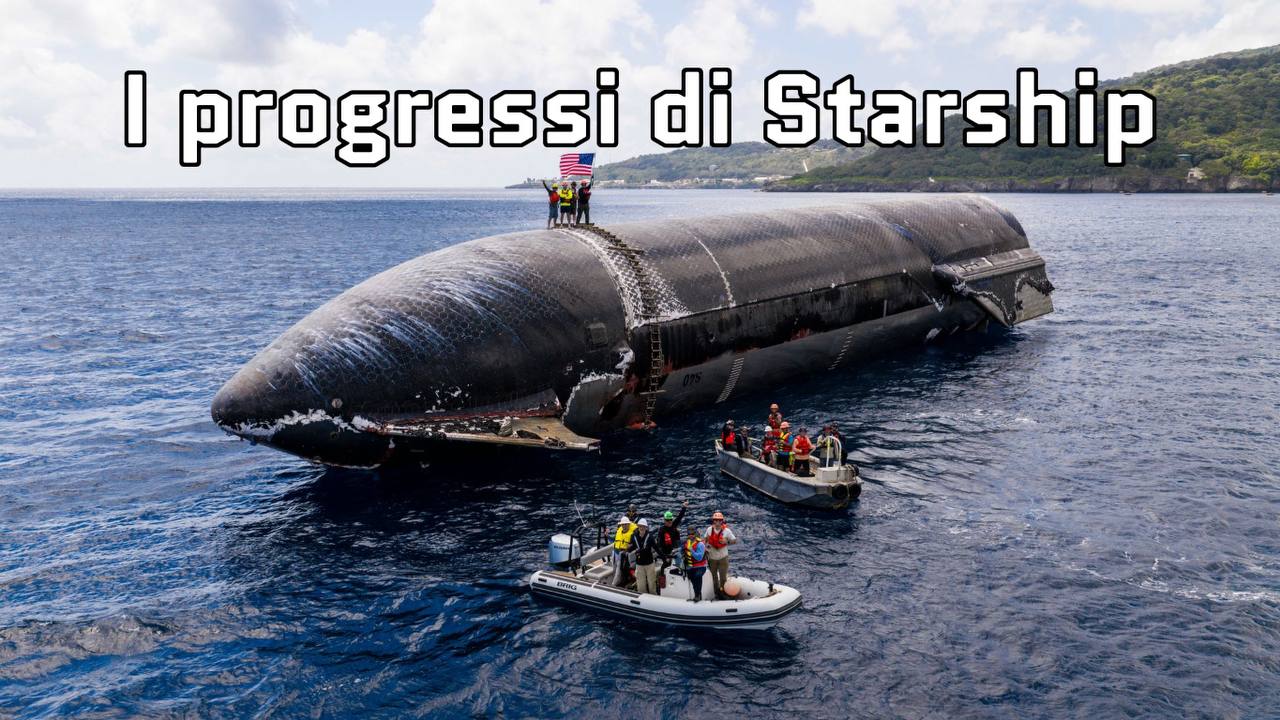
Public sources describe IFT‑14 as a mission that, if it proceeds as planned, will place the Starship upper stage into orbit and complete multiple circuits of Earth. SpacePolicyOnline reported that Starship would orbit six times on the mission and release 26 Starlink V3 satellites before the upper stage is expected to splash down in the ocean west of Chile.
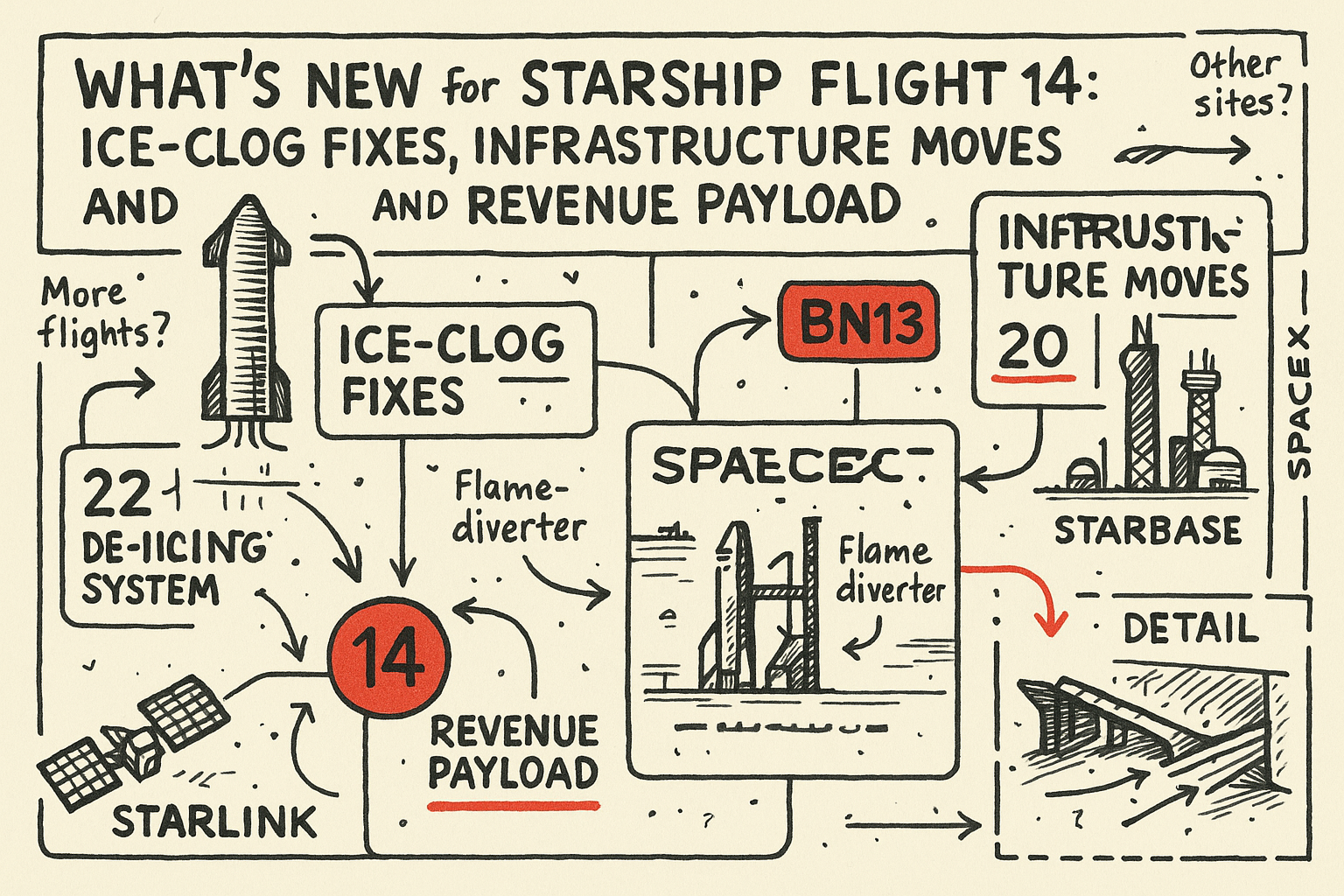
TechCrunch and other outlets confirmed that the flight will attempt to deploy the first V3 Starlink satellites into SpaceX’s orbital internet constellation as part of this orbital test. Earlier coverage of the flight did not emphasize the specific Starlink version and the planned number of satellites.
Implications for subsequent flights and Kennedy Space Center activity
New reporting from NASAspaceflight places IFT‑14 in the context of follow‑on Starship missions. If IFT‑14 is successful, Flight 15 is identified as the earliest realistic opportunity for a first ship catch — and in an optimistic scenario even a double catch. Flight 16 is described as the best‑case candidate for the first Starship launch from Launch Complex 39A at Kennedy Space Center; KSC workers reportedly cite that mission as launching from 39A internally.
Regulatory clearance and program history
All reporting stresses that the launch remains subject to regulatory approvals. SpaceX has pursued a steady cadence of development tests since the program's first launch in April 2023, which ended in a rapid unscheduled disassembly. Coverage notes the program's mixed record since then, including successful Super Heavy booster “catches” at the launch tower and a series of high‑profile flight anomalies. Commentators have framed the program’s approach as iterative — a ‘‘fail fast, learn faster’’ philosophy — as SpaceX continues toward orbital operations.
What’s new compared with prior coverage
Earlier NovΔ mAInd reporting documented the vehicles being prepared for the mission and the basic launch campaign. The newly surfaced sources add concrete details on the planned orbital profile (six orbits), the exact number and generation of Starlink satellites to be carried (26 V3 satellites), the updated target date (no earlier than September 28 pending approvals), and situate IFT‑14 in an internal sequence that could enable ship catches and a later first launch from LC‑39A.
As with all developing operations, these plans depend on regulatory signoffs and on the outcome of the test itself. If regulators grant permission and the flight proceeds, IFT‑14 will mark a milestone test of Starship’s ability to reach orbit and to deliver operational payloads into Earth orbit.