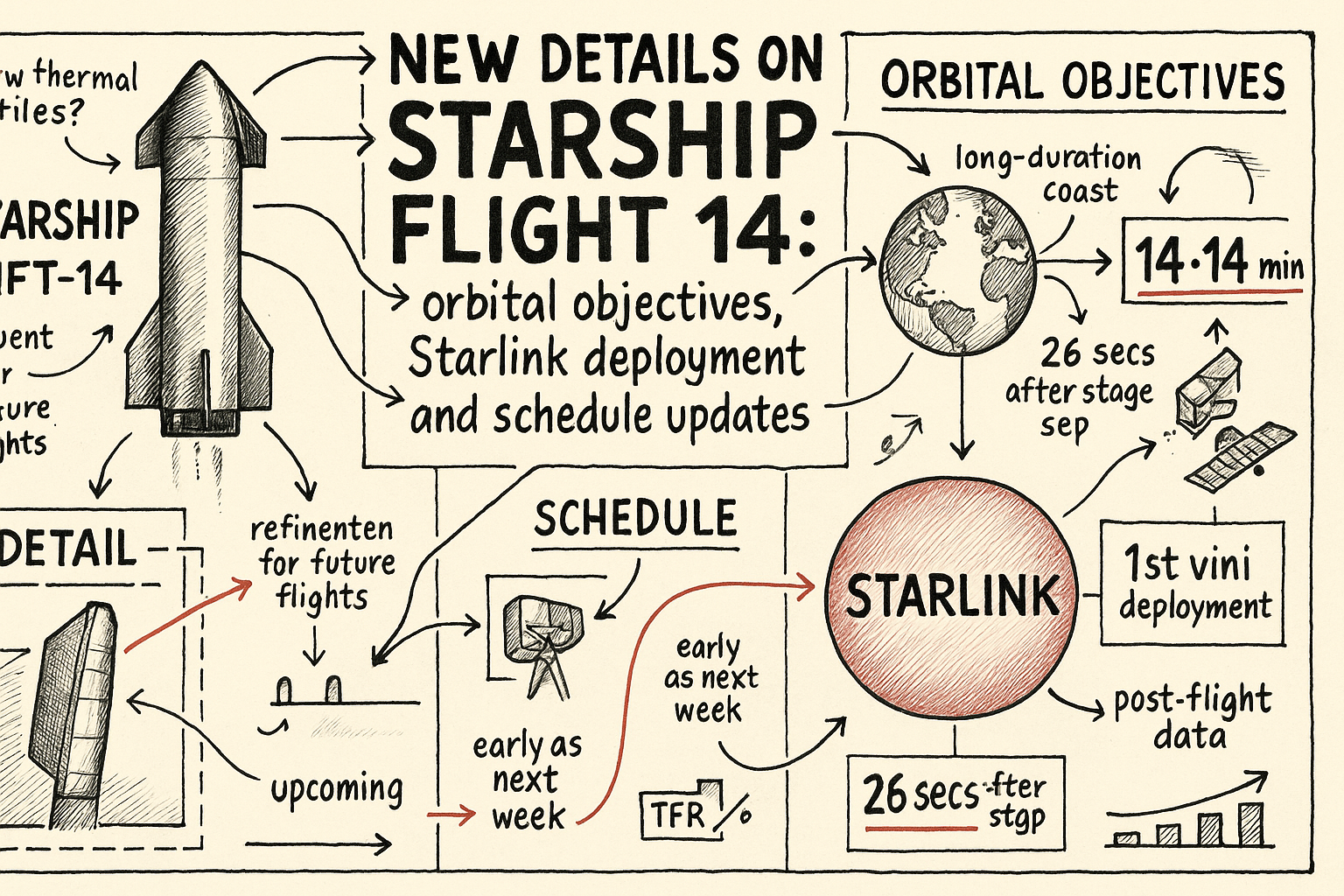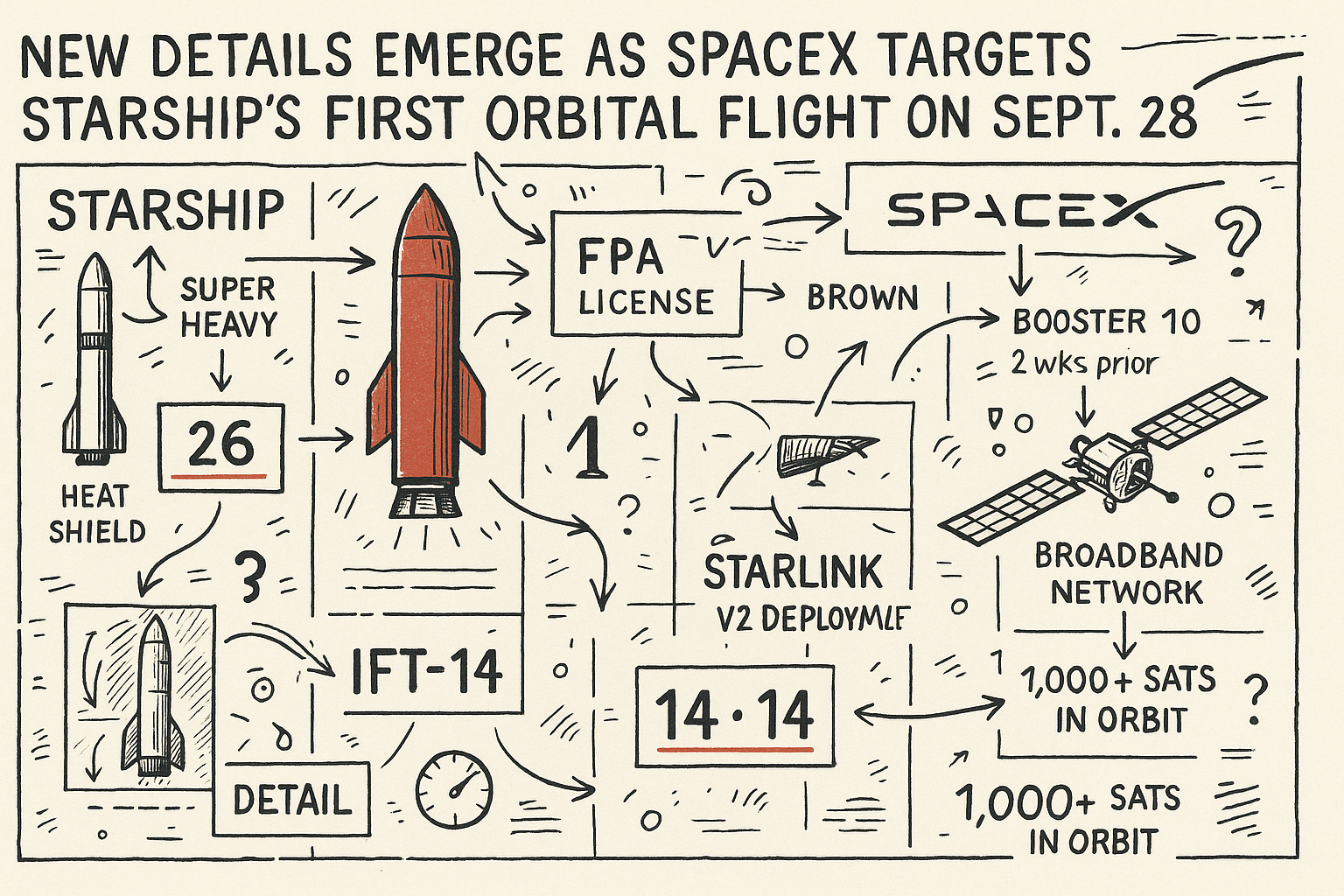
SpaceX has set its sights on what would be Starship’s first full orbital mission, now targeting Sept. 28 pending regulatory approval, according to multiple recent reports. The flight is being tracked as Integrated Flight Test‑14 (IFT‑14) and represents a major milestone for the company’s program to build a fully reusable heavy‑lift system for beyond‑Earth missions.
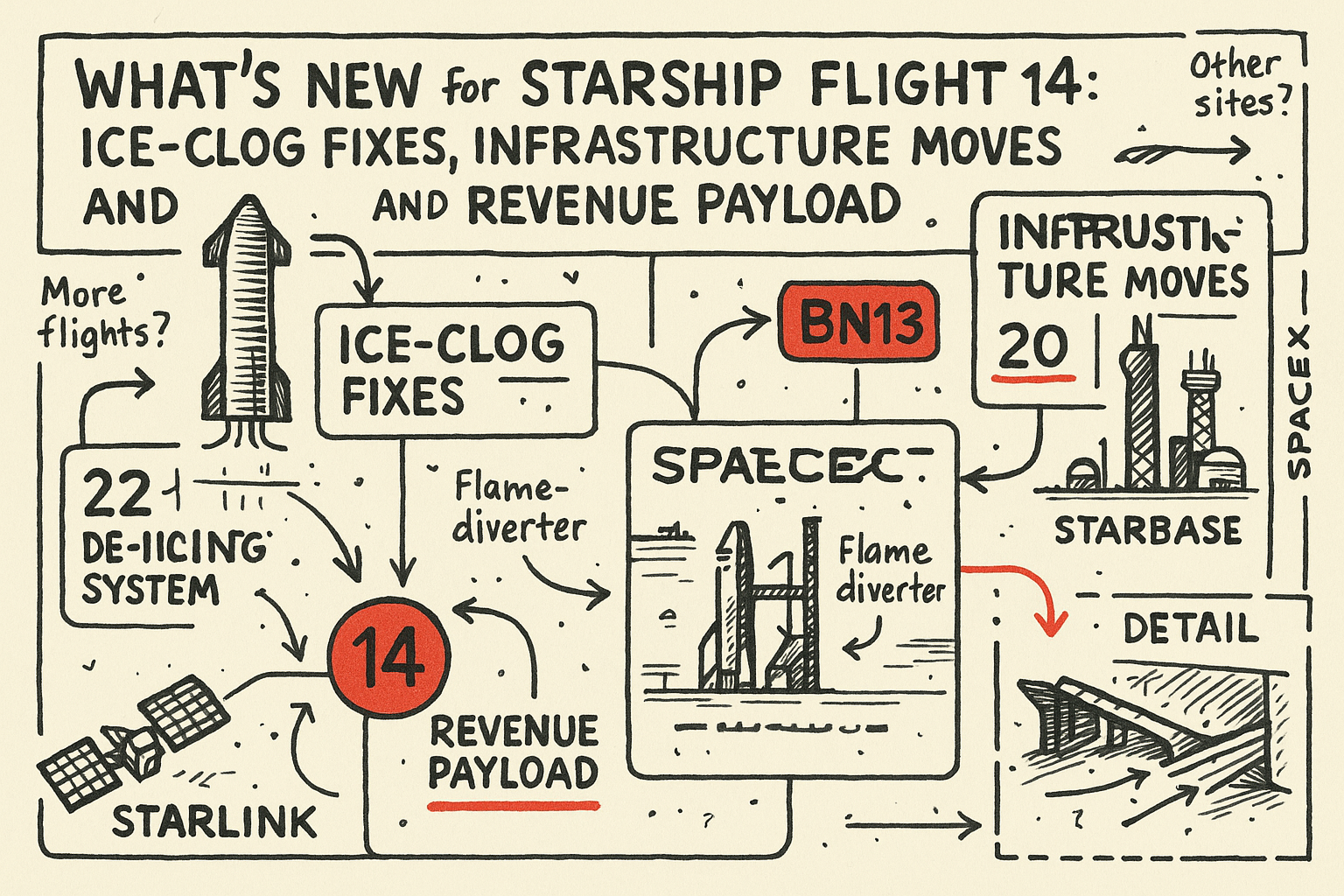
New reporting consolidates a handful of mission details that were not fully covered in earlier coverage. SpaceX intends for IFT‑14 to carry 26 Starlink V3 satellites and — if the flight proceeds as planned — to orbit Earth multiple times before the upper stage reenters and splashes down in the ocean west of Chile. Several outlets cite a Tuesday local‑time launch target and list the planned liftoff time from Starbase in Texas as 7:15 a.m. local (1215 GMT), while other updates shifted the target date to Sept. 28.
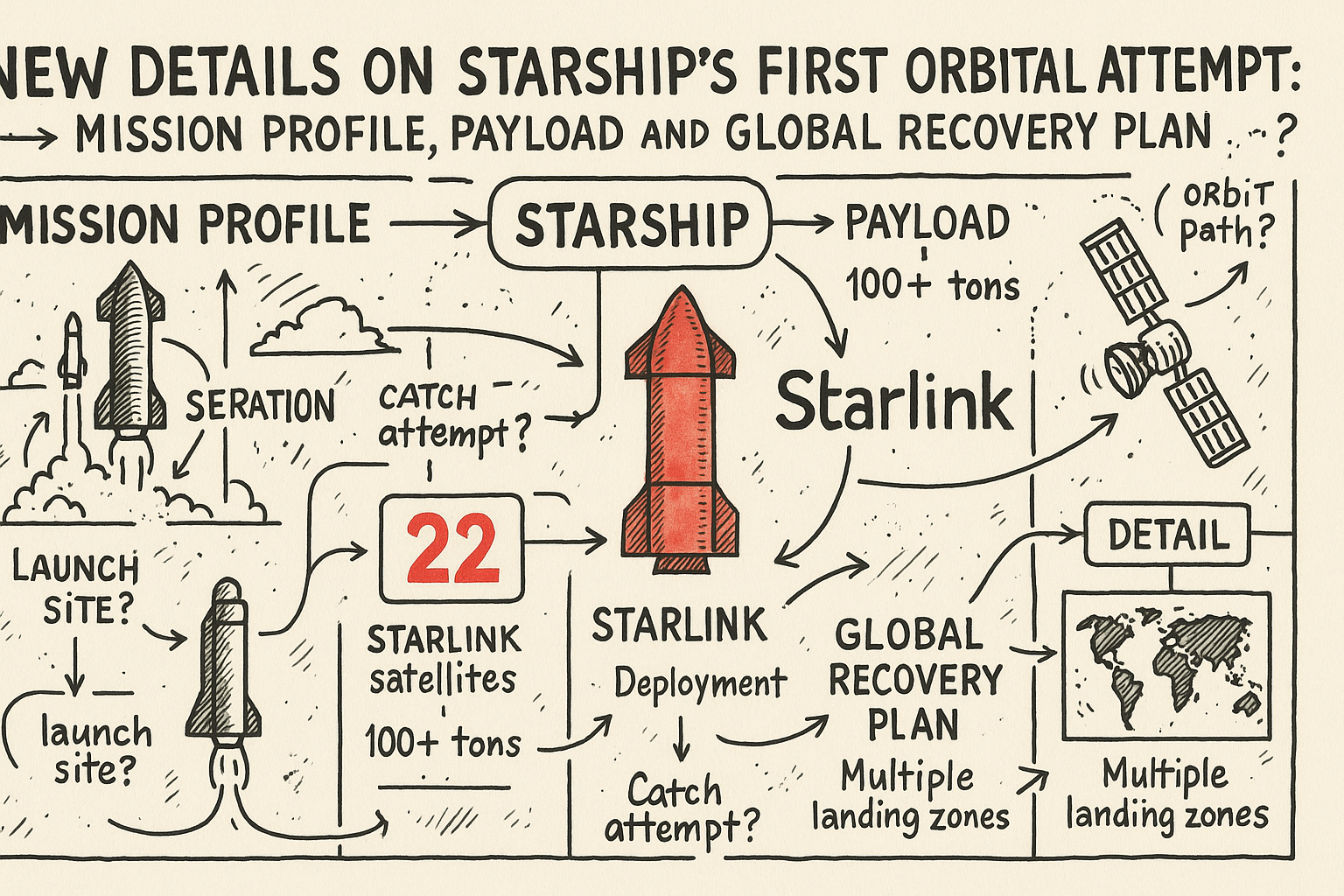
Mission profile and payload
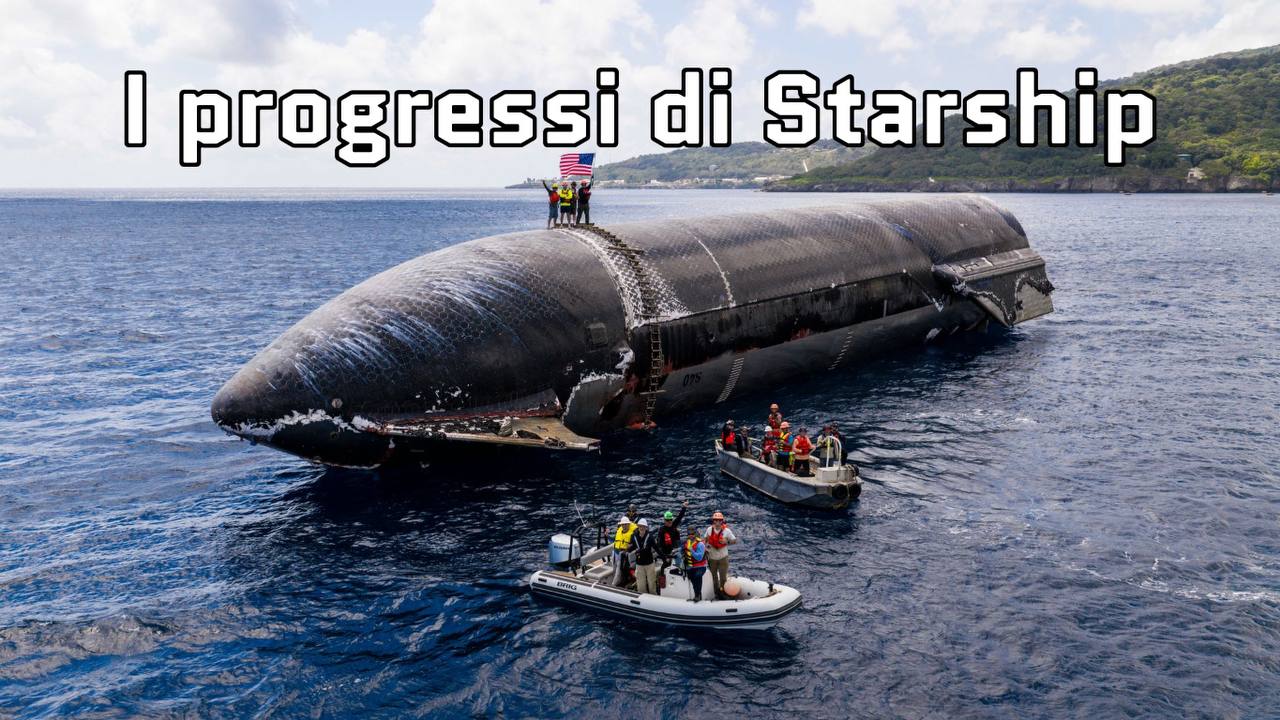
SpacePolicyOnline summarized the mission goal: if all goes according to plan, IFT‑14 will orbit Earth six times, deploy the set of Starlink V3 satellites, and then see the Starship upper stage splash down in the Pacific. TechCrunch and other outlets likewise reported the company’s announcement that the flight will attempt to put Starship into orbit and will carry the first V3 Starlink satellites into the company’s orbital internet constellation.
Phys.org repeated the company’s public schedule that pointed to a launch next week, while noting SpaceX framed the effort as an important step toward eventual lunar and Mars ambitions. NASAspaceflight’s coverage added context about what success on IFT‑14 could unlock for subsequent flights: a successful orbital mission would set up Flight 15 as the earliest opportunity for a ship catch and, in an optimistic scenario, a double catch. Flight 16 is described in internal reporting as the best‑case first launch from Kennedy Space Center’s Launch Complex 39A.
Why this flight matters
IFT‑14 represents both a technical demonstration and an operational test. The attempt to reach orbit and deploy Starlink hardware would be the first time Starship completes a full orbital circuit and successfully delivers payloads to space. SpacePolicyOnline emphasized the program’s history of high‑profile failures and recoveries since the program’s April 17, 2023 first launch, framing IFT‑14 as another step in a development approach the company has described as “fail fast, learn faster.”
Beyond a single flight, the reporting underscores a roadmap: an orbital success would open up the prospect of demonstrating ship catch operations and returning to established launch facilities like LC‑39A at Kennedy Space Center. NASAspaceflight cites KSC workers saying Flight 16 is now being cited internally as launching from 39A in a best‑case timeline.
Schedule, regulatory review and open questions
All outlets make clear the planned date remains subject to regulatory approval. SpacePolicyOnline and Florida Today noted the target is contingent on those clearances, and several reports reflect movement in the target date during the week of announcements. Specific technical details about ascent trajectories, engine-out contingencies, or recovery hardware and procedures were not provided in the reports and therefore are not addressed here.
IFT‑14 will be closely watched by regulators, industry observers and the international space community. If it proceeds on or near Sept. 28 as the company has signaled, the mission could both validate key system capabilities and set up subsequent flights that aim to demonstrate recovery techniques and operations from additional launch complexes.