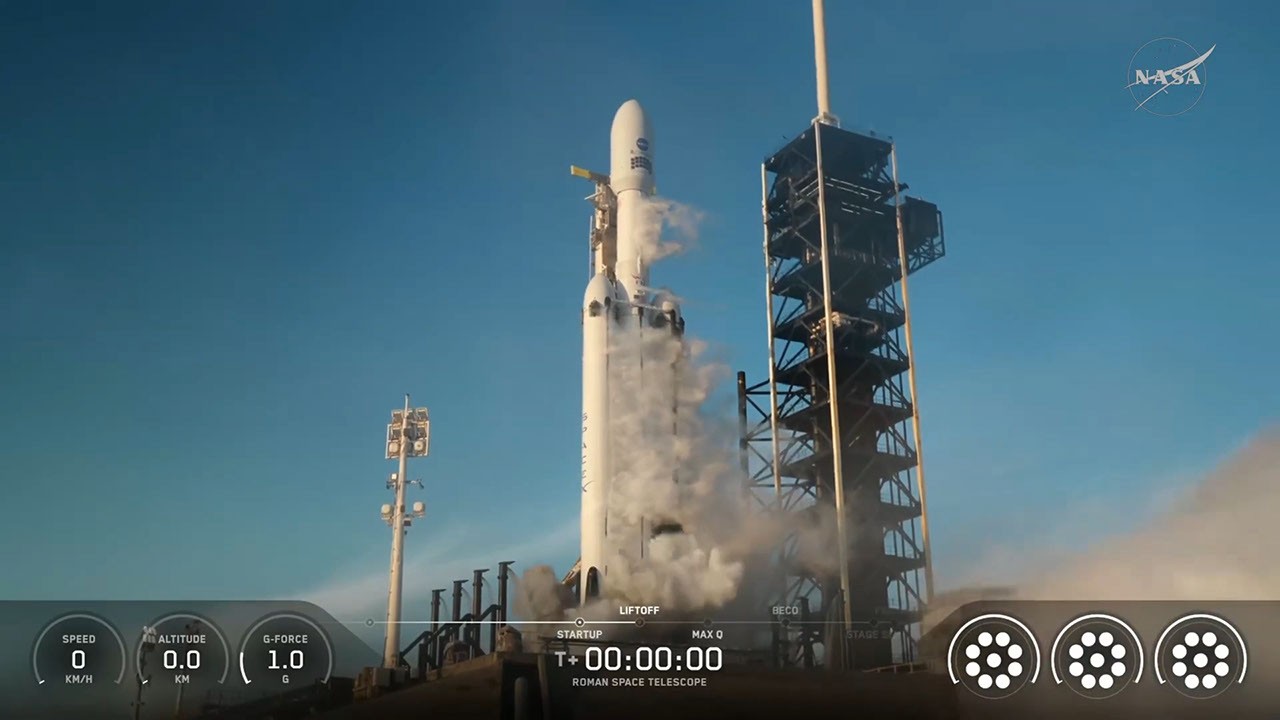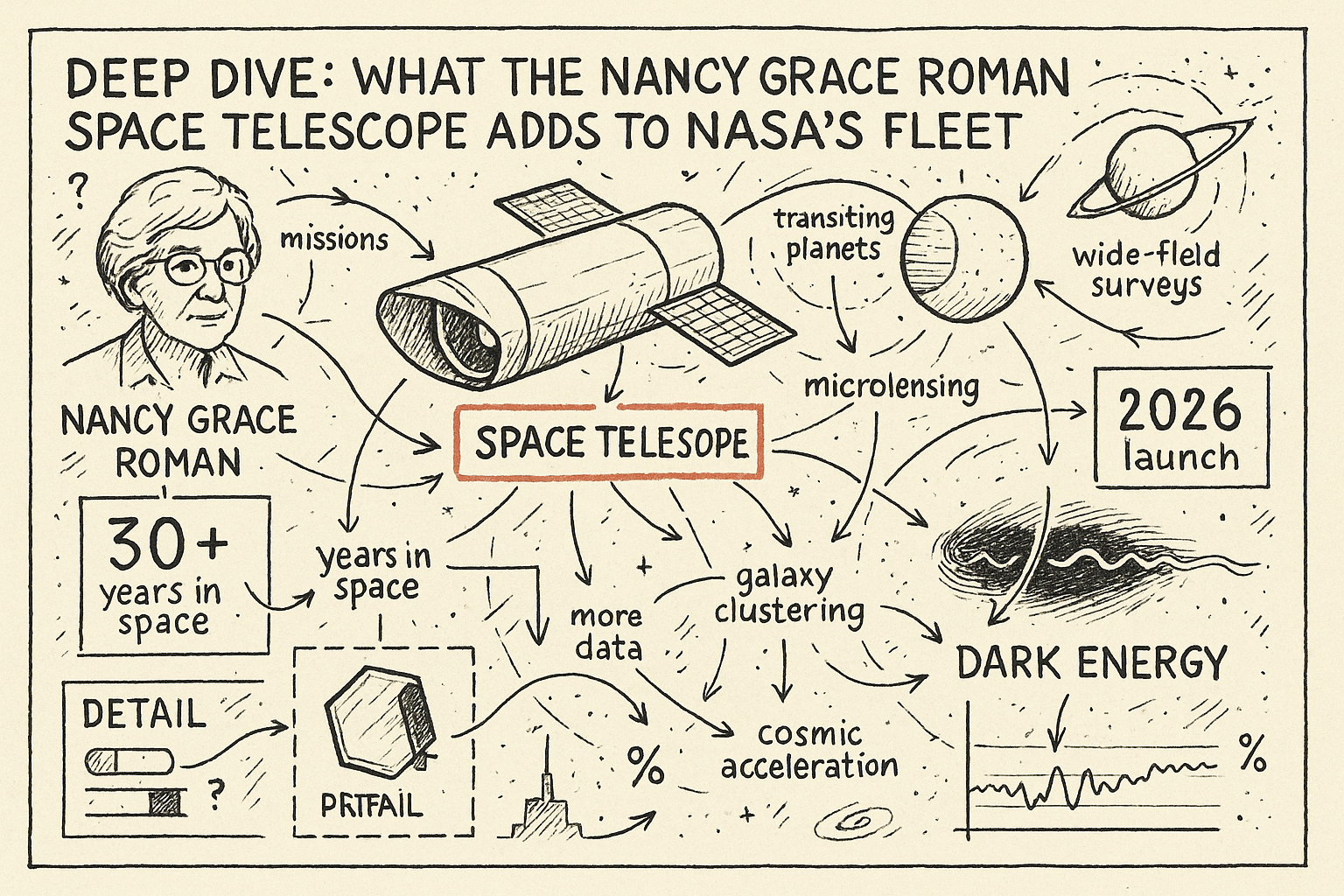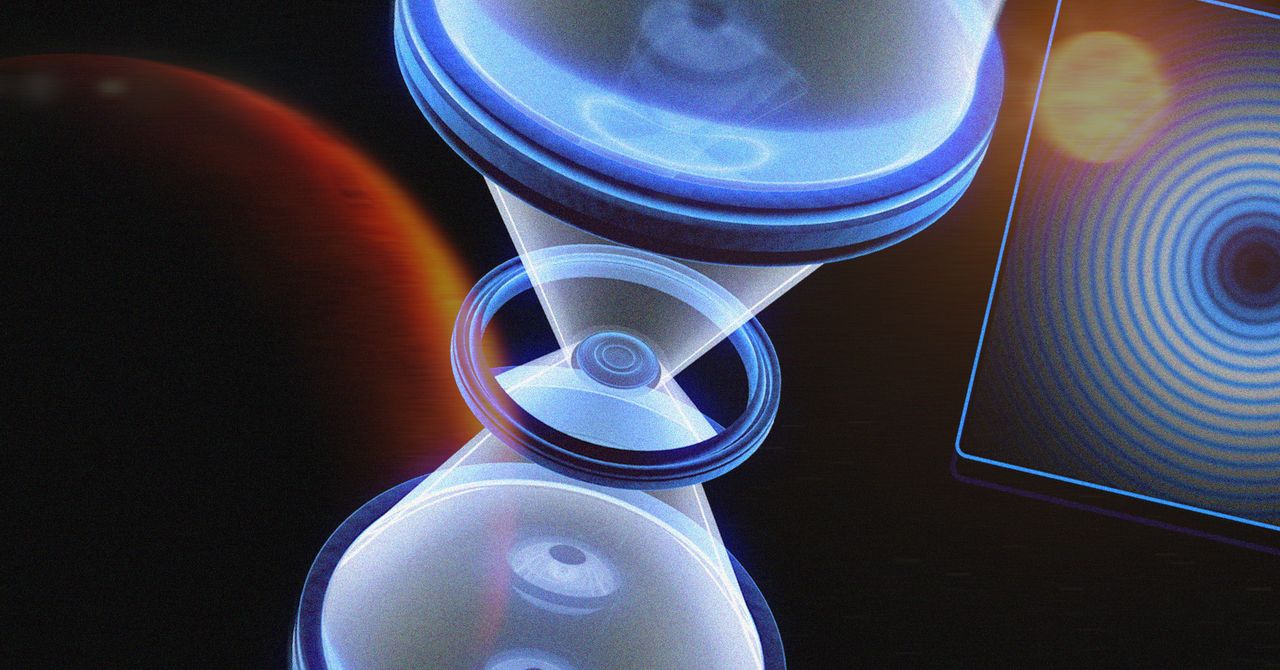
NASA’s Nancy Grace Roman Space Telescope lifted off on a SpaceX Falcon Heavy at the end of August and is now en route to its operational perch beyond the Moon. Over the next three months the observatory will complete a roughly one-million-mile transfer to the Sun–Earth Lagrange point L2, where a cold, stable thermal and radiation environment will enable wide-field infrared surveys that aim to probe dark energy, map dark matter and expand exoplanet catalogs.
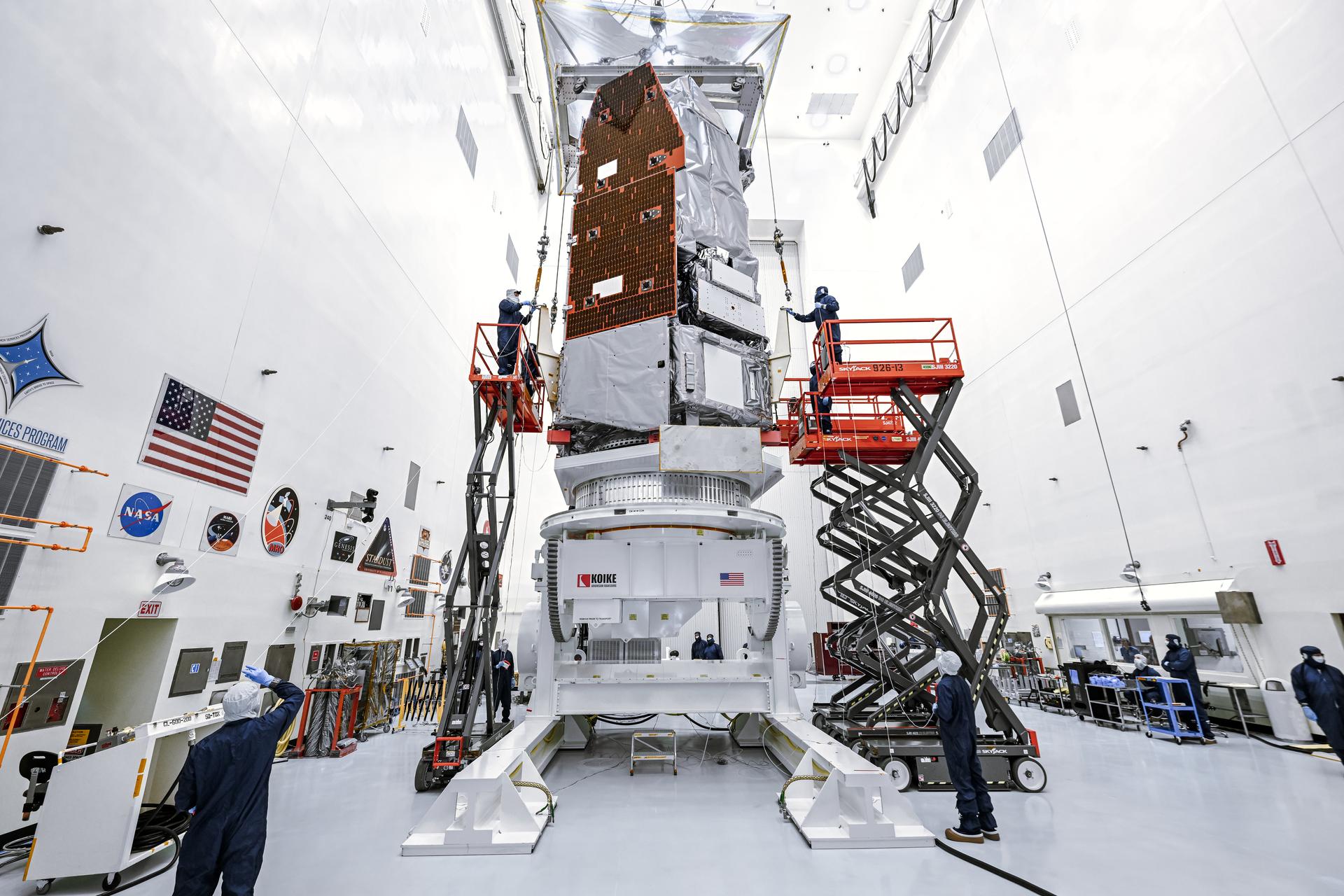
Mission teams have begun a careful commissioning sequence during cruise and immediately after arrival at L2. Early activities include instrument cooldown, mirror alignment and full checkout of Roman’s wide-field camera, which pairs a 2.4-meter primary mirror with a field of view about 100 times that of Hubble’s near-infrared imager. Those steps are critical to achieving the Hubble-quality image sharpness across much larger sky areas that the mission promises.
Beyond the baseline science program, several outlets highlight a key technology demonstration on board that could influence future exoplanet missions: Roman carries a coronagraph demonstrator to test starlight-suppression and high-contrast imaging techniques in space. If successful, this experiment will provide valuable lessons for future missions designed to directly image Earthlike planets around nearby stars, even though the coronagraph on Roman is not itself a planet-imaging observatory at the level required for biosignature searches.
With launch confirmed and cruise underway, the next months will determine how quickly Roman can begin its planned sky surveys. The mission’s progress will be followed closely by astronomers and the public alike: Roman’s combination of Hubble-quality resolution and unprecedented wide-field capability promises datasets that will be used for decades to study cosmic acceleration, the distribution of dark matter and planetary systems in our galaxy.