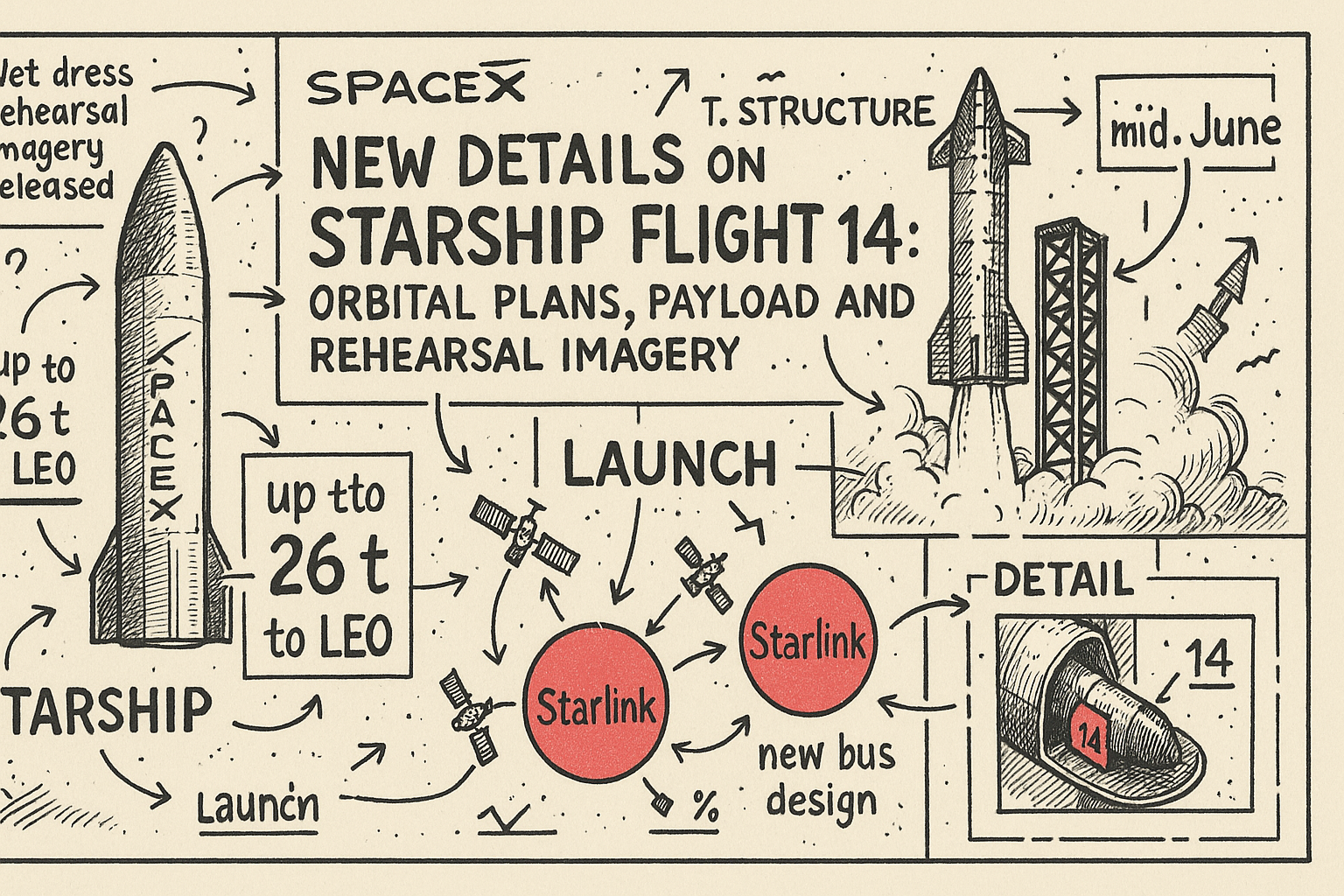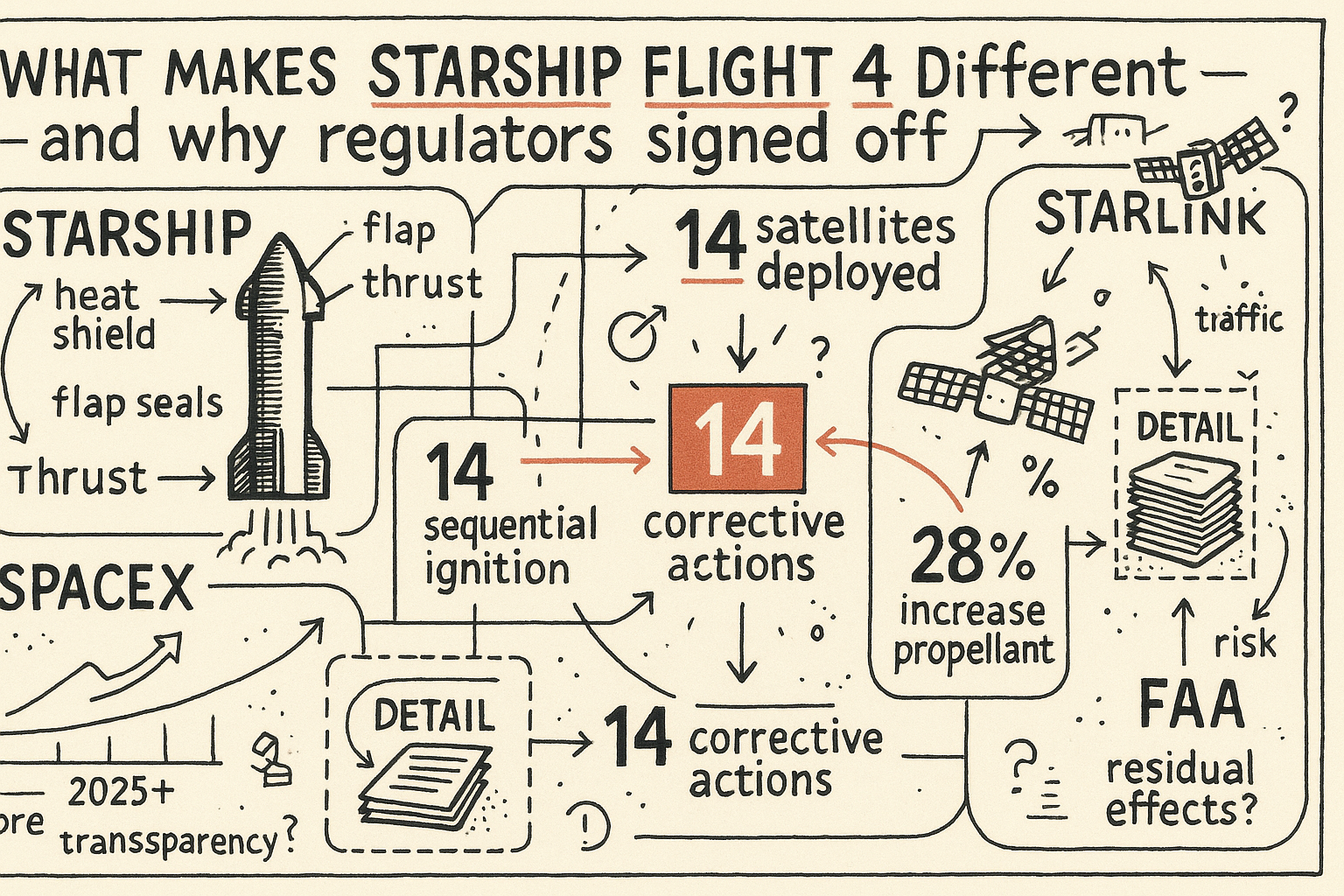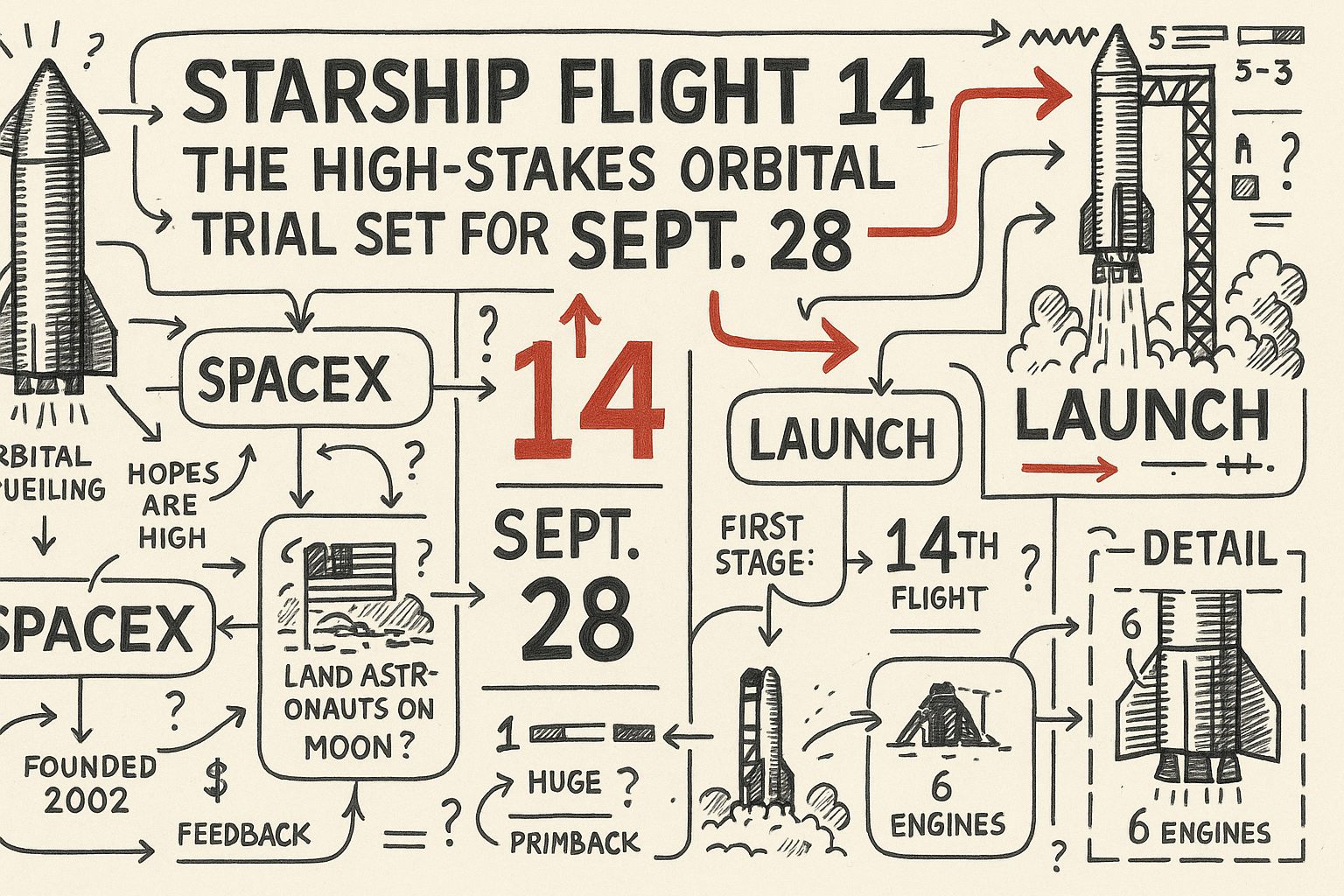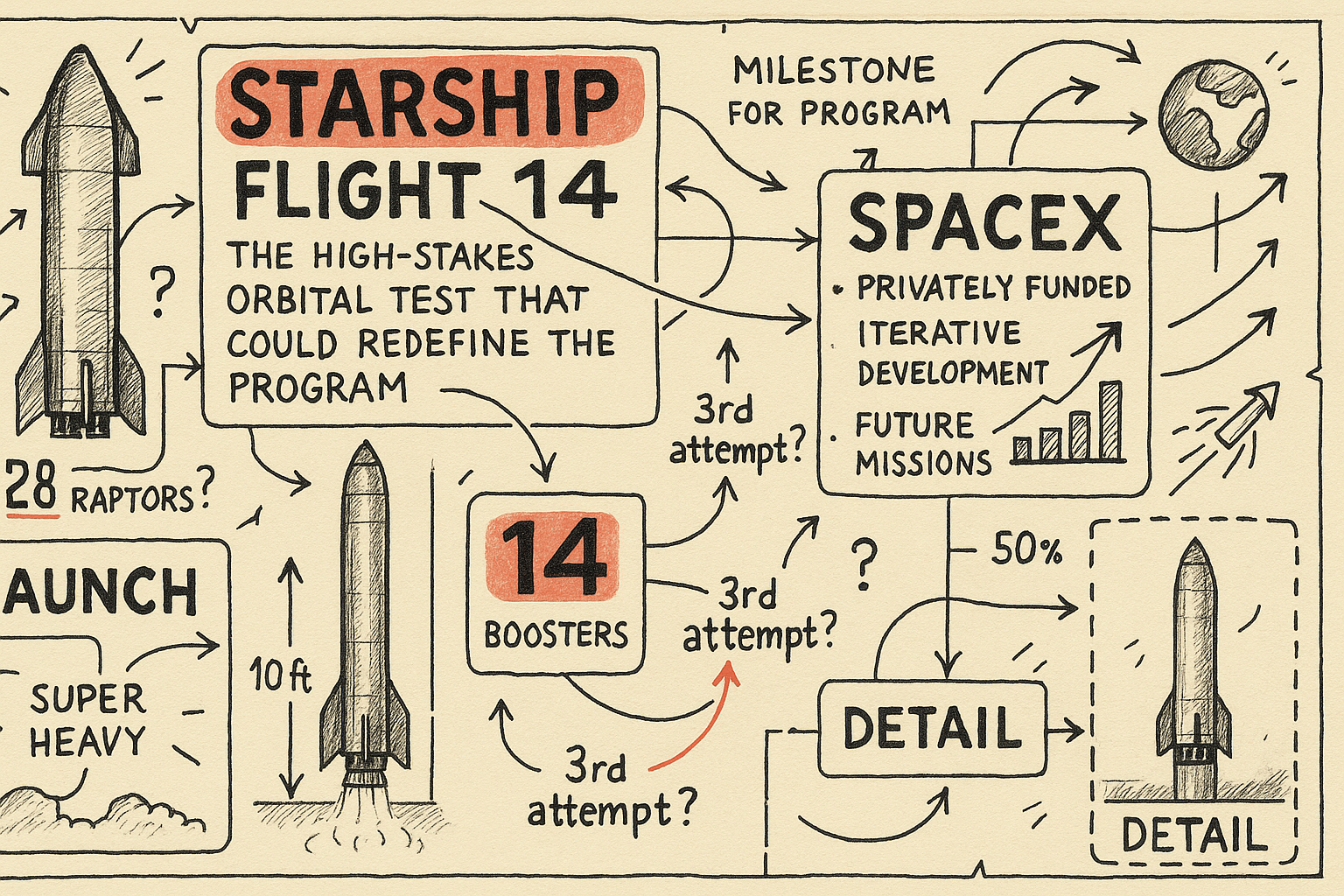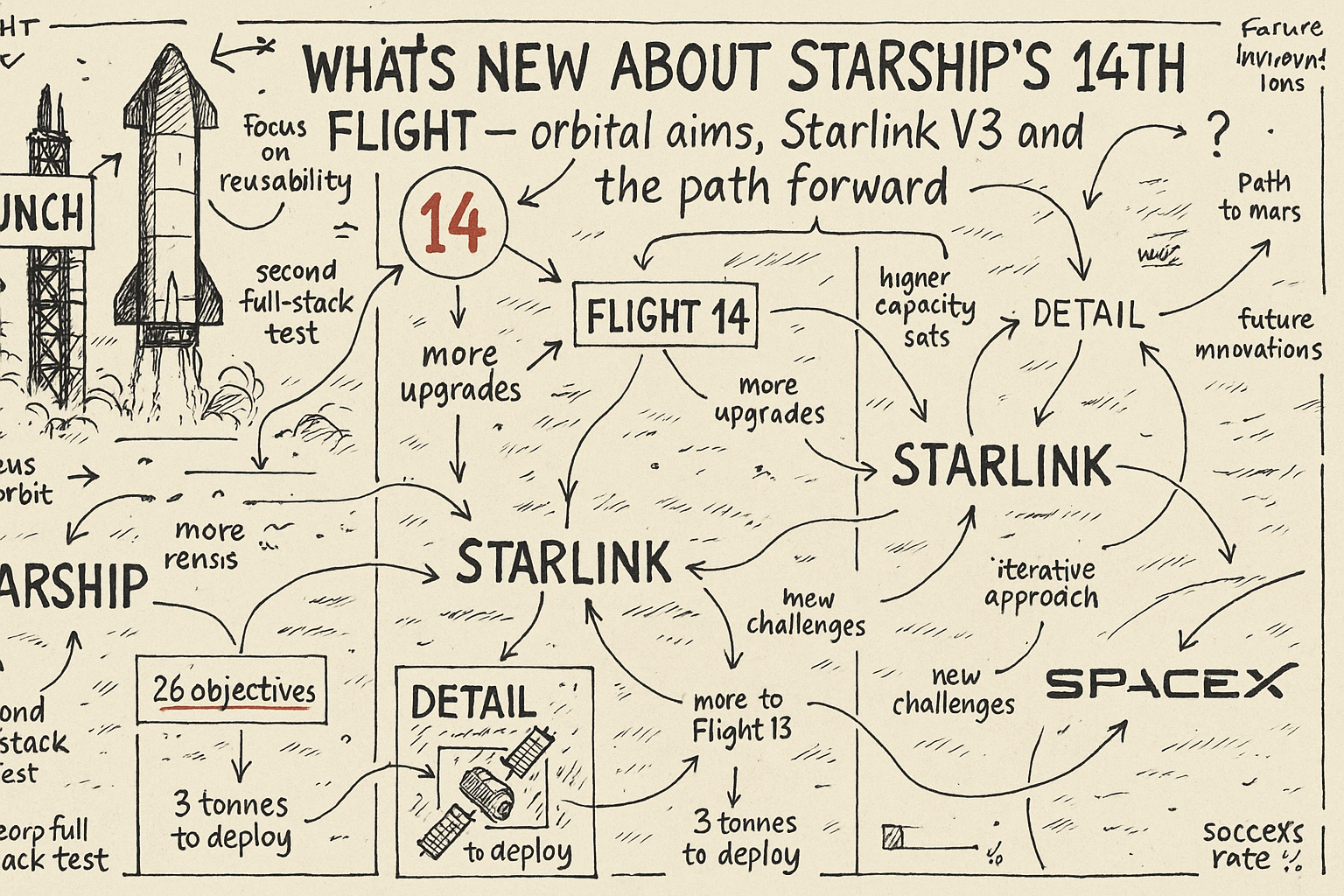
SpaceX has set a new milestone for its Starship program: Flight 14 is being prepared as the first true orbital mission for the Starship system. Multiple sources indicate the company is now targeting the end of September for the attempt, with regulators and final approvals still in play.
When and what
Multiple outlets report that SpaceX announced the orbital attempt would occur next week from Texas, aiming for a liftoff window that has been publicly discussed for late September. One source specifically states a local liftoff time of 7:15 a.m. local (1215 GMT) on a Tuesday, while SpacePolicyOnline and TechCrunch cite September 28 as the target date after an internal schedule slip. NASASpaceFlight notes the company is targeting Flight 14 no earlier than Monday, September 28, pending regulatory approval.
Mission profile and payload
SpacePolicyOnline provides the clearest outline of Flight 14's objectives: if all goes according to plan, Integrated Flight Test-14 (IFT-14) will place the Starship upper stage into orbit for six revolutions and deploy 26 Starlink V3 satellites before the upper stage is planned to splash down in the ocean west of Chile. TechCrunch and Phys.org likewise report that SpaceX intends to attempt to put the upper stage into Earth orbit and to deploy V3 Starlink satellites during the mission.
Why this flight matters
The flight is presented by outlets as a significant step in SpaceX's broader plans for Starship, which the company has framed as a key element for future ambitions that include lunar and Mars missions. The program’s history of early test flights — including the April 17, 2023 inaugural launch that ended quickly in a rapid unscheduled disassembly — is noted by SpacePolicyOnline, which also recounts both high-profile recoveries and on-pad and in-flight losses the program has experienced since then. Flight 14 is framed as a turning point: the first attempt to deliver the upper stage to orbit and to demonstrate in-space deployment of operational payloads.
Schedule, approvals and what comes next
Sources uniformly stress regulatory approvals remain a gating factor. NASASpaceFlight and SpacePolicyOnline explicitly say the date is pending regulatory approval. SpacePolicyOnline added that the date target slipped to September 28 in an update. If Flight 14 succeeds, NASASpaceFlight reports that internal timelines place Flight 15 as the first realistic opportunity for a ship catch, with Flight 16 cited internally as the earliest best-case for a launch from Kennedy Space Center’s Launch Complex 39A.
Collectively, the recent reporting adds operational detail to the previously published coverage: Flight 14 is not only another test of the growing Starship fleet but a planned operational demonstration — placing an upper stage into orbit, releasing a block of next-generation Starlink satellites, and returning the vehicle stage to a planned splashdown downrange. The outcome of this attempt will strongly influence how quickly SpaceX moves toward subsequent objectives such as ship catch attempts and operations from other launch complexes.