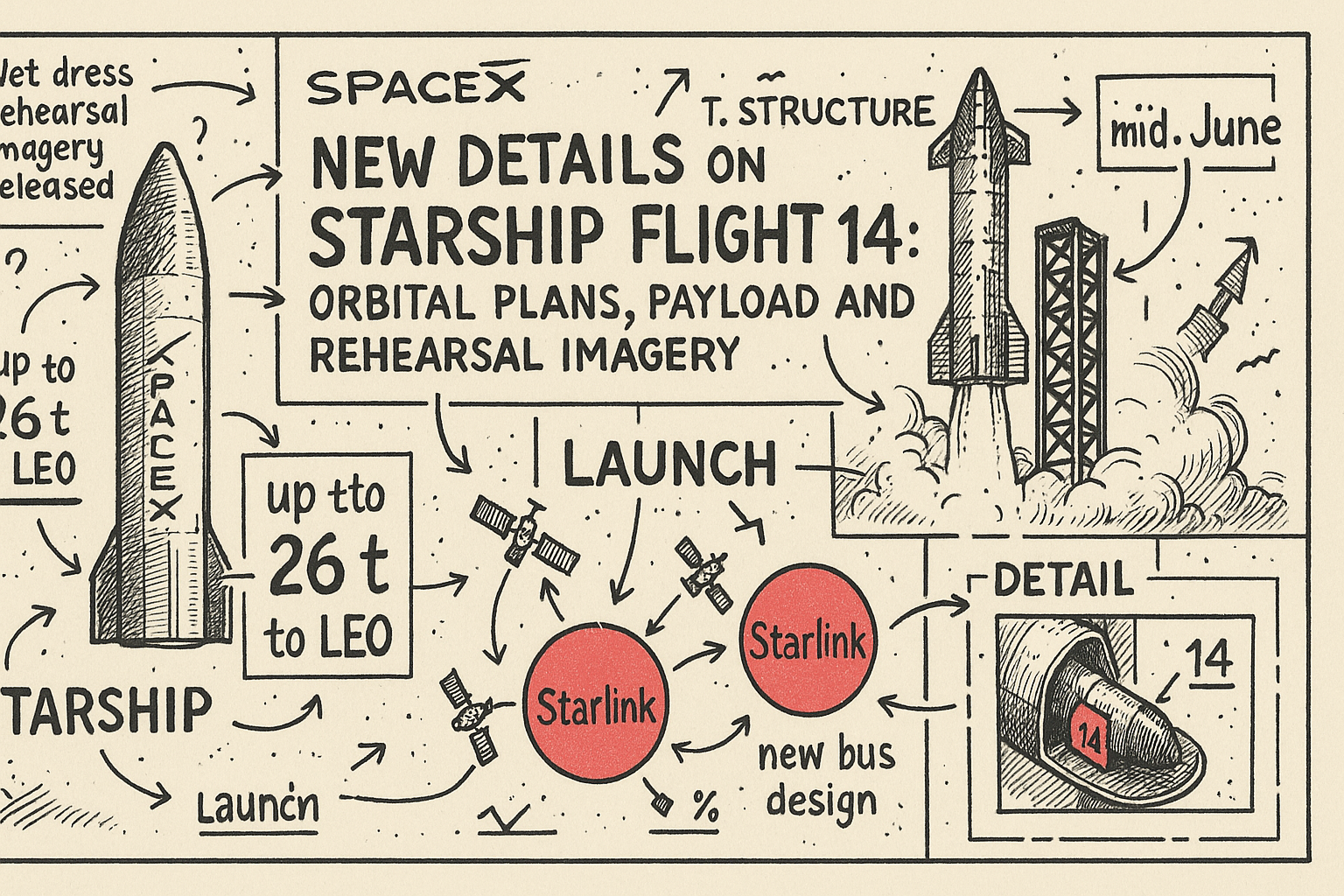
SpaceX completed a wet dress rehearsal for Starship at Starbase, Texas, a key milestone that precedes Integrated Flight Test-14 (IFT-14). Photographs released by SpaceX and published by independent outlets show the stacked Super Heavy booster and Ship 41 upper stage surrounded by cryogenic vapor as teams loaded propellants and exercised launch day procedures without igniting the engines.
Launch timing and regulatory caveats
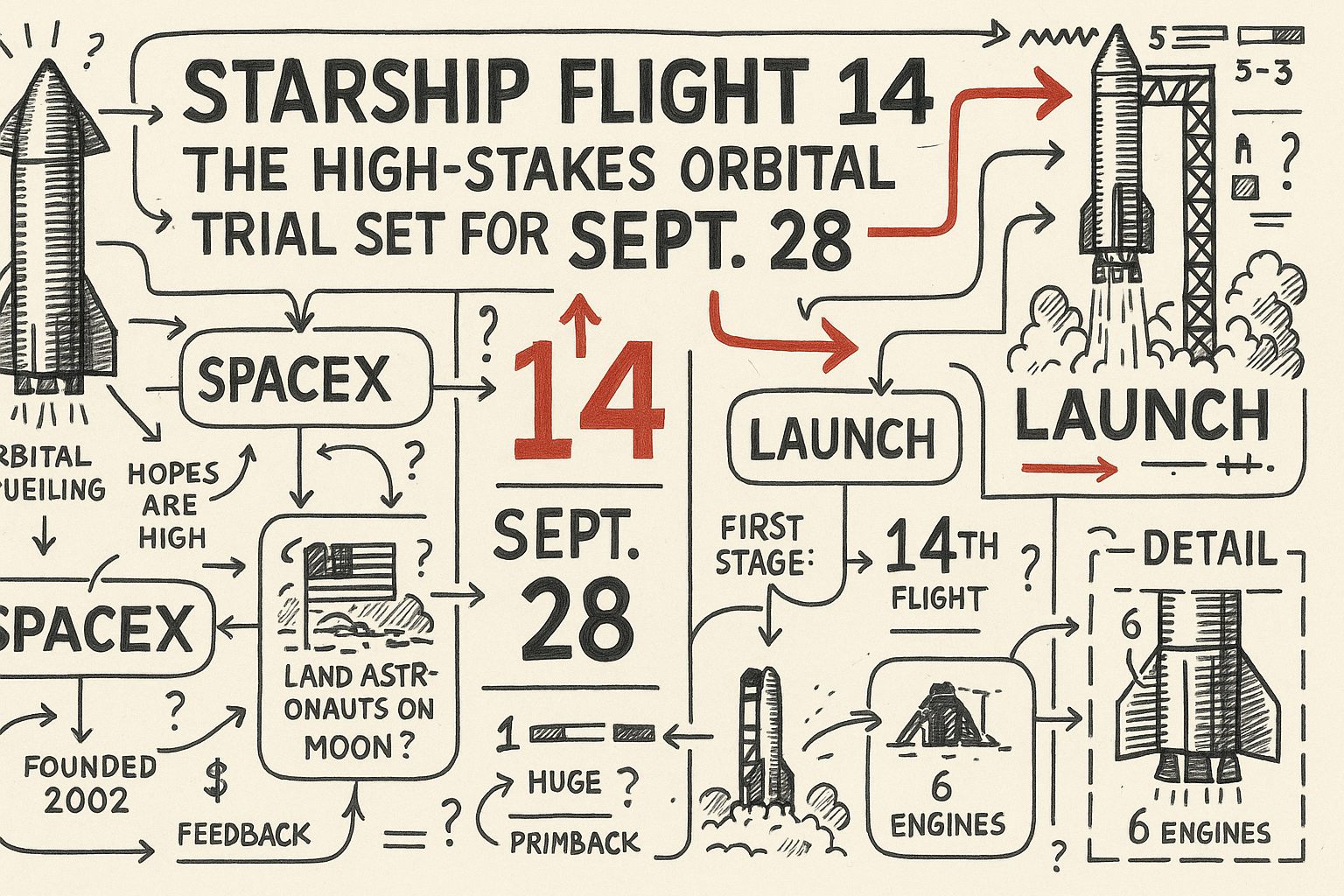
Multiple sources report that SpaceX is targeting September 28, 2026, for the company’s first orbital Starship mission, with local launch times given as 8:15 a.m. EDT (7:15 a.m. CDT) and 14:15 CEST in German reporting. The schedule is conditional: the flight remains pending regulatory approval.
Mission profile and payload
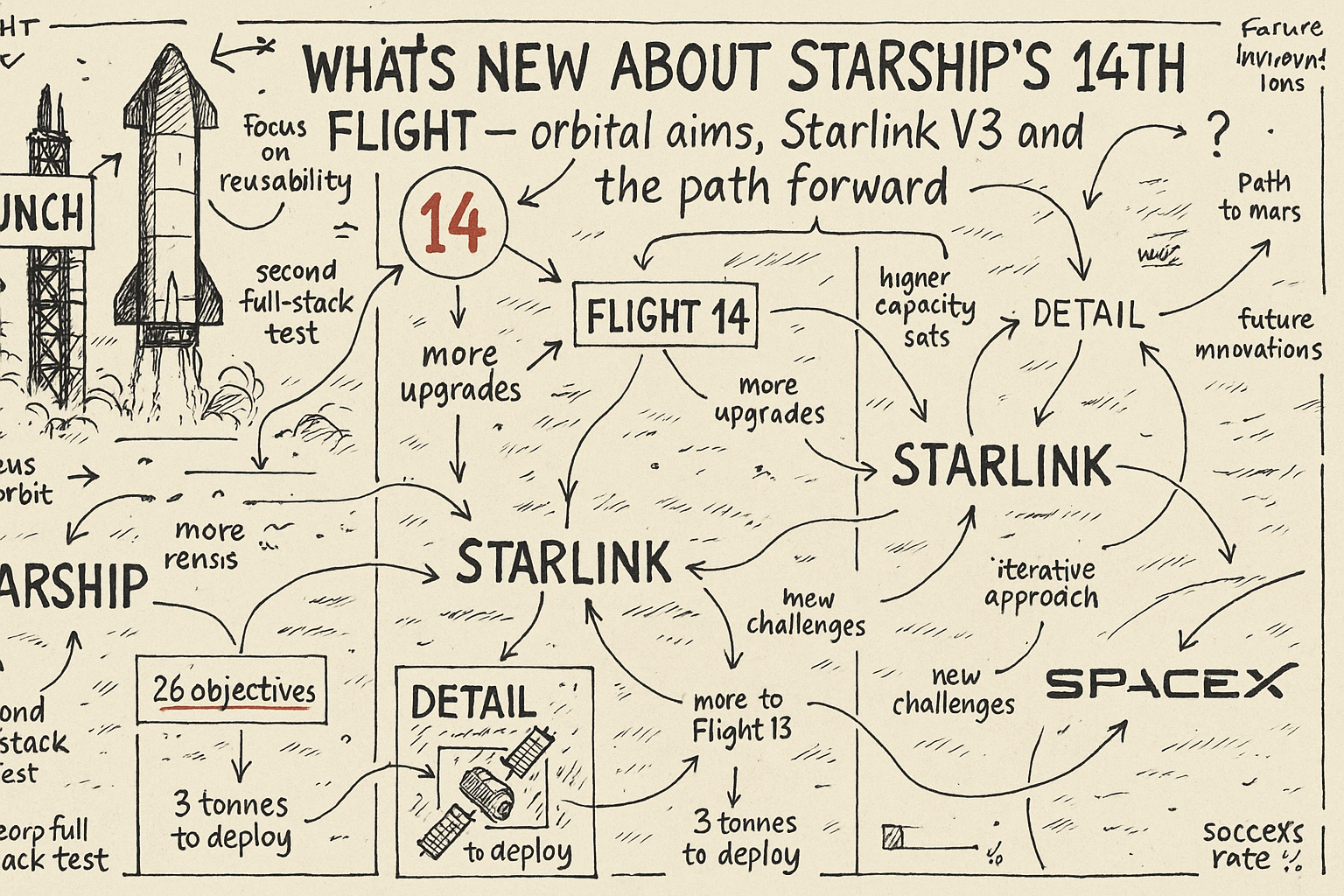
New mission details indicate IFT-14 is planned as Starship’s first orbital flight. According to public reports, the vehicle is expected to reach a roughly 275 km orbit and perform about six orbits of Earth. During those circuits, Starship will deploy 26 Starlink V3 satellites. After completing its orbital operations, the upper stage is planned to splash down in the ocean west of Chile approximately ten hours after launch, while the Super Heavy booster is slated to touchdown in the Gulf of Mexico water area rather than return to the launch site.
Program context and sequence
This upcoming flight will mark the third mission of Starship’s Version 3 (V3), which first flew on Flight 12 in May 2026. Industry reporting frames IFT-14 as a pivotal step toward operational capabilities: a successful flight could open the door for subsequent milestones, including attempts at booster catches on later flights and an eventual transition to launches from Kennedy Space Center’s Launch Complex 39A. Internal citations from KSC workers identify Flight 16 as the best-case first launch from 39A, while Flight 15 is described as the earliest realistic opportunity for a ship catch and potentially a double catch.
Significance of the rehearsal imagery
The rehearsal images, circulated by SpaceX and reproduced by outlets, document the operational procedures of a wet dress rehearsal: propellant loading, cryogenic boil-off, and dry runs of countdown sequences. Observers noted the stacking of Ship 41 atop the Super Heavy booster shortly before the rehearsal, underscoring progress toward an integrated stack for the orbital attempt.
Where this mission sits in Starship’s development arc
Reporting across the sources places IFT-14 in the broader experimental arc of Starship development. Since the vehicle’s initial flight in April 2023, the program has alternated high-visibility successes—such as booster recovery attempts—with explosive failures during early tests. Coverage frames the program’s approach as iterative, with each test informing subsequent modifications and operational planning.
In sum, newly surfaced material around the wet dress rehearsal, published imagery, and mission manifests provide a clearer picture of what SpaceX intends for Flight 14: a first orbital demonstration carrying 26 Starlink V3 satellites on a multi-orbit mission, contingent on regulatory approval and scheduled for late September 2026.