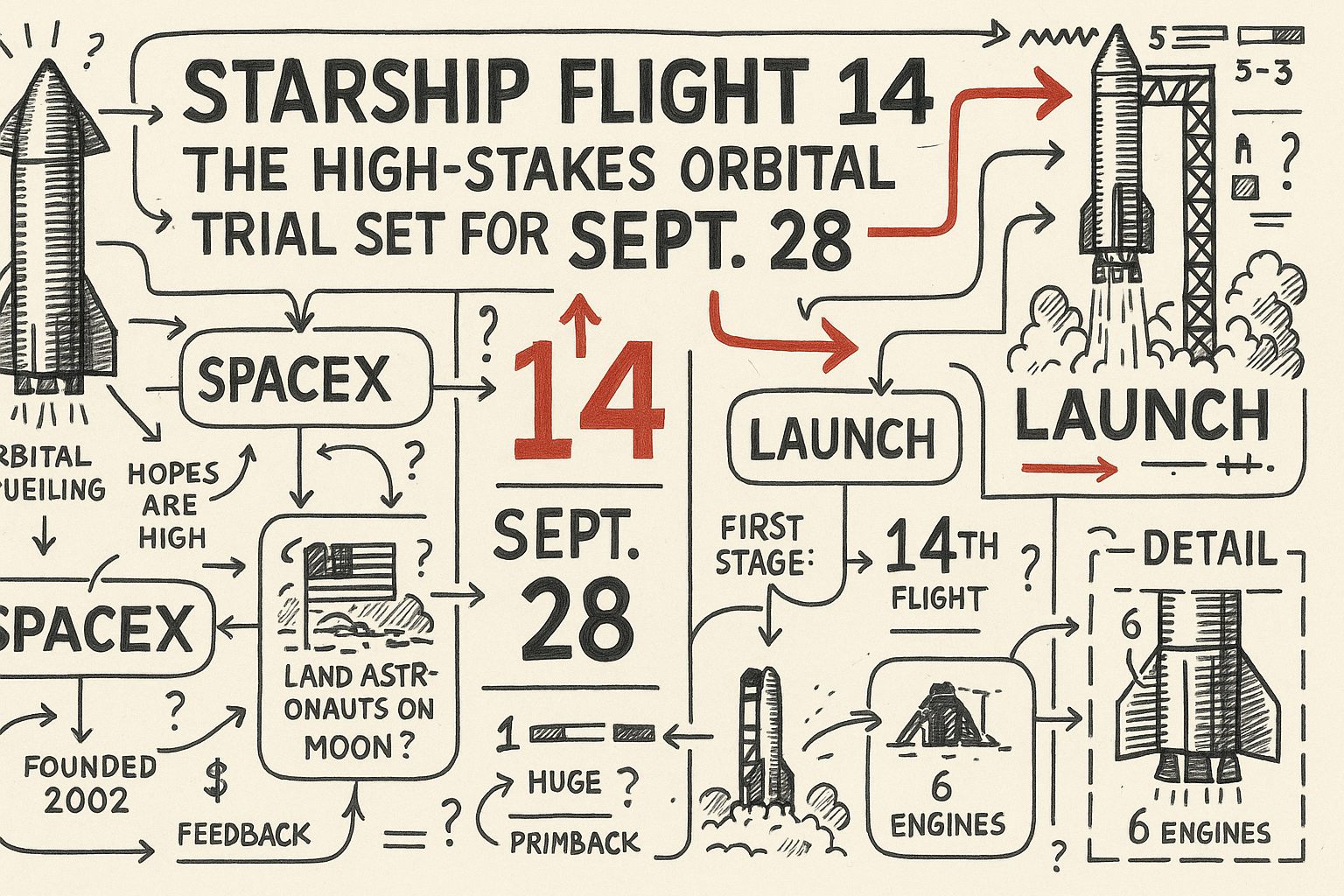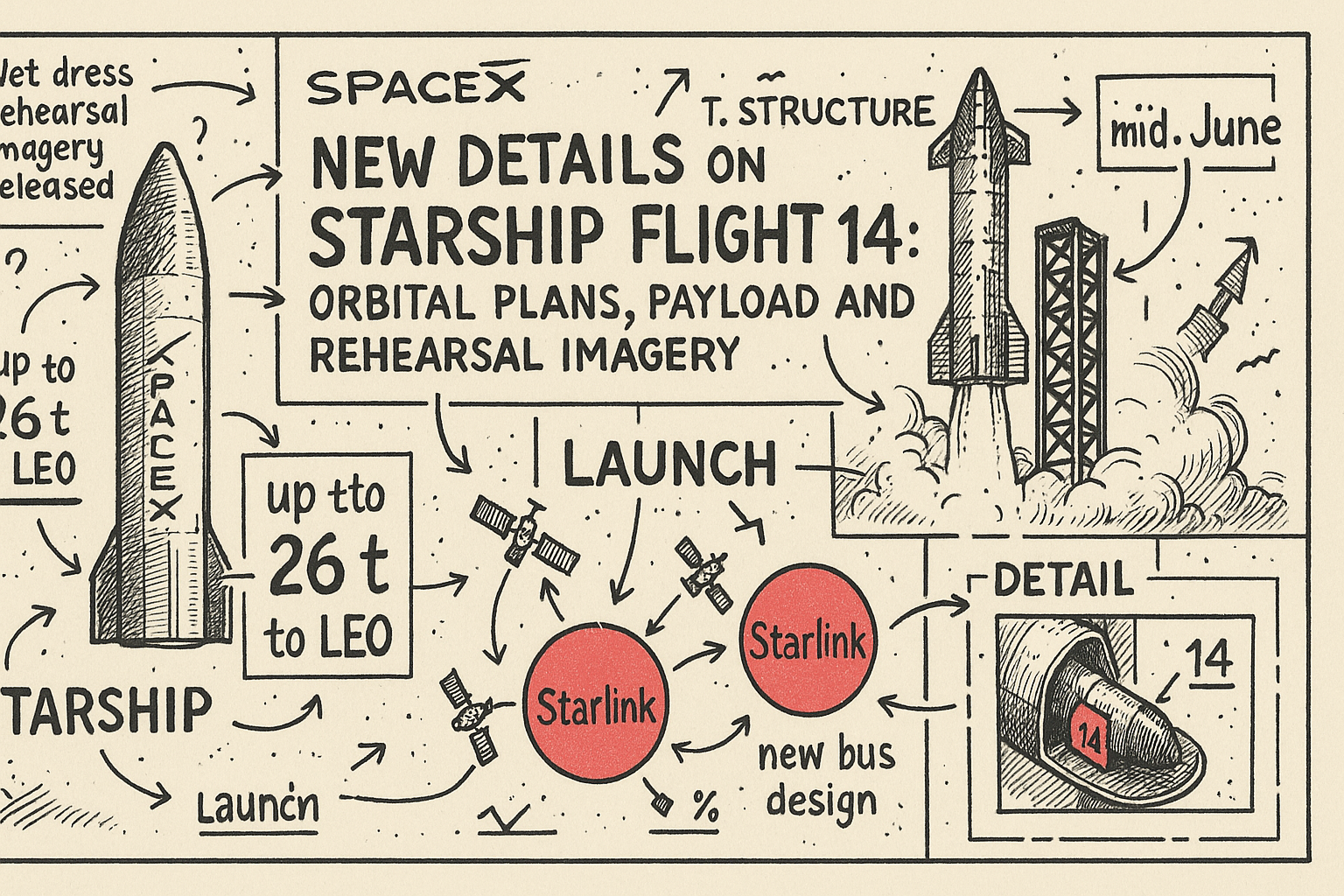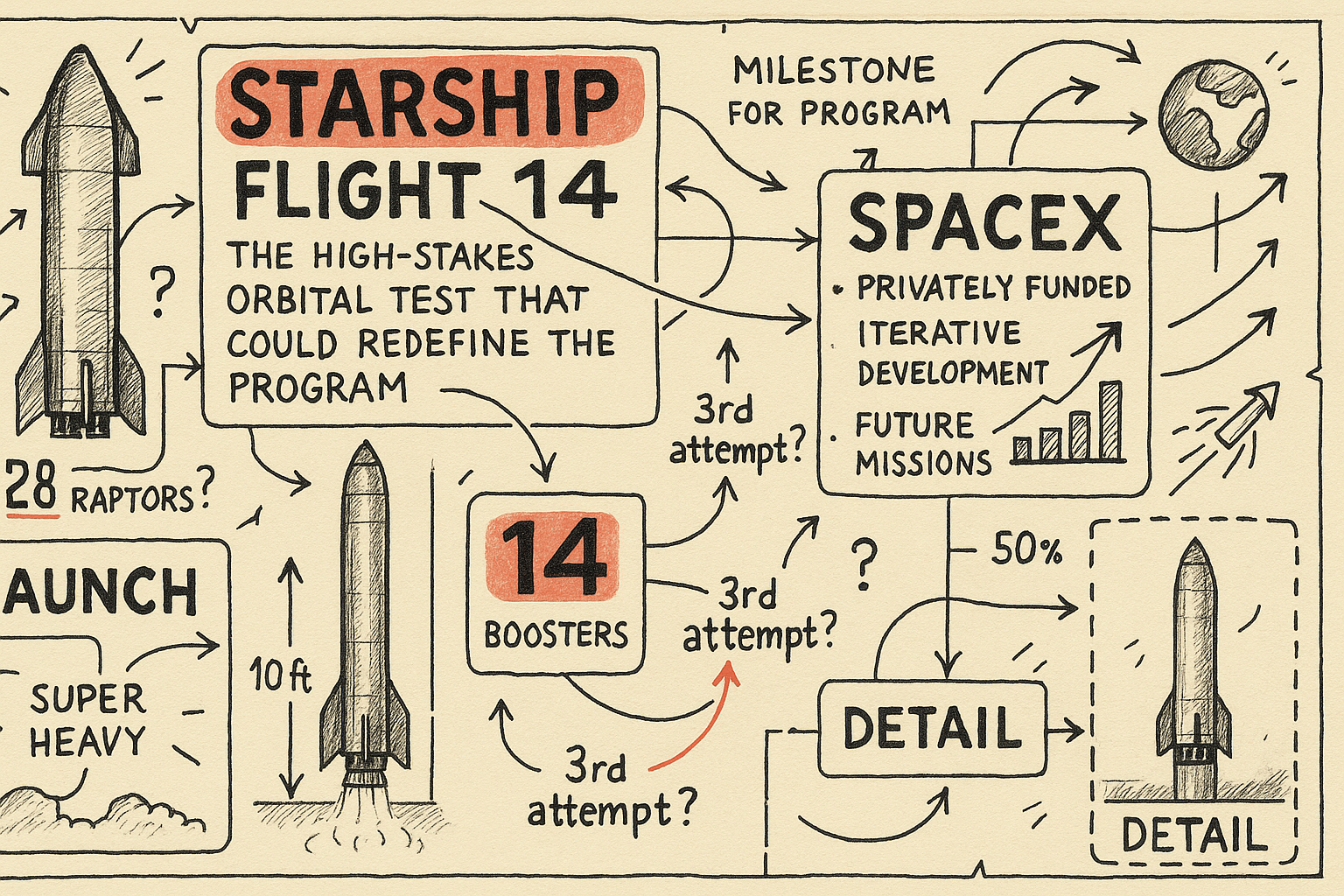
After a long series of incremental flights and dramatic setbacks, SpaceX is preparing what it calls Integrated Flight Test‑14 (IFT‑14) — a mission that, if successful, would be Starship’s first true orbital demonstration. The company has been targeting Monday, September 28 for the launch, contingent on regulatory approval, and conducted a wet dress rehearsal on Sept. 24 that kept the vehicle on track for the planned liftoff.
From repeated tests to an orbital objective
Starship’s program has been marked by a mix of early failures and notable recoveries. Since the program’s first launch on April 17, 2023, which ended in a rapid unplanned disassembly, SpaceX has iterated rapidly. The Super Heavy booster has had high‑profile successes, including three captured returns at the launch tower, as well as explosive losses such as two Starship explosions over the Caribbean. Through those ups and downs, the company has continued testing toward a fully orbital system.
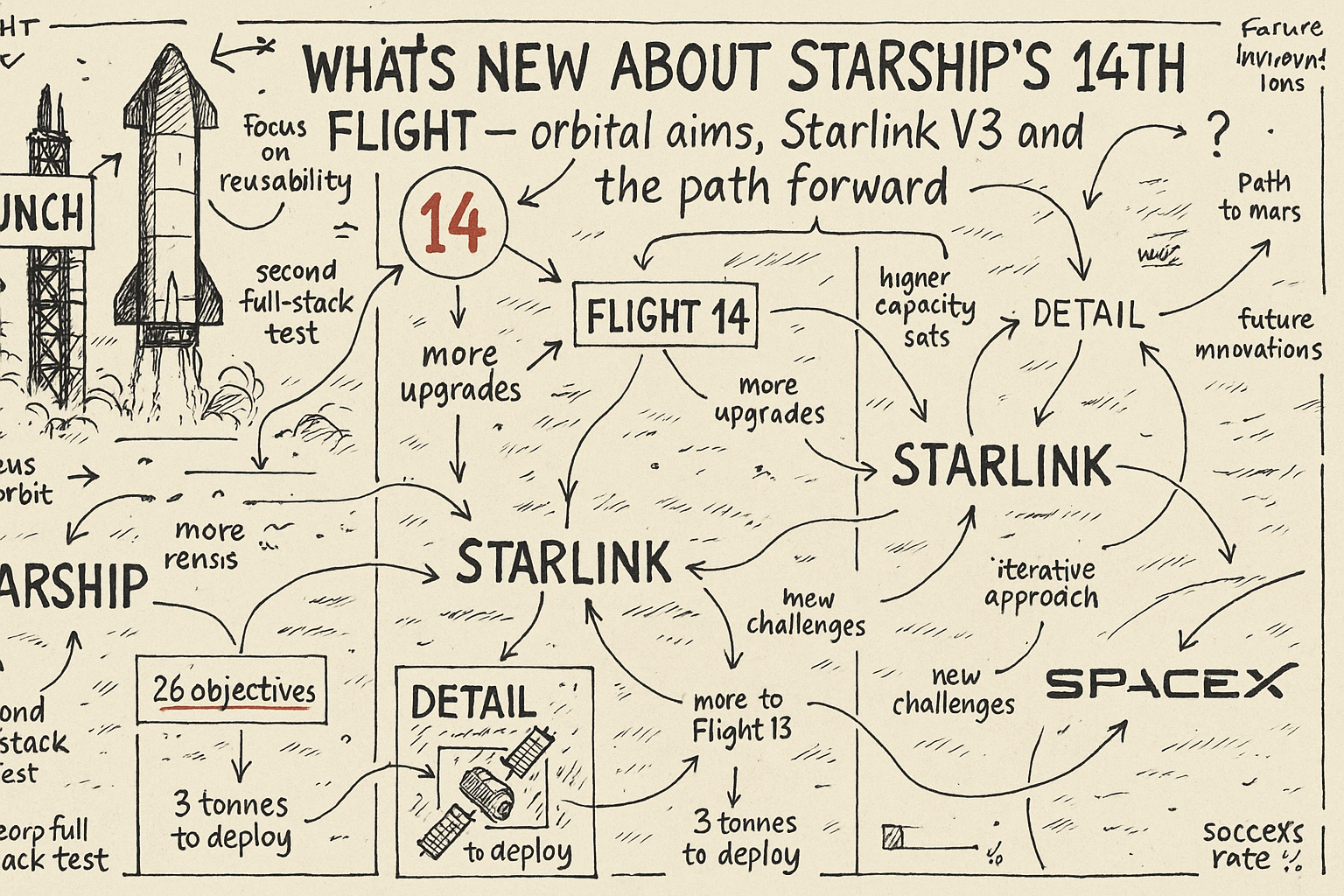
IFT‑14 represents a step change in mission complexity. According to public reporting, the flight, if it follows the plan, would place the combined Super Heavy‑Starship stack into orbit and have Starship orbit Earth six times before releasing 26 Starlink V3 satellites. After deployment, the vehicle is planned to splash down in the ocean west of Chile.
Schedule, approvals and what comes next
SpaceX’s internal and public timelines have converged on Sept. 28 as the no‑earlier‑than target for Flight 14, but all reporting stresses regulatory clearance as a gating factor. The Federal Aviation Administration’s approval was explicitly cited in multiple outlets as required before the mission can proceed. SpaceX conducted its wet dress rehearsal on Sept. 24, a procedural milestone that industry observers noted kept the rocket positioned for the planned late‑September attempt.
Public commentary around the program frames Flight 14 as the point at which Starship must deliver substantial new capabilities. If Flight 14 goes well, subsequent missions take on operational objectives. Reporting indicates Flight 15 would present the first realistic chance for a ship catch — and possibly a double catch in the best case — while Flight 16 is cited as the earliest realistic launch from Kennedy Space Center’s Launch Complex 39A, with internal references indicating that mission is now identified as originating from 39A.
Orbital ambitions and program context
SpaceX uses the name Starship to describe the whole two‑stage system, though officially the first stage is Super Heavy and the second stage is Starship. The outcome of Flight 14 will be watched closely not only for the immediate mission objectives — orbital insertion, multiple orbits, satellite deployment and a scheduled splashdown west of Chile — but for what it signals about the program’s readiness to move from experimental flights toward operational uses such as routine satellite deployment and, later, recovery operations like catches and launches from other pads.
As the Sept. 28 target approaches, industry coverage has emphasized both the technical difficulty of the sequence SpaceX is attempting and the significance of regulatory sign‑off. The wet dress rehearsal was cited as a recent positive sign that the vehicle and teams are prepared for the next step, but final clearance remains a prerequisite before liftoff can occur.
Whether Flight 14 will meet expectations remains to be seen; the mission’s success or failure will influence timelines for the next milestones the program has publicly identified, including attempted ship catches and the prospect of launches from KSC’s LC‑39A.