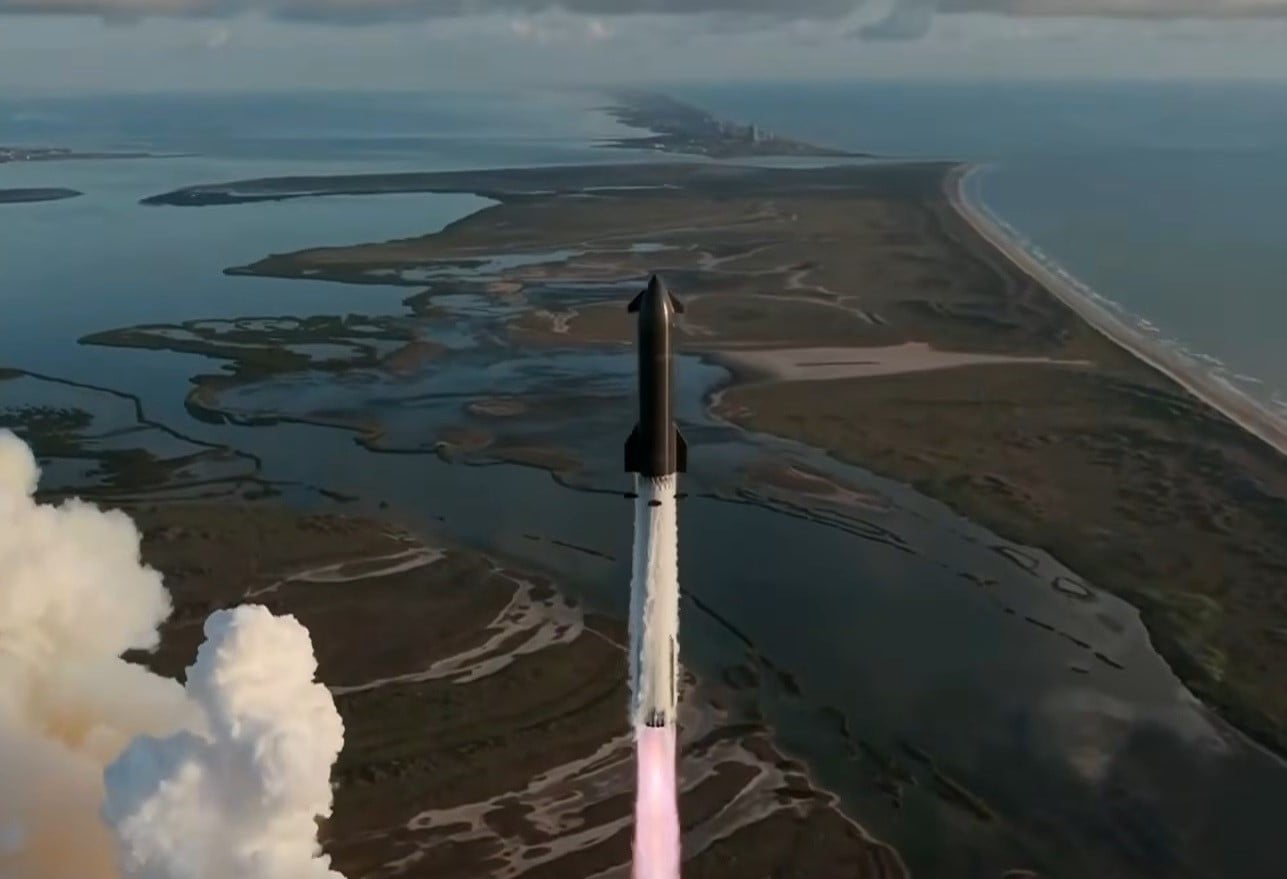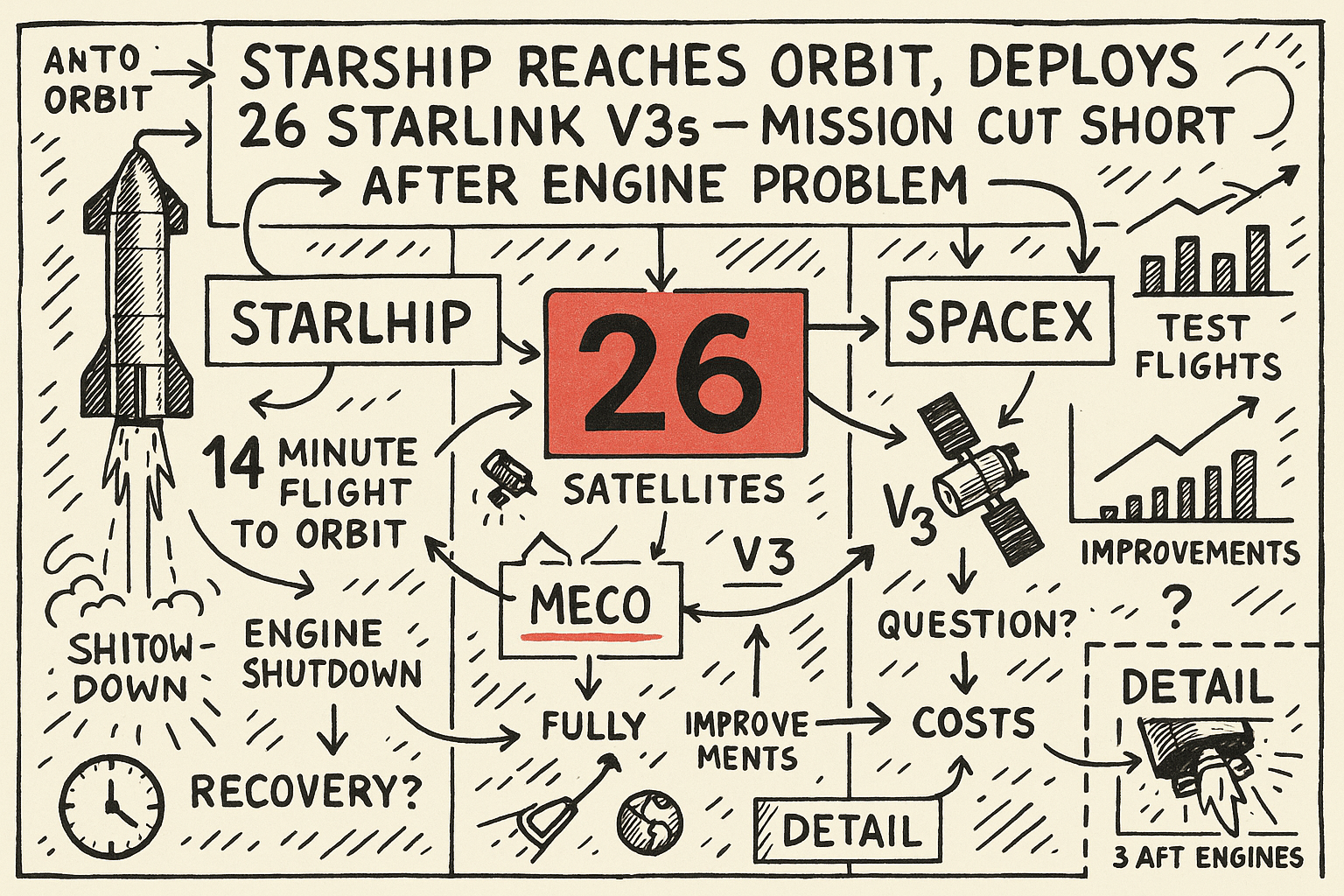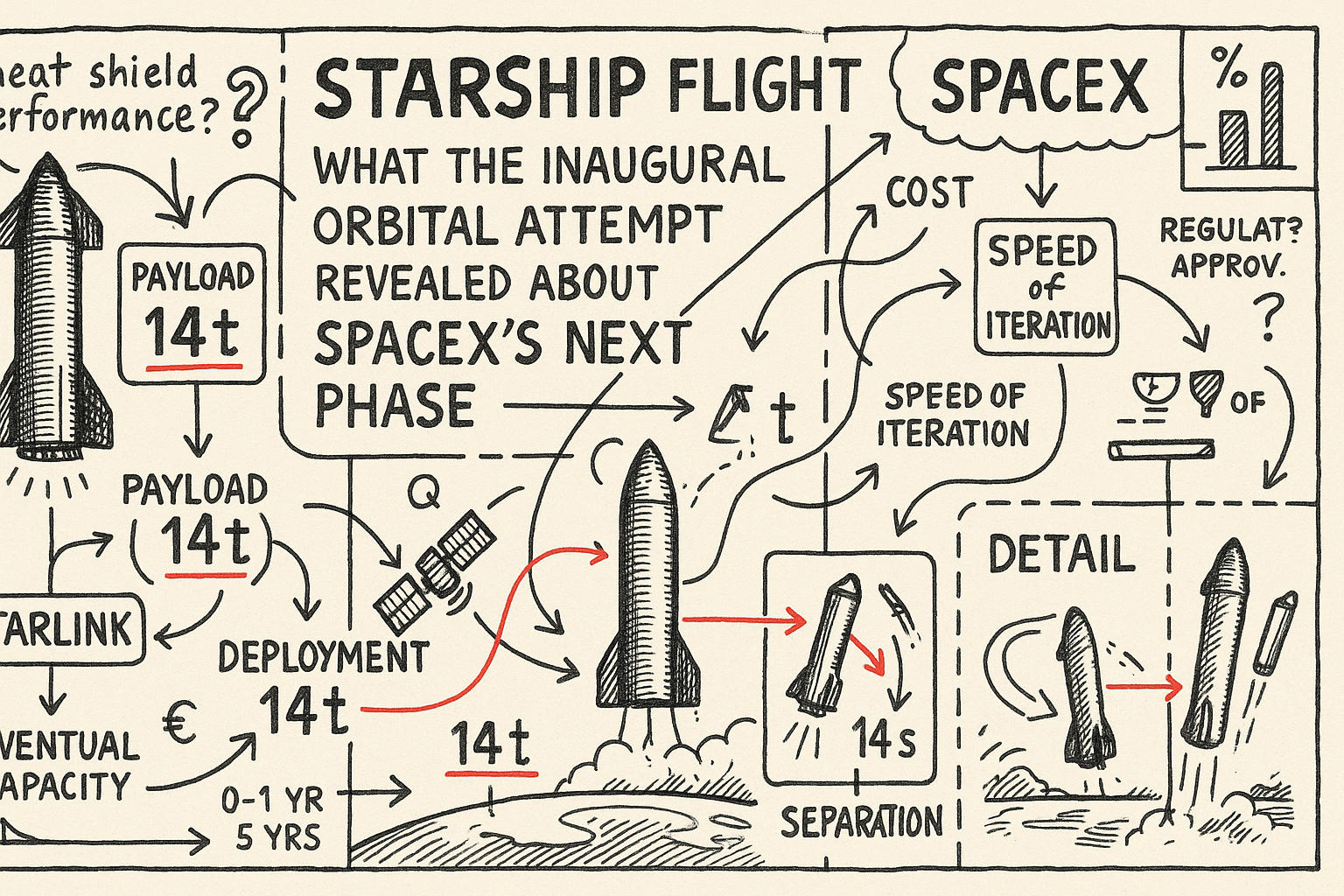
On its 14th test flight, SpaceX launched Starship from its Starbase complex in Texas in the company’s most ambitious mission yet: the first orbital attempt for the full Starship system. The flight aimed to send the spacecraft around Earth six times in a roughly 10-hour mission profile and included a planned deployment of 26 Starlink V3 satellites, an objective that underscored the dual development goals of testing orbital operations while performing a routine commercial activity.
Media reports characterized the mission as a dress rehearsal for the larger ambitions SpaceX has tied to Starship, including support for NASA’s Artemis lunar program. The company pushed to demonstrate end-to-end orbital capability for the turbo-heavy lift vehicle after three years of iterative test flights that culminated in this initial bid to reach orbital velocity and execute reentry.
Ambitious objectives and a mixed outcome
SpaceX intended a flight lasting roughly 10 hours and planned multiple orbits, but reports indicate the mission ended earlier than planned with the spacecraft splashing down hours before the originally targeted conclusion. Despite the mission being cut short, the spacecraft successfully deployed 26 Starlink V3 satellites during the flight, meeting at least one of its stated in-orbit objectives.
The operational plan included a decision gate: SpaceX stressed that the company would only press toward orbit if “everything needed to be operating properly” before giving the critical go for orbital insertion. Reports noted that a "no-go" call would have led to an early end in the Indian Ocean, a contingency that highlighted the cautious mission-management approach for this high-stakes test.
Context within SpaceX’s development timeline
Coverage noted that this orbital attempt came three years after Starship’s first test flight, a period of rapid iteration for the vehicle. The mission followed SpaceX’s initial public offering earlier in the year and was portrayed as part of the company’s shift into a more accelerated phase of operations.
Observers framed the flight as a key step toward demonstrating end-to-end capabilities for Starship, from liftoff through in-orbit operations and reentry, which are milestones SpaceX has tied to future crewed and cargo missions beyond low Earth orbit.
Commercial and programmatic implications
The inclusion of 26 Starlink V3 satellites on the flight linked a flight-test objective directly with commercial constellation deployment. That coupling illustrates how SpaceX is integrating spacecraft development milestones with its broader business activities, using operational payloads to exercise and validate mission phases while progressing toward reusable, high-capacity launch operations.
Even with the mission ending earlier than planned, the flight provided data points on deployment, orbital operations, and reentry planning that will inform subsequent tests and operational planning as SpaceX continues to mature Starship for roles ranging from commercial satellite launches to support of deep-space exploration programs.
As SpaceX digests the results from this inaugural orbital attempt, the mission stands as a pivotal exercise in proving the system’s integrated capabilities and in aligning aggressive test objectives with conservative go/no-go decision-making.