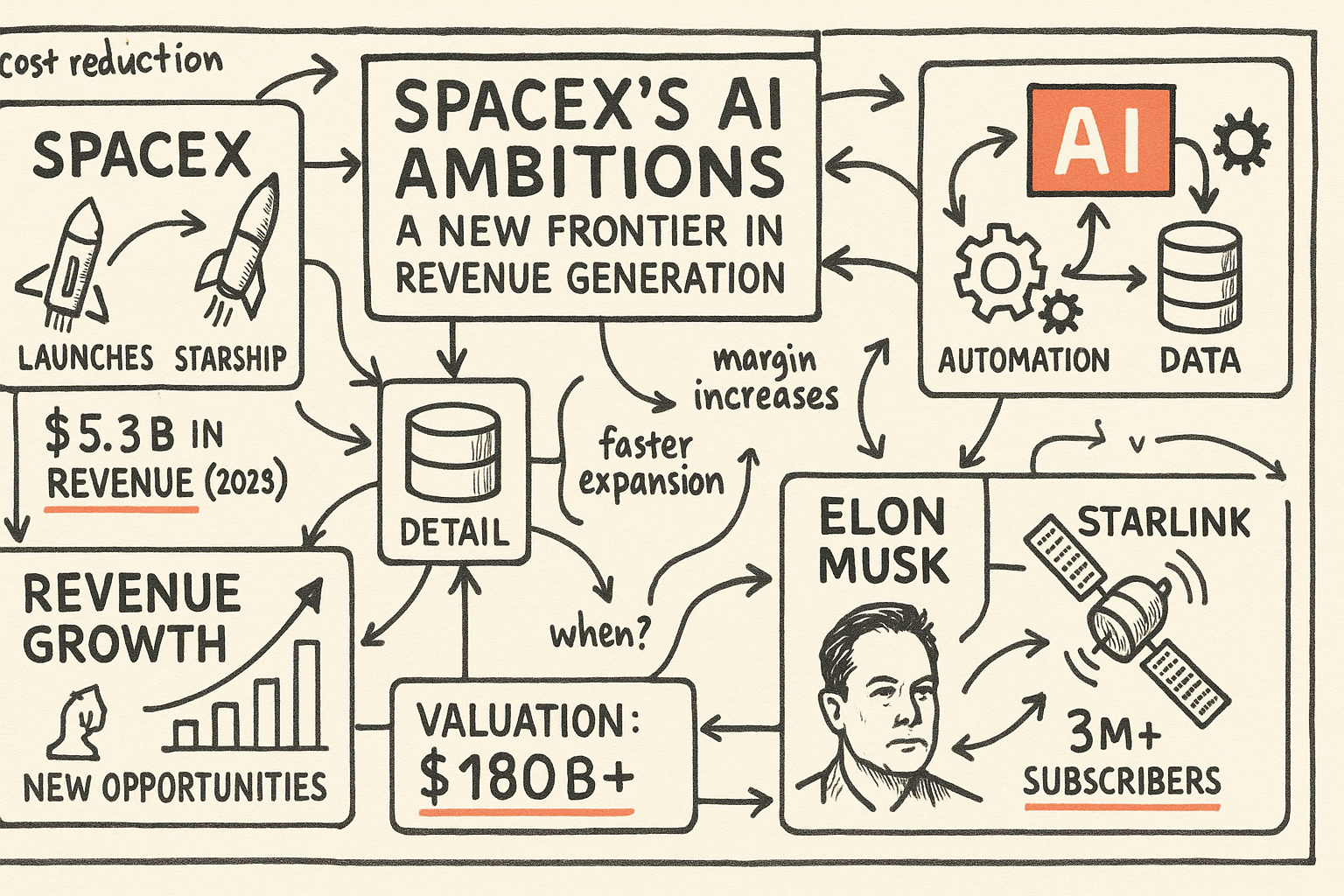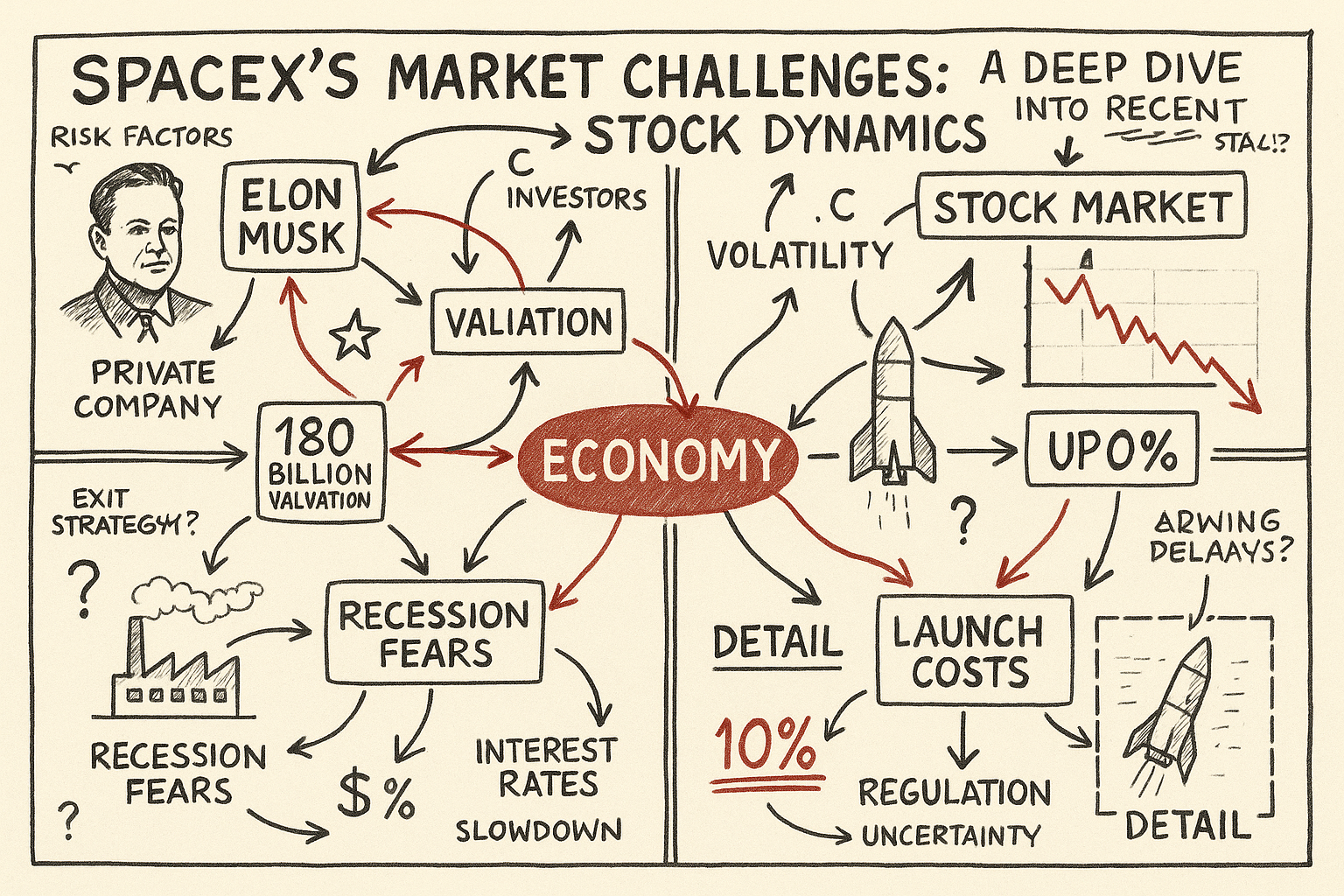
SpaceX, the pioneering aerospace company led by Elon Musk, has recently faced significant market challenges following its record-setting IPO. Despite the initial euphoria, SpaceX's stock has seen a notable decline, prompting concerns among investors and analysts alike.
Record-Setting IPO and Initial Surge
In June, SpaceX made headlines with its historic $75 billion IPO. The company's shares soared to over $225, marking an all-time high. This milestone positioned Elon Musk as the first trillionaire in history, further cementing his status as a leading figure in the tech and space industries. However, the initial excitement was short-lived as the stock began to tumble.
Factors Behind the Decline
Several factors have contributed to the recent downturn in SpaceX's stock. According to a report by Bloomberg, the company's stock has been under pressure as Wall Street races to sell SpaceX-linked products amidst the declining share prices. This has raised concerns about the sustainability of the company's market valuation.
Moreover, a Forbes analysis highlights that SpaceX's AI unit, a significant component of its business, is nearing a valuation point where it could be considered worthless by Morgan Stanley's standards. This potential devaluation has added to investor anxiety, especially as analysts weigh the company's divisional performance and overall investor sentiment.
Profitable Ventures Amidst Challenges
Despite the challenges, SpaceX continues to thrive in certain areas. The company's Falcon 9 launches remain highly profitable, largely due to the reusability of the rocket's first stage. This technological advantage allows SpaceX to undercut competitors' prices significantly. Additionally, SpaceX's Dragon spacecraft services to the International Space Station (ISS) continue to generate revenue, providing a stable financial foundation amidst the stock market turbulence.
Impact on Broader Market and Investor Sentiment
The decline in SpaceX's stock has had ripple effects across the market, notably impacting Tesla, another company under Musk's leadership. As reported by The Washington Post, Tesla's stock has also faced downward pressure, reflecting broader investor concerns about Musk-led ventures.
Furthermore, The Verge discusses the implications of SpaceX's stock dynamics on index funds, traditionally considered safe investment vehicles. The inclusion of SpaceX in these funds has introduced a new level of volatility, challenging the conventional wisdom surrounding index fund investments.
Looking Ahead
As SpaceX navigates these market challenges, the company's future strategy will be crucial in restoring investor confidence. The ability to leverage its profitable ventures while addressing concerns related to its AI unit and overall market valuation will determine SpaceX's trajectory in the coming months.
In conclusion, SpaceX's recent stock performance underscores the complexities of navigating the modern market landscape. While the company continues to make strides in aerospace technology, its financial dynamics present both challenges and opportunities for investors and stakeholders.