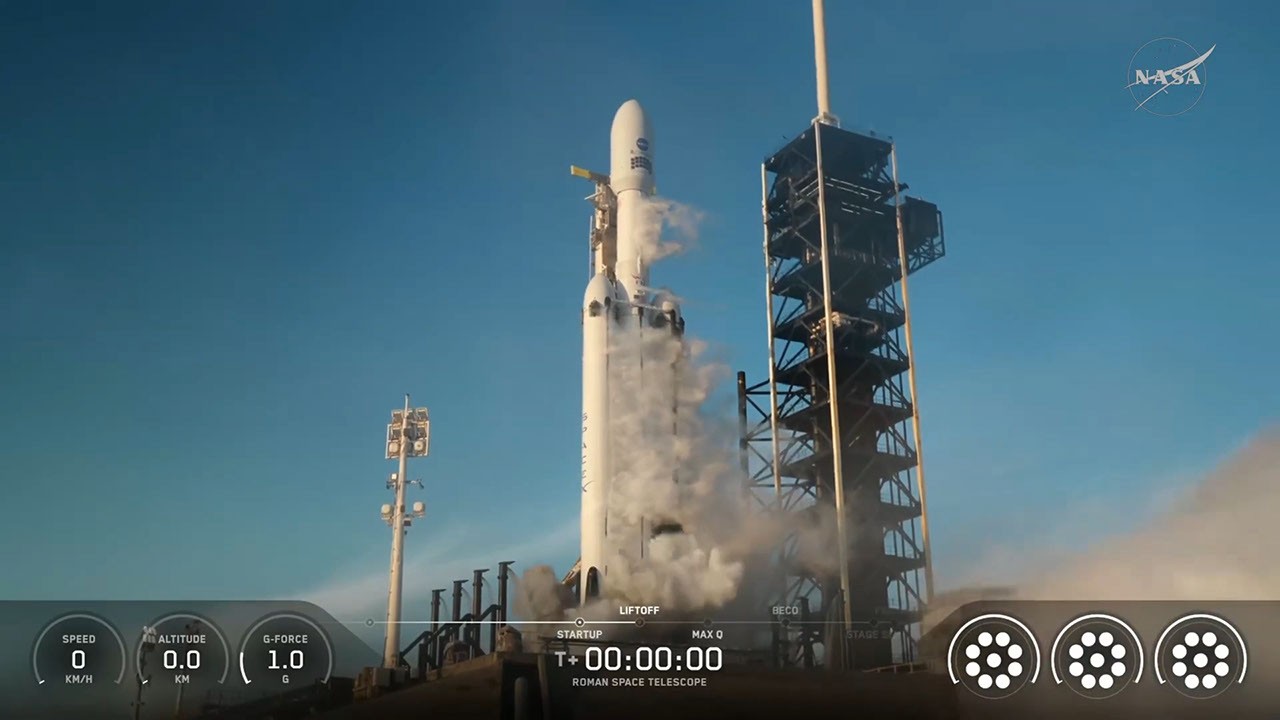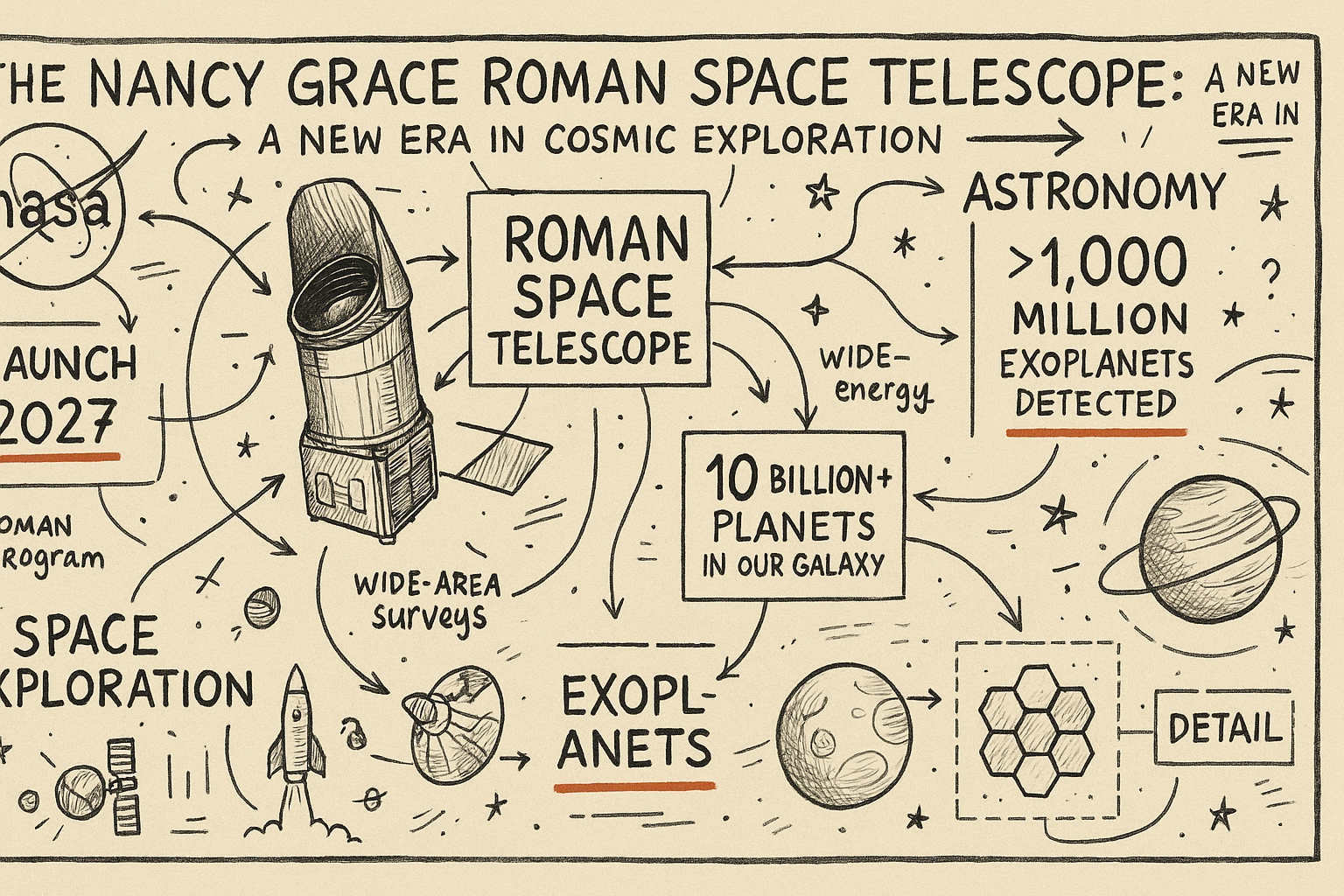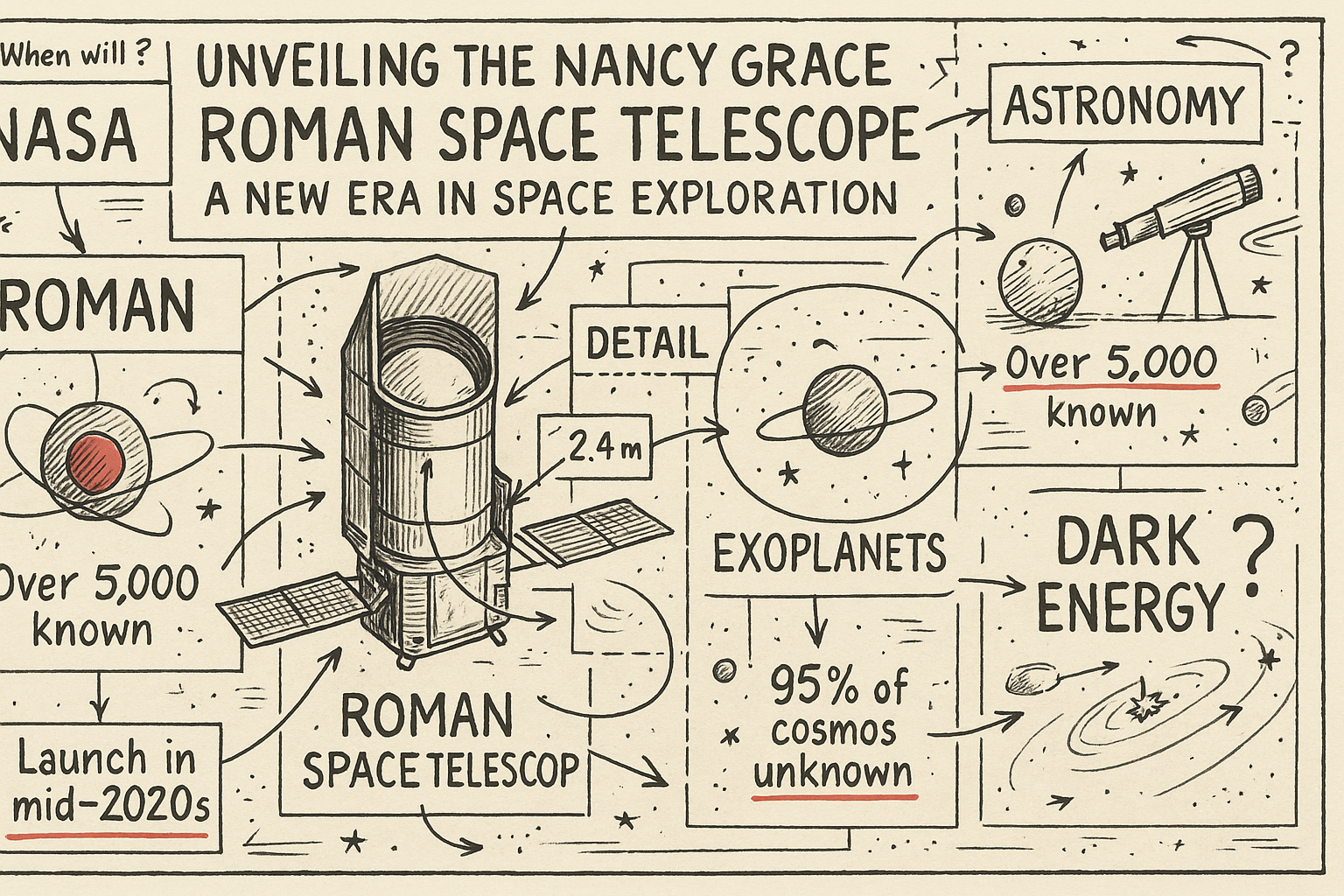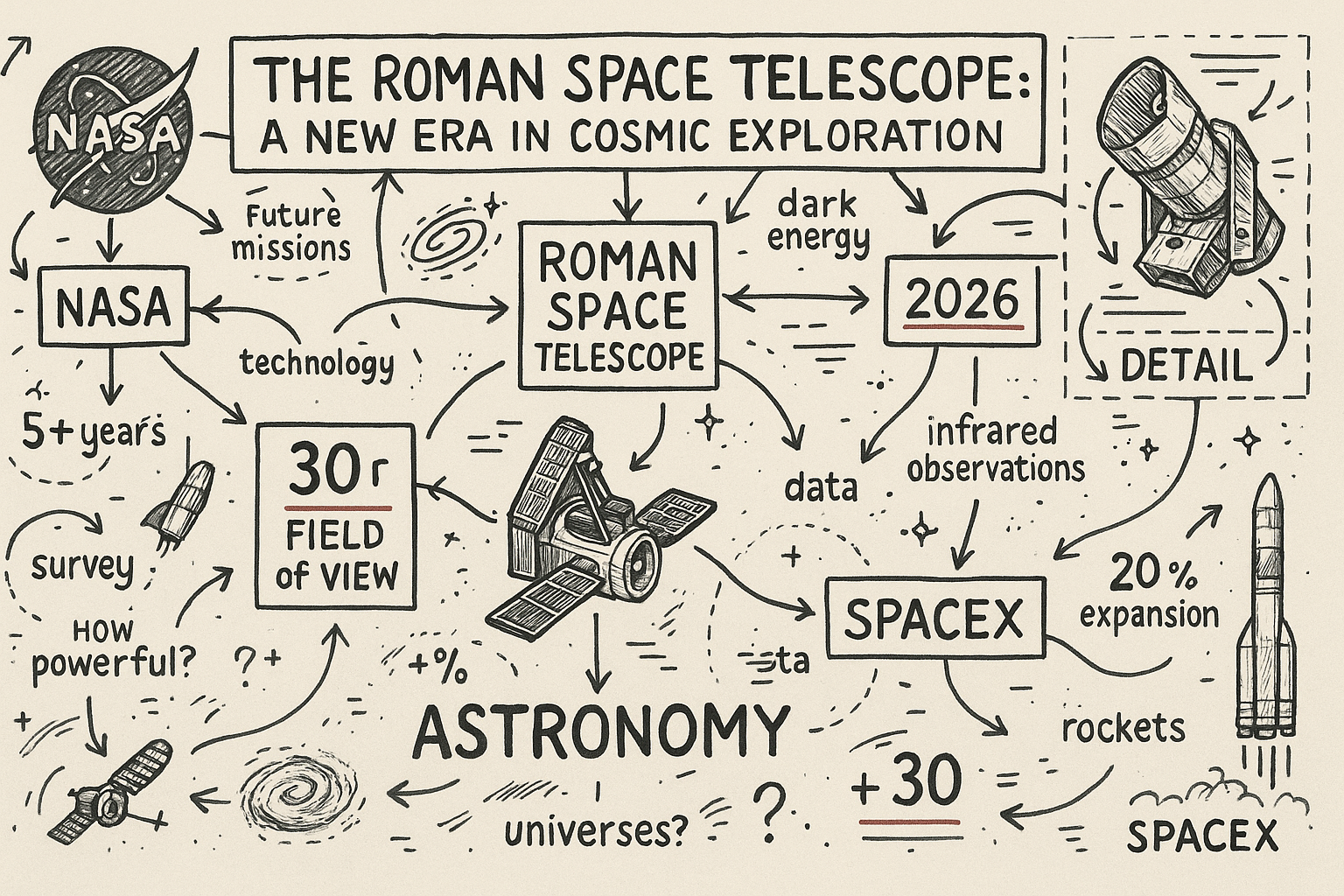
NASA's Nancy Grace Roman Space Telescope is set to embark on its mission to explore the cosmos, with a scheduled launch on August 30, 2026, from NASA’s Kennedy Space Center in Florida. This groundbreaking mission aims to unravel some of the universe's most profound mysteries, including the nature of dark energy and dark matter, and to discover new exoplanets.
The Roman Space Telescope, named after NASA’s first Chief of Astronomy, Nancy Grace Roman, is designed to survey the sky in visible to near-infrared light. Its advanced optical design and wide field of view will enable it to conduct detailed scans of the sky, providing unprecedented insights into the structure and evolution of the universe.
Partnerships and Contributions
The mission is a collaborative effort, with significant contributions from the European Space Agency (ESA). ESA is providing essential hardware, such as the spacecraft's star trackers, batteries, and detectors for the coronagraph instrument. Additionally, ESA will offer communications support through its deep-space ground station network. According to Bethan James, ESA’s Roman Project Scientist, the Mission of Opportunity program allows Europe to contribute scientific expertise that will enhance and maximize the mission's scientific return.
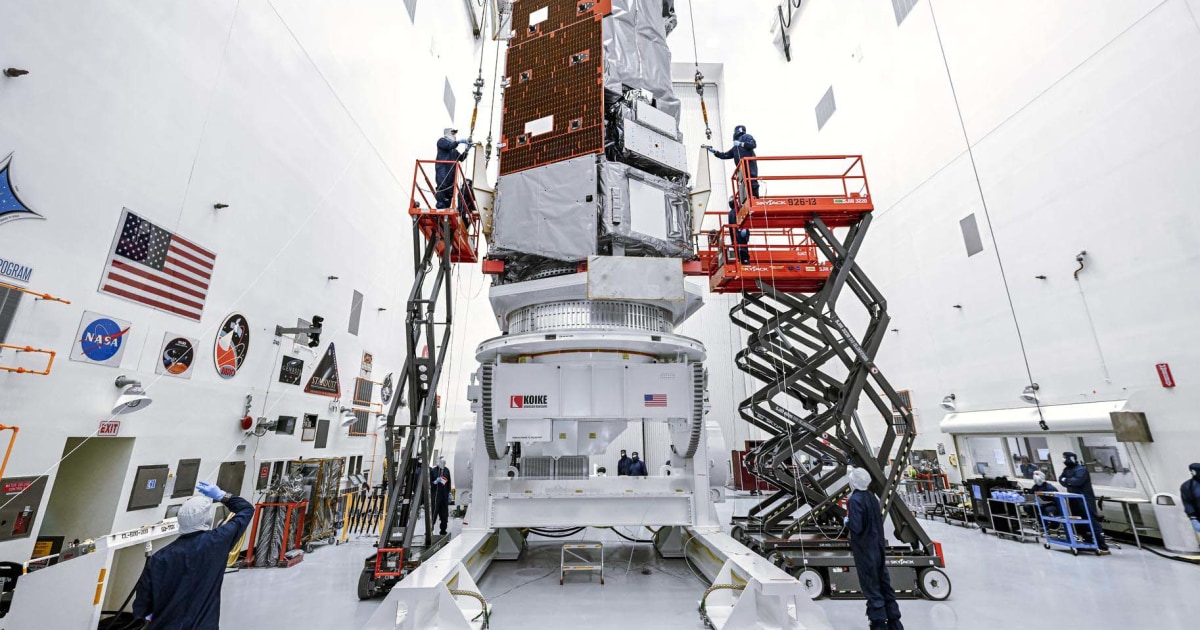
The Roman Space Telescope will be launched aboard a SpaceX Falcon Heavy rocket. The encapsulated telescope recently made its journey from the Payload Hazardous Servicing Facility to the SpaceX hangar at Launch Complex 39A, marking a significant milestone in the pre-launch preparations.
Scientific Goals and Expectations
One of the primary goals of the Roman Space Telescope is to shed light on dark energy, a mysterious force driving the accelerated expansion of the universe. By mapping the distribution of galaxies and measuring their distances, the telescope will help scientists understand how dark energy influences the cosmos.
In addition to its dark energy research, the Roman Space Telescope will employ a technique known as microlensing to discover thousands of new exoplanets. This method will allow the telescope to detect planets orbiting stars that are thousands of light-years away, expanding our knowledge of planetary systems beyond our own.
The mission also includes a cutting-edge coronagraph instrument, which will enable direct imaging of exoplanets by blocking out the light from their host stars. This technology will allow scientists to study the atmospheres of these distant worlds, searching for signs of habitability and potentially life.
As the launch date approaches, anticipation builds for the wealth of data the Roman Space Telescope is expected to provide. Its findings will not only deepen our understanding of the universe but also pave the way for future space exploration missions.