SpaceX has taken a significant step forward in human space exploration by announcing its inaugural mission to Mars. The mission, which will prominently feature Chun Wang, a billionaire and private astronaut, was revealed during the live stream of the first launch attempt of SpaceX's Starship V3. This historic announcement marks the first time in human history that a crewed mission to Mars has ever been formally announced by any organization, governmental or private.
Who Is Chun Wang?
Chun Wang is no stranger to breaking records in commercial spaceflight. He is best known for commanding and financing Fram2, the first human mission to fly directly over both of Earth's poles aboard a Crew Dragon capsule. That mission, named after the famous polar exploration vessel, demonstrated how private spaceflight initiatives are increasingly venturing into mission profiles that were, until very recently, reserved exclusively for government space agencies. With Fram2, Wang already secured his place in the history of commercial human spaceflight — and now he is set to push even further beyond Earth's boundaries.
Two Missions, One Astronaut
According to SpaceX, Wang's journey to Mars will not be his next immediate step. Before the interplanetary mission, he will first participate in a private circumlunar mission led by Dennis Tito and Akiko Tito, which is planned as the first commercial human flight of Starship around the Moon. That mission is expected to last approximately one week, bringing the vehicle to within 200 kilometers of the lunar surface without entering orbit.
The objectives of the lunar flyby mission are primarily technological. SpaceX intends to use it to verify Starship's performance in a deep space environment, testing critical systems for long-duration missions — including life support, communications, and operations far from low Earth orbit. Successfully validating these systems will be essential before any crewed vehicle can be trusted on a journey lasting years rather than days.
Following the circumlunar mission, Wang will then take part in what SpaceX is calling the first commercial interplanetary human mission. The announced mission profile envisions a flight lasting approximately two years, involving a departure from the Earth-Moon system, a flyby of Mars, and a subsequent return to Earth. Notably, no specific launch date has been announced for this mission.
A Historic — But Cautious — Announcement
While the announcement is undeniably historic, it is important to place it in context. As analysts have noted, the probability of this mission materializing — particularly within the current decade — remains limited. There are still significant technical and logistical milestones that SpaceX must achieve before a two-year crewed interplanetary voyage becomes feasible. Nevertheless, the announcement represents a meaningful signal of intent, and a landmark moment in humanity's long-held ambition to reach the Red Planet.
The Role of Starship V3
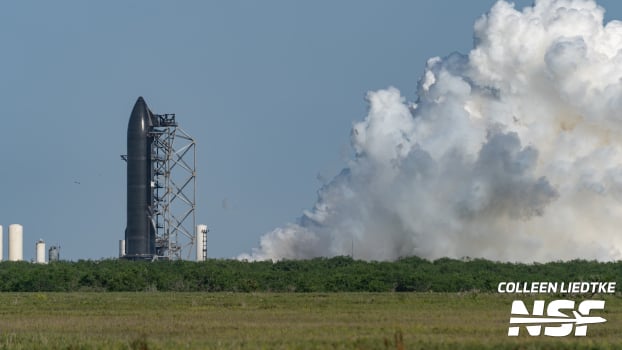
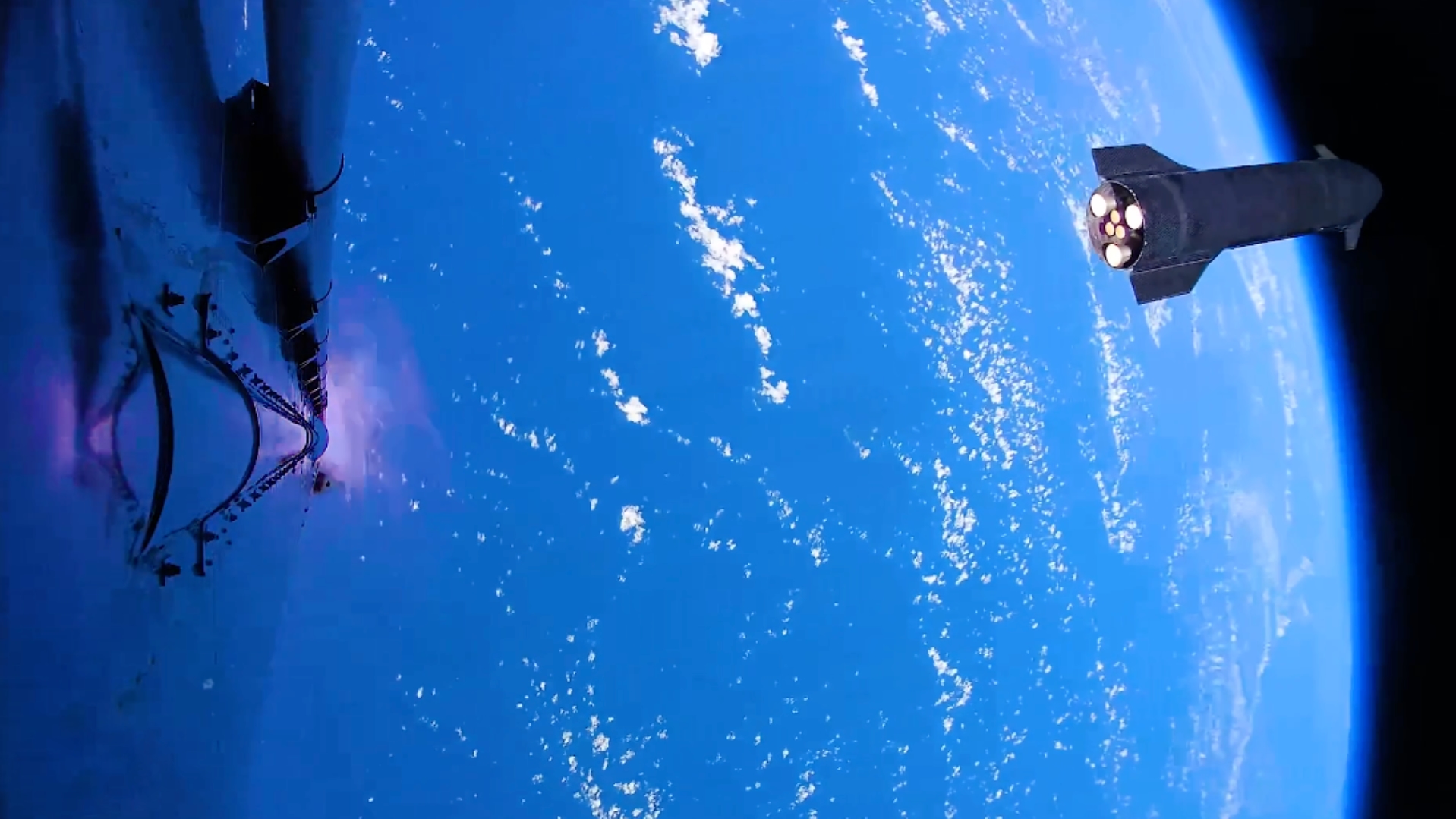
Central to all of these missions is the Starship V3, SpaceX's latest and most advanced iteration of its fully reusable deep space transportation system. The announcement was made during the live stream of the first launch attempt of Starship V3 on May 21, 2026 — a test designed to validate both the new V3 design and the Raptor 3 engines, which are considered essential for future interplanetary missions. However, that first attempt was scrubbed due to a problem with the Quick Disconnect arm, the connection mechanism between the launch pad and the Ship. Elon Musk confirmed the issue, and while no new launch date has been officially announced, a new attempt is expected within days.
SpaceX has made notable progress in recent flights with booster recovery and Super Heavy operations, but significant work remains on the Ship itself and on the overall vehicle maturation needed before long-duration missions can be safely undertaken.
The Bigger Picture
This announcement reflects a broader and accelerating shift in the space industry, where private enterprises are increasingly driving the agenda for human exploration beyond Earth. The inclusion of private astronauts like Chun Wang in missions of this magnitude underscores the growing role of commercial participation in what were once exclusively governmental endeavors. As SpaceX continues to develop and refine Starship, the dream of not just visiting Mars but eventually establishing a permanent human presence there moves — however incrementally — closer to reality.
The world will be watching closely as SpaceX works toward its next Starship V3 launch attempt, a critical step on the long road to making interplanetary human travel a reality.
Stay up to date with the latest space news at NovA mAInd.