The European Space Agency's (ESA) latest annual report on the space economy has highlighted a year of significant progress for Europe's space sector in 2025, despite global challenges. The report, which focuses primarily on data from 2025, underscores the continent's efforts to regain sovereign launch capabilities and increase its space-related investments.
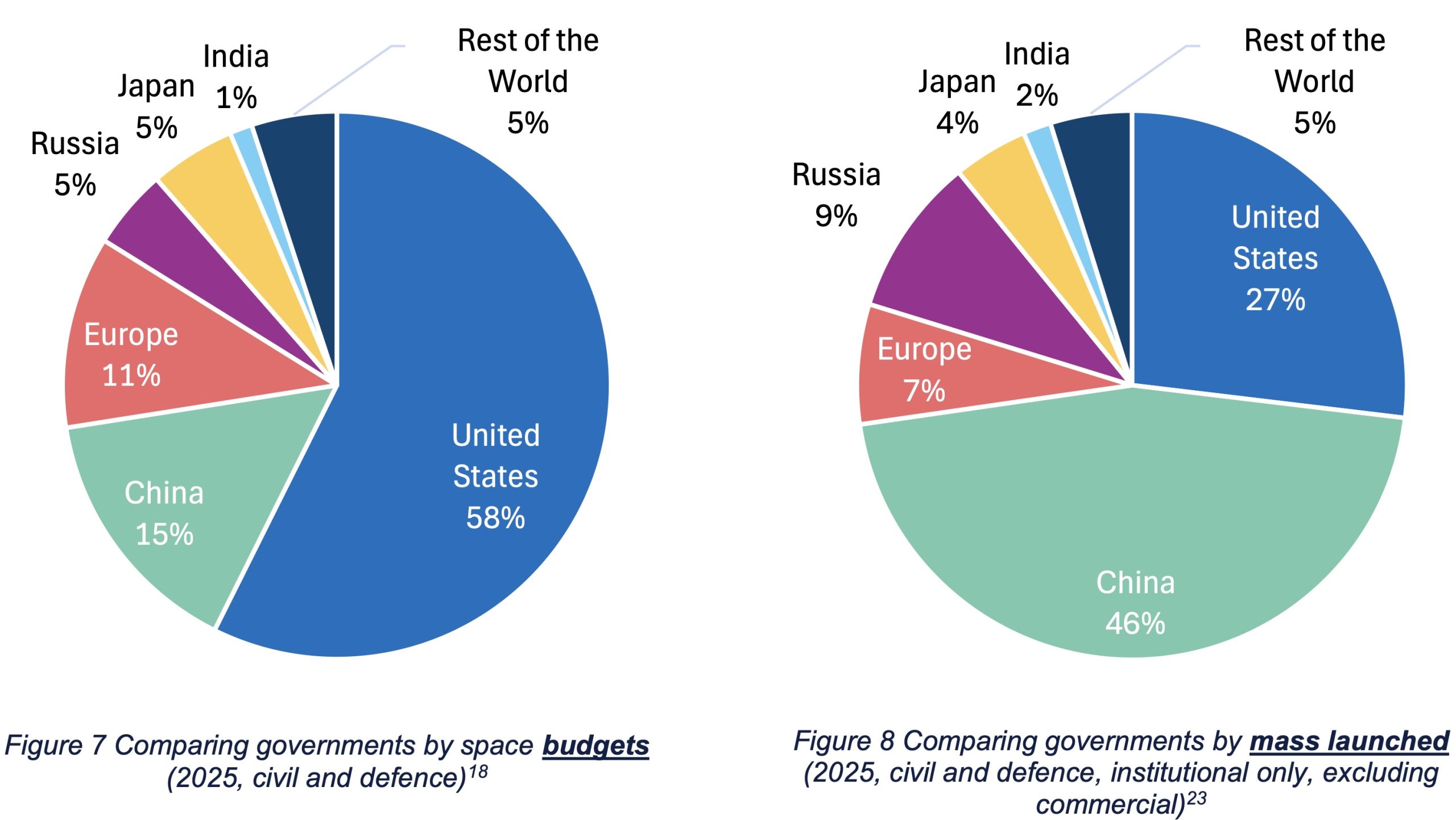
One of the most notable achievements for Europe was the successful commercial introduction of the Ariane 6 and the return to flight for the Vega C launch vehicles. These milestones have restored Europe's independent access to space, though the region still lags behind the United States and China in terms of payload launches. In 2025 alone, Europe conducted eight orbital launches, a modest figure compared to the 193 launches by the United States, which accounted for nearly 60% of the global total. China, meanwhile, contributed 46% of the total mass launched for government programs.
Europe's space budgets experienced a notable increase, growing by 12% to 13.5 billion euros. This growth was largely driven by rising national defense spending, with Germany and France at the forefront. Germany has committed to investing 35 billion euros in space security and defense by 2030, and France announced an additional 4.2 billion euros for military space activities over the next decade. These investments highlight a broader trend of increasing global military spending, which reached 2.9 trillion dollars in 2025, marking the 11th consecutive annual rise.
Despite the focus on defense, civil space activities still accounted for 84% of European funding, with Europe capturing 11% of the global institutional space budget. In contrast, global public space budgets saw a slight decline of 3%, ending a decade of steady growth. This contraction was primarily due to flat NASA funding and a temporary pause in U.S. military space spending. Globally, defense budgets now account for 53% of all institutional space funding.
On the private investment front, European space ventures raised 1.4 billion euros across 88 deals in 2025. While this represents an 8% decrease from 2024, the decline was mainly due to the absence of large corporate acquisitions like the Safran buyout of Preligens. When excluding acquisition deals, private investment in European space ventures actually grew by 10% year-over-year. Notable funding rounds included 150 million euros for ICEYE and a similar amount for Isar Aerospace, as well as 90 million euros for EnduroSat.
Globally, private funding for space ventures hit a record high of 11.7 billion euros, a 60% increase over the previous year, with the United States absorbing the majority of this capital. However, Europe continues to face structural challenges in turning domestic demand into a larger, more cost-efficient industrial base. A significant share of Europe's accessible market is open to global space industries, unlike in the United States and China, where domestic industries often receive preferential treatment.
Looking forward, ESA projects that European space budgets will increase sharply from 2026 onward, driven by new defense initiatives like the Golden Dome missile defense program. However, the Organisation for Economic Co-operation and Development (OECD) and the International Monetary Fund (IMF) caution that increased defense spending does not necessarily equate to long-term economic growth. Success will depend on strategic procurement that fosters innovation while managing costs, along with cross-border cooperation to achieve economies of scale.
In summary, Europe's space economy made substantial strides in 2025, bolstered by defense spending and renewed launch capabilities. Yet, the continent must navigate ongoing challenges in market competitiveness and industrial expansion to sustain this growth in the dynamic global space sector.