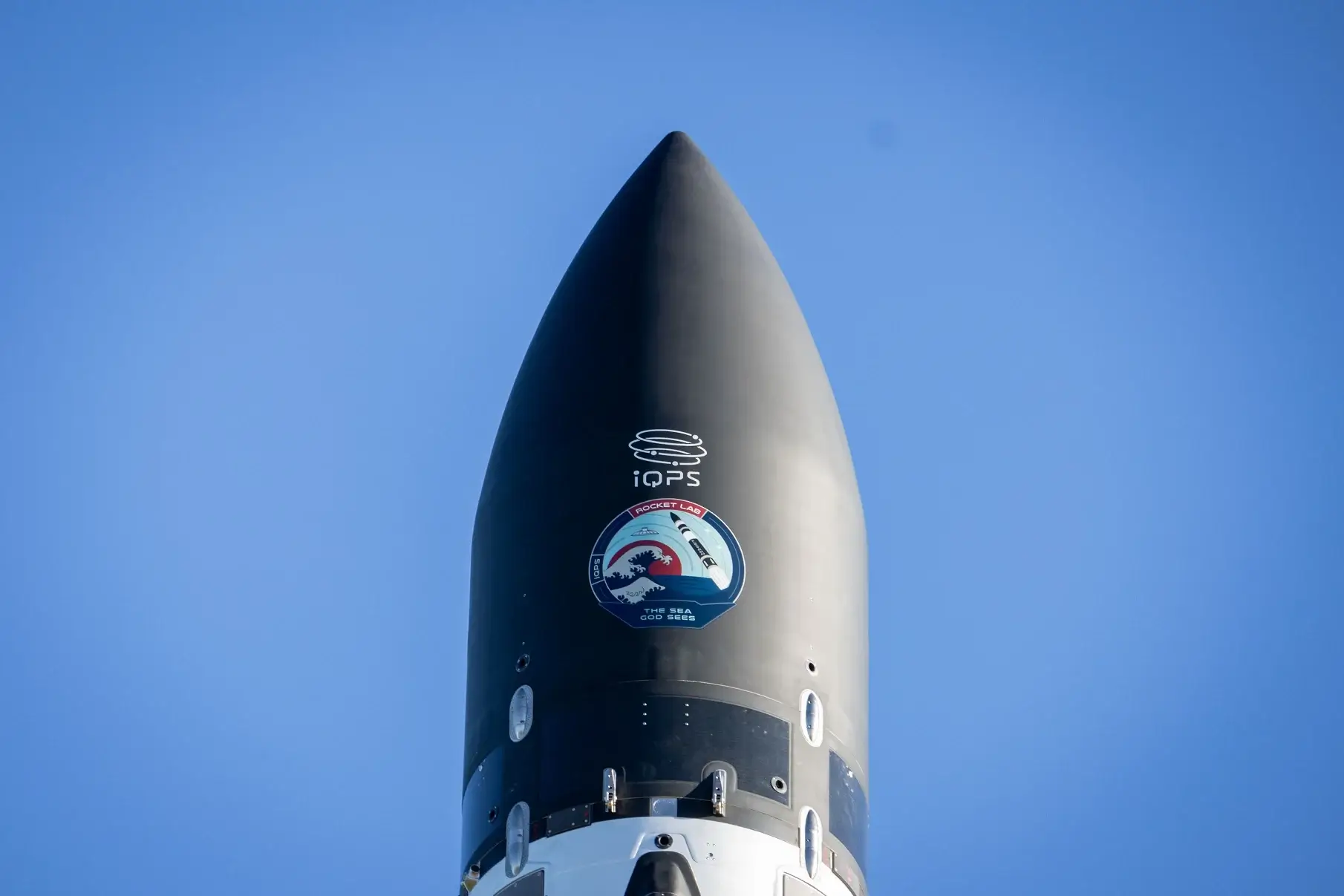
Rocket Lab has once again strengthened its position in the commercial space launch market by securing a new multi-launch contract with the Institute for Q-shu Pioneers of Space, Inc. (iQPS), a Japanese company specializing in radar imaging satellites. Announced on July 30, 2026, the contract includes three dedicated launches using Rocket Lab's Electron rocket, slated to begin in late 2027. All launches will take place from Rocket Lab’s Launch Complex 1 in New Zealand, aiming to place each iQPS satellite into a 575-kilometer low Earth orbit.
This latest agreement is the third multi-launch contract between Rocket Lab and iQPS within the span of a year, highlighting their robust partnership. Previous agreements were signed in April and October, bringing the total number of launches contracted by iQPS to 18, with seven already completed. The most recent launch occurred in December, with a planned launch on June 30 being aborted just as Electron's first stage engines ignited. The reason for the abort remains undisclosed, and the rescheduled launch is now anticipated no earlier than August.
iQPS is on an ambitious trajectory, aiming to deploy a constellation of 24 synthetic aperture radar (SAR) imaging satellites by May 2028, with plans to expand the constellation to 36 satellites by 2030. This constellation is intended to provide high-resolution Earth observation capabilities, which are increasingly in demand for applications ranging from environmental monitoring to disaster response.
Rocket Lab's growing portfolio of launch contracts is not limited to its partnership with iQPS. Recently, the company announced a $266 million contract with the U.S. Space Force for up to 18 launches of the suborbital variant of Electron, known as HASTE. This contract, the largest in Rocket Lab's history, underscores its vital role in national security missions and further cements its standing as a key player in the space industry.
The suborbital launches under the HASTE contract will be conducted from a new Rocket Lab facility at the Pacific Spaceport Complex in Kodiak, Alaska, with the first launches expected to commence by the end of the year. This expansion marks a significant milestone for Rocket Lab, allowing it to cater to a broader array of missions and clients.
Beyond these launch contracts, Rocket Lab is also making strategic moves to expand its capabilities. It has announced plans to acquire Iridium Communications for $8 billion, aiming to integrate Iridium's satellite-based communications network with its existing launch services and spacecraft manufacturing. This acquisition positions Rocket Lab as a formidable competitor to SpaceX in the satellite communications sector, leveraging Iridium's extensive global coverage and customer base.
As Rocket Lab continues to secure high-profile contracts and expand its operational footprint, it represents a growing force in the aerospace industry. Its collaboration with iQPS not only benefits the two companies but also contributes to the broader landscape of space exploration and satellite technology, providing more opportunities for innovation and advancement in Earth observation capabilities.